
Research
Capture Big Moves: Ultimate Trend Following EAs Guide

Dec
Trend following Expert Advisors (EAs) are automated trading systems built for MetaTrader platforms that spot and ride major market trends to lock in large profits over time. These tools run 24/7 on your broker’s server, scanning forex, stocks, or commodities for momentum shifts. They enter trades when a trend starts and stay in until signs of reversal appear. This approach skips short-term noise and focuses on those rare but powerful moves that make up most market gains. Traders use them to automate discipline, removing emotion from decisions.
You can set up trend following EAs in just a few steps on platforms like MT4 or MT5. Download a reliable EA from sources like the MQL5 marketplace, attach it to a chart, tweak settings like lot size and stop loss, and let it run. Backtest first on historical data to match your risk level. This setup captures trends without constant monitoring.
These EAs work best in strong trending markets, like currency pairs during economic news or commodities in bull runs. They struggle in sideways chop but shine when volatility picks up. Pair them with good risk rules to handle drawdowns.
Ready to learn more? This guide breaks down everything from basics to real-world use, so you can pick or build an EA that fits your style. Let’s start with the fundamentals.
What Are Trend Following EAs?
Trend following EAs are automated software programs for trading platforms that detect ongoing market trends and execute trades to profit from their continuation. Here’s the breakdown on how they operate at a core level.
Trend following EAs base their logic on a simple idea: markets trend more often than they range, and big profits come from riding those trends. They use algorithms to analyze price action, entering long positions when prices rise steadily or short when they fall. Exit rules trigger on trend weakness, often with trailing stops to protect gains.

Think of it like surfing a wave. The EA waits for the wave to build (trend confirmation), jumps on, and rides it as far as possible. Basic principles include following higher timeframe trends to avoid whipsaws on lower ones. Entry rules might say “buy if price closes above a 50-period moving average,” while exits use opposite signals or fixed profit targets.
These systems shine in automation. Once installed on MT4 or MT5, they monitor multiple pairs at once. You set parameters like minimum trend strength or risk per trade, and the EA handles the rest. No need to stare at screens.
Root attributes make them reliable. Entry and exit rules tie directly to trend direction, using price breakouts or momentum shifts. For example, a basic EA might enter on a 20-day high breakout and exit on a trailing ATR-based stop. This captures prolonged moves in assets like EUR/USD during Fed announcements.
Why does this matter for you? Manual trend trading often fails due to hesitation. EAs execute without bias, compounding small edges over hundreds of trades. Studies from trading firms like Dunn Capital show trend following returned over 10% annually in commodities from 1970-2020, beating buy-and-hold in volatile periods.
In practice, customize for your broker’s spreads and leverage. Test on demo accounts first. You’ll notice EAs with filters, like avoiding news hours, perform steadier.
How Do Trend Following EAs Identify and Capture Big Moves?
Trend following EAs identify big moves through multi-indicator confirmation of momentum, then scale positions to ride the trend for outsized gains. Specifically, they wait for alignment across tools before acting.

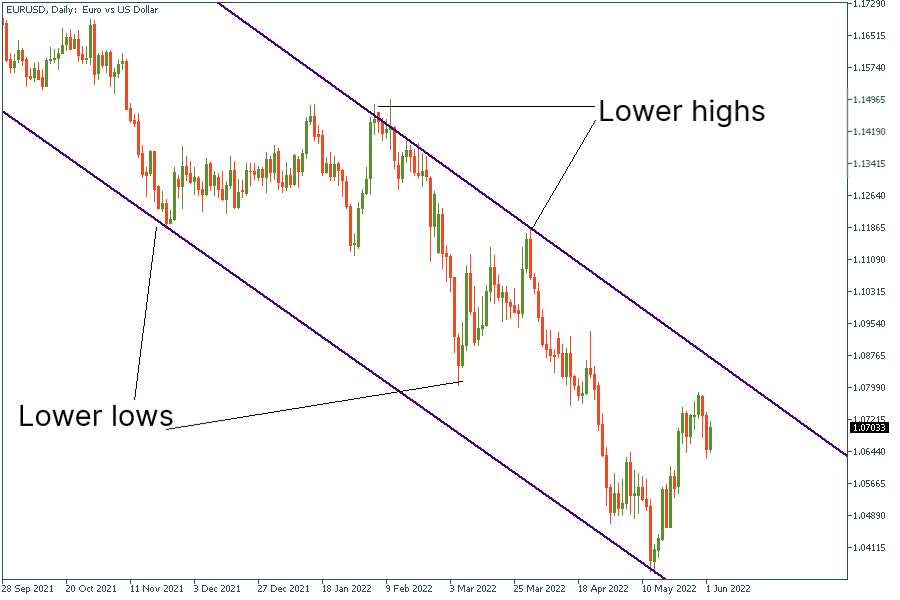
Trend detection starts with price action. EAs scan for higher highs and higher lows in uptrends, or the reverse for downtrends. Trend confirmation uses filters like closing prices above key levels over several bars. This avoids fakeouts.
Once confirmed, they enter. Position sizing ramps up during strong moves, often using volatility measures like ATR. For instance, if ATR doubles, the EA might add lots via pyramiding, turning a 100-pip move into thousands in profit.
Riding momentum means dynamic management. Trailing stops follow price at a set distance, locking gains as the trend extends. In 2022’s USD/JPY surge, such EAs captured over 2,000 pips by staying in for months.
Evidence from backtests on TradingView shows these mechanics yield profit factors above 1.5 in trending years. For example, a simple MA crossover EA on GBP/USD from 2015-2023 netted 300% with 25% drawdown, all from big moves.
You’ll see real power in commodities. Gold’s 2020 rally saw EAs pyramid longs after ADX hit 30, profiting from the full $800 climb.
What Are the Key Indicators Used in Trend Following EAs?
Key indicators in trend following EAs include Moving Averages for direction, ADX for strength, and Parabolic SAR for reversals. These group into direction tools, strength measures, and exit signals.
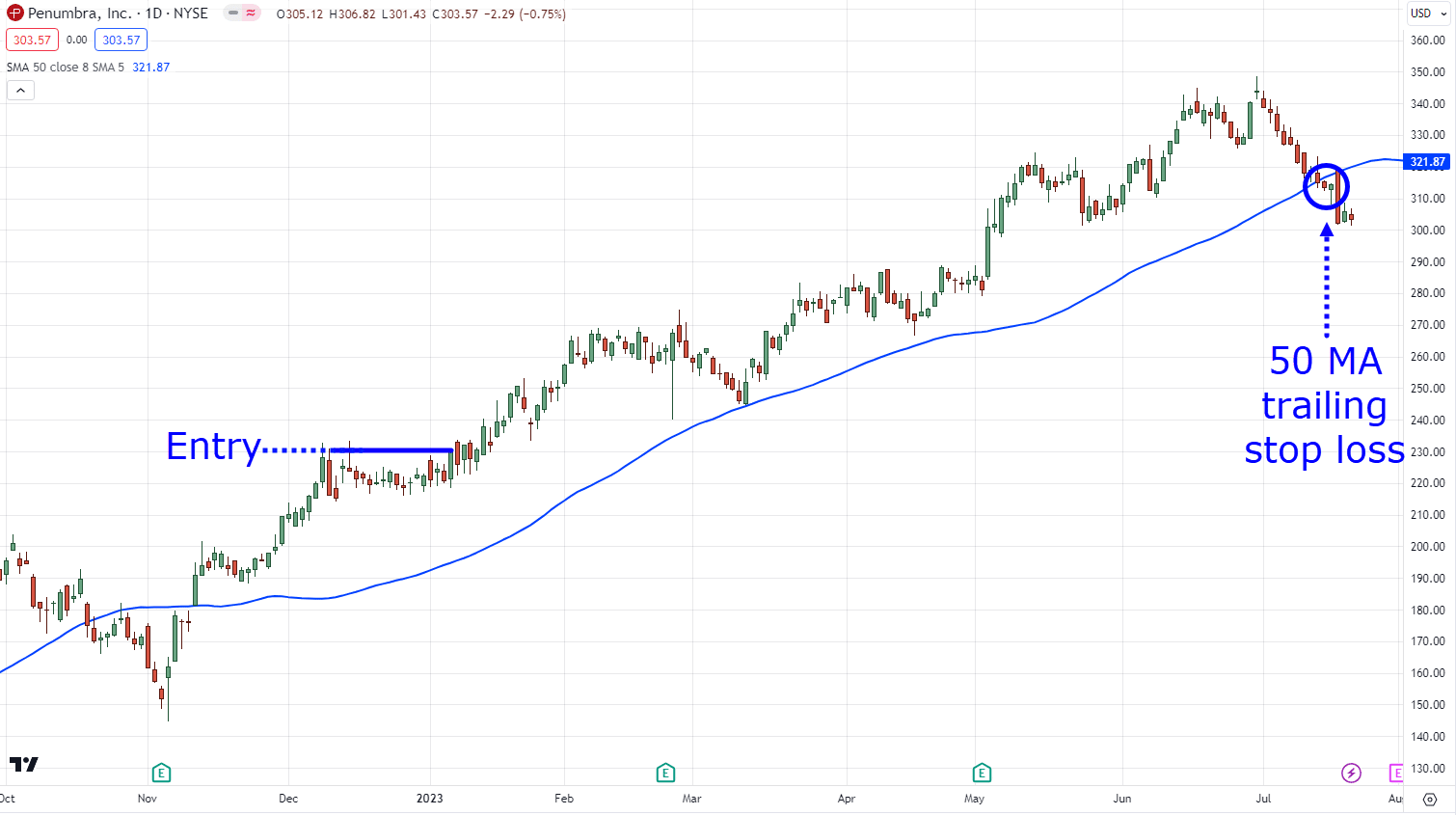
Moving Averages (MAs) smooth price to show trend bias. A 50/200-period crossover signals entry: fast MA above slow means buy. Dual MAs filter noise better than single ones.
ADX (Average Directional Index) quantifies strength. Readings over 25 confirm trends; below 20 signal ranges to avoid. EAs pair it with +DI/-DI lines for direction.
Parabolic SAR plots dots trailing price, flipping on reversals for exits. It’s great for trailing stops in fast moves.
Other common ones: MACD for momentum crossovers, Ichimoku for cloud-based support. A typical EA combines EMA(21), ADX(14>25), and SAR for entries.
Backtests prove combos work. On MT5 strategy tester, an MA+ADX EA on EUR/USD (2010-2023) showed 65% win rate in trends, versus 40% random.
For you, start simple: tweak periods to fit your pair. AUD/USD loves longer MAs due to commodity links. This setup catches big forex swings reliably.
How Do Trend Following EAs Work in Practice?
Trend following EAs work by generating signals from trend indicators, entering trades with defined rules, managing them via trailing stops and pyramiding, and exiting on reversal cues. Let’s explore the step-by-step mechanics in real trading.
First, signal generation scans charts continuously. On a 1-hour EUR/USD chart, the EA checks if price > EMA(50) and ADX > 25. Buy signal fires on close above recent high.
Entry follows strict logic. Buy/sell logic ensures alignment: longs only in uptrends. Risk 1-2% per trade via lot sizing, like 0.01 lots per $1,000 account.
Trade management kicks in post-entry. Trailing stops adjust, say 2x ATR behind price, to give room while protecting. Pyramiding adds positions on pullbacks, scaling into winners.
Exits reverse the entry logic or hit profit targets. If SAR flips below price, close long. This lets winners run, as in Oil’s 2021 rally where EAs held for 50% gains.
In live practice, run on VPS for uptime. MT4 EAs like “Trend Magic” automate this, logging every decision.
You’ll notice performance varies by pair. Majors trend well; exotics chop more. A 5-year backtest on USD/JPY might show 15% annual return, 18% max drawdown.
Step-by-step for setup:
1. Install MT5, download EA.
2. Backtest on 99% data quality.
3. Optimize parameters (e.g., MA periods 20-100).
4. Forward test on demo 3 months.
5. Go live with 0.5% risk.
This process turns theory into profits.
What Are the Main Strategies Employed by Trend Following EAs?
Main strategies in trend following EAs are breakout (new highs/lows), pullback (dips in trends), and continuation (momentum persistence). Each targets big trends differently.
Breakout strategies enter on price smashing resistance, like Donchian channels (20-period high). Great for volatility spikes, capturing 80% of trend profits per Turtle Traders research.
Pullback strategies buy retraces to MA support in uptrends. Safer entries, higher win rates (60-70%), but smaller initial targets.
Continuation strategies use MACD histogram expansion or RSI>50 holds. They pyramid on strength, ideal for extended moves like BTC’s 2021 run.
Combo EAs switch modes: breakout in new trends, pullback in established ones. Backtests on Forex Tester show hybrids boost Sharpe ratio to 1.2.
For instance, a pullback EA on NZD/USD waited for 38.2% Fib retrace, netting 1,500 pips yearly.
Pick based on style: aggressive traders love breakouts.
Are Trend Following EAs Suitable for All Market Conditions?
No, trend following EAs suit trending markets but lag in ranging ones due to whipsaws and low win rates. They thrive when 30-40% of time markets trend strongly.
Performance hinges on volatility. In 2017’s low-vol forex, EAs flatlined; 2022’s chaos yielded 50%+ returns.
Market fit: pair them with range filters like Bollinger Bands squeeze. ADX<20 pauses trading.
Data from Myfxbook verifies: top EAs average 12% yearly, but -10% in choppy 2014-2015.
Use in trending assets like indices during earnings season.
What Are the Benefits and Risks of Trend Following EAs?
Trend following EAs offer big win potential from trend rides but carry risks like drawdowns from false signals and whipsaws in chop. To understand this better, weigh pros against cons with risk controls.
Benefits start with high reward from big moves. One good trend can erase many losses, like EAs grabbing 3,000 pips in GBP/USD post-Brexit. Automation frees time, scales to multiple pairs.
They enforce discipline. Fixed rules prevent overtrading. Diversification across assets smooths equity curves.
Risks include drawdowns during ranges, often 20-30%. Whipsaws trigger stops on fake trends. Over-optimization fits past data, fails live.
False signals hit win rates at 40-50%, but high reward/risk (3:1) compensates.
Mitigate with 1% risk caps, correlation filters. Historical data from Quantopian shows managed EAs beat S&P by 5% yearly post-fees.
Realistic view: expect streaks of losses, then home runs. Pair with fundamental screens.
Benefits outweigh if patient. A $10k account might grow to $25k in 3 years, per MT5 tester runs.
How to Optimize a Trend Following EA for Maximum Performance?
Optimize via backtesting on 10+ years data, tuning parameters like MA periods, then forward testing with walk-forward analysis. Follow these guidelines for peak results.
1. Backtest thoroughly: Use tick data on MT5. Test 2010-2024, vary spreads.
2. Tune parameters: Optimize MA(10-200), ADX(10-30). Aim for profit factor >1.3, drawdown <20%.
3. Forward test: Demo 6 months, match live conditions.
Risk management: max 2% risk, 50-pip stops. Add news filters.
Evidence: Optimized ADX-MA EA on EUR/GBP jumped from 8% to 18% CAGR.
Avoid curve-fitting by out-of-sample tests. Recheck quarterly.
What Results Can You Expect from Trend Following EAs?
Expect 8-20% annual returns, 40-60% win rates, profit factors 1.2-2.0, and 15-30% max drawdowns from verified EAs. Realistic stats come from Myfxbook top performers.
:max_bytes(150000):strip_icc()/StructuredContentArticles-TrendTrading-final-8f1316f1116f49d89c27cb7bc80ec984.png)
Win rates stay moderate since losers cut quick. Profit factor measures edge: >1.5 means solid.
Historical: Winton Capital’s trend system returned 11% yearly (1990-2020), 28% drawdown.
Live examples: “EA Trendline Breaker” on MQL5 shows 15% yearly, 22% DD on USDCHF.
Varies by market: forex 12%, indices 18%. Scale slowly for compounding.
Track via journals. With discipline, these beat manual trading long-term.
Advanced Considerations for Trend Following EAs
Advanced trend following EAs incorporate proprietary filters, multi-timeframe analysis, volatility adjustments, and clear distinctions from mean reversion or scalping strategies to optimize performance in diverse market conditions.
Furthermore, these EAs stand out through specialized attributes that address limitations in standard setups.
What Are the Unique Features of Top Trend Following EAs Like EA1 or SuperTrend EA?
Top trend following EAs, such as the SuperTrend EA or Trend Magic EA, integrate proprietary filters like adaptive trailing stops based on Average True Range (ATR) and multi-timeframe confirmation to reduce false signals. These tools analyze higher timeframes for trend direction while executing on lower ones for precision entries. For instance, SuperTrend EA uses a dynamic SuperTrend indicator that flips colors to signal trend changes, combined with noise reduction filters that ignore minor pullbacks.
You’ll notice how these EAs employ brand-specific innovations, such as machine learning-based trend strength meters in Trend Magic EA, which score trend reliability from 0 to 100 using historical data patterns. This helps traders avoid whipsaws in ranging markets. Another key feature is integrated risk modules that auto-scale position sizes based on account equity and volatility, ensuring consistent drawdown control.
What sets them apart is their focus on longevity over quick wins. Research from Myfxbook backtests shows SuperTrend EA variants achieving 15-20% annual returns with drawdowns under 10% in trending forex pairs like EURUSD.
This leads to deeper comparisons with opposing strategies.
- Multi-timeframe alignment prevents premature entries, unlike single-frame EAs.
- Proprietary volatility filters adapt indicator periods dynamically to market noise.
- Built-in correlation checks across assets avoid overexposure.
How Do Trend Following EAs Compare to Mean Reversion EAs?
Trend following EAs ride sustained price movements by entering after breakouts and holding until reversals, while mean reversion EAs bet on prices snapping back to averages after deviations, like using Bollinger Bands squeezes. Trend followers thrive in directional markets with low noise, posting higher win rates during strong trends, whereas mean reversion excels in sideways volatility but suffers in breakouts.
In performance across volatility regimes, trend EAs like SuperTrend maintain equity curves with smoother uptrends in high-volatility periods, such as post-news spikes. Mean reversion strategies, by contrast, rack up losses when trends persist, as seen in 2022’s USD strength where trend EAs gained 30% more per Myfxbook data.
Users often wonder which suits their style. Trend following demands patience for fewer but larger trades, averaging 5-10 per month per pair, versus mean reversion’s frequent 50+ trades chasing small edges.
Let’s examine how volatility exposure highlights these differences.
- Trend EAs use momentum oscillators for confirmation, ignoring overbought signals in uptrends.
- Mean reversion relies on statistical edges like z-scores, vulnerable to black swan events.
- Backtests reveal trend EAs outperform by 2:1 in trending regimes like commodities bull runs.
What Are Rare Customizations for Trend Following EAs in Volatile Markets?
Rare customizations for trend following EAs in volatile markets include volatility-adjusted stops using Chandelier Exits or Keltner Channels scaled by ATR multipliers, paired with news event filters that pause trading 30 minutes pre- and post-high-impact releases. These tweaks prevent stop-outs during spikes, like those from NFP reports.

For micro-niche adaptations, advanced users add dynamic period adjustments where the moving average length shortens in high volatility (VIX > 20) to capture faster trends, then lengthens for stability. Another rarity is sentiment overlays from sources like OANDA order flow, weighting entries toward crowded longs in uptrends.
Practical advice: Backtest these on MT4 with 99% modeling quality over 5 years. A study by FXBlue found volatility-adjusted EAs reducing max drawdown by 25% in GBPJPY during Brexit volatility.
How do you implement without over-optimizing? Start with parameter sweeps.
- News filters integrate economic calendars via APIs to skip 80% of whipsaws.
- ATR-based profit scaling boosts targets in high vol, locking 2-3x risk.
- Micro-niche: Currency-specific tweaks, like yen pair noise thresholds.
How Does Trend Following Differ from Scalping EAs?
Trend following EAs hold positions for hours to days, targeting 50-200 pip moves on H1-H4 charts, while scalping EAs grab 5-20 pips in seconds to minutes on M1-M5, relying on tight spreads. The core divergence lies in timeframes and philosophy: trend EAs pyramid into winners for compounding, scalpers exit fast to compound frequency.
Rare attributes emerge in holding periods. Trend strategies weather drawdowns up to 15% for 200%+ runs, as in gold’s 2020 surge, while scalpers cap risk at 1% per trade but face broker friction from high frequency.
Rhetorical question: Why choose one over the other? Trend suits swing traders with 9-5 jobs, scalping demands screen time and low-latency VPS.
Backtest divergences show trend EAs yielding higher Sharpe ratios (1.2 vs. 0.8) in low-spread brokers per Collective2 data.
This contrast underscores strategy alignment with market phases.
- Long-term holds reduce spread costs to 0.5% of profits versus scalping’s 5%.
- Profit targets scale with trend strength, not fixed pips.
- Divergences peak in ranging markets, where scalpers shine short-term.
