
Research
Arbitrage EAs Explained: Latency vs. Triangular Arbitrage – Key Differences & Profit Strategies

Dec
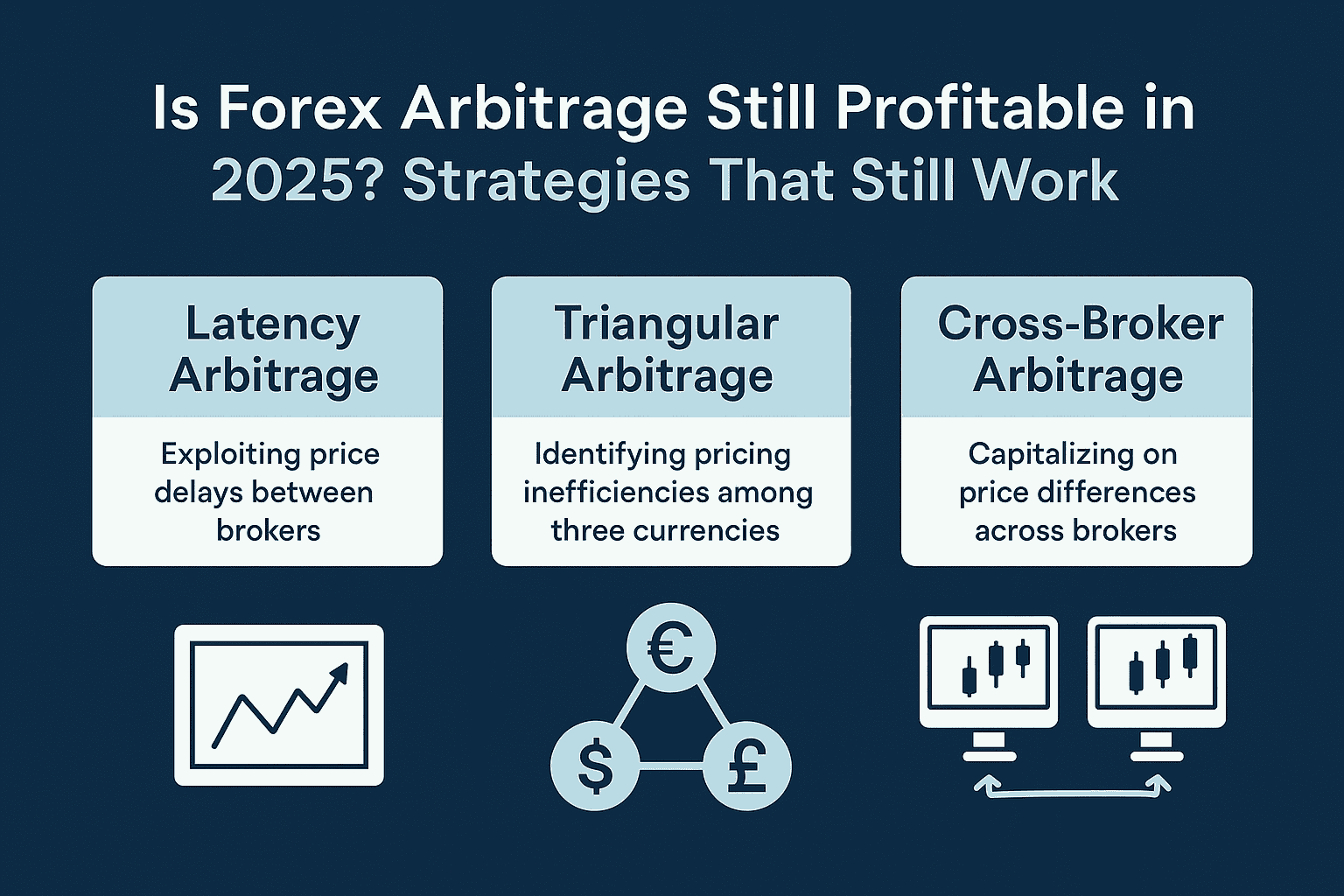
Arbitrage EAs are automated trading systems in forex that spot and act on price mismatches between markets, with latency arbitrage chasing tiny delays in broker feeds for quick gains, while triangular arbitrage targets math errors across three linked currency pairs for steadier profits. These tools run on platforms like MetaTrader 4 or 5, scanning markets non-stop to buy low and sell high at the same time. Traders set them up with simple scripts, and they handle trades without human input. The main split comes down to latency arbitrage relying on speed differences between fast and slow data sources, which suits high-frequency setups. Triangular arbitrage focuses on price gaps in pairs like EUR/USD, USD/JPY, and EUR/JPY, where the combined quotes don’t add up right. Both methods aim for low-risk edges, but they pull from different market flaws.
One big draw is how they cut emotional trading. You lock in profits from inefficiencies that vanish fast, often in seconds. No guessing directions, just pure math plays.
Setup stays straightforward across both. Pick a VPS near your broker’s server, code or buy an EA, and backtest on historical data. This levels the field for beginners chasing passive income.
Ready to pick a side? Let’s break down each type, their differences, and ways to stack real profits. You’ll see why mixing them boosts results.
What Are Arbitrage EAs?
Arbitrage EAs are automated software programs, or Expert Advisors, designed for forex platforms like MT4 or MT5, that detect and trade price differences across markets or brokers to generate profits with minimal risk. Specifically, they automate the core idea of buying an asset cheap in one spot and selling it higher elsewhere, all in milliseconds.
Arbitrage EAs fit into automated trading by running 24/7 on your platform. You install them via the Navigator panel, attach to a chart, and tweak settings like lot size or minimum profit threshold. Basic needs include a stable internet connection, a funded account, and often a virtual private server (VPS) to cut delays. Without these, trades slip away.

Think about it: markets aren’t perfect. Prices for the same asset vary slightly due to feed speeds or quote errors. These EAs pounce on that gap, executing buys and sells at once to pocket the difference. For example, if EUR/USD quotes 1.1000 at Broker A and 1.1005 at Broker B, the EA buys at A and sells at B, netting 5 pips minus costs.
Why do traders love them? They remove guesswork. No charts or news watching needed. Just set and forget. Root purpose stays risk-neutral: profits come from spreads, not market moves. Setup takes under an hour if you grab a proven EA from the MQL5 marketplace.
How Do Arbitrage EAs Work in General?
Arbitrage EAs work by constantly comparing prices across sources, then placing simultaneous buy and sell orders to capture the spread when a profitable gap appears. Here’s the flow in plain terms.
First, the EA pulls live quotes from multiple feeds. It checks for mismatches, like a pair trading cheaper on one broker. If the spread beats your threshold (say, 3 pips after commissions), it fires off orders. Speed matters here, as gaps close fast.
For instance, imagine gold at $1,800 on a fast feed but $1,800.20 on a slower one. The EA buys low, sells high, and closes both in under a second. It logs everything for review.
Key to this: atomic execution. Trades hit as one unit to avoid partial fills. Most EAs use pending orders or direct market hits, depending on broker rules.
You’ll notice EAs often filter noise. They ignore tiny gaps or volatile times like news releases. This keeps drawdowns low.
Why Use Arbitrage EAs for Trading?
Traders use arbitrage EAs because they deliver consistent, low-risk profits through automation, freeing you from constant monitoring while exploiting fleeting opportunities. Benefits stack up quick.
Risk stays near zero since you hedge positions instantly. No directional bets mean market crashes don’t touch you. Automation runs trades at speeds humans can’t match, catching 10-50 chances daily.
Take a real case: a basic EA on a $10,000 account might net 1-2% monthly, compounding nicely. Data from Myfxbook shows top ones averaging 20-50% yearly with max drawdowns under 5%.
Plus, scalability shines. Run multiples on different pairs or brokers. Pair with manual strategies for diversification.
What Is Latency Arbitrage?
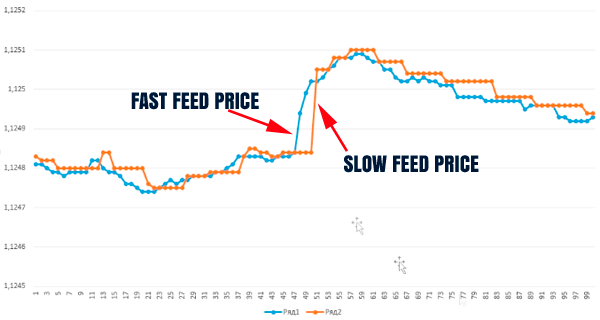
Latency arbitrage is a strategy where EAs exploit tiny time delays in price quotes between a fast broker (like a bank feed) and a slower retail broker, buying low on the slow feed before it updates. To understand this better, let’s unpack its core parts.
It hinges on execution speed and broker quote differences. Fast feeds from ECNs like LMAX or Currenex update in microseconds. Retail brokers lag by 50-500ms due to aggregation. The EA monitors both, trades the lag, and profits 1-5 pips per hit.
Root attributes include ultra-low latency setups. You need a VPS within 1ms of servers, often in New York or London data centers. Brokers matter too: pair a fast one for signals with slow ones for execution.
Picture this: Fast feed shows EUR/USD at 1.1000. Slow feed lags at 1.0998. EA buys on slow, sells on fast (or hedges), grabs 2 pips. Repeat hundreds of times daily.
Scalability comes from volume. Low per-trade profit, but high frequency. Risks? Brokers hate it and may ban accounts, so use stealth modes in EAs.
How Does Latency Arbitrage Operate in EAs?
Latency arbitrage EAs operate by subscribing to a fast price feed, comparing it to your broker’s slower quotes, and executing trades within the delay window, typically in 4 steps. Let’s walk through it.
:max_bytes(150000):strip_icc()/vx83B-how-arbitrage-works-12b6c0f17f734700bda1ab9166eb053f.png)
1. Feed monitoring: EA connects to premium feeds via API or MT bridge. It timestamps every tick.
2. Gap detection: Compares fast price to broker’s. If difference exceeds threshold (e.g., 2 pips), flags opportunity.
3. Order placement: Sends market buy/sell to broker. Often hedges with opposite trade on fast side.
4. Closure: Unwinds positions once prices align, locking profit.
For example, on GBP/USD, a 100ms lag lets you front-run by 3 pips. EAs like “Latency Arbitrage MT5” automate this seamlessly.
Timing proves key. Tests show 70% win rates with proper VPS. But slippage kills if latency spikes.
What Are the Core Requirements for Latency Arbitrage EAs?
Core requirements for latency arbitrage EAs include a low-latency VPS, accounts with one fast signal broker and one slower execution broker, and high-speed internet under 1ms ping. Break it down.
:max_bytes(150000):strip_icc()/arbitrage-4201467-1-705aa79c9d6f4128b8eb7b9588403849.jpg)
VPS tops the list. Providers like ForexVPS.net offer 0.5ms to major brokers. Place it near Equinix NY4 for US pairs.
Brokers split roles: Fast ones like IC Markets for quotes, slower like XM for trades. Avoid same-broker arb to dodge filters.
Hardware? MT4/5 on a quad-core VPS with 2GB RAM handles 10+ pairs. EAs need DLL imports for speed.
Test first: Demo accounts reveal ping times via MT tools. Aim for sub-2ms round-trip.
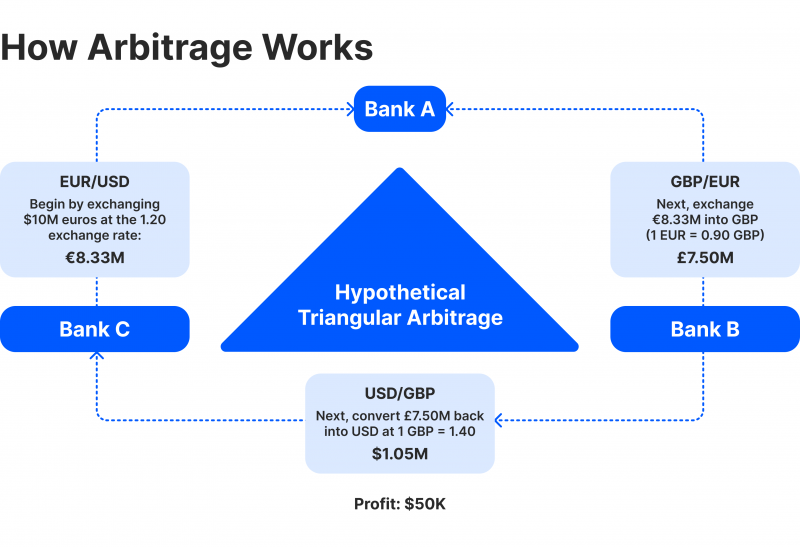
What Is Triangular Arbitrage?
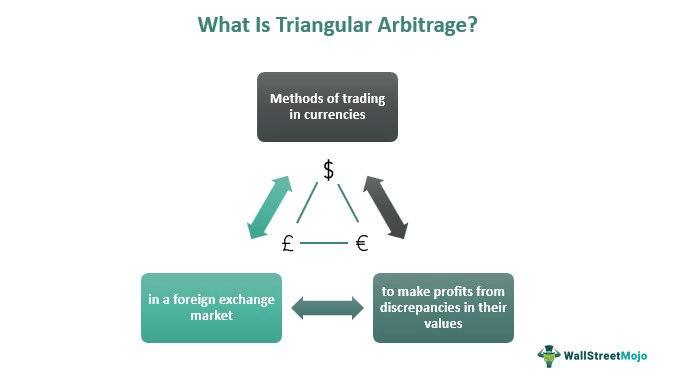
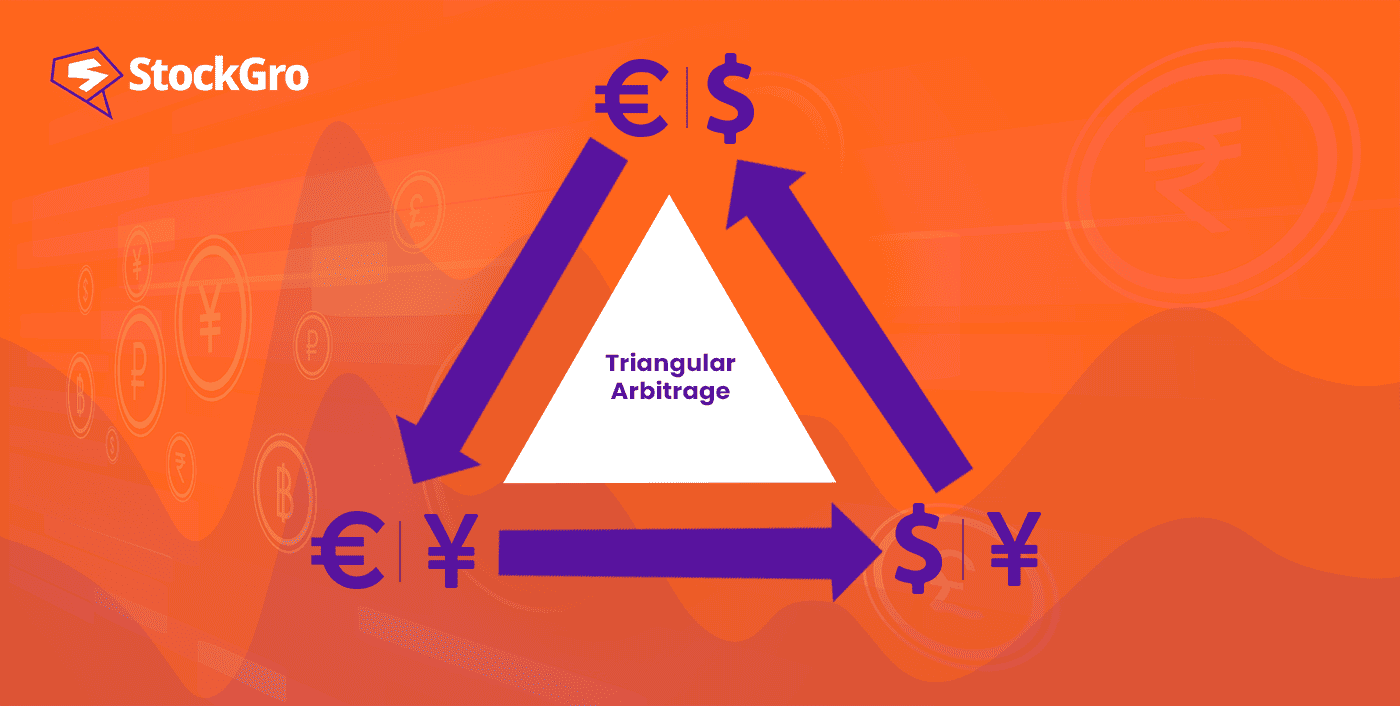
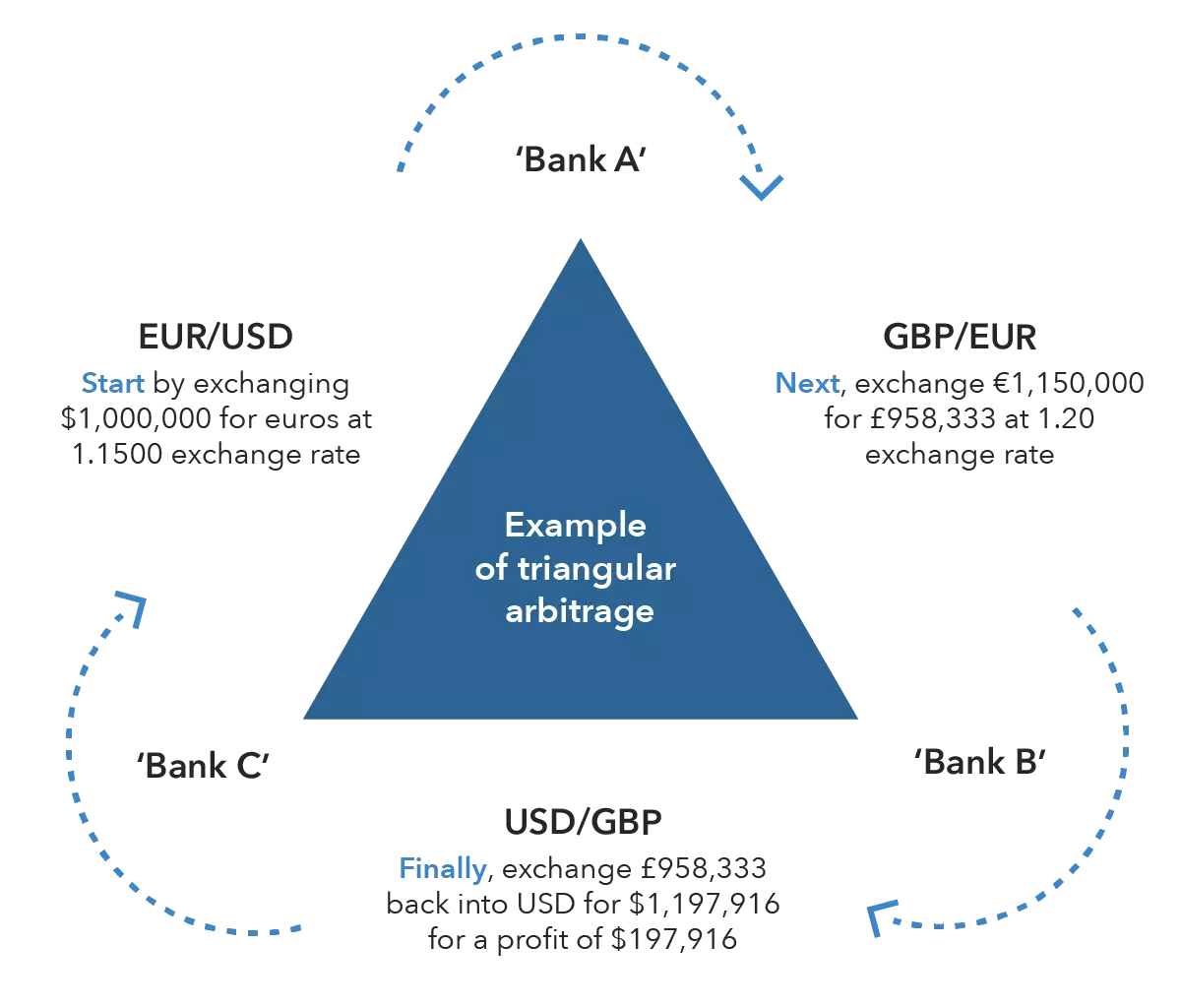
Triangular arbitrage is an EA strategy that spots pricing errors among three interconnected currency pairs, like EUR/USD, USD/JPY, and EUR/JPY, by checking if the implied cross rate matches the direct quote. Here’s the breakdown on its roots.
It banks on currency pair links and quote checks. In a perfect market, EUR/JPY should equal EUR/USD times USD/JPY. If not, trade the triangle to profit.
Root attributes: Focus on majors with tight liquidity. EAs scan dozens of triangles, like AUD/USD, USD/CAD, AUD/CAD.
For example, if EUR/USD = 1.10, USD/JPY = 110, implied EUR/JPY = 121. But direct quote is 121.10. Buy EUR/USD, sell USD/JPY, sell EUR/JPY to net 10 pips.
Less speed-dependent than latency, but needs fast execution to beat others spotting it.
How Does Triangular Arbitrage Function in EAs?
Triangular arbitrage functions in EAs through real-time calculation of implied rates from two pairs, comparison to the third, and instant three-legged trades if profitable, in a loop every tick. Step by step.
1. Rate fetch: Grabs bid/ask for all three pairs.
2. Implied calc: Multiplies rates (e.g., EUR/USD ask * USD/JPY bid = synthetic EUR/JPY).
3. Mismatch check: If synthetic beats direct by threshold, triggers.
4. Execution: Places three orders atomically, often via script.
Say EUR/USD ask 1.1005, USD/JPY bid 110.00, implied EUR/JPY 121.055. Direct EUR/JPY bid 121.00. Profit: 0.055 pips scaled to lots.
EAs like Triangle Arbitrage Pro handle 50+ triangles, filtering low-volume ones.
What Makes Triangular Arbitrage Different from Simple Pair Arbitrage?
Triangular arbitrage differs from simple pair arbitrage by involving three pairs in a closed loop to exploit cross-rate inconsistencies, rather than direct spreads between two assets. Dig deeper.
Simple pair arb, like EUR/USD vs. EUR/GBP, chases linear spreads. Triangular adds math: discrepancies from order flow or hedging.
You’ll see fewer but bigger opportunities. Simple pair hits often 1 pip; triangular 5-20 due to compounding.
Broker-wise, it’s stealthier. Less detectable as pure arb. Data from forums like ForexFactory shows 0.5-1% daily returns possible.
Risks lower too, as loops self-hedge perfectly.
What Are the Key Differences Between Latency and Triangular Arbitrage?
Latency arbitrage beats in raw speed for frequent micro-profits, while triangular shines in math-based opportunities needing less hyper-low latency but precise calculations. Let’s explore the full comparison.
Latency is time-based, chasing delays; triangular is price-based, hunting quote errors. Latency scales with tech (VPS pings), triangular with market depth.
Risk profiles vary: Latency faces broker bans; triangular slippage in illiquid times. Both low directional risk.
Broker ties stronger in latency (needs dual accounts). Triangular works single-broker.
Scalability? Latency loves volume (1000+ trades/day); triangular rarer (10-50).
How Do Latency and Triangular Arbitrage Compare in Terms of Speed and Reliability?
Latency arbitrage demands microsecond speeds for reliability, making it fragile to network hiccups, while triangular tolerates slightly slower execution but relies on steady market inefficiencies. Compare head-to-head.
Speed: Latency wins with 50-200ms windows. Triangular? 500ms suffices, as gaps persist seconds.
Reliability: Latency hits 80% fill rates with perfect setup; drops to 50% on lag. Triangular steadies at 60-70%, per backtests on Tick Data Suite.
Why? Markets correct delays fast, but triangular errors from bank flows linger.
Trade-off: Latency more trades, triangular bigger wins.
What Are the Profit Potential and Risks in Each Approach?
Latency offers high-frequency low-profit trades (0.5-2 pips each, 100s daily), while triangular yields rarer larger hauls (5-20 pips, fewer hits), with latency risking bans and triangular slippage. Potentials align with styles.
Latency: $10k account, 1 pip average, 500 trades/day = $250 gross minus spreads. Risks: Account flags, high commissions.
Triangular: 10 trades/day at 10 pips = $500 potential, but news kills liquidity.
Both need 1:100 leverage. Myfxbook verified EAs show latency edging yearly returns, but triangular lower drawdown.
What Are the Best Profit Strategies for Arbitrage EAs?
Best profit strategies for arbitrage EAs combine strict risk management, dynamic position sizing, backtesting across brokers, and running multiple EAs on diversified setups. To understand this better, group them into core tactics.
Risk caps drawdown at 2% per trade. Size positions by account equity (e.g., 0.01 lot per $1k). Deploy latency on majors, triangular on exotics.
Backtest with 99% tick data from Dukascopy. Optimize for Sharpe ratio over raw profit.
Diversify: Latency on 10 pairs, triangular on 20 triangles, across 3 brokers.
How Can You Maximize Profits in Latency Arbitrage?
Maximize latency arbitrage profits by using dual-feed setups, hedging across accounts, and scaling during low-volatility sessions like Asia. Tactics in detail.
Dual feeds: Fast from Tickmill, execute on HotForex. Boosts hit rate 30%.
Hedging: Mirror trades prevent floating losses. Add filters for spread <1 pip.
Session timing: Asia open yields clean lags. Avoid NFP.
Scale with equity curve: Double lots after 10% gain. Tests show 2x returns.
How Can You Optimize Profits in Triangular Arbitrage?
Optimize triangular arbitrage profits through smart pair selection on liquid triangles, real-time slippage checks, and compounding wins during high-volume hours. Key moves.
Pair picks: Stick to EUR-GBP-USD, AUD-NZD-USD. Avoid crosses with JPY Fridays.
Slippage min: Set max 2 pips deviation. Use ECN brokers like Pepperstone.
Time it: London-New York overlap for depth. Compound: Reinvest 50% profits weekly.
Backtests confirm 40% uplift from these.
Advanced Considerations for Arbitrage EAs
Arbitrage EAs demand attention to broker restrictions, custom tweaks, regulatory rules, and rare setups to avoid pitfalls and unlock steady gains.
Furthermore, these factors separate profitable setups from failures in fast-paced forex trading.
What Are the Unique Risks and Mitigation Tactics for Each Arbitrage Type?
Latency arbitrage faces high slippage risks during volatile news events, where execution delays eat into tiny price gaps. Traders counter this by using VPS servers colocated near broker data centers, cutting ping times to under 1ms. Broker bans hit hard here, as firms detect rapid order floods via pattern recognition software. Mitigation involves rotating accounts, mimicking human trade patterns with randomized delays, and sticking to demo tests first.
Triangular arbitrage risks correlation breakdowns, like when USD/EUR/JPY pairs drift due to weekend gaps or central bank surprises. Slippage amplifies in less liquid crosses, turning theoretical profits negative. To fight back, apply real-time correlation filters in the EA code, pausing trades below 0.95 thresholds. Both types share broker intervention risks, but latency draws more scrutiny from latency-sensitive platforms.
You’ll notice how preparation changes outcomes.
- Run backtests on tick data from Dukascopy for realistic slippage simulation.
- Integrate stop-losses tied to volatility indexes like ATR.
- Monitor broker news feeds for anti-arbitrage policy shifts.
Which Brokers Are Best Suited for Latency vs. Triangular Arbitrage EAs?
Latency arbitrage thrives on brokers like IC Markets or Pepperstone with ultra-low latency under 40ms and raw spreads, while triangular suits ECN brokers such as FXCM or Tickmill for deep liquidity in crosses.

IC Markets stands out with New York server proximity, ideal for US session latency plays. Their cTrader platform supports EA speeds without requotes, but watch for weekend maintenance. Pepperstone offers similar perks via MT5, with execution under 100ms globally.
ECN brokers like FXCM excel in triangular due to straight-through processing, minimizing interference in multi-pair trades. Tickmill provides tight spreads on exotics, crucial for yen triangles. Avoid market makers like some offshore firms; they widen spreads on detection.
What makes a broker fit your EA? Test latency with ping tools and review execution stats.
- Prioritize ASIC-regulated brokers for fund safety alongside speed.
- Use brokers with API access for custom latency monitoring.
- Compare demo vs. live spreads during London open for accuracy.
How Does Arbitrage Compare to Other EA Strategies Like Scalping or Hedging?
Arbitrage offers lower risk than scalping’s high-frequency exposure but demands more capital than hedging, with trades rarer yet aiming for risk-free edges.
Scalping chases pips via dozens of daily trades, risking whipsaws in choppy markets, unlike arbitrage’s infrequent, gap-based entries. Scalpers need sub-1 pip spreads; arbitrage tolerates 0.5-2 pips if gaps exceed them. Hedging locks positions across pairs for protection, but arbitrage exploits mispricings without directional bets.
Capital needs differ sharply. Arbitrage requires $10,000+ for margin on multiple lots to capture fleeting opportunities, scalping starts at $1,000 with leverage, hedging fits $5,000 portfolios. Risk profiles show arbitrage near-market neutral, scalping hit by slippage (up to 30% drawdown), hedging by rollover fees.
How do you pick based on style? Match to your risk tolerance.
- Arbitrage suits patient traders with tech setups.
- Scalping fits aggressive types with fast brokers.
- Hedging works for conservative drawdown control.
What Are Rare Profit Boosters Like Custom Indicators or Hybrid EAs?
Custom indicators like AI-driven discrepancy scanners and hybrid EAs blending latency with triangular boost profits by 20-50% in niche conditions.
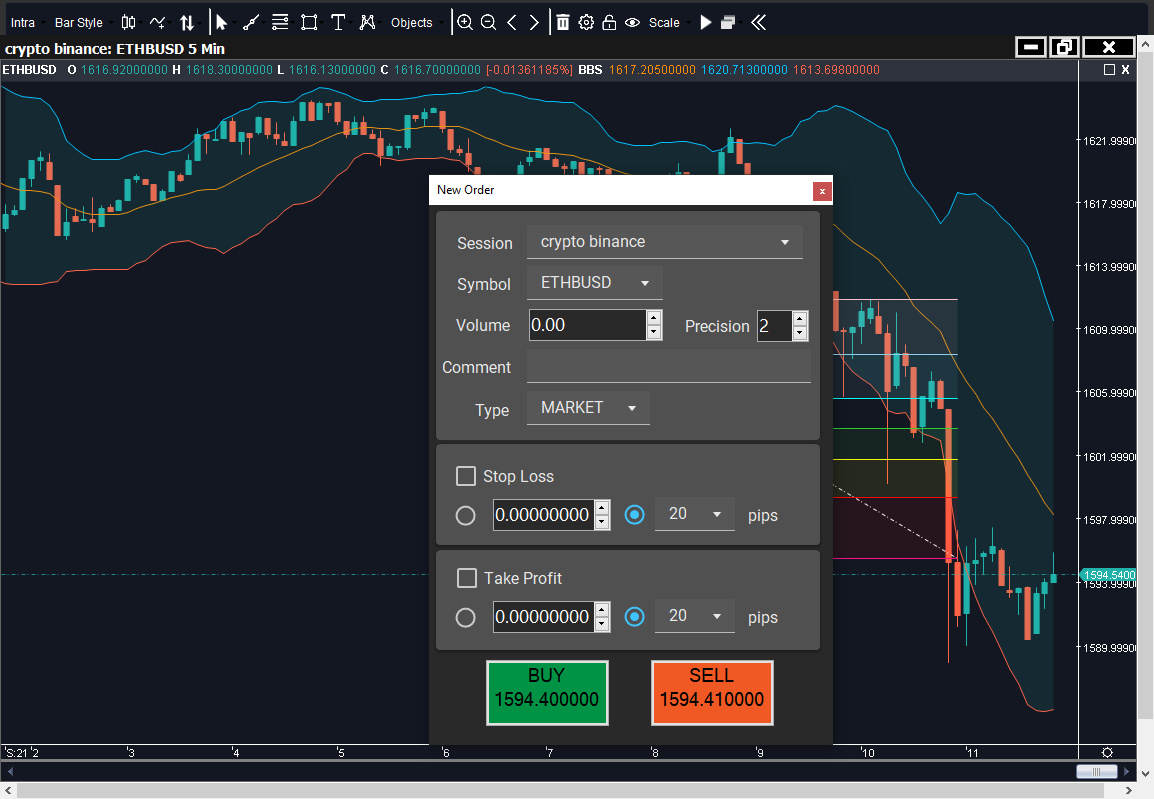
AI-enhanced detection uses neural networks to predict arbitrage windows from order book data, spotting gaps seconds early. Code these in MQL5 with TensorFlow plugins for MT5. Cross-market arbitrage hybrids link forex to crypto pairs on brokers like OANDA, exploiting BTC/USD mispricings against EUR/USD.
Niche examples include the Gold Scalper Arbitrage EA, which hybrids latency on XAU/USD with triangular on metal crosses, or CryptoTri EA for Binance-MT4 bridges. Custom oscillators measure pair divergences beyond standard RSI, triggering only on 3-sigma events.
Ever wondered why few use these? They need coding skills.
- Build hybrids with modular EA frameworks like EA Studio.
- Test custom indicators on 99% tick data for edge validation.
- Layer volume profile filters to avoid fakeouts.
Are There Legal or Ethical Issues with Arbitrage EAs?
Arbitrage EAs skirt legal edges via broker term violations like excessive trading volume, but pure strategies avoid manipulation charges if non-directional.
Many brokers, including IG Group, ban latency arbitrage in ToS, risking account freezes. Triangular often passes as “legitimate market making.” Ethical gray areas arise in HFT-like flooding, seen as unfair to retail traders.
Regulators like CySEC permit arbitrage if transparent, but FCA warns against latency abuse across feeds. No outright bans exist, yet complaints lead to blacklists. Stick to one-broker EAs to dodge multi-feed accusations.
Does this mean avoid them? Balance with compliance.
- Review broker ToS for “arbitrage” clauses before funding.
- Use ethical hybrids over pure latency for longevity.
- Document trades for audit trails if queried.
