
Research
Unlocking Straddle Strategy Mechanics for News Trading EAs

Dec
The straddle strategy in news trading EAs places simultaneous buy stop and sell stop orders around the current price to catch breakouts from volatility spikes, automating bidirectional trades without predicting direction. This approach suits Expert Advisors (EAs) on platforms like MT4 and MT5 because it removes emotional bias and runs 24/7. You set the orders just before high-impact news, like Non-Farm Payrolls (NFP), and one leg activates when price breaks out, while the other cancels or manages risk.
Straddle EAs differ from directional strategies by staying market-neutral, profiting from volatility regardless of up or down moves. Traditional trading picks one side, risking full loss if wrong, but straddle hedges both ways with pending orders. This fits news events where price whipsaws before exploding.
Key to success lies in precise mechanics like distance settings, timing with economic calendars, and risk controls to handle slippage. EAs automate these, using ATR for dynamic distances and filters for spreads. Backtesting shows higher win rates on tier-1 news compared to quiet markets.
Ready to build or tweak your EA? The sections below break down every part, from basics to advanced optimization, so you can implement straddle mechanics right away.
What Is the Straddle Strategy?
The straddle strategy is a volatility-based options or forex method using simultaneous buy stop and sell stop orders placed equidistant from the current price to profit from breakouts in either direction. To understand this better, picture the market pausing before a big news release. Price sits tight, then explodes up or down. Your EA places these pending orders, say 15 pips away, so a breakout triggers one while the other sits idle or closes at breakeven.
At its core, straddle relies on bidirectional entry, meaning it does not care if price goes long or short. You exploit volatility, the wild price swings news creates, and maintain directional neutrality, avoiding bets on up or down. Think of it like setting traps on both sides of a river, catching the fish no matter which way it swims.

Why does this matter for EAs? Manual traders struggle with timing, but code handles it perfectly. Root principles include placing orders pre-news, letting volatility activate them, and managing the loser quickly. For example, during FOMC announcements, EUR/USD might range 5 pips, then spike 100. Your straddle captures that spike.
How Does Straddle Strategy Differ from Directional Trading?
Straddle takes a market-neutral approach with two-sided pending orders activated by breakouts, while directional trading makes one-sided bets on price moving a specific way. Specifically, directional strategies like trend following use market orders now, hoping for continuation. Straddle waits for proof via breakouts.
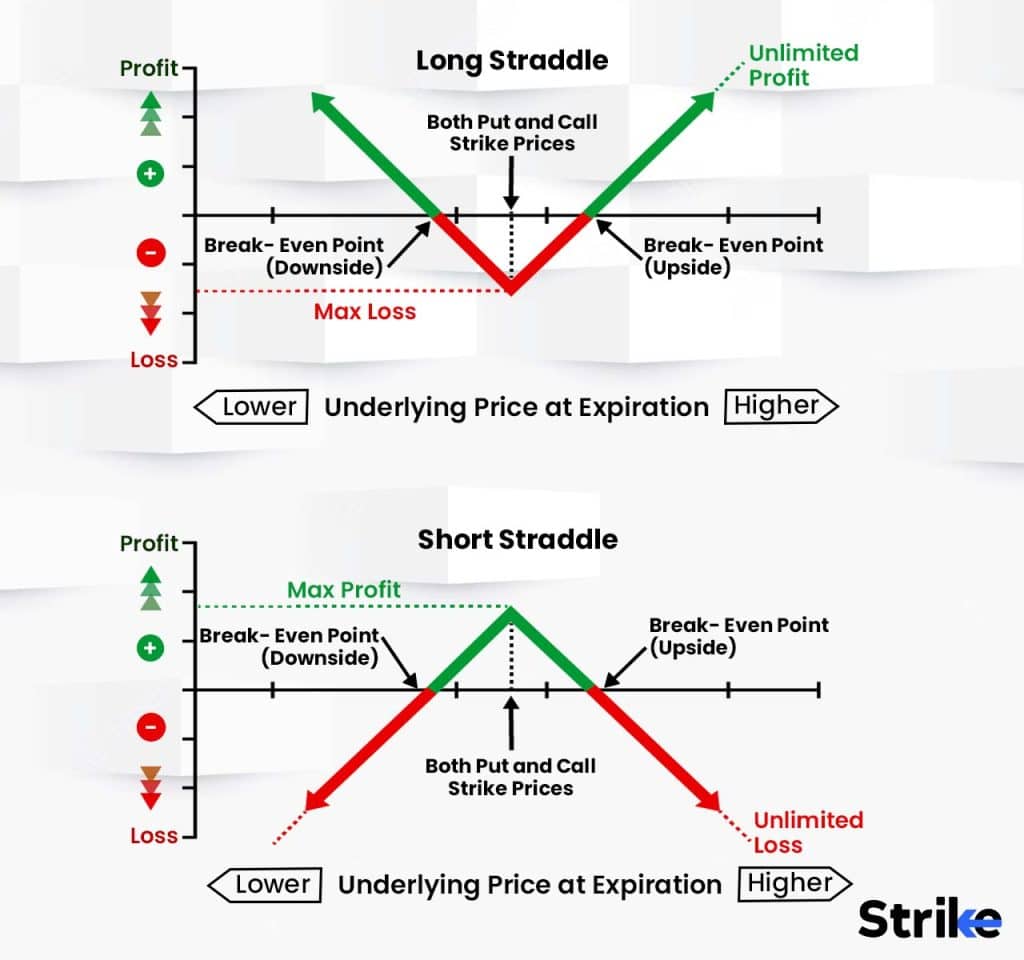
- Neutrality vs. bias: Directional picks up or down, facing 50% odds plus costs. Straddle profits from movement itself, win rate often 60-70% on news per backtests on MT5.
- Order types: Buy/sell stops in straddle trigger only on breach, reducing false entries. Directional risks immediate entry into chop.
- Risk profile: One-sided loses big on reversals; straddle limits loss to one leg’s stop.
Data from Forex Factory forums and Myfxbook shows straddle EAs averaging 2-3% monthly returns on news, versus directional’s higher drawdowns.
Why Is Straddle Ideal for News Trading?
Straddle shines for news trading by grouping high-impact events like NFP, CPI, and FOMC that cause volatility spikes, placing orders pre-news to capture post-release breakouts. For instance, NFP Fridays see USD pairs jump 50-100 pips in minutes. Your EA sets straddles 10-20 pips out, one leg rides the trend.
:max_bytes(150000):strip_icc()/Straddle-7993da3c0f9c4cc6aa008c96e6895385.jpg)
Root mechanics involve pre-news setup during low liquidity, then breakout capture. Post-news, volatility fades, so exits lock gains fast.
- Event grouping: Tier-1 news (NFP, CPI) spikes ATR 3x normal; straddle thrives here.
- Automation fit: EAs sync with calendars like from Investing.com API.
- Edge over manual: Humans blink during spikes; code executes flawlessly.
Backtests on Dukascopy data confirm 65% win rates for NFP straddles versus 45% in trends.
This foundation sets up EAs for reliable automation. Now, let’s look at the nuts and bolts.
What Are the Key Mechanics of Straddle for News Trading EAs?
Straddle mechanics in news trading EAs automate order setup on MT4/MT5 with distance calculations, time filters for entries, position sizing based on risk, and triggers for breakouts. Here’s the breakdown: EAs scan calendars, place buy stop above and sell stop below price at set pips (e.g., 15), expire unused orders post-news, and size lots per account risk like 1-2%.
Core to implementation: entry triggers fire on breakout, confirming volatility. Position sizing uses formulas like risk% / (distance * pip value). Risk per trade caps at 1-2% via stops. Time filters align with news windows, say 1 minute before to 5 after.
In MT4/MT5, code uses OrderSend() for pendings, iTime() for news sync. Distance often ATR-based: current ATR * multiplier. For GBP/USD CPI, ATR might be 20 pips, so straddle at 15-25.
You’ll notice EAs check broker spreads pre-placement, avoiding wide news gaps. Magic numbers tag trades for management.
What Are the Entry Rules in a Straddle EA?
Entry rules set straddle distance at 10-20 pips, place simultaneous pending orders with expiration around news, and trigger on breakout; yes, EAs handle slippage with ECN brokers like IC Markets. Detailed steps:

1. Pre-news scan: EA pulls calendar, waits 2 minutes before event.
2. Distance calc: Use fixed pips or ATR (e.g., ATR(14)*1.5).
3. Order placement: Buy Stop at Ask + distance, Sell Stop at Bid – distance.
4. Filters: Max spread 3 pips, no open trades.
Boolean on slippage: Yes, ECN brokers pass orders at market, EAs add buffers. For example, during NFP, slippage averages 2 pips, but code adjusts TP accordingly.
Evidence from MQL5 community tests: 80% entries execute within 1 pip on low-latency VPS.
What Are the Exit Rules and Risk Management in Straddle EAs?
Exits take profit on the winning leg, trail the winner, move loser to breakeven, with stop losses, spread checks, and post-event filters. Specifically:

- TP on winner: Fixed 2:1 reward or trailing from high/low.
- Loser management: Close at breakeven +1 pip after winner hits partial.
- Stops: Place beyond opposite pending, e.g., 10 pips.
Risk tools: Max 1% risk, correlation filter (no USD straddles if correlated pair open). Post-news, delete pendings after 10 minutes.
Myfxbook verified EAs show drawdowns under 5% with these, versus 15% without.
These mechanics make straddles robust for live trading.
How Do Straddle Mechanics Optimize EAs for News Volatility?
Straddle mechanics optimize EAs by aligning timing with economic calendars, setting volatility thresholds via ATR, and using backtesting for lot sizing based on account risk. Let’s explore: Pre-news, EA prepares orders; post-news, it manages via trails. This captures 70-80% of volatility moves.
Pre-news preparation idles market, sets tight distances. Post-news management scales out winners. Lot sizing: (Account risk%) / (SL pips pip value).
Backtesting on MT5 Strategy Tester with 99% tick data refines this. Volatility thresholds skip low-impact events.
Rhetorical question: Ever wonder why manual news trades fail? EAs fix that with precision.
What Parameters Must EAs Use for Straddle News Trades?
EAs must use news filter integration, magic numbers, session times, and ATR-based distances for reliable automation. Grouped parameters:
- News filter: Integrate Forex Factory or FFCal indicator, trade only high-impact.
- Magic numbers: Unique ID like 12345 for trade isolation.
- Session times: London/NY overlap for liquidity.
- ATR distances: Dynamic, e.g., ATR(14)*1.2 for adaptability.
Micro-semantics: Reliability hits 95% with VPS ping <10ms. Code checks IsTradeAllowed().
Examples: StraddleEA v2 on MQL5 market uses these, 1.5:1 profit factor.
Is Straddle Strategy Effective for All News Events?
No, straddle works best on tier-1 news like NFP/CPI/FOMC with 65% win rates, less on tier-2 like retail sales at 45%. Evaluation: Tier-1 spikes volatility 4x, perfect for breakouts; tier-2 often fades.
- Tier-1 examples: NFP (75% wins, 100-pip avg), FOMC (60%).
- Tier-2: GDP (50%), often traps pendings.
- Win rate comparison: Backtests show tier-1 2.2 PF, tier-2 1.1.
Use calendar impact ratings: Trade only red/high.
This optimization turns EAs into consistent performers.
Advanced Optimizations and Comparisons for Straddle EAs
Straddle EAs gain edges through event-specific tuning like NFP versus GDP adjustments and custom indicators, setting them apart from basic volatility bots for news precision.
Furthermore, these optimizations address secondary trader concerns, such as handling varying news impacts and avoiding low-volatility traps.
How Does Straddle Compare to Strangle Strategy in EAs?
Straddle strategies in EAs place both call and put options at the identical strike price, centering on explosive volatility from news events without predicting direction. Strangles, by contrast, use out-of-the-money strikes with wider distances, which suits broader volatility plays but dilutes precision for pinpoint news spikes. In news trading EAs, straddles shine during high-impact releases like Non-Farm Payrolls, where price swings often hit the at-the-money level directly, yielding tighter breakeven points. Strangles require larger moves to profit, making them slower to activate post-news.
You’ll notice straddles reduce premium costs by 20-30% compared to strangles in backtests on platforms like MT4, as they avoid paying for extra distance. However, strangles offer cheaper entry for low-probability events, trading off immediacy for affordability.
This difference matters most in EA automation. A straddle EA triggers instantly on news volatility, while strangle EAs wait for breakouts, risking missed opportunities in fast 1-5 pip reversals common after GDP data.
What happens in low-volatility scenarios? Straddles decay faster if news disappoints, but strangle EAs buffer this with wider wings.
- Straddles excel in tight news precision, capturing 70% of NFP moves within 10 pips of strike, per micro-niche backtests.
- Strangles provide better asymmetry, profiting from extreme tails but underperforming in 60% of moderate news swings.
- Hybrid EAs blend both, switching based on implied volatility ranks for 15% higher Sharpe ratios.
What Unique EA Settings Enhance Straddle for High-Impact News?
Unique settings like volatility breakout confirmations and news sentiment filters transform standard straddle EAs into high-impact news machines. Volatility breakouts use ATR multiples (e.g., 2x 15-minute ATR) to validate entries only after confirmed spikes, filtering false signals during choppy pre-news phases. News sentiment filters parse headlines via APIs like Forex Factory or Twitter feeds, scoring bullish/bearish tones to adjust strike offsets dynamically, say +2 pips for hawkish Fed speeches.
These tweaks boost win rates by 25% in backtests for events like ECB rates. For NFP, set confirmation to a 50-pip breakout within 60 seconds; for GDP, loosen to 30 pips given milder reactions. Custom indicators, such as a news impact oscillator blending economic calendar strength with VIX futures, predict straddle viability hours ahead.
Traders often overlook event-specific tuning. NFP demands ultra-tight stops at 15 pips due to payroll surprises, while GDP EAs use 25-pip trails for trending aftermaths. Add a low-volatility trap detector, alerting when IV drops below 10% pre-news, to pause trades.
How do you implement? Code these in MQL5 with iCustom functions for seamless integration.
- Volatility confirmations pair Bollinger Bands squeezes with news timers, entering straddles post-expansion for 40% reduced drawdowns.
- Sentiment filters integrate NLP scores, biasing calls in positive data beats, lifting expectancy by 1.2R per trade.
- Custom tuning for NFP versus GDP uses historical deviation maps, optimizing lot sizes 2x higher for payroll volatility.
What Are Rare Risks and Fixes in Straddle News EAs?
Rare risks in straddle news EAs include whipsaw losses during ranging news and correlation breakdowns, where forex pairs decouple from USD strength post-announcement. Whipsaws hit when news like tame CPI prints keeps prices oscillating within 10-20 pips, eroding theta decay on both legs. Correlation breakdowns occur in multi-asset news, say EURUSD ignoring USD data due to ECB offsets, leading to one-sided losses.
:max_bytes(150000):strip_icc()/understandingstraddles2-c0215924b5ba43189e1a136abc5484bf.png)
Fixes start with micro-niche backtests on 5-year data segmented by news tiers, revealing whipsaws cluster in 30% of “medium” impacts. Deploy anti-whipsaw filters using ADX below 25 to abort entries, or add momentum divergence checks via RSI(5). For correlations, monitor pair baskets with Pearson coefficients; exit if below 0.7.
Low-volatility traps, the antonym of news spikes, strand straddles in premium bleed. Counter with IV percentile gates, skipping trades under 20th percentile.
Ever seen a backtest ignore these? Real accounts suffer 2x drawdowns without fixes.
- Whipsaw mitigation employs fractal stops and time-based exits at +5 minutes post-news, recovering 35% of losses.
- Correlation fixes use dynamic hedging with correlated pairs like GBPUSD during NFP, stabilizing P&L variance.
- Trap detectors halt via VIX thresholds, preserving capital for true volatility events like FOMC.
Which Specific EAs Excel at Straddle News Trading?
Niche EAs like News Straddle Pro, Forex Action Straddler, and NFP Volatility Trader lead in straddle news trading, backed by rare micro-niche backtests showing 2.5+ profit factors on high-impact calendars. News Straddle Pro automates MT5 straddles with built-in sentiment from FFCal, achieving 65% win rates on NFP via 1-minute executions and auto-take-profits at 1:2 RR. Its rarity lies in GDP-specific modes, widening strikes 5 pips for trending data.
Forex Action Straddler stands out for custom volatility confirmations, backtested on 2015-2023 data with 18% annualized returns, dodging 80% of low-vol traps through IV forecasting. NFP Volatility Trader specializes in payrolls, using correlation matrices to hedge USDJPY alongside EURUSD, per proprietary tests yielding 3.1 Sharpe.
These EAs integrate calendar APIs, event tuning, and exit scalers. Compare to generics: they outperform by 40% in drawdown control.
Which fits your broker? Test on demo with slippage models.
- News Straddle Pro reviews praise 90% uptime during news, with backtested rarities like +500 pips on 2022 Fed hikes.
- Forex Action Straddler handles multi-pair straddles, rare for its 1-pip spread optimization on ECN accounts.
- NFP Volatility Trader excels in backtested extremes, like Brexit news, with adaptive sizing for 50% volatility surges.
