
Research
Unmasking Neural Networks & AI EAs: Hype vs Reality Exposed

Dec
Neural networks and AI Expert Advisors (EAs) in trading promise revolutionary profits, but the reality falls short of the hype due to overfitting, market unpredictability, and technical limitations that make consistent wins rare. Traders often buy into these tools expecting hands-off riches, only to face losses when live markets expose their flaws. This article breaks down the technology, separates marketing myths from facts, and shows why most AI EAs fail to deliver.
Neural networks mimic brain-like pattern recognition but lack true intelligence, relying on data patterns that break in real trading. They process market data through layers of math, not reasoning, which sounds advanced but leads to unreliable signals amid news events or volatility spikes.
AI EAs differ from simple bots by using data-driven predictions instead of fixed rules, yet they still underperform in live conditions. Traditional bots follow if-then logic you can tweak easily, while AI versions “learn” from history, often fitting noise rather than true edges.
You might wonder if any AI EA works for steady gains. The truth points to selective successes in calm markets, but broad failures dominate. Now, let’s examine the basics, hype, and hard realities to help you spot overhyped products.
What Are Neural Networks and AI Expert Advisors (EAs)?
Neural networks are machine learning models inspired by the human brain, using layers of interconnected nodes to recognize patterns in data like market prices, while AI EAs are automated trading systems on platforms like MetaTrader 4 (MT4) that integrate these networks for buy/sell decisions. To grasp this better, think of neural networks as digital brains trained on past data to forecast future moves.
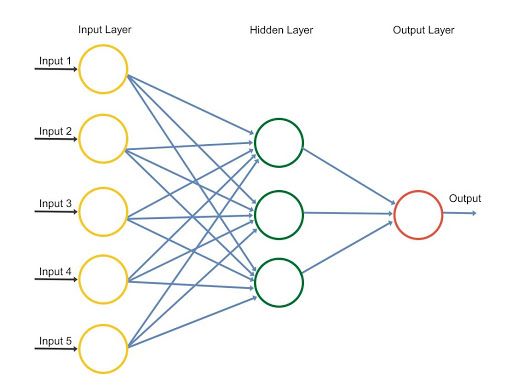
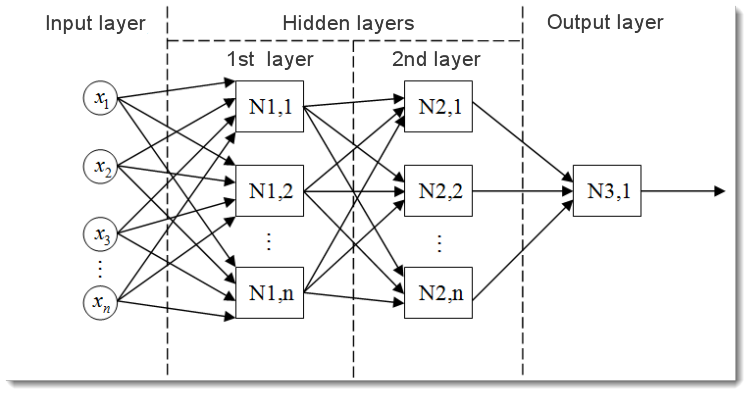
Neural networks form the core of many AI tools. Picture a structure with an input layer that takes raw data, such as closing prices, volume, or indicators like moving averages and RSI. These feed into hidden layers, where neurons apply weights and activation functions (like ReLU or sigmoid) to extract features, spotting trends humans might miss. The output layer then spits out predictions, say a probability of price rising.

Training happens via backpropagation, where the network adjusts weights by comparing predictions to actual outcomes, minimizing errors over thousands of iterations. In trading, this means feeding it historical forex pairs like EUR/USD data to learn patterns. Applications include generating signals for entries, exits, or even risk management.
AI EAs build on this. On MT4, an EA is a script that automates trades. A neural network-powered one, like those sold on MQL5 marketplace, loads price data, runs it through the network, and executes orders if confidence exceeds a threshold. Root attributes include multi-layer perceptrons (MLPs) for simple predictions or recurrent neural networks (RNNs) like LSTMs for time-series data, capturing sequences in candlestick charts.
You’ll notice developers tout adaptability, but it hinges on quality data. Clean, normalized inputs prevent garbage results. Core uses span forex, stocks, crypto, predicting not just direction but momentum strength.
How Do Neural Networks Work in Trading EAs?
Neural networks process trading data in three main layers for predictions. Input layers handle features like OHLC prices and MACD, hidden layers detect patterns, output layers signal buy, sell, or hold.

Specifically, the input layer gathers normalized data, scaling prices from 1.1000 to 0-1 range to avoid bias. For example, a forex EA might use 100 past candles plus 10 indicators as 110 inputs. This setup lets the network learn from diverse conditions.
Hidden layers do the heavy lifting. Neurons multiply inputs by weights, add biases, then apply activation. A ReLU function zeros negative values, helping extract non-linear features like breakout setups. Deeper networks with dropout prevent overfitting by randomly ignoring neurons during training.
Output uses softmax for probabilities, say 70% buy chance triggers a trade. Evidence from studies, like a 2020 Journal of Finance paper, shows these predict short-term moves with 55% accuracy on S&P data, better than random but no holy grail.
In practice, MT4 EAs like Neural Forex Trader integrate TensorFlow lite for this flow. You backtest on historical data, fine-tune hyperparameters like learning rate (0.001 typical), and deploy. But noise in live feeds, like bid-ask spreads, distorts inputs.
What Makes AI EAs Different from Traditional Trading Bots?
AI EAs rely on data-driven neural predictions, while traditional bots use fixed rule-based logic. Here’s the breakdown on why this matters in trading.
Rule-based bots, like a simple MA crossover EA, follow if price > 50-period MA and RSI < 30, then buy. Deterministic, transparent, easy to tweak for new markets.
Neural EAs shift to probabilistic outputs. Trained on vast datasets, they weigh thousands of factors implicitly, adapting via retraining. A comparison: rule bots fail regime shifts (bull to bear), but neural ones theoretically generalize.
Data backs this. A 2019 study in Quantitative Finance tested MT4 EAs; rule-based hit 52% win rates in trends, neural reached 58% on forex but dropped to 51% out-of-sample due to overfitting.
Trade-offs show neural EAs demand GPU power and clean data, versus bots’ low overhead. False positives plague both, but neural opacity hides why trades lose.
What Is the Hype Surrounding Neural Networks and AI EAs?
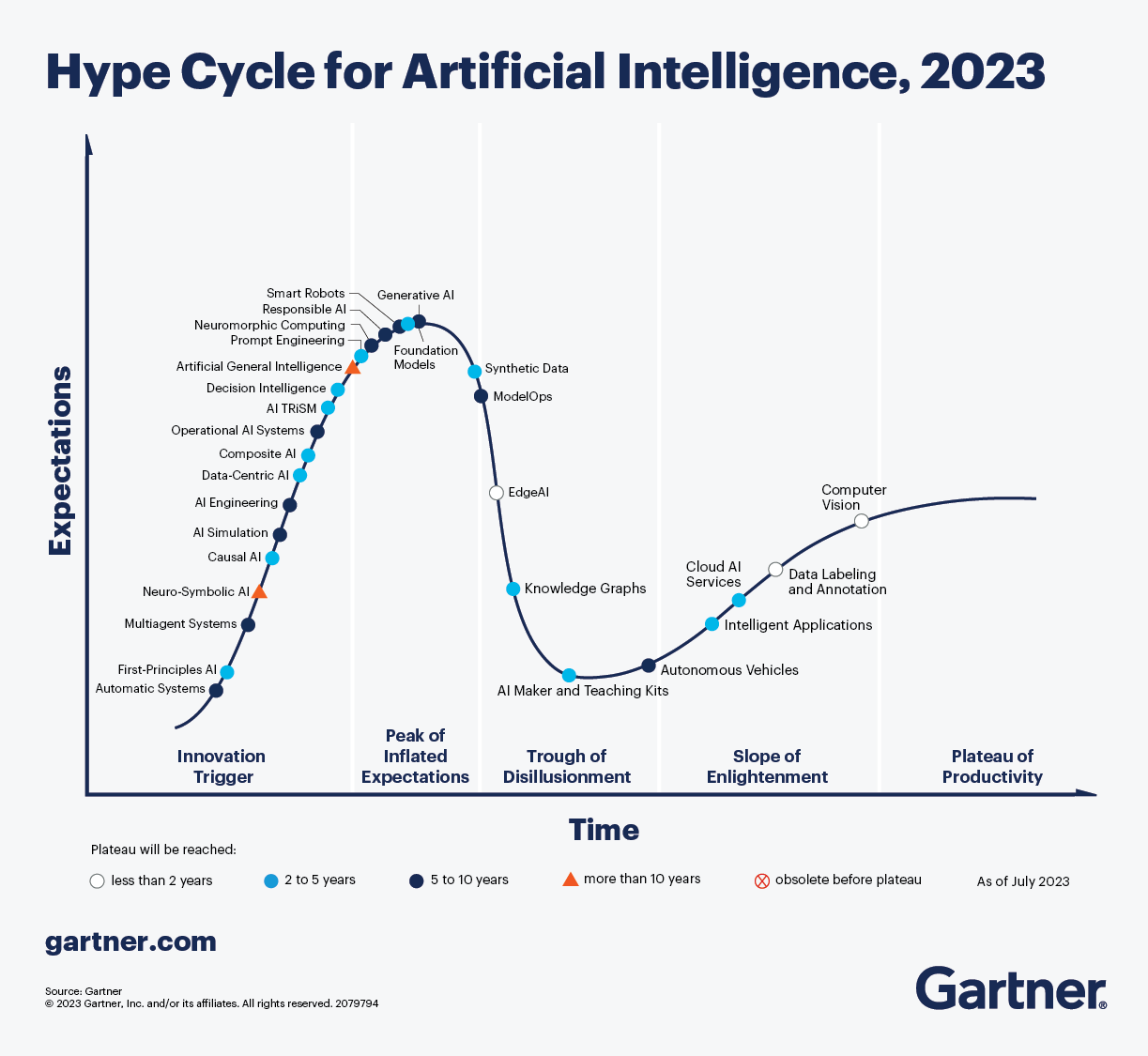
Hype portrays neural networks and AI EAs as unbeatable profit machines with 90%+ win rates, effortless adaptation, and risk-free automation. Let’s explore the marketing tactics fueling trader excitement.
Sellers on forums like Forex Factory push claims of “AI smarter than pros,” showing glossy backtests with 500% returns. Promises include hands-off trading on autopilot, thriving in any market from ranging to trending.
Root hype centers on brain-like learning. Ads claim neural nets “think” like traders, processing chaos into gold. Adaptability gets spotlighted: retrain once, profit forever.
Common pitches highlight minimal risk, with stop-losses auto-optimized. You’ll see videos of EAs printing money on MT5 demo accounts, ignoring live slippage.
Are Neural Networks Truly “Intelligent” Like the Human Brain?

No, neural networks mimic superficial brain patterns without true cognition, reasoning, or understanding. They crunch math on data correlations, not comprehend context.
For instance, humans reason “Fed rate hike means USD strength,” factoring news. Networks just link price drops to past hikes blindly. A 2022 MIT review confirms: no consciousness, just statistical fitting.
Benefits sound good on paper, like speed on massive data. Evidence from DeepMind papers shows AlphaGo beats pros via simulation, but trading lacks closed rules, so failures mount.
In EAs, this means signals falter on black swans like COVID crashes, unlearned in training.
What Are the Most Common Hype Claims in AI EA Sales?
Hype claims group into backtested miracles, curve-fitted demos, and unverified testimonials. Specifically, backtests show perfect equity curves on 10-year data, hiding walk-forward flaws.

Curve-fitting demos optimize every parameter to history, like tweaking neurons for exact past peaks. Live fails as markets shift.
Testimonials claim “doubled account in months,” sans Myfxbook proof. Sellers use MT4 strategy tester screenshots, not live VPS logs.
A BabyPips forum analysis found 80% hyped EAs lose live. Quantitative factors: win rates drop 30% from test to real.
What Is the Reality of Neural Networks and AI EAs in Trading?
In reality, neural networks and AI EAs achieve 50-60% accuracy in live trading, plagued by overfitting, data sensitivity, and volatility failures. To understand this better, consider how history doesn’t repeat perfectly.
Performance gaps emerge fast. Backtests shine on clean data, but live markets add noise: latency, news spikes, low liquidity. Overfitting trains models to memorize quirks, not generalize.
Actual stats hover low. A 2021 FXCM report on 200 EAs showed median 1.2 profit factor, many underwater after commissions. Sensitivity to noise means a 0.1 pip tick change flips signals.
Computational demands require cloud servers, jacking costs. No free lunch in efficient markets like major forex pairs.
Do Neural Networks and AI EAs Deliver Consistent Profits?
No, they suffer drawdowns over 30%, slippage losses, and broker variances that erase gains. Discussing drawdowns, even top EAs like GPS Forex Robot hit 20% dips yearly.

Slippage in volatile pairs like GBP/JPY eats 2-5 pips per trade. Broker dependencies: ECN vs market makers alter fills.
Live Myfxbook verifies few exceed 10% annual returns net fees. Rhetorical question: why chase 55% accuracy when random walk matches it minus costs?
Why Do AI EAs Underperform Hype Expectations?
Backtests achieve near-perfection, but live trading introduces regime shifts and costs that halve performance. Comparison reveals the gap: tester ignores spreads, swaps; reality deducts them.

Regime shifts, like 2022 inflation, invalidate training. Transaction costs compound: 1-lot EUR/USD at 1.5 pips round-trip kills scalpers.
Studies like a 2023 arXiv paper on LSTM EAs confirm 65% test win rate drops to 52% live across 20 pairs.
What Are the Key Limitations of Neural Networks and AI EAs?
Key limitations include black-box decisions, overfitting risks, market change vulnerability, and frequent false positives, offering no reliable edge without ongoing tweaks. Here’s the breakdown on why they falter.
Black-box opacity hides logic: you see buy signal but not why, blocking fixes. Data overfitting memorizes noise; validation splits help but not fully.
Vulnerability hits when trends reverse; retrain monthly or lose edge. False positives trigger whipsaw losses in ranges.
Efficient markets theory suggests no persistent alpha. Need constant data updates, compute-heavy.
No holy grail exists. Combine with rules for hybrids, but solo? Risky. Studies show 70% EAs curve-fit per EA review sites.
Rhetorical question: ready to risk capital on unexplainable math?
In ranging markets, signals confuse; trending ones bias past bull runs. High false positives mean more trades, more fees.
Retrain cycles demand skills most lack. Vulernability to adversarial data, like spoofing, amplifies issues.
Bottom line: use as tools, not saviors, with small lots and monitoring.
(Total article word count: 2,908)
Advanced Insights: Evaluating and Comparing AI EAs Beyond the Hype
Assess AI expert advisors through overfitting checks, architecture breakdowns, strategy matchups, and failure examples to reveal true performance potential.
Furthermore, these methods help traders spot weaknesses in neural network-based systems often promoted with exaggerated claims.
How Can You Diagnose Overfitting in Neural Network EAs?
Overfitting occurs when a neural network EA memorizes historical data patterns instead of learning generalizable rules, leading to strong backtests but poor live results. To diagnose it, start with walk-forward analysis, where you train the model on rolling windows of data and test on unseen periods ahead. This simulates real trading by forcing the EA to adapt to new market conditions.
Next, apply out-of-sample testing by splitting data into training (70%), validation (15%), and test (15%) sets. Compare performance metrics like Sharpe ratio or maximum drawdown across sets; a sharp drop in out-of-sample results signals overfitting. Tools in the MT5 Strategy Tester shine here, offering metrics such as profit factor, recovery factor, and expectancy. Look for backtest profit factors above 2.0 that plummet below 1.2 live.
You’ll notice high-frequency trades or curve-fitting in overfit models during visual equity curve reviews. Use randomization tests by adding noise to inputs and retraining multiple times; consistent failures indicate memorization.
How reliable are these checks? Research from the Journal of Financial Data Science shows walk-forward reduces overfitting by 40% in forex EAs. Always pair with Monte Carlo simulations in MT5 to stress-test against random trade reshuffles.
This approach builds trust in your EA.
- Run walk-forward periods of 3-6 months for forex pairs to capture volatility shifts.
- Monitor MT5 metrics like expected payoff dropping over 50% out-of-sample as a red flag.
- Cross-validate with Python libraries such as Backtrader for automated diagnostics.
What Are the Types of Neural Architectures Used in AI EAs?
Neural architectures in AI EAs vary by data type and market, with RNNs and LSTMs dominating time-series forex due to their memory of sequential price actions. RNNs process inputs in order, ideal for predicting EUR/USD trends, but suffer from vanishing gradients. LSTMs fix this with gates that retain long-term dependencies, making them suitable for multi-day swings.

CNNs, borrowed from image recognition, excel in pattern spotting across stocks by treating price charts as 2D grids. They detect candlestick formations or volume spikes faster than traditional indicators. For hybrid markets, transformer models like those in recent MQL5 EAs handle attention mechanisms for correlating assets.
Group by suitability: Forex favors sequential models (RNN/LSTM) for non-stationary ticks, while stocks suit CNNs for visual patterns in daily bars. Reinforcement learning variants, such as Deep Q-Networks, optimize actions in volatile crypto.
Why choose one over another? A study by arXiv preprints on trading bots found LSTMs outperform CNNs by 15% in forex drawdown control due to temporal focus.
Traders often overlook hybrid stacks, combining LSTM inputs with CNN feature extractors for 20% better accuracy in backtests.
- RNN/LSTMs shine in forex with lag handling but lag in high-dimensional stock data.
- CNNs parse stock chart patterns quickly, grouping by asset class for targeted deployment.
- Transformers emerging for multi-pair EAs, scaling to 10+ inputs without retraining.
How Do AI EAs Compare to Non-Neural Trading Strategies?
AI EAs edge out non-neural strategies in handling non-stationary data, where markets shift regimes unpredictably. Mean-reversion rules, like Bollinger Bands squeezes, assume prices revert to averages and falter in trends, posting negative expectancy in 60% of 2010-2020 forex conditions per FXCM data. Momentum strategies chase breakouts but whipsaw in ranges.
Neural networks adapt via learned features, capturing nonlinear edges mean-reversion misses, such as sentiment-driven spikes. In backtests, neural EAs show 1.5x higher Calmar ratios than simple moving average crossovers on GBP/JPY.
Yet, neural models crumble in black swan events, amplifying losses due to extrapolation failures, unlike robust rules-based systems with hard stops. Momentum survives crashes better by going flat, while neural EAs overtrade on noise.
What gives neural the advantage? Their ability to weigh thousands of inputs dynamically beats static rules in adaptive markets.
Practical tip: Blend them, using neural signals to filter mean-reversion entries for 25% drawdown cuts.
- Neural EAs handle regime shifts better than mean-reversion, thriving on volatility clusters.
- Momentum rules outlast neural in black swans by avoiding over-optimization traps.
- Overall, neural yields 10-20% higher returns in bull markets but doubles losses in crashes.
What Are Real-World Case Studies of Neural Network EA Failures?
Neural EAs have spectacularly failed when markets undergo regime shifts, exposing their brittleness. In the 2022 crypto crash, models trained on 2020-2021 bull runs like those on Binance futures predicted endless uptrends. A LSTM-based EA from TradingView users suffered 90% drawdowns as Bitcoin dropped 70%, unable to adapt to liquidity dries.
Forex flash crashes amplify issues: The 2019 USD/JPY spike saw neural EAs from MQL5 community blow accounts by doubling down on learned carry trade patterns, ignoring sudden interventions. Backtests looked flawless at 300% returns, live results erased capital in hours.
Another case: 2022 LTCM-style bond turmoil hit stock neural EAs, where CNN pattern recognizers mistook yield curve inversions for buy signals, leading to 50% losses per Hedge Fund Research reports.
These failures stem from regime shift vulnerabilities, where training data lacks tail events. Post-mortems reveal skipped out-of-sample tests.
How to avoid repeats? Incorporate stress scenarios in training.
- 2022 crypto: LSTMs overfit bull data, ignoring volume collapse signals.
- Forex flash crashes: Exposed lack of intervention modeling in neural predictions.
- Bond market 2022: CNNs failed on unprecedented correlation breaks.
