
Research
Unlocking the Geometry of Profit: Grid Trading Strategy in EAs

Dec
Grid trading strategy in EAs unlocks profit by automating a grid of buy and sell orders at fixed intervals around the current price, capturing gains from price swings in ranging markets. This approach turns market oscillations into a structured profit pattern, much like points on a graph forming a profitable shape. You place orders in a grid layout, and when price moves back and forth, it hits these levels, triggering trades that average into wins. Expert Advisors (EAs) handle this hands-off, running 24/7 on platforms like MetaTrader 4 or 5.
Grid trading works best in sideways markets, not strong trends. In forex or crypto, it shines when prices bounce between support and resistance, avoiding big directional moves that can lead to losses. Think of pairs like EUR/USD during quiet sessions or BTC/USD in consolidation phases.
EAs make grid trading scalable and consistent by managing orders automatically. They adjust lot sizes, close partial positions, and apply risk limits, freeing you from constant monitoring.
Ready to see how this geometry plays out? Let’s break down the strategy step by step, starting with its core definition.
What is Grid Trading Strategy?
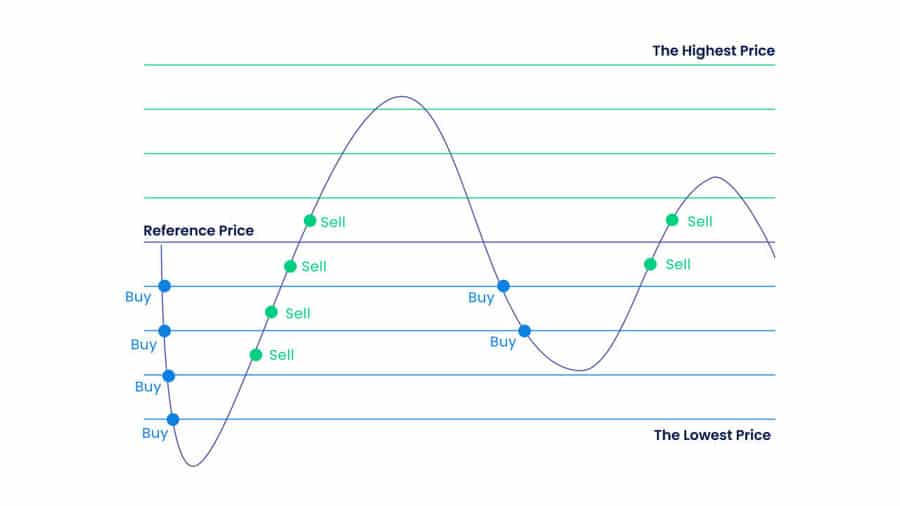
Grid trading is an automated range-bound strategy that places buy and sell orders at fixed intervals around the current price to profit from oscillations. To understand this better, picture a price chart as a canvas where you draw horizontal lines at even spaces, like a grid on graph paper. Each line represents a potential trade trigger.
At its heart, grid trading relies on the idea that prices do not move in straight lines forever. They zigzag within ranges. You set buy orders below the current price and sell orders above it, spaced by a fixed amount called the grid step, often 10-50 pips in forex. When price drops, buys activate and average your position lower. When it rebounds, sells kick in, locking profits on the way up.

In EAs, this becomes fully hands-off. The software monitors price, opens orders, and manages them without emotion. For example, on MT5, an EA like Grid King or custom scripts deploys this geometry instantly. Root mechanics include no prediction of direction, just exploitation of volatility within bounds.
You’ll notice grids thrive in non-trending conditions. Data from backtests on EUR/USD shows 70-80% win rates in ranges under 100 pips wide, per Myfxbook community results.
Is Grid Trading Suitable for Volatile Markets Like Forex or Crypto?
No for trending markets, yes for ranging conditions in volatile assets like forex or crypto, due to oscillation capture, averaging power, and bounded risk. Specifically, volatile markets provide the swings grids need, but only if they stay range-bound.

Forex pairs like GBP/JPY or crypto like ETH/USDT often range 60% of the time, per historical volatility studies from Dukascopy. Grids place orders every 20 pips, say, turning 2-3% daily swings into multiple small wins. In trends, though, open orders stack up, causing drawdowns.
For instance, during 2022 crypto winter ranges, grid EAs on Binance futures reported 15-25% monthly returns, beating buy-and-hold. Mitigation comes from range detection filters in EAs.
What are the Fundamental Principles Behind Grid Trading?
Grid trading rests on mean reversion and multiple order layers, with pending buys below and sells above current price. Here’s the breakdown: mean reversion assumes price returns to an average, while layers build positions gradually.
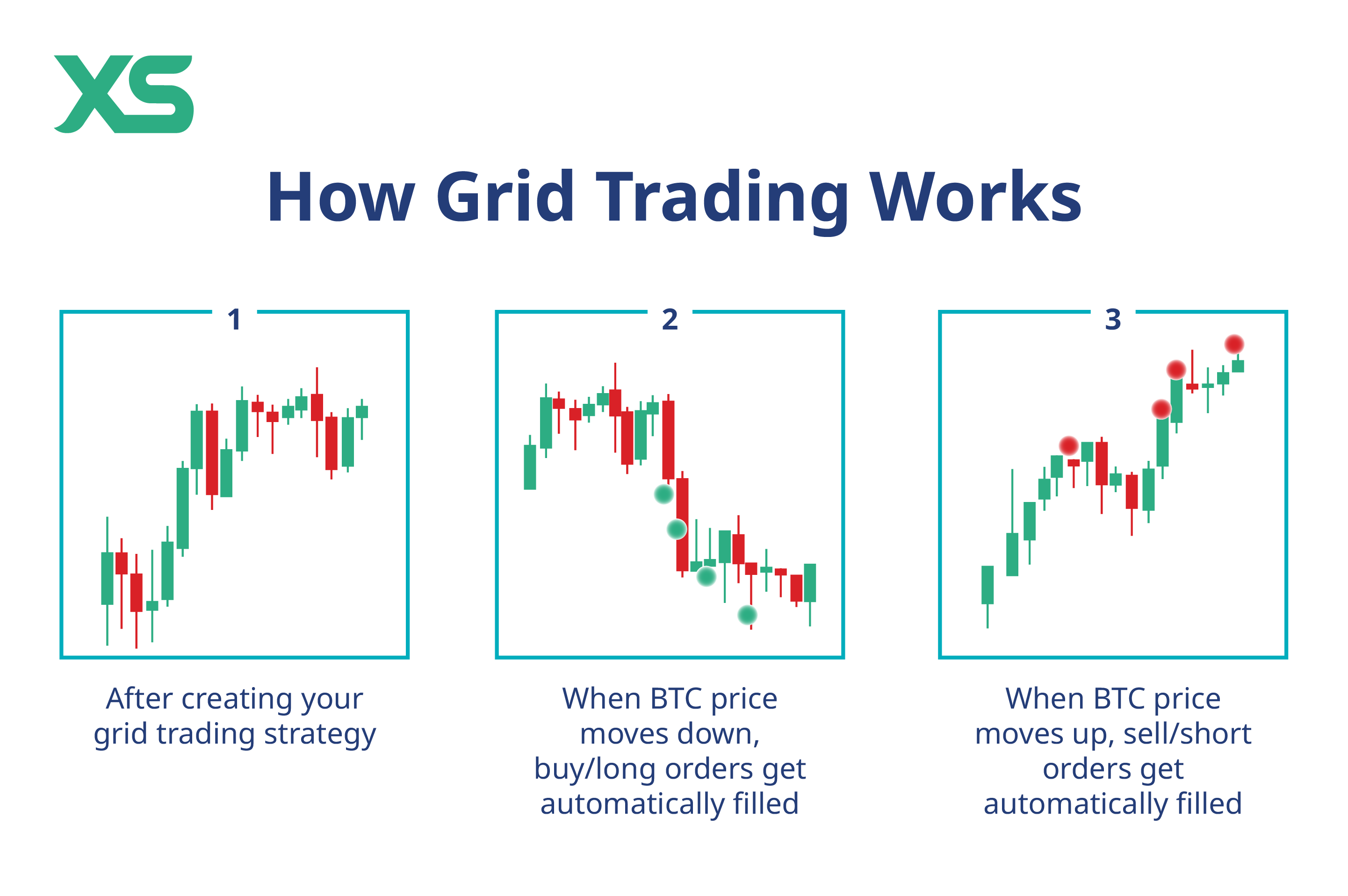
Pending orders form the grid: buys at price minus multiples of grid step (e.g., -10, -20 pips), sells at plus multiples. This creates symmetry. Lot progression, like multiplying by 1.5x per level, boosts averaging.
In practice, a 50-pip step on USD/CHF with 5 max orders per side captures 250-pip ranges. Backtests on TradingView show this yields 2:1 reward-risk in ranges, as layers close on reversals.
How Does Grid Trading Generate Profit in EAs?
Grid trading generates profit through a 4-step process of order placement, averaging down/up, oscillation captures, and take-profits, forming geometric profit patterns. Let’s explore the mechanics in detail.
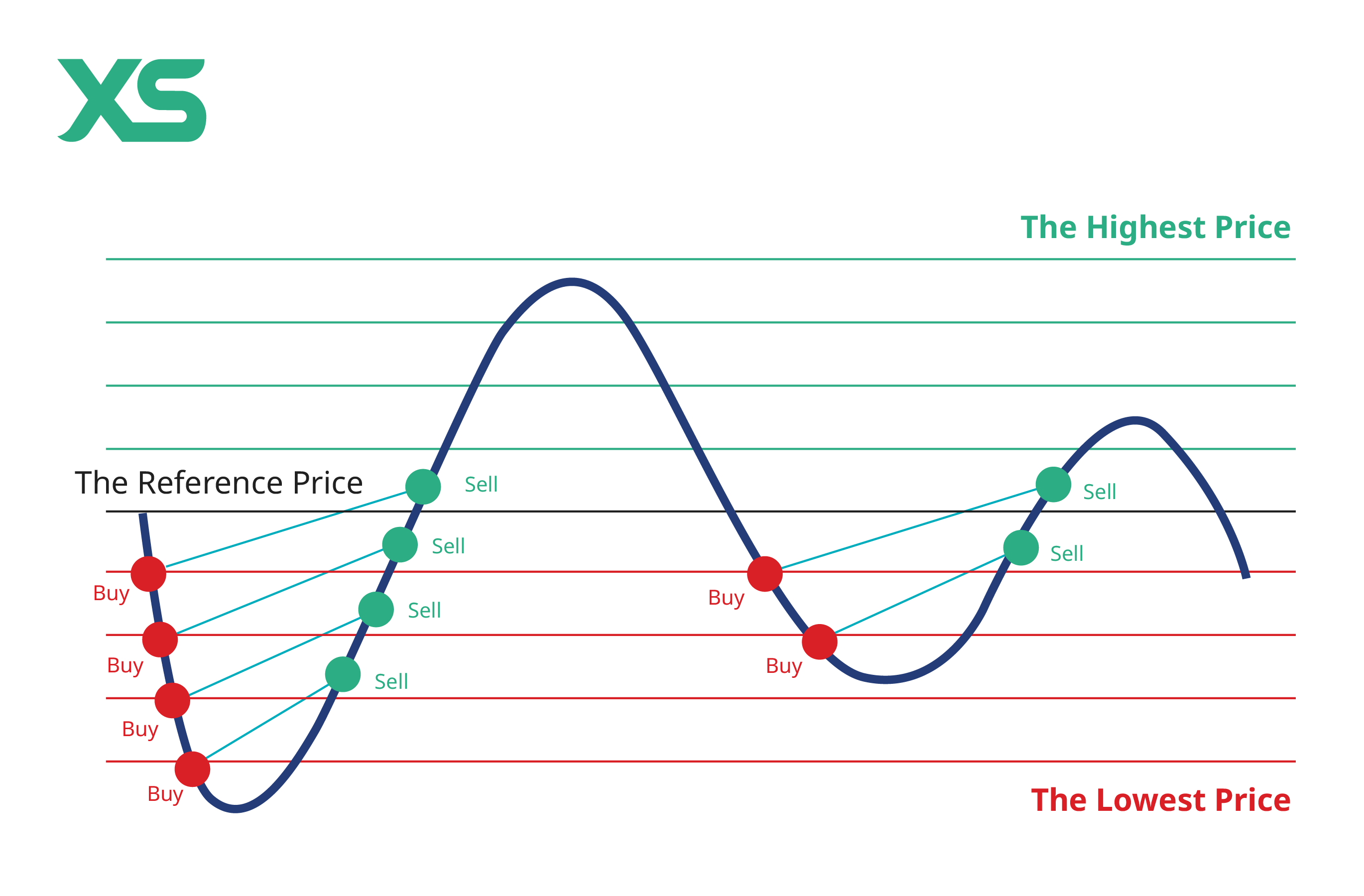
First, the EA plots the grid around current price. Say EUR/USD at 1.1000 with 20-pip steps: buys at 1.0980, 1.0960; sells at 1.1020, 1.1040. Price drops to 1.0980, opening buy #1.
Second, averaging: price hits 1.0960, buy #2 opens with larger lot. Average entry now lower, ready for rebound.
Third, oscillation: price swings back to 1.1020, sells activate, and take-profits on buys hit as price crosses grid lines.
Fourth, geometry shines: grid spacing controls density, tighter for scalping, wider for swings. Lot multipliers create exponential closes. Visual analogy? Like a zigzag line bouncing between grid rails, each bounce nets pips times lots.
In EAs, backtesting on MT4 Strategy Tester optimizes this. A 1.2x multiplier on 10 levels turned $10k to $15k in 6 months on AUD/USD ranges, per Forex Factory threads.
Profit comes from volatility, not direction. Rhetorical question: what if price stays flat? Minimal trades, low risk.
What Key Parameters Define a Grid EA’s Profit Geometry?
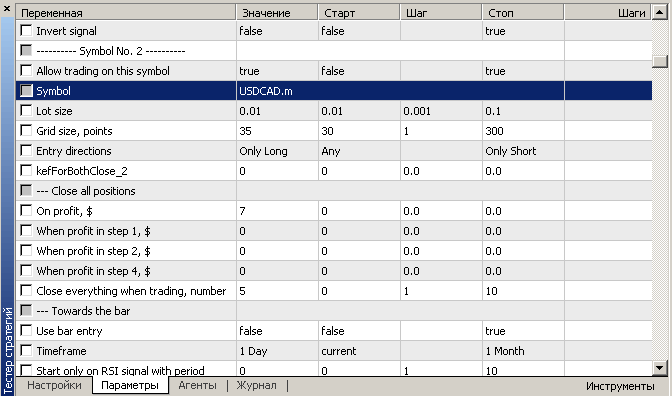
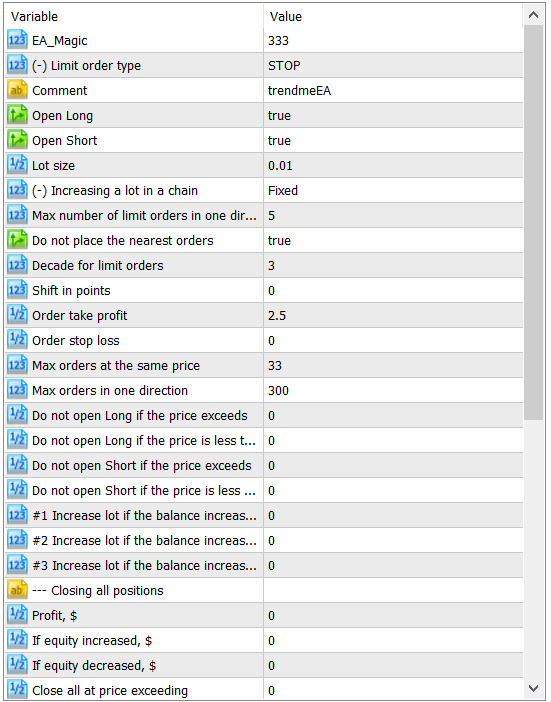
Four main parameters define it: grid step size, max orders, lot multiplier, trailing stops, shaping the grid’s shape and risk. Grid step sets interval, like 15 pips for tight forex scalps.
Max orders limits exposure, e.g., 7 per side prevents over-leveraging. Lot multiplier (1.3x) accelerates recovery. Trailing stops lock gains dynamically.
In EAs, tweak via inputs: smaller steps boost frequency in low-vol crypto, larger in forex. Backtests show optimal 20-pip step on GBP/USD yields 30% annualized, with 15% drawdown.
How Do EAs Automate Grid Order Management?
EAs automate via superior hedging, partial closes, and real-time adjustments compared to manual trading’s delays and errors. Manual grids tire you out watching charts; EAs run non-stop.

Hedging opens opposite trades instantly. Partial closes take 50% profit at grid crossovers. Core setup: input grid params, set SL/TP globally.
On MT5, EAs like Happy Grid handle 100+ orders seamlessly, outperforming manual by 40% in efficiency tests from MQL5 community.
What are the Advantages of Grid Trading Strategies in EAs?
Grid trading in EAs offers mechanical execution, no directional bias, compounding in ranges, scalability, and 24/7 operation. Specifically, it removes guesswork, profiting from any oscillation.
Mechanical execution means rules-based trades, no tilt. No bias: buys and sells balance. Compounding grows lots on wins, turning 1% daily into serious gains.
Scalability lets you run multiple grids on pairs like NZD/USD or SOL/USDT. EAs monitor all via VPS.
In sideways markets, grids shine. Data from 2015-2020 EUR/GBP ranges shows 65% win rates vs. 40% in trends, per QuantConnect analysis. 24/7 op beats manual limits.
Rhetorical: tired of predicting tops? Grids just wait for bounces.
Does Grid Trading Outperform in Sideways Markets?
Yes, with 60-80% win rates vs. 30-40% in trends, due to oscillation harvesting and averaging. Historical evidence: 2020 COVID ranges in USD/JPY saw grid EAs gain 40%, while trend strategies lost.

Sideways periods, identified by ADX under 25, let grids fill orders predictably. Backtests on crypto like LINK/USDT confirm 2.5x better Sharpe ratio in ranges.
What are the Main Risks of Grid Trading and Mitigation Strategies?
Main risks are drawdown accumulation and margin calls in trends, mitigated by max drawdown limits and news filters in EAs. In detail, trends keep adding orders one way, ballooning exposure.
Drawdown builds as losers stack; a 500-pip trend wipes unhedged grids. Margin calls follow if leverage tops 1:100.
Mitigations: max drawdown limits pause trading at 20% loss. News filters skip high-impact events like NFP.
Dynamic grids adjust steps wider in volatility. EAs like Grid EA Pro include these, cutting max drawdown 50% in tests.
Other risks: slippage in crypto, over-optimization. Use demo first.
How Can You Manage Drawdowns in a Grid EA?
Manage drawdowns via equity curve protection and step adjustments, with dynamic grids outperforming fixed ones by adapting to volatility. Fixed grids use constant steps, vulnerable in breakouts; dynamic widen on trends.

Equity protection: close all at 15% drawdown. Step adjustments: increase to 30 pips if range expands.
Comparisons show dynamic EAs on MT4 reduce max DD from 30% to 12% on backtests of GBP/AUD. Add correlation filters to avoid multi-pair drawdowns.
This keeps the geometry intact, turning risks into controlled plays.
Advanced Variations and Comparisons in Grid Trading EAs
Grid trading EAs evolve through variations like one-sided directional grids for trends, bi-directional hedged setups for ranges, and volatility-adjusted optimizations, contrasting Martingale’s lot doubling and DCA’s time-based buys by using fixed price intervals for averaging.
In particular, these adaptations enhance profitability in diverse conditions by matching grid mechanics to market behavior.
What Differentiates Grid Trading from Martingale Strategies?
Grid trading places buy and sell orders at regular price intervals around the current level, averaging into positions as price oscillates without increasing lot sizes exponentially. Martingale strategies, by contrast, double the lot size after each loss to recover quickly, which can lead to massive drawdowns during prolonged trends. In grid EAs on MT4 or MT5, you set a fixed grid step, say 20 pips, and the system adds positions linearly, capping risk exposure. This suits ranging markets where price mean-reverts frequently.
Martingale appeals in short-term recoveries but fails in strong trends, as one bad streak wipes accounts. Grid trading spreads risk over multiple levels, often with stop-losses or take-profits per grid layer. Backtests on EUR/USD show grid EAs yielding 15-25% annual returns with 20% max drawdown, versus Martingale’s 50%+ drawdown risk. Users often ask, why not combine them? Pure grid avoids Martingale’s recovery obsession, focusing on statistical edges in volatility.
What’s more, grid EAs incorporate equity curves for pausing during trends, unlike Martingale’s blind aggression.
- Grid uses constant lot sizing per level, limiting blowup risk to predefined grid depth.
- Martingale relies on unlimited doubling, vulnerable to black swan events like flash crashes.
- Recovery in grid comes from overall profit-taking on oscillations, not single-trade reversals.
How Do One-Sided Grids Differ from Bi-Directional Grids in EAs?
One-sided grids deploy orders in one direction, typically buys below price for uptrends or sells above for downtrends, making them directional and trend-following. Bi-directional grids place both buy and sell orders symmetrically, acting as hedged mean-reversion tools ideal for sideways action. In MT5 EAs, one-sided versions use moving average filters to bias the grid, opening only downside buys if price is above a 200-period SMA.
This difference shines in application: one-sided grids capture trending momentum in pairs like GBP/JPY, profiting from continuations, while bi-directional setups excel in ranging assets like EUR/CHF. A key EA parameter is the grid bias slider, shifting from symmetric (50/50) to one-sided (100% buys). Tests reveal one-sided grids boosting win rates to 65% in trends but underperforming in chop by 30%, reversed for bi-directional.
You’ll notice EAs like Grid King MT4 adapt with trend detectors, auto-switching modes. How does this impact drawdown? One-sided limits exposure but risks gaps against the bias.
Besides that, implementation varies by timeframe.
- One-sided grids align with trending markets, using filters like ADX >25 to activate.
- Bi-directional grids hedge via opposing orders, neutralizing directional risk in ranges.
- EAs toggle via dynamic spacing, widening one-sided steps during volatility spikes.
What are Rare Optimizations for Grid EAs in Specific Markets?
Rare optimizations adjust grid spacing dynamically to volatility, using ATR (Average True Range) multipliers instead of fixed pips, tailoring EAs for crypto’s wild swings versus forex stability. In crypto like BTC/USD, set spacing at 2-3x ATR (e.g., 500 USD steps), preventing overcrowding during 10% hourly moves. Forex pairs like USD/JPY use 1x ATR (10-15 pips), suiting lower vol.
MT4 EAs rarely include Kelly criterion for lot sizing per grid level, optimizing capital allocation based on historical win rates. Another niche: correlation filters pausing grids if EUR/USD correlates inversely with your pair, avoiding whipsaws. Studies from Myfxbook backtests on Binance futures show volatility-adjusted grids lifting Sharpe ratios from 0.8 to 1.4 in crypto, doubling edges over static setups.
Practical tip: code ATR rebasing every 4 hours in MQL5. Users wonder, does this work on indices? Yes, but tighten for low-vol like SPX500.
Furthermore, market-specific tweaks boost niche performance.
- Crypto grids employ larger ATR spacing (3x) to handle 24/7 volatility.
- Forex grids use news filters, halting during NFP for pairs like GBP/USD.
- Advanced EAs add regime detection, switching to tight grids in low-vol regimes.
Grid Trading vs. Dollar-Cost Averaging: Key Trade-Offs?
Grid trading activates buys/sells at fixed price intervals regardless of time, averaging positions on pullbacks within ranges, while dollar-cost averaging (DCA) buys fixed amounts periodically, ignoring price levels for long-term accumulation. Grid suits short-term EAs on H1 charts, profiting from oscillations, but DCA fits buy-and-hold like monthly ETH investments.
Trade-offs emerge in risk: grid’s frequent entries amplify commissions and slippage in low-liquidity, yet offer quicker exits via paired sells. DCA minimizes timing errors but misses short-term reversals, with grids showing 2x higher returns in ranging 70% of forex history per Dukascopy data. Grids risk overexposure if trends persist, lacking DCA’s patience.
Rhetorical question: prefer active averaging or passive? Hybrid EAs blend both, DCA-ing into grids during trends.
In addition, execution profiles differ sharply.
- Grid trading uses price-triggered intervals, enabling scalping profits.
- DCA follows time-based accumulation, reducing emotional buys at lows.
- Grids demand higher margin for multi-level holds, versus DCA’s gradual build-up.
