
Research
Mastering Tick Data Backtesting for Flawless Strategy Simulation

Dec
Mastering tick data backtesting involves using the most granular market data available, which records every single price change, to simulate a trading strategy with the highest possible degree of realism. This method moves beyond traditional bar-based testing by accounting for intra-bar price movements, variable spreads, and the precise timing of trades. By replicating market conditions so closely, traders can gain a much clearer understanding of how their strategies would have performed historically, uncovering potential weaknesses that simpler backtests might miss. This level of detail is foundational for developing robust and reliable automated trading systems.
The step-by-step process for a successful tick data backtest begins with acquiring and cleaning high-quality data, a foundational stage that prevents the “garbage in, garbage out” problem. After preparing the data, you must construct a realistic simulation environment that accounts for real-world costs like commissions, slippage, and spreads. Only then can you run the strategy simulation and properly analyze the performance metrics to evaluate its true potential.
Even with a perfect process, common flaws like look-ahead bias and survivorship bias can completely invalidate your backtesting results. Look-ahead bias occurs when the simulation uses information that would not have been available at the time of a trade, leading to overly optimistic outcomes. Survivorship bias produces a skewed perspective by testing only on assets that still exist today, ignoring the many that have failed or been delisted over time.
Recognizing these components, processes, and potential pitfalls is the first step toward achieving a truly flawless strategy simulation. The following sections will provide a detailed guide to navigating each aspect of tick data backtesting, empowering you to build and validate your trading ideas with confidence.
What is Tick Data Backtesting?
Tick data backtesting is the process of simulating a trading strategy using the most detailed level of market data, which captures every individual trade or change in the bid/ask quote. Its purpose is to create an exceptionally accurate and realistic simulation of a strategy’s historical performance by replaying the market exactly as it happened.
To understand this better, let’s break down the core ideas and data needs associated with this sophisticated testing method. You’ll see how it differs from more common forms of backtesting and why that difference matters for certain types of strategies.

Is a Tick-by-Tick Simulation Necessary for All Trading Strategies?
No, a tick-by-tick simulation is not necessary for all trading strategies, but it is indispensable for specific types, particularly those that operate on very short timeframes. The necessity depends almost entirely on the frequency of trades and the sensitivity of the strategy to minute price fluctuations. For certain approaches, it is the only way to get a trustworthy result, while for others, it represents an unnecessary complication.
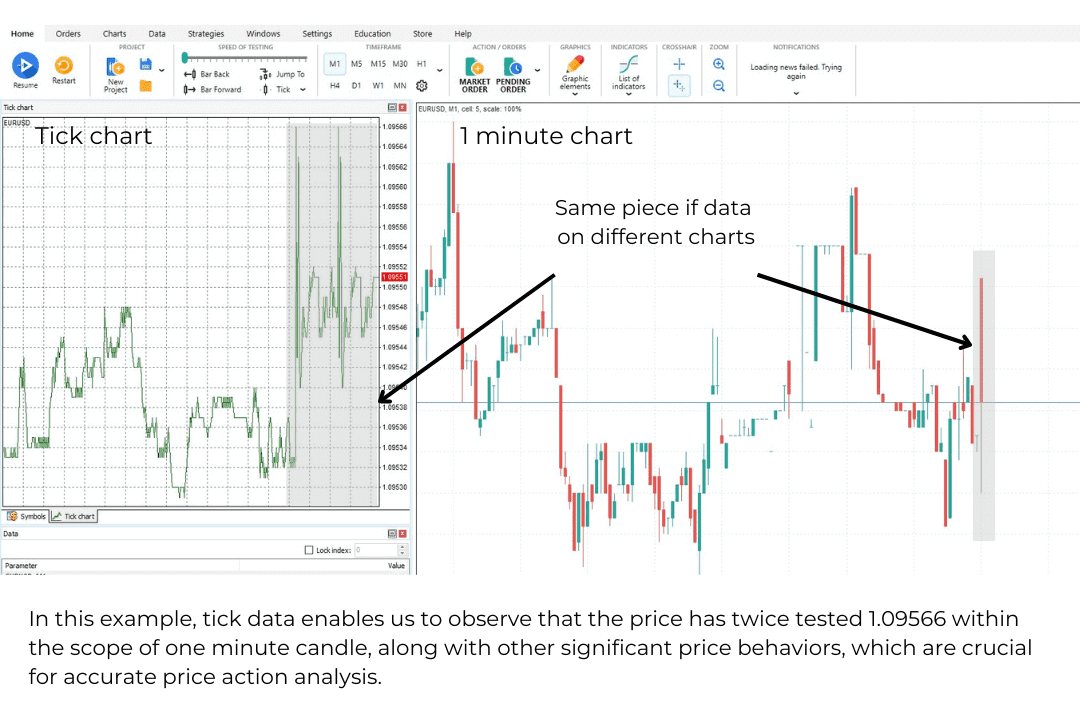
To illustrate, consider high-frequency trading (HFT) or scalping strategies. These strategies aim to profit from tiny price changes that occur over seconds or even milliseconds. For them, the price movement within a one-minute bar is where all the action happens. A backtest using one-minute Open-High-Low-Close (OHLC) bars would be completely blind to these movements. It might assume a trade was filled at a price that was never actually available or miss that a stop-loss was triggered and then the price reversed, all within the same bar. A tick-by-tick simulation is the only method that can accurately capture this reality.
On the other hand, let’s look at a long-term, position-trading strategy based on daily or weekly charts. This type of strategy might hold a position for weeks or months, and the entry signal could be a daily moving average crossover. For such a strategy, the exact intra-day path the price took is far less relevant. Whether a buy order was filled at $100.05 or $100.07 has a negligible impact on the outcome of a trade that targets a $20 profit. Using daily OHLC bar data is perfectly sufficient and computationally much more efficient. The added precision of tick data would not meaningfully change the backtest results but would dramatically increase the processing time and data storage requirements.
What are the Key Components of a Tick Data Backtesting System?
There are four main components of a tick data backtesting system: a high-quality tick data feed, a backtesting engine, a strategy implementation module, and a performance analytics module. Each part plays a distinct and foundational role in ensuring the simulation is accurate, functional, and provides meaningful insights. A weakness in any one of these components can compromise the entire process.

Let’s see what each component does:
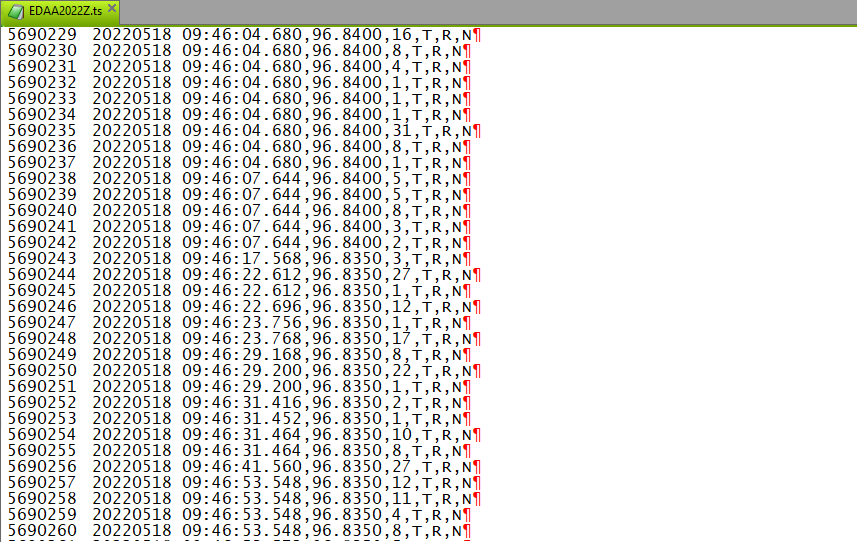
- High-Quality Tick Data Feed: This is the bedrock of the entire system. Tick data is a sequential log of every price event. For equities, this means every trade that occurs. For forex, it’s every change in the bid or ask price. “High-quality” implies the data is accurate, has minimal gaps, includes correct timestamps (often to the millisecond), and contains both trade prices and bid/ask quotes. Without reliable data, any simulation is worthless.
- Backtesting Engine: This is the core processor of the system. Its job is to read the tick data sequentially, one tick at a time, and simulate the passage of time. When the strategy module generates a trade signal, the engine is responsible for simulating the order execution. This includes managing the state of the trading account (balance, open positions), modeling transaction costs like commissions and slippage, and determining at what price an order is filled based on the current bid/ask prices.
- Strategy Implementation Module: This is the component where you, the trader, define your trading logic. The backtesting engine feeds each new tick to this module. Your code then analyzes this information, along with any historical data, to decide whether to enter a new position, exit an existing one, or do nothing. This module is separate from the engine to allow for testing different strategies without altering the core simulation mechanics.
- Performance Analytics Module: Once the backtesting engine has processed the entire dataset, the simulation is complete. The analytics module then takes the full history of trades and account values to calculate a wide range of performance metrics. These include net profit, maximum drawdown, Sharpe ratio, profit factor, win rate, and many others. This component turns the raw simulation output into actionable insights about the strategy’s profitability, risk, and consistency.
What is the Step-by-Step Process for Conducting a Tick Data Backtest?
The primary method for conducting a tick data backtest involves a sequential workflow of six steps: acquiring and preparing the data, modeling the trading environment, implementing the strategy logic, running the simulation, analyzing the results, and refining the strategy. This structured process helps organize the complex task into manageable stages, from data sourcing to final evaluation.
Below, we detail the practical actions needed at each stage of the workflow. Following these steps helps build a robust testing framework and reduces the chance of introducing errors that could invalidate the final results.
How to Acquire and Prepare High-Quality Tick Data?
Acquiring and preparing high-quality tick data involves two major phases: sourcing the data from a reliable provider and then meticulously cleaning it to remove errors. For sourcing, traders generally turn to two main channels: specialized data vendors or their own brokerage. Data vendors like TickData.com or Dukascopy offer extensive historical tick data for a wide range of assets, often for a fee. The main benefit here is the data is typically well-structured and covers long historical periods. Alternatively, some brokers provide historical data to their clients, which can be a cost-effective option, though the quality and depth may vary.
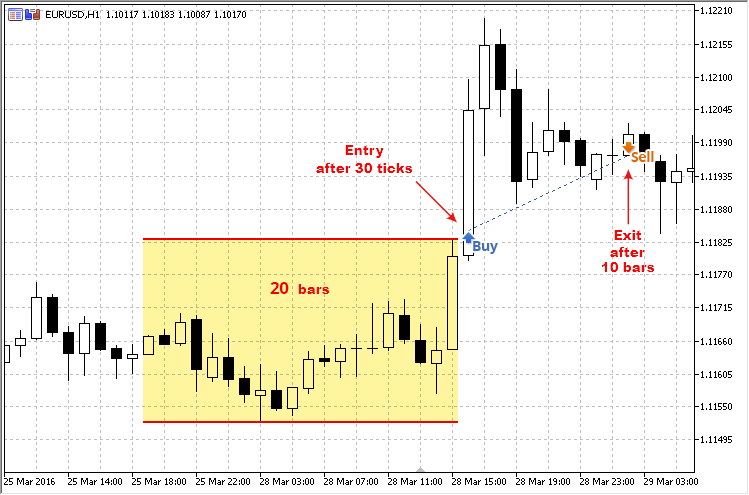
Once you have the raw data, the preparation or “cleaning” phase begins. This is a non-negotiable step. What does it entail?
- Filtering Out Bad Ticks: Raw data feeds often contain errors, such as trades reported with a price of zero, sudden price spikes that are clearly erroneous, or ticks with incorrect timestamps. You must write scripts to identify and remove these outliers. For example, you might set a rule to discard any tick whose price deviates by more than a certain percentage from the previous tick.
- Handling Data Gaps: No dataset is perfect; there will be periods where data is missing due to network issues or exchange problems. You need a consistent policy for handling these gaps. Some options include pausing the simulation during the gap or using statistical methods to fill it, though the latter approach should be used with extreme caution as it can introduce artificial data.
- Timestamp Synchronization: If you are testing a strategy on multiple assets, you must ensure their timestamps are synchronized to a common clock (like UTC). Millisecond-level discrepancies between different data feeds can lead to incorrect assumptions about the order of events, which is very damaging for strategies that rely on inter-market relationships.
How to Model a Realistic Trading Environment?
To model a realistic trading environment, you must program your backtesting engine to account for the imperfections and costs of real-world trading, including variable spreads, slippage, commission fees, and latency. Simply matching a buy signal with the last traded price is not enough and leads to overly optimistic results. A realistic model acknowledges that execution is never perfect or free.
Let’s see how to simulate these factors properly:
- Variable Spreads: In reality, the spread between the bid and ask price is not fixed; it widens and narrows based on liquidity and volatility. A realistic backtest should use the actual bid and ask prices from the tick data. When your strategy generates a buy signal, the simulation should execute the trade at the ask price. When it generates a sell signal, it should use the bid price. This correctly models the cost of crossing the spread.
- Slippage: Slippage is the difference between the price you expected and the price at which your order was actually filled. This is especially common for large market orders or during fast-moving markets. To model this, you can add a small, random amount of slippage to the execution price. A more advanced method is to model slippage as a function of trade size and recent market volatility, making it larger for bigger trades in thin markets.
- Commission Fees: This is the most straightforward cost to model. You must deduct the commission fee structure of your target broker from each simulated trade. This could be a fixed fee per trade, a fee per share or contract, or a percentage of the total trade value. Failing to include commissions can make an unprofitable strategy appear profitable.
- Latency: Latency is the time delay between your system sending an order and the exchange receiving it. While small, this delay means the market price may have changed by the time your order arrives. You can model this by introducing a small, fixed or random time delay (e.g., 50 milliseconds) in your simulation between the moment a signal is generated and the moment the order is processed by the engine.
How to Execute and Analyze the Backtest Results?
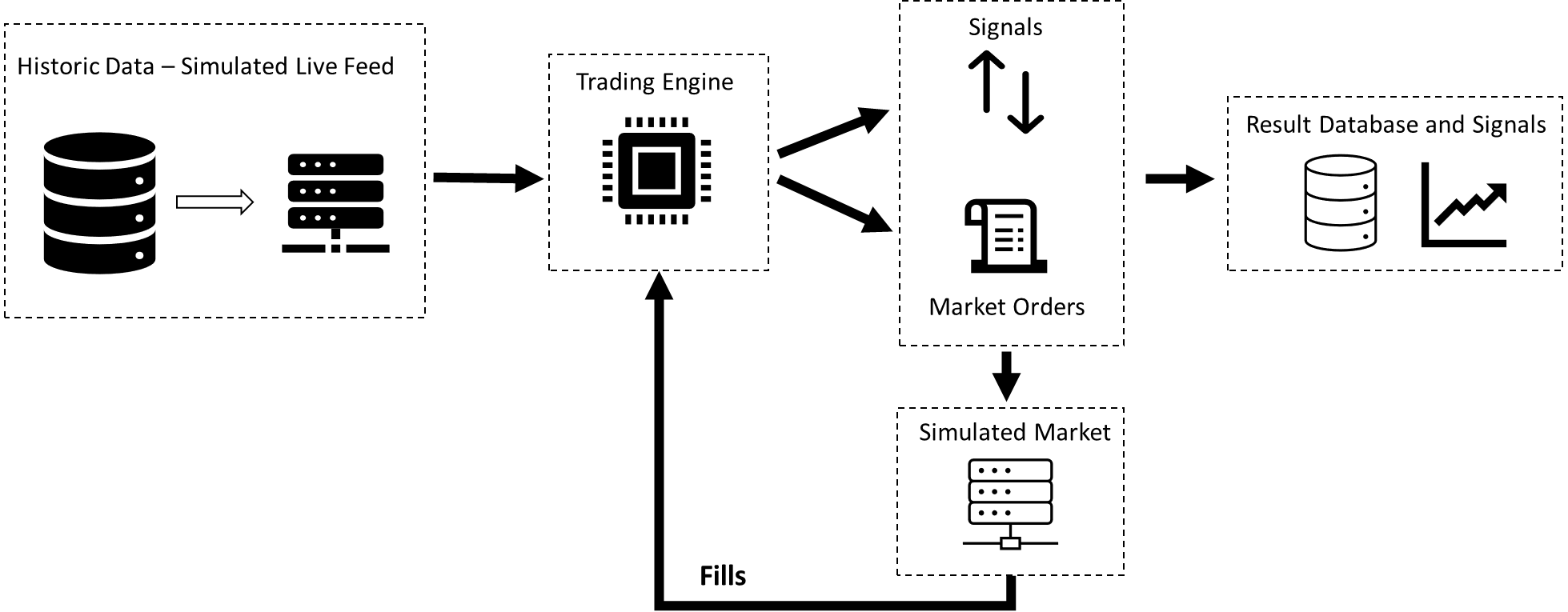
Executing the backtest involves running your strategy logic against the prepared historical tick data within the simulated environment. The backtesting engine will loop through every single tick in your dataset, from the start date to the end date. At each tick, it passes the market information to your strategy module. Your strategy then decides what to do. If it generates an order, the engine simulates its execution, updates your account balance and position, and logs the trade. This process continues until the last tick is processed.

After the simulation run is complete, the analysis begins. This is where you evaluate the mountain of data generated to determine if the strategy is viable. You should focus on a core set of metrics that give a holistic view of performance and risk. Key metrics include:
- Total Net Profit and Compound Annual Growth Rate (CAGR): This shows the overall profitability of the strategy. CAGR helps standardize the return over different time periods.
- Maximum Drawdown: This measures the largest peak-to-trough decline in account equity. It is a critical indicator of risk. A strategy with a high return but a 70% maximum drawdown is likely too risky for most traders to endure.
- Sharpe Ratio: This metric calculates risk-adjusted return. It tells you how much return you are getting for each unit of risk you take on (as measured by volatility). A higher Sharpe ratio is generally better.
- Profit Factor: This is calculated by dividing the gross profit by the gross loss. A value greater than 1 indicates a profitable system. For example, a profit factor of 2 means the strategy made twice as much money on winning trades as it lost on losing trades.
- Win Rate and Average Win/Loss: The win rate is the percentage of trades that were profitable. While a high win rate seems good, it is meaningless without knowing the average win and loss sizes. A strategy can be very profitable with a 40% win rate if the average winning trade is much larger than the average losing trade.
What are the Most Common Flaws That Invalidate Backtesting Results?
The most common flaws that invalidate backtesting results are look-ahead bias, survivorship bias, overfitting, and the incorrect modeling of transaction costs. These errors create a distorted and typically overly optimistic view of a strategy’s performance, causing traders to deploy systems that fail in live market conditions.
To ensure your simulation is as flawless as the title suggests, you must be hyper-aware of these pitfalls. Let’s examine two of the most insidious biases in more detail: look-ahead bias and survivorship bias. Understanding how they creep into your code and analysis is the first step to eliminating them.
How Does Look-Ahead Bias Distort Strategy Performance?
Look-ahead bias distorts strategy performance by allowing the simulation to make decisions using information that would not have been available at that specific point in historical time. This contamination of future data into past decisions results in a backtest that appears far more profitable than it could ever be in reality. It is one of the most common and damaging errors in strategy development, often introduced accidentally through subtle coding mistakes.
How can this happen in practice? It’s easier than you might think. For example, imagine a strategy that uses the day’s high and low prices to place an order. If your code calculates the daily high at the beginning of the day and uses it for a trade decision at 10 AM, you have introduced look-ahead bias. At 10 AM, you could not have known what the high for the rest of the day would be. The correct approach is to only use information available up to the exact moment of the decision.
Another frequent cause is related to data processing. Let’s say you normalize a price series by dividing it by the maximum price in the entire dataset. When your backtest is at a point in 2015, it is now using a maximum price that might have occurred in 2020 to make a decision. This is a classic form of look-ahead bias. The correct method is to calculate the maximum price using only the data available up to that point in 2015. These subtle errors can turn a losing strategy into one that looks like a holy grail on paper, leading to false confidence and eventual financial loss when traded live.
How Does Survivorship Bias Create an Unrealistic View of the Market?
Survivorship bias creates an unrealistic view of the market by exclusively using data from assets that have “survived” to the present day, while ignoring those that have failed, been delisted, or were acquired. This leads to an upwardly biased sample, making trading strategies tested on it appear much more successful than they would have been in reality. It essentially tests a strategy on a universe of only winners, which is not representative of the actual market environment.

To make this concrete, consider a strategy tested on the current list of stocks in the S&P 500 index over the past 20 years. This backtest is fundamentally flawed. The current list of S&P 500 companies includes today’s strongest performers. It excludes companies that were in the index 10 years ago but have since gone bankrupt (like Lehman Brothers) or were acquired. A strategy tested on this modern list would not have had to navigate the price collapses of those failed companies.
The impact of this bias is a dramatic overestimation of returns and a severe underestimation of risk. The backtest results will not reflect the losses that would have occurred from holding stocks that eventually failed. To conduct a proper backtest, a trader needs to use a point-in-time database that shows the exact constituents of an index or market on any given day in the past. This allows the simulation to trade the universe of stocks as it actually existed at that time, including the ones that eventually disappeared. Without this, the backtest is not a true simulation of historical reality.
What are the Advanced Techniques and Alternative Approaches in Strategy Simulation?
Advanced strategy simulation uses specialized methods like walk forward optimization and hardware acceleration, while alternative approaches weigh the trade offs between high fidelity tick data and less granular bar data. This exploration moves beyond fundamental backtesting to reveal more sophisticated ways of validating and refining trading strategies for different market conditions and technological capacities. Let’s see how these methods compare and what specific challenges they address.
How Does Tick Data Backtesting Differ from Bar Data Backtesting?
The primary distinction between tick and bar data backtesting lies in the level of detail and the resulting accuracy of the simulation. Tick data records every single price change, offering the most granular view of market activity available. In contrast, bar data aggregates price movements over a specific period, like one minute or one hour, into four points: open, high, low, and close. This aggregation simplifies the data but also loses a substantial amount of information about how the price moved within that bar. For example, did the price hit the high before the low? Bar data alone cannot answer that.
This difference in granularity creates a clear trade off between precision and computational demand. Examining this trade off helps in selecting the right approach for a given strategy.
- Accuracy and Realism: Tick data provides a near perfect historical replay, making it indispensable for strategies that depend on intra bar price action, such as scalping or arbitrage. Bar data can produce misleading results because it makes assumptions about price movement, potentially causing a profitable strategy to appear unprofitable, or vice versa.
- Computational Cost: The sheer volume of tick data makes backtesting a resource intensive process. It demands powerful computers, ample storage, and significant processing time. Bar data is much lighter and allows for rapid testing, making it suitable for initial idea generation or for strategies that operate on longer timeframes.
- Strategy Suitability: High frequency and short term strategies absolutely require tick data to model slippage, spread, and execution with any degree of realism. For longer term swing or position trading strategies, the information lost in bar data is often less impactful, making it a practical choice.
What is the Role of Walk-Forward Optimization in Tick Data Backtesting?
Walk forward optimization is a sequential testing method designed to combat a common pitfall in strategy development known as curve fitting. Curve fitting, or over optimization, occurs when a strategy’s parameters are so finely tuned to historical data that they perform exceptionally well in backtests but fail in live trading. The strategy essentially memorizes the past instead of learning adaptable patterns. Walk forward optimization provides a more robust validation process by simulating how a strategy would have been periodically re optimized and traded in a real world scenario.
The process systematically divides historical data into multiple periods. Let’s see how it works.
- In Sample and Out of Sample Data: The process uses a block of data for optimization (the “in sample” period) to find the best parameters. It then applies these parameters to the next, unseen block of data (the “out of sample” period) to test their performance.
- Sliding Window: After testing, the window slides forward. The previous out of sample period becomes part of the new in sample period, and a new out of sample period is defined. This cycle of optimize, test, and slide repeats across the entire dataset.
- Performance Assessment: The final performance of the strategy is judged solely on the combined results of all out of sample periods. This offers a more realistic expectation of future performance because the strategy is always being tested on data it was not trained on, mimicking the constant flow of new information in live markets.
What are the Unique Backtesting Challenges for High-Frequency Trading (HFT) Strategies?
Backtesting high frequency trading (HFT) strategies introduces a layer of complexity far beyond what is needed for lower frequency approaches. Because HFT strategies operate on timescales of microseconds and even nanoseconds, a simple price feed is insufficient. The simulation must replicate the entire market microstructure with extreme fidelity. Failing to model these nuances renders the backtest results meaningless, as they do not reflect the true execution realities of a high speed environment.
:max_bytes(150000):strip_icc()/BuildaProfitableTradingModelIn7EasySteps2-93ba242cb2e3443a8a846ed36c92867f.png)
Several distinct challenges arise when attempting to simulate an HFT strategy accurately. How can one replicate the market’s inner workings?
- Modeling Order Book Dynamics: An HFT backtest cannot just use tick data; it must reconstruct the full limit order book (LOB). This includes the volume of bids and asks at every price level. The strategy’s performance depends on its ability to interact with this liquidity, and the simulation must model how the strategy’s own orders affect the book.
- Simulating Queue Position: When a limit order is placed, it joins a queue behind existing orders at the same price. The backtest must estimate the order’s position in this queue to determine the probability and timing of a fill. This is a complex statistical problem that depends on order flow and cancellation rates.
- Accounting for Micro latency: Latency is the time delay in data transmission and order processing. For HFT, this includes network latency (the time for data to travel between the trader and the exchange) and processing latency (the time the exchange takes to handle an order). Even delays of a few microseconds can completely alter a strategy’s outcome, so the backtest must include a realistic latency model.
How can Hardware Acceleration (e.g., GPUs) Optimize the Backtesting Process?
The immense computational load of tick data backtesting presents a major bottleneck for quantitative analysts and traders. Running a single simulation on a large dataset can take hours or even days on a standard CPU (Central Processing Unit). This slow feedback loop hinders strategy development and optimization. Hardware acceleration, particularly using Graphics Processing Units (GPUs), offers a powerful solution to this problem by fundamentally changing how the calculations are performed.

A CPU is designed to handle a few complex tasks sequentially. A GPU, on the other hand, is built with thousands of smaller cores designed to handle many simple tasks in parallel. This parallel architecture is perfectly suited for the nature of backtesting calculations. Think about how this applies to a trading strategy.
- Parallel Processing Power: Many backtesting operations, such as calculating a moving average over millions of ticks or testing thousands of parameter combinations, can be broken down into smaller, independent calculations. A GPU can execute thousands of these calculations simultaneously, dramatically reducing the overall processing time.
- Increased Simulation Throughput: By slashing simulation times from hours to minutes, hardware acceleration allows developers to run far more tests. This enables more thorough parameter optimization, more extensive walk forward analysis, and the ability to test strategies across a wider range of historical market conditions.
- Alternative Hardware: Beyond GPUs, other specialized hardware like FPGAs (Field Programmable Gate Arrays) offer even greater performance for specific, highly optimized tasks. Cloud computing platforms also provide access to powerful GPU and FPGA instances, allowing individuals and firms to leverage this technology without a large upfront investment in physical hardware.
