
Research
Mastering Martingale EA Risk: From Dangerous Gamble to a Profitable Strategy

Dec
Mastering Martingale EA risk means transforming the strategy from a high-stakes gamble into a calculated method by applying strict, non-negotiable risk management rules. Instead of letting the Expert Advisor run on aggressive default settings, a proficient trader takes control. They meticulously define parameters to limit potential losses during unfavorable market conditions. This shift in approach is the fundamental difference between traders who experience catastrophic account blow-ups and those who achieve consistent, long-term growth. The focus moves away from the allure of a high win rate to the reality of capital preservation.
The essential path to taming a Martingale EA lies in meticulously configuring settings like the Lot Multiplier, Max Trades limit, and Equity Protection. These parameters act as safety brakes, preventing the exponential risk from spiraling out of control. A low multiplier slows down the rate of position sizing, while a cap on the maximum number of trades prevents the EA from chasing a losing streak indefinitely. These controls are not optional; they are the foundation of a sustainable Martingale system.
A Martingale EA is often perceived as a gamble because of its core mechanism of exponentially increasing trade sizes after each loss. This approach works well in oscillating markets, where price reverts to the mean, allowing the larger position to close the entire series for a profit. However, during a strong, persistent market trend, this same mechanism leads directly to a margin call. The risk of ruin is not a possibility; it is a mathematical certainty without proper controls.
The difference between a blown account and a profitable system often comes down to understanding these controls. By moving away from a “hope and pray” method to one based on defined risk, a trader can use the Martingale EA as a tool rather than a lottery ticket. Let’s explore exactly how to implement the necessary safeguards to turn this dangerous system into a manageable strategy.
What Is a Martingale EA and Why Is It Considered a Gamble?
A Martingale EA is an automated trading robot that executes the Martingale strategy, which involves doubling a trade’s size after a loss to recover all previous losses and secure a small profit with a single subsequent winning trade. This automated system operates without manual intervention, placing and managing trades based on its pre-programmed algorithm.
To understand its reputation as a pure gamble, we must look closer at its mechanics. The core idea seems appealing on the surface. If you have a theoretically infinite amount of capital, you can’t lose. A losing streak cannot last forever, and eventually, a winning trade will occur, recouping all prior losses. The problem is that no trader has infinite capital. This is where the theory breaks down and the extreme risk becomes apparent. Let’s see how this plays out in a real trading environment.

How does the exponential risk of Martingale lead to catastrophic losses?
The exponential risk of Martingale leads to catastrophic losses because the required capital and trade size grow at an unsustainable geometric rate, quickly overwhelming an account’s margin during a losing streak. Each consecutive loss demands a progressively larger amount of capital just to stay in the game. This rapid escalation means that even a modest series of losses can wipe out an entire account. It’s not a slow erosion of capital; it is a sudden and complete collapse.
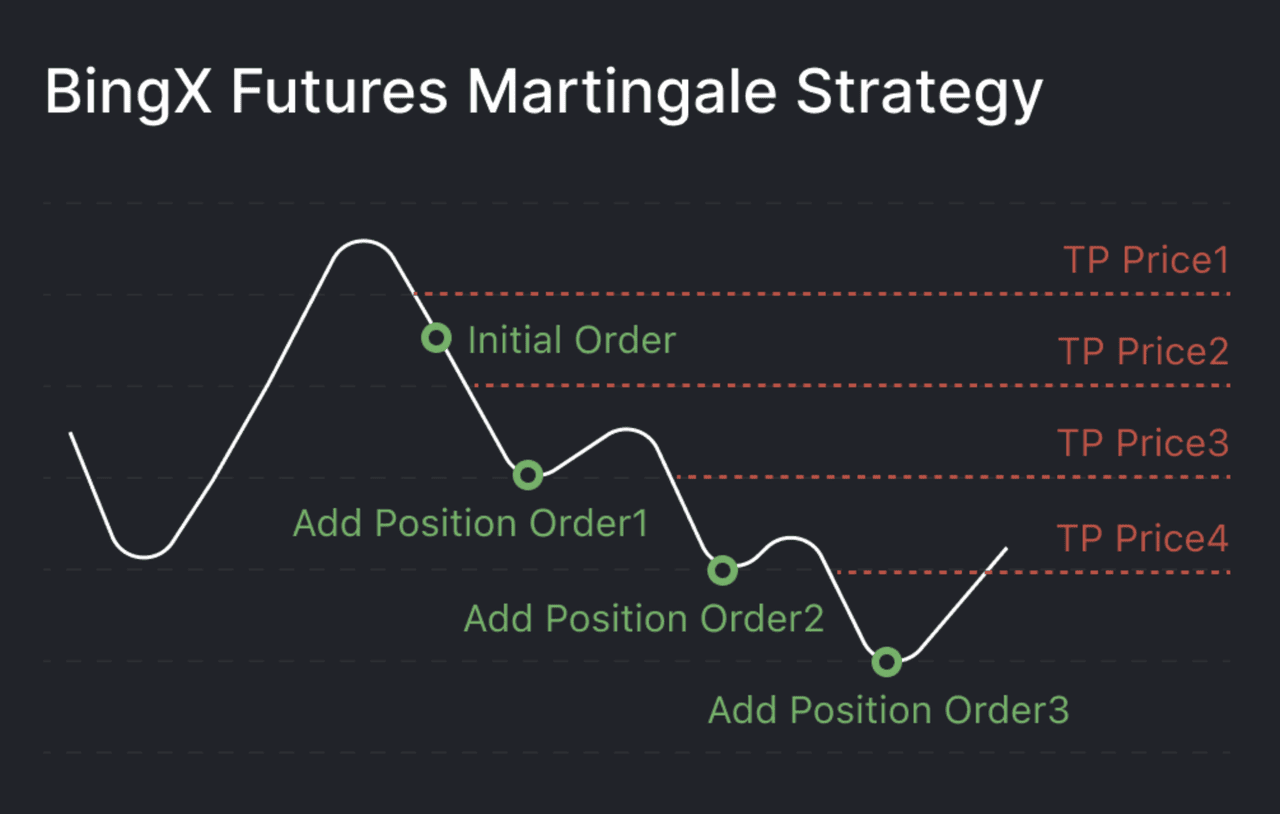
Let’s illustrate with a simple example. Imagine a trader with a $5,000 account who starts with a small 0.01 lot trade.
- Trade 1: 0.01 lots. It loses. Total loss is small.
- Trade 2: The EA opens a 0.02 lot trade. It also loses. The total number of lots open is now 0.03.
- Trade 3: The next trade is 0.04 lots. Another loss. The total is now 0.07 lots.
- Trade 4: The size increases to 0.08 lots. Loss. Total is 0.15 lots.
- Trade 5: Now 0.16 lots. Loss. Total is 0.31 lots.
- Trade 6: A 0.32 lot trade is opened. Loss. Total is 0.63 lots.
- Trade 7: A 0.64 lot trade is opened. Loss. Total is 1.27 lots.
After just seven consecutive losses, the EA is holding a position size of 1.27 lots. For a $5,000 account, this position size is enormous and consumes a massive amount of margin. The drawdown, or the unrealized loss on these open trades, becomes devastatingly large. The account is now extremely vulnerable to a margin call, where the broker forcibly closes all positions because the account equity can no longer sustain them. This is how an account is blown.
What is the core psychological flaw that makes Martingale trading so appealing yet dangerous?
The core psychological flaw that makes Martingale trading so appealing is its extremely high win rate, which creates a false sense of security and infallibility. The strategy is designed to win the vast majority of its trade cycles. An EA might successfully close 98 out of 100 series of trades in profit. This consistent stream of small wins can be very seductive. A trader sees their account balance ticking up regularly and may start to believe the system cannot fail. This predictable success masks the underlying danger.

The danger lies in the catastrophic risk/reward ratio of the remaining 2% of trades. For each of the 98 winning cycles, the EA might have aimed for a tiny profit of $10. To achieve this, it might have risked hundreds or even thousands of dollars in drawdown. The trader is effectively risking a large amount for a very small gain. When that inevitable, long losing streak occurs, the single resulting loss is not small. It is designed to be so large that it wipes out all the 98 previous wins and a substantial portion of the account balance, if not all of it. This imbalance makes it so perilous. The psychological comfort of frequent wins blinds the user to the low probability, high-impact event that is always lurking.
Is It Possible to Tame the Martingale Strategy for Profitability?
Yes, it is possible to make a Martingale strategy profitable, but this success is entirely dependent on implementing strict risk management, focusing on surviving drawdowns, and shifting your mindset from winning every trade to managing losing streaks. The default, uncontrolled Martingale is a path to ruin. However, a modified and controlled version can be a viable strategy.
To achieve this, one must move past the idea of the strategy as a “get rich quick” scheme. It requires treating it as a high-risk tool that needs careful calibration and constant oversight. The goal is no longer to simply let the EA run and hope for the best. Instead, the objective becomes defining the absolute worst-case scenario in advance and putting mechanical rules in place to prevent that scenario from ever wiping out the account. Here is a deeper look at the changes needed.
What fundamental shift in mindset is required to trade Martingale EAs successfully?
The fundamental shift in mindset required is moving from an objective of “never lose” to an objective of “manage losses effectively.” A successful Martingale trader accepts that losing streaks are inevitable and are a normal part of the strategy. Instead of fearing them, they plan for them. Their primary concern is not maximizing profit on every trade but preserving capital so they can continue trading after a losing sequence. This means defining an acceptable loss beforehand and having the discipline to stick to it.

For instance, a novice trader might see a series of five losing trades and feel panic, hoping the next one will be a winner. They might even manually add more funds to the account to avoid a margin call, compounding their risk. In contrast, a seasoned trader has already calculated that their system can withstand, for example, a maximum of eight losing trades. They have a pre-set rule, like an equity protection setting, that will automatically cut the loss after the eighth trade. They take the manageable loss, accept that the market did not behave as expected, and wait for the next clean setup. This mindset treats a losing streak not as a failure but as a predictable cost of doing business.
How does market condition influence the success or failure of a Martingale EA?
Market condition is one of the most important factors determining the success or failure of a Martingale EA, as the strategy performs exceptionally well in ranging markets but fails catastrophically in strong, trending markets. The very nature of the strategy is based on the principle of mean reversion, where price tends to return to an average level over time. This behavior is the hallmark of a ranging or sideways market.

In a ranging market, if an EA opens a buy order and the price drops, it will open larger buy orders at lower prices. Because the market is range-bound, the price is likely to reverse and move back up. This price reversal allows the EA to close its basket of trades for a profit. The oscillations provide the necessary pullbacks for the strategy to work as intended. Conversely, a strong, one-directional trending market is the system’s kryptonite. If the EA opens a buy trade in what turns out to be a powerful downtrend, the price will not revert. It will just keep dropping. The EA will continue to open larger and larger buy trades at progressively worse prices, digging a deeper and deeper hole until the account’s margin is completely exhausted. For this reason, many successful Martingale traders only run their EAs during specific market sessions known for less volatility or on currency pairs that tend to range more often.
What Are the Essential Risk Management Techniques for a Martingale EA?
There are five essential risk management techniques for a Martingale EA: controlling the Lot Multiplier, setting a Max Trades limit, using Equity Protection as a safety net, defining a clear Take Profit, and optimizing the Trade Distance between entries. These settings are the controls that transform the strategy from a gamble into a system with defined risk.
Next, we will examine each of these settings in detail. Ignoring any one of these can expose your account to the unbounded risk that makes the default Martingale strategy so dangerous. When used together, they create a multi-layered defense system for your capital. Think of them not as limitations but as the very tools that enable long-term survival and potential profitability. Let’s see how each one contributes to building a safer trading system.
What is a safe Lot Multiplier and how do you determine it for your account?
A safe Lot Multiplier is a conservative value, typically between 1.2 and 1.5, that slows down the exponential growth of trade sizes during a losing streak, thus reducing the speed at which margin is consumed. The multiplier is the factor applied to the last trade’s size to determine the next one’s size. A classic, high-risk Martingale uses a multiplier of 2.0, which leads to a rapid doubling sequence (0.01, 0.02, 0.04, 0.08, etc.). This aggressive setting is what causes accounts to blow up quickly. A safer multiplier creates a much flatter, more manageable progression.
To determine the right multiplier for your account, you must use a process of backtesting. This involves running the EA on a strategy tester using historical market data. You can run tests with different multipliers to observe the impact on the maximum drawdown. For example, you might run a test on one year of data with a multiplier of 1.8 and see that it produced a 60% drawdown. Then, you run the same test with a multiplier of 1.4 and find the drawdown was only 25%. While the profit might also be lower with the smaller multiplier, the primary goal is survival. A safe multiplier is one that, based on historical tests, keeps the drawdown within a level you are personally comfortable with.
What role does the ‘Max Trades’ setting play in preventing a margin call?
The ‘Max Trades’ setting plays the role of a hard stop, preventing a margin call by placing a firm limit on the number of trades the EA can open in a single losing sequence. It acts as a circuit breaker for the strategy itself. Without this limit, in a strong trend, the EA would continue opening progressively larger trades forever until the account runs out of margin. By setting a maximum number of trades, you are defining the point at which you accept a loss and stop digging the hole deeper.
For instance, if you set ‘Max Trades’ to 7, the EA will open its initial trade and can add up to six more trades if the market moves against the position. If the seventh trade is placed and the market continues its adverse move, the EA is forbidden from opening an eighth trade. At this point, the trader has a choice: either manually close the basket of trades for a loss or wait and hope for a reversal. Regardless, the exponential risk has been capped. This setting transforms an undefined risk into a calculated one. You know in advance what your maximum exposure will be during a losing streak, which is a cornerstone of responsible risk management.
How does setting a proper Equity Protection level act as the ultimate safety net?
Setting a proper Equity Protection level acts as the ultimate safety net by automatically liquidating all open positions and halting the EA if the account’s drawdown reaches a pre-defined percentage. This is the final line of defense for your capital. While other settings like Max Trades and the Lot Multiplier manage the risk of a single trading sequence, Equity Protection manages the total risk to your entire account. It protects you from unexpected market events, software glitches, or a strategy that is simply failing in current market conditions.
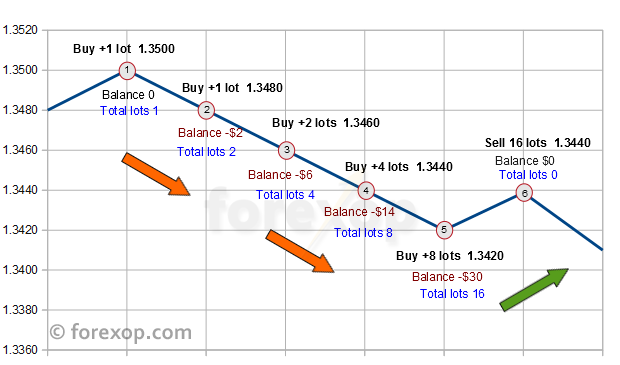
Imagine you have a $10,000 account and set the Equity Protection at 20%. This means that if the floating loss (drawdown) of all open trades causes your account equity to drop to $8,000, the EA will immediately close every trade. The loss is realized, but you have preserved $8,000, or 80% of your capital. Without this feature, a “black swan” market event could cause a drawdown so severe and rapid that it leads to a 100% loss. This setting allows the trader to define their absolute maximum pain point. It is a non-negotiable feature for anyone serious about trading a Martingale strategy for the long term, as it is the one control that guarantees you will survive to trade another day.
How Does a “Mastered” Martingale Strategy Compare to a Standard High-Risk Approach?
A mastered Martingale strategy wins on long-term survival and predictable, lower drawdown, while a standard high-risk approach provides higher short-term profit potential but faces an almost certain risk of total account failure over time. The two approaches operate on fundamentally different philosophies.
Let’s compare these two approaches side-by-side. The high-risk version is a sprint, aiming for quick, large gains while ignoring the cliff at the end of the road. The mastered, risk-managed version is a marathon, prioritizing consistency and capital preservation over rapid profits. It is designed to endure the inevitable challenges and continue generating returns over many years. The managed strategy accepts smaller profits in exchange for staying in the game.
What are the expected drawdown differences between a managed and an unmanaged Martingale system?
The expected drawdown differences between a managed and an unmanaged Martingale system are stark. An unmanaged system, with its aggressive settings, can easily experience drawdowns of 80%, 90%, or even 100%, leading to a total loss. In contrast, a well-managed system is specifically designed to keep its maximum drawdown within a pre-defined, acceptable limit, such as 20% or 25%. This is the single greatest distinction between the two methods.

To illustrate, let’s use some hypothetical numbers for a $10,000 account.
- Unmanaged System: This system might use a 2.0 multiplier with no limit on the number of trades. During a quiet, ranging month, it might have a drawdown of only 5%. However, when a strong trend forms, the drawdown can explode. It is not uncommon for such a system to go from 10% drawdown to 80% drawdown in a matter of days or even hours, ending in a margin call. The risk is uncapped.
- Managed System: This system might use a 1.4 multiplier, a max trades limit of 8, and an equity protection feature set at 25%. No matter how strong a trend becomes, the system has built-in brakes. The maximum possible loss is mechanically capped at $2,500 (25% of $10,000). The trader has exchanged unlimited profit potential for a guarantee of survival.
How does profitability change when applying strict risk controls to a Martingale EA?
Profitability changes from being erratic and unsustainable to being more modest but consistent when applying strict risk controls. An uncontrolled Martingale EA might show spectacular monthly returns, such as 20% or 30%, for several months in a row. This creates the illusion of a highly profitable system. However, this period is often followed by a single month with a 100% loss, wiping out all previous gains and the initial capital. The long-term average return of such a strategy is negative.

A managed Martingale strategy will have much lower monthly returns. Because it uses a smaller lot multiplier and may cut losses on a sequence of trades, its profit potential is inherently lower. It might aim for a more realistic 2-5% return per month. While this number seems less exciting, the key is its consistency. By avoiding the catastrophic loss, the managed system allows the power of compounding to work over time. A system that makes 3% per month consistently for five years is infinitely more profitable than a system that makes 20% a month for five months and then blows up. The focus shifts from short-term gains to long-term, sustainable wealth accumulation.
What Are Advanced Concepts and Alternatives to the Classic Martingale Strategy?
Advanced Martingale concepts move beyond the basic strategy by introducing opposite logic like Anti Martingale, incorporating technical filters in hybrid systems, and applying rigorous backtesting methods for validation. These approaches attempt to mitigate the inherent risks of the classic model by adding layers of qualification and analysis before and during trading. They represent an evolution from a pure mathematical sequence to a more nuanced trading methodology that considers specific market behaviors and conditions.
How does an Anti-Martingale strategy differ from a Martingale strategy?
An Anti Martingale strategy operates on a principle directly opposite to the classic Martingale. Instead of doubling trade size after a loss, a trader using an Anti Martingale approach doubles their trade size after a win. The core idea is to capitalize on winning streaks and minimize losses during losing periods. When a trade is successful, the next trade is larger, aiming to amplify gains during a favorable market trend. Conversely, after a losing trade, the trade size is reduced, often back to the initial starting amount, which helps protect capital when the market moves against the position.
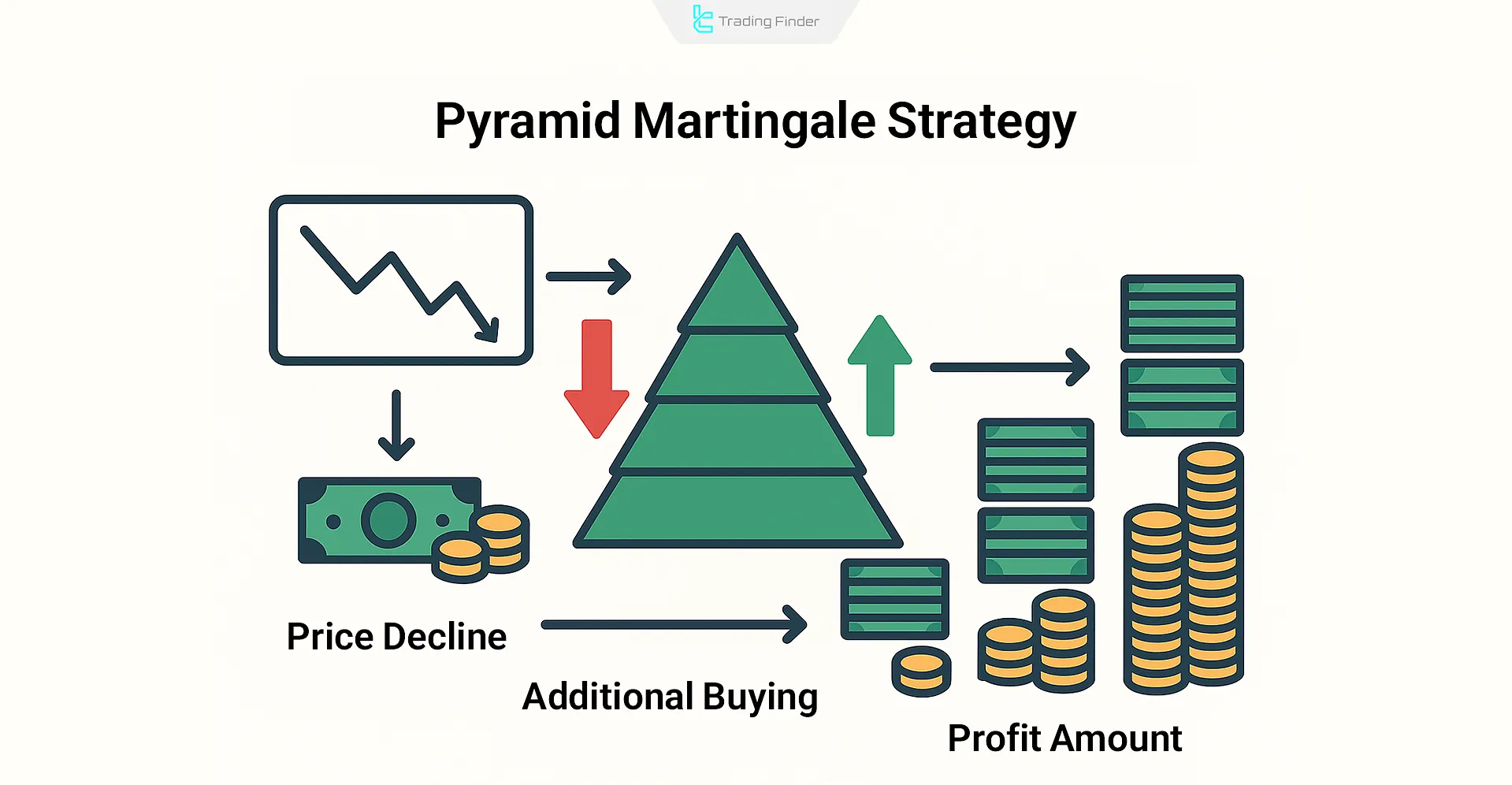
This approach fundamentally alters the trading psychology and market conditions for which it is suited. To explore this contrast further, let’s look at the key differences:
- Market Condition Suitability: The classic Martingale assumes that price will revert to a mean, making it theoretically suitable for ranging or sideways markets. The Anti Martingale strategy, however, thrives in trending markets. It seeks to ride a strong upward or downward price movement by increasing exposure as the trend continues.
- Risk Profile: A Martingale strategy exposes a trader to the risk of catastrophic loss from a single extended losing streak. An Anti Martingale strategy limits the risk on any single trade after a loss, but it forgoes the potential for quick recovery. The main risk here is missing out on large profits if a winning streak is cut short.
- Profit and Loss Dynamics: With Martingale, you have many small wins and the occasional devastating loss. With Anti Martingale, you experience many small losses and the occasional very large win. It is a system built around “letting your winners run” while “cutting your losers short,” a common piece of trading advice.
How can you effectively backtest a Martingale EA to avoid misleading results?
Properly backtesting a Martingale Expert Advisor requires a meticulous approach that goes far beyond a simple profit factor calculation. Misleading results often arise from poor quality data or insufficient testing periods, which can hide the true risk of the system blowing up an account. You need to simulate real world trading conditions as closely as possible to get a dependable picture of future performance.

To achieve a reliable backtest, focus on these critical elements:
- Use High Quality Tick Data: The standard backtesting data in many platforms is often incomplete, with large gaps between price points. This can cause the simulation to miss price spikes that would have triggered orders or stop losses in a live environment. You need to source and use 99.9% quality tick data, which models every single price tick and provides a much more accurate simulation of how the EA would have behaved.
- Test Over Long and Varied Periods: A Martingale EA might look incredibly profitable if tested over a few months of a quiet, ranging market. A genuine test must cover multiple years. This extended period should include different market conditions: strong trends, high volatility events like news releases, and flat, ranging periods. This shows how the EA holds up under stress, not just during ideal times.
- Analyze Maximum Drawdown Above All: The final profit figure is less important than the maximum drawdown. Maximum drawdown reveals the largest peak to trough decline in account equity during the test. For a Martingale system, this number is the most direct indicator of its risk. A system with a 70% drawdown, even if profitable, is extremely dangerous and likely to fail in the future.
What are Hybrid Martingale Systems and are they safer?
Hybrid Martingale systems are automated trading strategies that combine the core lot sizing principle of Martingale with other technical analysis tools. Instead of placing a trade simply because the previous one lost, a hybrid system uses indicators like the Relative Strength Index (RSI), Moving Averages, or Bollinger Bands to filter for higher probability entry points. For example, a hybrid EA might only initiate a Martingale sequence if the RSI indicates an oversold condition in a ranging market, suggesting a higher chance of price reversal.
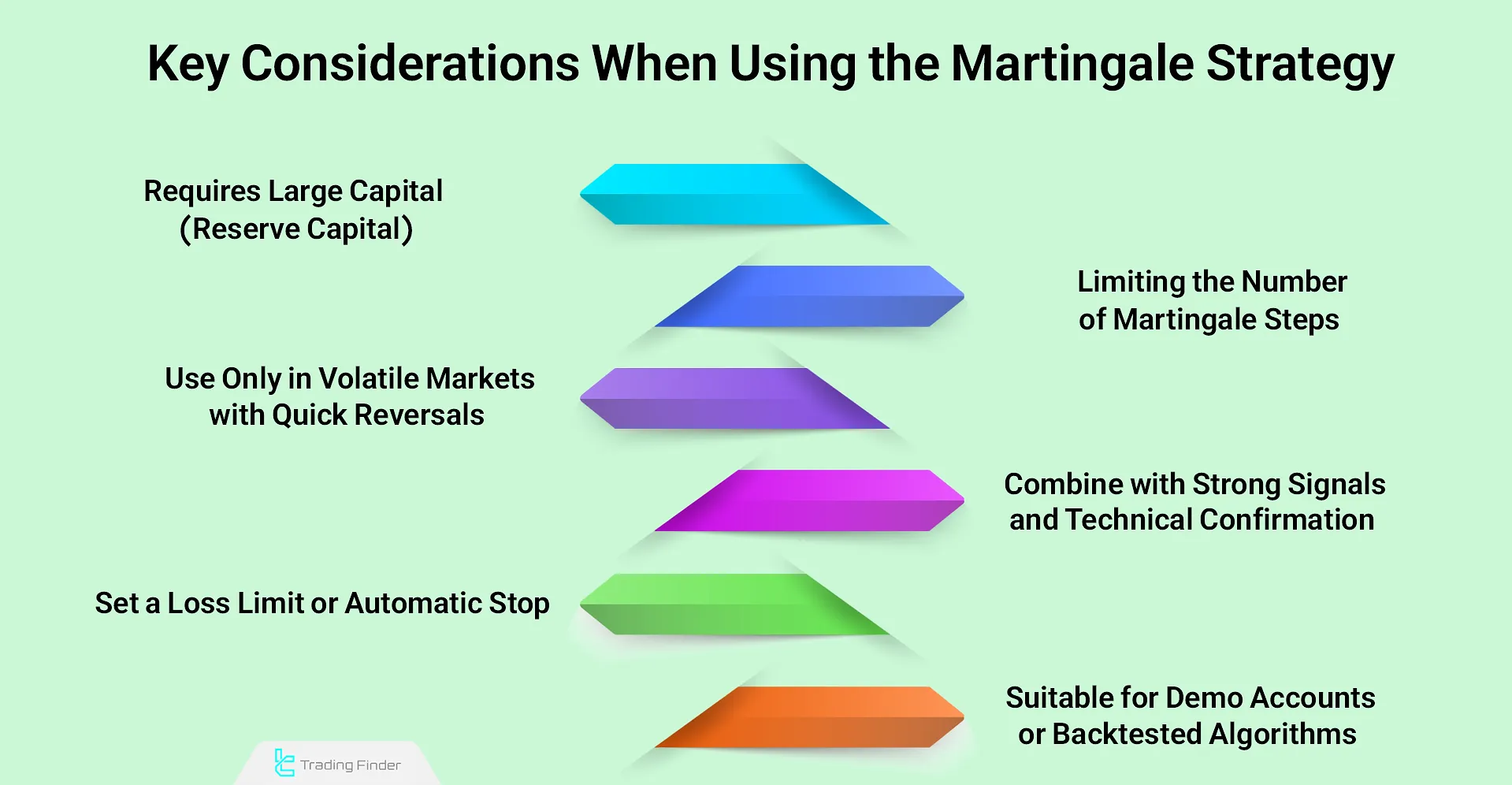
The primary goal of a hybrid system is to reduce the number of consecutive losses. By adding these technical filters, the system becomes more selective about when to enter the market. This selectivity aims to avoid initiating a trade sequence during a strong, sustained trend that could quickly lead to a margin call. Let’s see how this improves safety:
- Improved Entry Logic: The system is not just blindly doubling down. It waits for a specific technical setup that aligns with the strategy’s premise, which is usually mean reversion. This can shorten the length and depth of drawdown periods.
- Contextual Trading: Filters allow the EA to adapt better to the current market context. For instance, using a moving average filter can prevent the EA from taking buy trades in a clear downtrend, a common failure point for classic Martingale bots.
- Relative Safety: While these systems are generally safer than a “pure” Martingale EA, they do not eliminate the core risk. An unexpected market event or a persistent trend can still override the filters and lead to a long string of losses. The risk of a catastrophic loss is reduced, but it is never completely gone. They are a step toward risk management, not a complete solution.
Are there specific currency pairs or market conditions that are better suited for Martingale EAs?
Yes, the performance of a Martingale EA is heavily dependent on the chosen currency pair and the prevailing market conditions. The strategy is built on the statistical assumption of mean reversion, the idea that price will eventually return to its average. Therefore, it performs best on instruments that exhibit this behavior and struggles on those that experience long, sustained trends.
Certain pairs are often preferred by traders using this strategy due to their historical price action. You’ll notice these pairs often lack a strong directional bias over long periods.
- Range Bound Pairs: Currency pairs that tend to trade within a predictable range for extended periods are considered more suitable. Pairs like AUD/CAD (Australian Dollar vs. Canadian Dollar) and EUR/CHF (Euro vs. Swiss Franc) are classic examples. These economies are often linked, and their currencies tend to oscillate rather than embark on multi year trends, providing more opportunities for price to revert to the mean and close a series of trades in profit.
- Low Volatility Pairs: Instruments with lower average volatility are also favored. They are less prone to sudden, massive price spikes that can quickly escalate the risk of a Martingale sequence. The steady, less erratic movement allows the strategy to function without the account being exposed to extreme and immediate margin pressures.
- Unsuitable Instruments: In contrast, instruments known for strong and persistent trends are exceptionally dangerous for Martingale strategies. This includes major trending pairs like GBP/JPY (British Pound vs. Japanese Yen) and commodities like Gold (XAU/USD). A strong, one directional move in these markets can continue for weeks or months, making a mean reversion strategy unviable and leading to an almost certain account wipeout.
