
Research
Decoding EX4 vs MQ4: The Core Difference Between Source Code & Compiled Files
The core difference between EX4 and MQ4 files is that an MQ4 file is the human-readable source code used by programmers to write and edit trading robots and indicators, while an EX4 file is the compiled, machine-readable version of that code that the MetaTrader 4 platform actually executes. You can think of the MQ4 as a detailed recipe and the EX4 as the final baked cake. A programmer works with the recipe, but the person enjoying the result only interacts with the cake. This distinction is fundamental to how custom tools are developed, shared, and used within the MT4 environment.
The process that connects these two files is called compilation, where the MetaEditor software translates the MQ4 source code into an executable EX4 file. Without this step, a program written in MQL4 is just a text file that the trading platform cannot understand or use. The compiler acts as a bridge, checking the code for errors and converting it into a language the computer can process quickly. This ensures that trading actions happen with maximum speed and efficiency.
Furthermore, it is technically possible to attempt converting an EX4 file back into an MQ4 file through a process called decompilation, but this is often difficult and produces imperfect results. Decompilation tools try to reverse-engineer the machine code, but important information like comments and original variable names is lost forever during the initial compilation. The resulting code is frequently hard to read, incomplete, and may not function correctly, especially with newer files that have built-in protections.
This separation between a development file (MQ4) and an execution file (EX4) is a standard practice in software development. It serves two main purposes: performance and protection. For traders, it means the tools they use run efficiently. For developers, it protects their intellectual property from being easily copied or stolen. Let’s explore these concepts in greater detail.
What Are MQL4 Files: The Foundation of MetaTrader 4 Automation?
MQL4 files are the essential components for creating custom trading tools in MetaTrader 4, existing in two primary forms: the MQ4 source code file for development and the EX4 compiled file for execution by the platform. These two file types work together to bring automated strategies, custom indicators, and scripts to life. Every custom tool you use on an MT4 chart started as an MQ4 file before being transformed into an EX4 file that the platform can run.
To understand this relationship better, it is helpful to examine each file type on its own. They represent two different stages in the life cycle of a program: the creation stage and the usage stage. One is designed for human interaction, while the other is designed for machine interaction.

What is an MQ4 file (Source Code)?
An MQ4 file is a source code file containing programming instructions written in the MQL4 language; it is human-readable and can be created, opened, and modified using the MetaEditor application. This file is the blueprint for any Expert Advisor (EA), custom indicator, or script. It holds all the logic, calculations, and rules that define how the tool will behave on a trading chart. Because it is plain text, a programmer can read through it to understand its function, find and fix bugs, or add new features.
:max_bytes(150000):strip_icc()/mq4-text-dae5975b8fcc4fe49ec2b2bafb5d9366.png)
To illustrate, when you open an MQ4 file in MetaEditor, you will see structured text with recognizable words, commands like `OrderSend()` or `iMA()`, and mathematical operations. A key feature of MQ4 files is the ability to include comments. These are notes written by the programmer, ignored by the computer, that explain what different parts of the code do. For example, a line might say `// Calculate the stop loss based on the Average True Range`. These comments are invaluable for anyone trying to understand or modify the program later. Essentially, the MQ4 file is where all the creative and logical work happens. It is the raw material from which the final, usable tool is built.
What is an EX4 file (Compiled File)?
An EX4 file is the compiled and executable version of an MQ4 file; it contains machine code that the MetaTrader 4 terminal can directly execute, but it is not human-readable and cannot be easily edited. Once a programmer is finished writing the code in the MQ4 file, they use the compiler in MetaEditor to convert it into an EX4 file. This process transforms the text-based instructions into a binary format, a sequence of ones and zeros that the computer’s processor understands. This conversion makes the program run much faster and more efficiently than if the platform had to read the text file line by line.
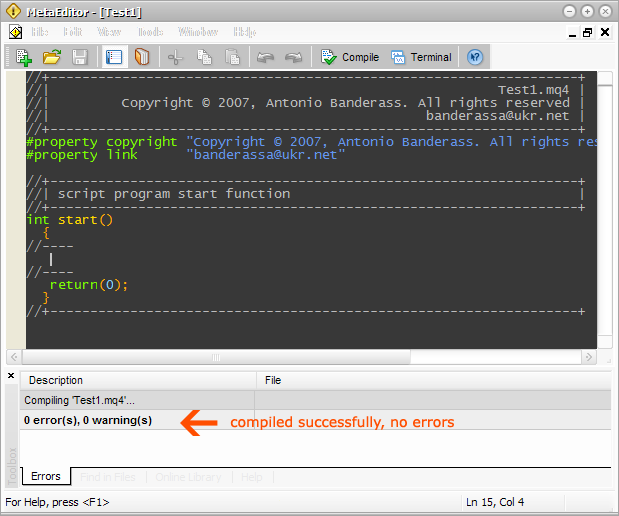
When you purchase or download a commercial EA or indicator, you almost always receive the EX4 file. This serves two purposes. First, it is the only file type the MT4 platform can actually use to place on a chart. You put the EX4 file into the correct folder (e.g., `MQL4/Experts` or `MQL4/Indicators`), and it becomes available in your trading terminal. Second, it protects the developer’s intellectual property. Since the EX4 file cannot be easily read or changed, it prevents users from stealing the underlying trading strategy or code and reselling it as their own. The EX4 file is the finished product, ready for use.
How Does an MQ4 File Become an EX4 File?
An MQ4 file becomes an EX4 file through a one-way process called compilation, where the special MQL4 compiler built into the MetaEditor program reads the human-readable source code and translates it into machine-executable instructions. This conversion is a necessary step to make any custom indicator, script, or Expert Advisor functional within the MetaTrader 4 platform. The compiler acts as a translator, taking the abstract ideas written in MQL4 and turning them into concrete commands the computer can follow.
The entire process happens within MetaEditor, the dedicated coding environment that comes with MT4. A developer writes their code in an MQ4 file and then simply clicks the “Compile” button. The compiler then performs its work, and if successful, a new EX4 file with the same name appears in the same directory. This new file is now ready to be used on the trading platform.
What is the primary role of the compiler in MQL4?
The primary role of the compiler in MQL4 is twofold: first, to act as a syntax checker that validates the source code for errors, and second, to translate that error-free code into a low-level, executable EX4 file. The compiler is the gatekeeper that determines whether a program is ready for use. Its first job is to meticulously scan every line of the MQ4 file to look for mistakes in the programming language’s rules, or its “syntax.” This is similar to a word processor checking a document for spelling and grammar errors.
:max_bytes(150000):strip_icc()/mq4-files-5a95cd93c5542e003692d202.png)
For instance, if a programmer forgets to put a semicolon at the end of a line, uses a variable that was never defined, or misspells a function name, the compiler will halt the process. It will then report the specific error and the line number where it occurred in a log at the bottom of the MetaEditor screen. This feedback is essential for debugging, as it allows the developer to quickly locate and fix problems in their code. Without this error-checking step, a faulty program could cause the trading platform to crash or behave unpredictably. Only once the compiler confirms that the entire MQ4 file is free of syntax errors will it proceed to the next step: translation into an EX4 file.
Can MetaTrader 4 run an MQ4 file directly?
No, MetaTrader 4 cannot run an MQ4 file directly because the platform is engineered to execute compiled machine code for maximum performance, not interpret source code in real time. The MT4 terminal needs to process data, perform calculations, and execute trading orders as quickly as possible. Interpreting human-readable source code line-by-line is a slow and resource-intensive process. Executing a compiled EX4 file is thousands of times faster because the instructions are already in a binary format that the computer’s CPU can understand instantly.
:max_bytes(150000):strip_icc()/ex4-files-5aeb1b39eb97de00390464ad.png)
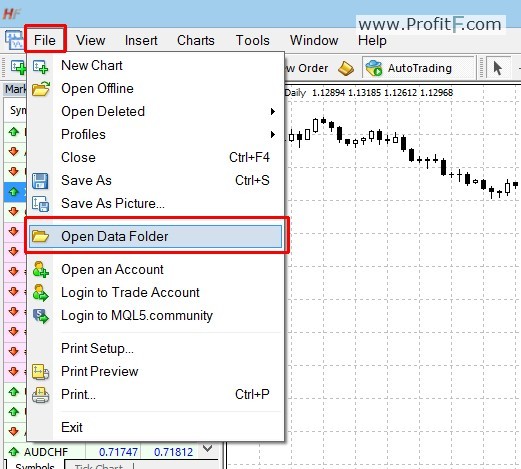
This is a deliberate design choice made for the sake of speed and stability, which are critical in a trading environment where market conditions can change in milliseconds. To use a custom tool, you must have its corresponding EX4 file. If you only have the MQ4 source code, you must first open it in MetaEditor and successfully compile it. If the compilation process is successful, an EX4 file is generated. You then place this EX4 file into the appropriate MT4 data folder (like `MQL4/Indicators`). After restarting the platform or refreshing the Navigator panel, the compiled tool will appear and be ready to attach to a chart. The MQ4 file remains the editable blueprint, but the EX4 file is the working tool.
What Are the Core Differences Between MQ4 and EX4 Files?
The core differences are that MQ4 files are human-readable source code for development, while EX4 files are non-readable compiled code for execution; MQ4 is intended for editing and debugging, while EX4 is for distribution and protecting intellectual property. These distinctions define their separate roles in the lifecycle of an MT4 program. The MQ4 file is the developer’s domain, a flexible and transparent blueprint. In contrast, the EX4 file is the end-user’s tool, a fixed and efficient final product.
To better visualize these distinctions, let’s compare their key attributes directly.
| Feature | MQ4 File (Source Code) | EX4 File (Compiled File) |
|---|---|---|
| Readability | Human-readable plain text. | Machine-readable binary code. |
| Editability | Can be opened and modified. | Cannot be edited directly. |
| Purpose | Development, debugging, customization. | Execution, distribution, IP protection. |
| Creation | Written by a programmer in MetaEditor. | Generated by the MQL4 compiler. |
| Used By | Programmers and developers. | MetaTrader 4 trading platform. |
How do MQ4 and EX4 compare in terms of readability and editability?
MQ4 and EX4 files are polar opposites in readability and editability; MQ4 files are fully readable and editable with a basic text editor or MetaEditor, while EX4 files are binary, making them unreadable and uneditable through normal methods. An MQ4 file is designed for transparency. When you open it, you see the developer’s original code, complete with logical structures, descriptive variable names like `TrailingStopPips`, and helpful comments that explain complex sections. This transparency allows anyone with programming knowledge to understand how the tool works, customize its settings, or fix a bug. It is an open book.

Conversely, an EX4 file is a black box. If you attempt to open an EX4 file in a text editor, you will not see organized code. Instead, you will be met with a chaotic jumble of symbols, letters, and non-printable characters. This is the raw binary data that the computer reads. It is not meant for human eyes and provides no insight into the trading strategy within. This lack of readability means the file is also not editable. You cannot change a setting or alter the logic of an EX4 file. You can only use it as the developer intended, making it a secure and fixed piece of software.
What is the difference in purpose between an MQ4 and an EX4 file?
The difference in purpose is that an MQ4 file is for the creation, modification, and debugging of trading algorithms, whereas an EX4 file is for the execution, distribution, and protection of the finished algorithm. The MQ4 file is fundamentally a development tool. It is the workshop where a programmer builds and refines an idea. Its purpose is to be changed, tested, and improved. A developer spends their time working within the MQ4 file, tweaking parameters, optimizing code for speed, and ensuring the logic is sound before it is ever used in a live environment. It is the ‘behind-the-scenes’ file.
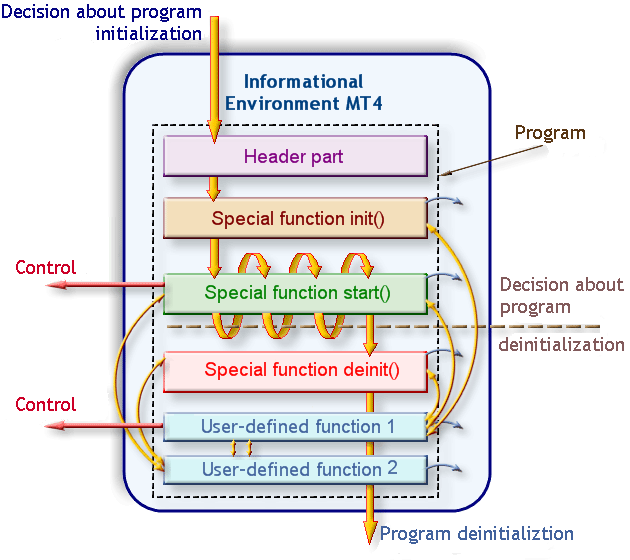
The EX4 file, on the other hand, serves a completely different purpose. Its primary function is execution. It is the final, optimized version of the program that is loaded by MetaTrader 4 to run on a chart. Its secondary purpose is distribution. When a developer sells an Expert Advisor, they provide the customer with the EX4 file, not the MQ4. This allows the customer to use the tool without giving them the ability to see or steal the proprietary source code. This protects the developer’s hard work and intellectual property, ensuring their unique trading strategy remains confidential. The EX4 is the ‘on-stage’ file, the final performance delivered to the user.
Is It Possible to Convert an EX4 File Back to an MQ4 File?
Yes, it is technically possible to attempt converting an EX4 file back to an MQ4 file using a specialized program called a decompiler, but this process is often imperfect, unreliable, and the resulting source code may be incomplete or non-functional. This reverse-engineering process is known as decompilation. While tools for this exist, they do not perform a perfect conversion. Instead, they analyze the low-level machine code in the EX4 file and try to reconstruct what the original MQ4 source code might have looked like.
The quality of the resulting MQ4 file depends heavily on the complexity of the original program and, more importantly, the version of the MQL4 compiler that was used to create the EX4 file. Modern versions of the compiler include advanced protections specifically designed to make decompilation extremely difficult, if not impossible. Therefore, while the answer is technically “yes,” in practice it is far from a simple or guaranteed process.
What is the process of decompilation?
The process of decompilation involves using a specialized software tool, known as a decompiler, to analyze the binary instructions within an EX4 file and attempt to regenerate the high-level MQL4 source code from which it was created. Think of it as trying to write down the original recipe for a cake just by tasting the finished product. The decompiler examines the machine code, which consists of low-level commands like “add this number” or “move data here,” and tries to group them into logical structures that resemble the original MQL4 code, such as `if-else` statements, loops, and functions.
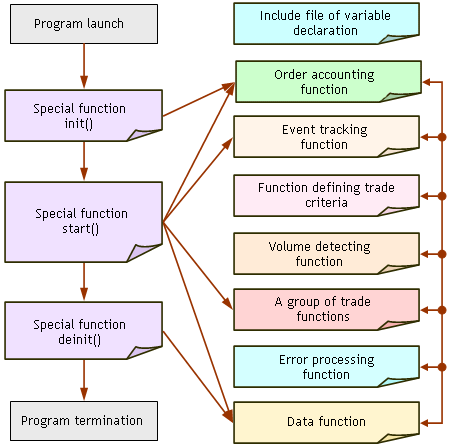
The decompiler essentially makes educated guesses. It identifies patterns in the machine code that correspond to common programming constructs. It reconstructs the flow of the program and tries to assign placeholder names to variables and functions. The output is a brand new MQ4 file that, in a best-case scenario, will be functionally equivalent to the original. However, this reconstructed code is an approximation. It is not the original source code but rather the decompiler’s best effort at recreating it based on the limited information available in the compiled file.
Why is decompiling often unsuccessful or problematic?
Decompiling is often unsuccessful or problematic because crucial information is permanently lost during the original compilation process, and modern MQL4 compilers incorporate anti-decompilation technologies. There are several key reasons why the output of a decompiler is frequently flawed. First, all the original comments are stripped out. These notes, which explain the programmer’s intent, are vital for understanding complex logic. Without them, the code becomes a puzzle. Second, meaningful variable and function names (e.g., `CalculateProfitTarget`) are replaced with generic, system-generated names like `var_1` or `sub_4010F0`. This makes the code exceptionally difficult to read and understand.

Furthermore, the logical structure of the code can be optimized and rearranged by the compiler in ways that are efficient for the machine but confusing when converted back to source code. The most significant barrier, however, is the ongoing effort by MetaQuotes (the creators of MetaTrader) to prevent decompilation. Newer builds of the MQL4 compiler deliberately obfuscate the compiled code, adding layers of complexity and security measures that are designed to break decompilation tools. As a result, trying to decompile a recently created EX4 file is very likely to fail or produce unusable garbage code.
What Are the Advanced Implications for Developers and Traders?
For developers, the implications revolve around intellectual property protection and distribution control, while for traders, they involve usage rights, compatibility, and the inability to customize purchased tools. These distinctions move beyond simple definitions and into the practical, day to day realities of using the MetaTrader 4 platform for automated trading. For the creator, the separation between the source code and the compiled file is the foundation of their business model. For the end user, this separation defines the boundaries of what they can and cannot do with a trading tool they have acquired.
How does the EX4 format serve to protect a developer’s intellectual property?
The EX4 file format acts as a digital lockbox for a developer’s hard work and unique trading strategies. When a programmer writes an Expert Advisor, they create a human readable script in an MQ4 file. This file contains every rule, calculation, and piece of logic. Compiling this MQ4 file transforms it into an EX4 file, which is a machine readable format. The original, intelligible logic is converted into a complex set of instructions that the MetaTrader 4 terminal can execute directly.
This compilation process is the first and most important layer of protection. It prevents a casual user from simply opening the file and seeing the secret formula behind the trading robot. Without the MQ4 source code, one cannot easily view, copy, or alter the core strategy. While advanced programmers can attempt to “decompile” an EX4 file back into a readable format, the process is difficult and rarely perfect. The resulting code is often messy, lacks the original comments and variable names, and can be challenging to understand or modify reliably.
This protection is essential for anyone selling their trading tools.
- It prevents unauthorized copying and distribution, safeguarding the developer’s revenue stream.
- It stops others from making minor changes to the code and rebranding the product as their own.
- It maintains the strategic advantage of a proprietary algorithm in a competitive market.
What are the main distinctions between MQL4 (MQ4/EX4) and MQL5 (MQ5/EX5) files?
While they serve similar purposes on their respective platforms, MQL4 and MQL5 files are fundamentally different due to the languages they are built upon. MQL5 is not a simple upgrade to MQL4; it is a more advanced, object oriented programming language that mirrors C++. This core difference creates several key distinctions. Code written for MQL4 is not compatible with MetaTrader 5, and MQL5 code will not run on MetaTrader 4 without extensive rewrites.

One of the most noticeable differences is in how trades are managed. MQL4 uses a straightforward system where each trade is a separate order. MQL5, by contrast, uses a position based system that aggregates orders for the same instrument. This “netting” system is standard in many markets but can be different from the “hedging” approach MQL4 allows, where you can have simultaneous long and short trades on the same currency pair. The MQL5 language and its corresponding EX5 files are designed to handle more complex tasks, like multi currency backtesting and advanced analytical tools, directly within the platform.
These language and platform differences are reflected in their associated files.
- An EX5 file is compiled for the advanced architecture of MT5, which includes features like a built in economic calendar and a deeper market depth view.
- MQL5 promotes a more structured, object oriented programming style, which can lead to more complex but also more robust and reusable code.
- The MetaEditor environment for MQL5 provides superior debugging and code management tools compared to its MQL4 counterpart.
Why might an Expert Advisor have an EX4 file but no MQ4 file?
The most common reason for receiving an EX4 file without its corresponding MQ4 source code is that you have purchased or licensed a commercial product. In the software world, it is standard practice for developers to distribute the executable file, not the underlying source code. This is the same principle that applies when you install an application on your computer; you get the program that runs, not the blueprint that created it.
For developers of Expert Advisors, this model is essential for protecting their intellectual property. The MQ4 file contains the complete trading strategy, the result of potentially thousands of hours of research, development, and testing. Giving away the source code would be like a chef giving away the secret recipe to their signature dish. It would allow anyone to copy, modify, and resell their unique creation without permission or compensation. By providing only the EX4 file, the developer grants the user the right to use the software on their trading account while retaining ownership and control over the source code. This also helps ensure the stability of the EA, as users cannot accidentally introduce bugs or errors by tampering with the code.
This commercial reality shapes the market for automated trading tools.
- Developers are able to monetize their expertise and build a sustainable business.
- Users receive a finished, tested product intended to be used as is.
- The separation protects the developer from support requests related to user modifications of the source code.
Can differences in MetaTrader 4 build versions affect EX4 file compatibility?
Yes, differences in MetaTrader 4 build versions can absolutely affect EX4 file compatibility, especially concerning the major update known as build 600, which was released in 2014. This was not a minor patch; it was a fundamental overhaul of the MQL4 programming language and the MetaEditor compiler. Before this update, MQL4 was a simpler, procedural language. After build 600, MQL4 was redesigned to be much more like MQL5, incorporating many features of object oriented programming like classes and structures.

This created a compatibility divide. An EX4 file that was compiled using a version of MetaEditor before build 600 may not function correctly on a modern, updated MT4 terminal. The old file might fail to load or produce unexpected errors. Conversely, an EX4 file compiled on a new version of the platform will not work on an old, outdated terminal. The new compiler is more strict and generates code differently. Old MQ4 source code often needs modifications, such as adding the `#property strict` directive, to even compile without errors on the modern MetaEditor.
Traders using older EAs need to be aware of this technical history.
- When acquiring an older or unmaintained Expert Advisor, you should verify if it has been updated for post build 600 compatibility.
- Most modern brokers force automatic updates to their MT4 terminals, so nearly all users today are on a recent build, making this mainly an issue for legacy tools.
- Developers must ensure their code remains compatible with the latest platform versions to serve their client base properly.
