
Research
Mastering Your EA for ECN Account: A Guide to Flawless Execution

Dec
To successfully master your Expert Advisor (EA) on an ECN account, you must first understand the core differences of the ECN environment, then configure specific EA settings for variable spreads and latency, and finally, program your EA to correctly handle ECN-specific execution events like partial fills and slippage. This approach moves beyond the simple “plug-and-play” mindset often associated with standard accounts. It requires a deeper appreciation for how direct market access influences every trade your automated system takes. By focusing on these three pillars, you can transform your EA from a fragile strategy into a robust trading tool built for a professional environment.
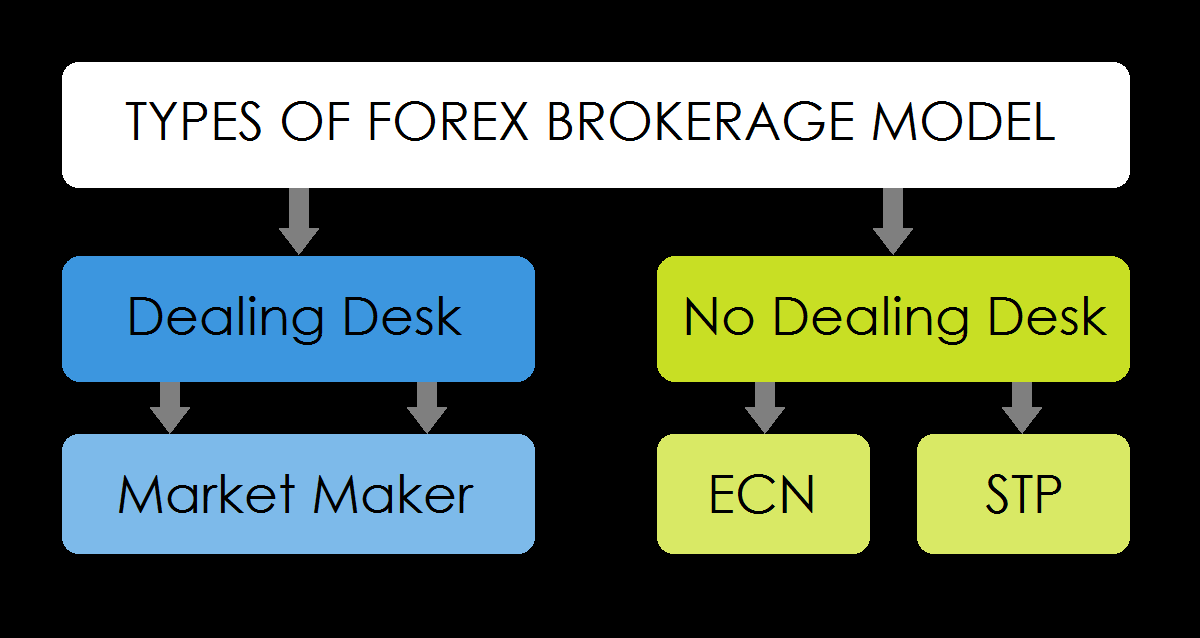
The primary difference when running an EA on an ECN account is the direct interaction with a live market, which introduces variable spreads, trading commissions, and a high sensitivity to execution speed. Unlike Market Maker accounts where the broker sets the prices, an ECN broker simply connects your orders to a network of liquidity providers. This creates a more transparent but also a more demanding trading landscape. Your EA must be prepared for prices that change with every tick and spreads that can widen in seconds during news events.
Therefore, the essential EA settings that need configuration for an ECN environment are maximum slippage tolerance, dynamic stop-loss and take-profit calculations, and a robust logic for handling order rejections. You cannot use default settings designed for fixed-spread accounts. Adjusting slippage allows your EA to execute trades in a fast-moving market, while dynamic stop calculations prevent “invalid stop” errors caused by fluctuating spreads. This level of customization is what separates a profitable ECN strategy from one that constantly fails.
These adjustments are necessary because the ECN model prioritizes filling your order at the best available price rather than a guaranteed price, a distinction that has major implications for automated strategies. This guide provides a detailed breakdown of how to adapt your EA for the challenges and opportunities of the ECN market, leading to more consistent and flawless execution.
What Are the Fundamental Differences When Running an EA on an ECN Account?
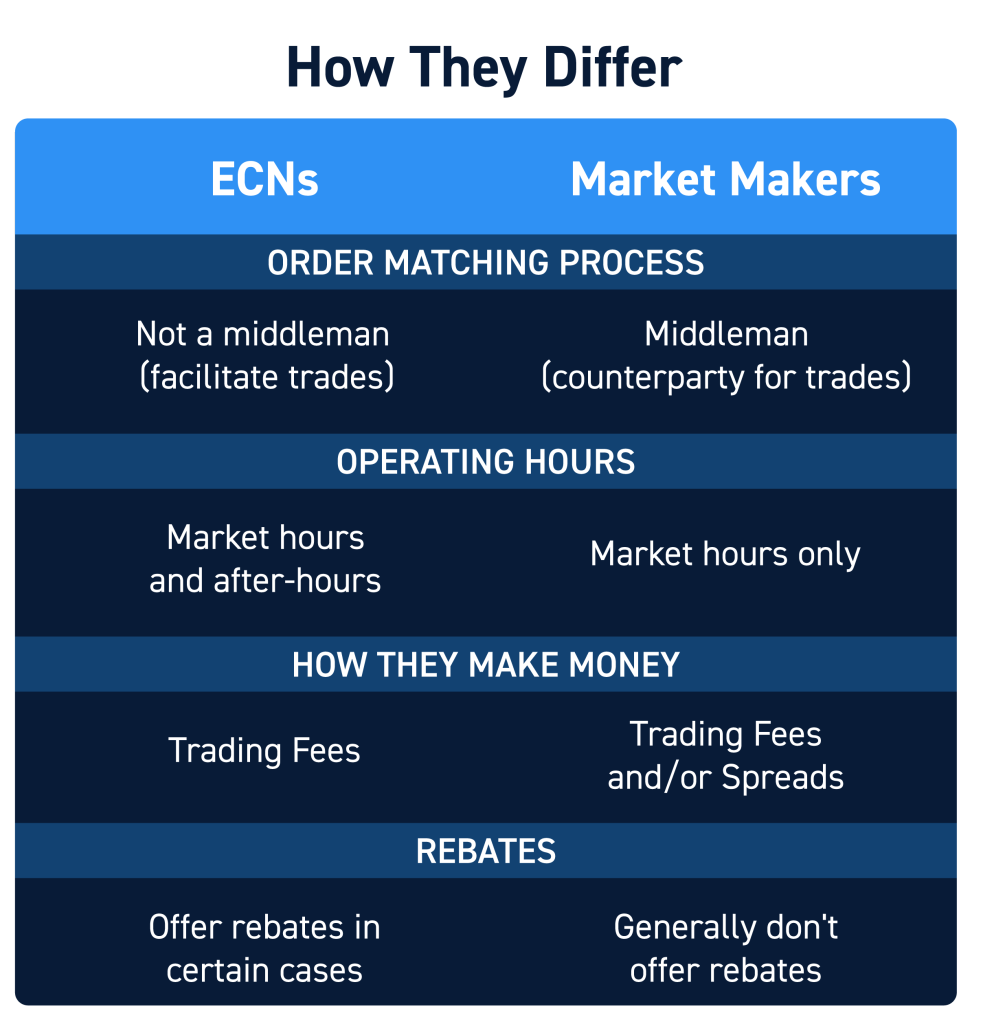
The fundamental differences when running an EA on an ECN account are its direct market access execution model, the presence of variable spreads and commissions instead of a fixed spread, and a much higher sensitivity to network latency. These factors create a trading environment that is faster and more transparent but also requires a more sophisticated automated strategy compared to standard or Market Maker accounts, where the broker often takes the opposite side of the trade and controls the pricing feed.
To understand these differences more clearly, let’s break down the core components that directly affect how your EA performs. The ECN model is not just a different name; it represents a completely different way of processing your orders. Your EA is no longer trading in a curated environment but in a live, competitive marketplace. This shift has profound consequences for every aspect of your automated trading, from order entry to trade management.

What is the role of a liquidity provider in an ECN execution model?
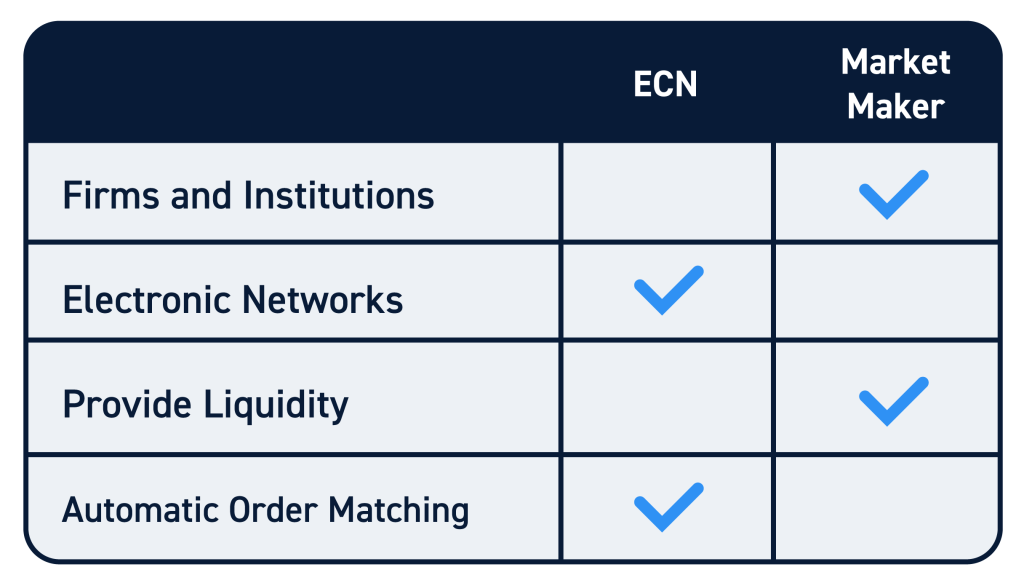
A liquidity provider in an ECN execution model is a large financial institution, such as a major bank, investment firm, or hedge fund, that continuously supplies bid and ask prices to the ECN network, creating a deep pool of orders that can be matched against. These providers are the backbone of the ECN system. They essentially compete with each other to offer the best prices, and your ECN broker’s job is to find the best available price from this collective pool and pass it directly to you. Your EA’s order is not filled by the broker, but by one or more of these liquidity providers.

This structure is what enables Direct Market Access (DMA). Let’s see how this works in practice.
- Elimination of Conflict of Interest: In a Market Maker model, the broker is your counterparty. If you win, they lose, and if you lose, they win. This creates a direct conflict of interest. In the ECN model, the broker is a neutral intermediary. They have no stake in whether your trade wins or loses. Their profit comes from a small, fixed commission on each trade. This aligns the broker’s interest with yours; they want you to trade more, and successful traders tend to trade more.
- Price Formation: The price you see on an ECN platform is a composite of the best bid and ask prices from all liquidity providers in the network. This competition naturally leads to tighter spreads than a single Market Maker could offer. When you place a buy order, the ECN system instantly matches it with the lowest ask price available from a liquidity provider.
- Depth of Market: ECN platforms often provide access to “Depth of Market” (DOM) data. This allows you to see the volume of buy and sell orders at different price levels, not just the best bid and ask. For an advanced EA, this information can be used to gauge market sentiment and liquidity before placing a trade, offering a significant analytical edge.
How does slippage on an ECN account differ from requotes on a Market Maker account?
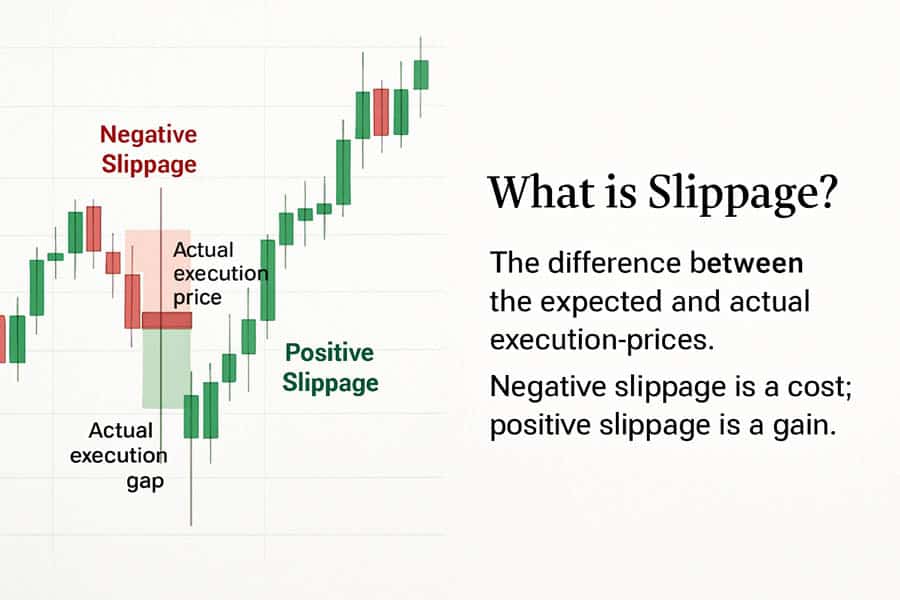
Slippage on an ECN account is preferable for an EA as it represents a natural outcome of market speed where an order is filled at the next best available price, whereas requotes on a Market Maker account are a form of broker intervention that rejects the order and offers a new price, halting the automated process. An EA is designed for execution, and slippage, while not always ideal, is a form of execution. A requote is a complete failure to execute.

To better grasp this, let’s compare the two events from an EA’s perspective.
- Slippage (ECN): Imagine your EA wants to buy EUR/USD at 1.10000. In the milliseconds it takes for your order to reach the server, the best price might have moved to 1.10002. An ECN broker will fill your order at this new price. This 0.2 pip difference is negative slippage. Conversely, the price could move in your favor to 1.09998, resulting in positive slippage. For an EA, getting into the trade, even with a tiny price difference, is usually better than missing the move entirely. The key is that the trade happens.
- Requotes (Market Maker): Using the same scenario, when your EA’s order to buy at 1.10000 reaches the Market Maker, they might see the price has already moved to 1.10002. Instead of filling you, they reject your order and send back a “requote” asking, “The price is now 1.10002, do you still want to buy?” This completely stops your automated strategy. The EA would need complex logic to handle this rejection, decide whether to accept the new price, and resubmit the order, by which time the opportunity may be gone.
For an automated system, slippage is a manageable variable. You can program a “maximum slippage” parameter into your EA to control how much deviation you are willing to accept. A requote, however, is a hard stop. It introduces unpredictability and delay, which are toxic for automated strategies that rely on speed and precision.
What Are the Essential EA Settings to Configure for the ECN Environment?
The essential EA settings to configure for the ECN environment are the maximum slippage parameter to control order fills, dynamic stop-loss and take-profit logic that adapts to variable spreads, and code that can handle rapid price ticks without generating excessive trades. These settings are not optional tweaks; they are foundational requirements for an EA to function reliably on an ECN platform. Without them, an EA designed for a stable, fixed-spread broker will likely fail due to constant execution errors and an inability to adapt to real market conditions.
The goal of these configurations is to make your EA resilient. An ECN environment is dynamic, and your EA’s logic must reflect that. It needs the flexibility to execute trades during moderate volatility but also the discipline to protect itself from extreme price movements. Let’s look at the practical steps and best practices for adjusting these critical parameters to help your automated strategy thrive.
How should you define maximum slippage in your EA’s order execution function?
You should define maximum slippage in your EA’s order execution function by setting a precise point value that creates a balance between ensuring your order gets filled during volatile periods and protecting your strategy from entering a trade at a significantly worse price than intended. This setting tells the broker the maximum price deviation you are willing to accept between the moment you send the order and the moment it is executed. It is a direct instruction to the server, and finding the right value is a process of balancing opportunity with risk.

Here is a more detailed look at best practices for setting this value.
- Start with a Reasonable Baseline: For most currency pairs on a 5-digit broker, a maximum slippage setting of 2 to 3 points (which translates to 0.2 to 0.3 pips) is a common and effective starting point. This value is small enough to prevent disastrous fills during a major news event but large enough to allow your orders to be executed during normal market volatility when the price might fluctuate by a point or two.
- Understand the Trade-Off: If you set the slippage too low (e.g., 1 point or less), you risk having your orders rejected frequently with an “Off Quotes” error, especially when the market is moving quickly. Your EA will see a setup, try to enter, but fail because the price moved slightly before the order was filled. If you set it too high (e.g., 10 points), your orders will almost always get filled, but you risk entering a trade at a much less favorable price, which could invalidate the entire premise of your trading signal.
- Consider Dynamic Adjustments: More advanced EAs can be programmed to adjust the maximum slippage setting based on current market conditions. For example, the EA could use the Average True Range (ATR) indicator to measure volatility. During periods of low volatility, it could use a tighter slippage setting of 1-2 points. During periods of higher volatility, it could automatically widen the acceptable slippage to 3-5 points to increase the chance of execution. This dynamic approach allows the EA to adapt intelligently to the market.
Is it necessary to use a Virtual Private Server (VPS) for an EA on an ECN account?
Yes, it is necessary to use a Virtual Private Server (VPS) for an EA on an ECN account because it is the most effective way to minimize network latency, it provides a stable and uninterrupted 24/7 connection, and it safeguards your trading from local hardware failures or internet disruptions. While you can technically run an EA from your home computer, the competitive nature of ECN trading makes the advantages of a VPS a near-necessity for serious automated trading. The speed and reliability it offers can be the difference between a profitable execution and a missed opportunity.
Let’s examine the three core reasons why a VPS is so important.
1. Latency Reduction: Latency is the time delay it takes for data to travel from your trading platform to your broker’s server. In ECN trading, you are competing with other traders for the best prices from liquidity providers. If your latency is 100 milliseconds and another trader’s is 5 milliseconds, their order will reach the server first and get the better price. A VPS is a remote computer located in a data center, often the very same data center as your broker’s servers. This proximity can reduce latency to just 1-2 milliseconds, giving your EA a massive speed advantage.
2. Constant Uptime: An EA needs to run 24 hours a day, 5 days a week, to monitor the markets and manage trades without interruption. Your home computer can be subject to power outages, internet disconnections, accidental restarts, or operating system updates. Any of these events would shut down your EA, potentially leaving open trades unmanaged. A VPS runs in a professional data center with redundant power and network connections, offering 99.9% uptime and making sure your EA never misses a signal.
3. Independence from Local Issues: Running an EA on your main computer means it shares resources with other applications. A software crash or high CPU usage from another program could freeze your trading platform. A VPS provides a dedicated and clean environment solely for trading, eliminating these risks and ensuring your EA has all the resources it needs to operate smoothly.
What Are the Most Common Execution Errors for EAs on ECN and How to Fix Them?
The most common execution errors for EAs on ECN accounts are “Invalid Stops” or “Off Quotes” caused by setting stop levels too close to the current price, order rejections due to incorrect slippage parameters, and unexpected outcomes from partial fills due to insufficient liquidity at a single price point. These errors are not bugs in the platform but are the natural result of an automated system interacting with a live, fast-moving market. Fixing them requires programming the EA to be more aware of its environment and to handle these events gracefully.
Successfully troubleshooting these issues involves shifting from a rigid “if-then” logic to a more dynamic and adaptive approach. Your EA must be able to query the broker’s server for constraints, measure market conditions like the current spread, and have contingency plans for when an order is not filled exactly as requested. Below, we will identify the root causes of these common failures and provide clear, actionable solutions to build a more robust EA.
(Grouping) What are the main reasons for an “Invalid Stops” or “Off Quotes” error on an ECN feed?
The main reasons for an “Invalid Stops” or “Off Quotes” error on an ECN feed are setting a stop-loss or take-profit level that is too close to the current market price, attempting to place an order that violates the broker’s minimum distance requirement for stops (the “StopLevel”), and sending orders during periods of extreme volatility where the spread widens suddenly. An EA that does not account for these three variables will frequently fail to open trades, even when its trading logic is sound. The server rejects the order because it is impossible to fulfill under current market rules.
To fix this, your EA must be programmed to dynamically check these conditions before sending any trade request.
- Stops Too Close to Market Price: During volatile news events, the spread can widen dramatically. If your EA has a hardcoded stop-loss of, for example, 10 pips, but the spread momentarily widens to 12 pips, your order will be rejected. The fix is to program the EA to always query the current spread before placing a trade and make sure the stop-loss distance is greater than the spread.
- Violating the Broker’s StopLevel: Every broker has a minimum distance, specified in points, at which stop orders can be placed. This is a server-side rule. For example, a broker might have a `StopLevel` of 30 points (3 pips). This means any stop-loss or take-profit must be at least 3 pips away from the entry price. The solution is for the EA’s code to call the `MarketInfo(Symbol(), MODE_STOPLEVEL)` function to get this value and use it in its calculations. The EA should choose the larger of the current spread or the `StopLevel` as its minimum distance.
- Extreme Volatility and “Off Quotes”: The “Off Quotes” error often happens when the price is moving so fast that by the time your order reaches the server, the price you requested no longer exists. This is closely related to slippage. The fix is to have a reasonable maximum slippage parameter configured in your order-sending function. This gives the broker a small window of flexibility to fill your order at the next available price, preventing an outright rejection.
(Definition) What are partial fills and how should an EA be coded to manage them correctly?
Partial fills are a type of order execution, common in ECN environments, where only a portion of your total requested order size is filled at a specific price due to limited liquidity available at that level, leaving the remainder of the order unfilled. For instance, if your EA tries to buy 1.0 lot of EUR/USD, but there is only 0.7 lots of liquidity available at the best price, the broker will fill the 0.7 lots and your order will be “partially filled.” This is not an error but a feature of trading with direct market access.
An EA that is not coded to handle this scenario can run into serious problems, such as miscalculating risk or attempting to manage a trade that doesn’t fully exist. Correct management requires the EA to check the outcome of every trade. Here is a simplified logic snippet of how an EA should be coded to handle this:
1. Send the Order: The EA sends an order to buy 1.0 lot. `OrderSend(…, 1.0, …)`
2. Check the Result: After sending the order, the EA must not assume it was filled completely. It should immediately select the order and check the filled volume. `OrderSelect(…); double filledVolume = OrderLots();`
3. Compare and React: The EA then compares the volume it requested with the volume that was actually filled. `if (filledVolume < 1.0)`
4. Implement Contingency Logic: If a partial fill occurred, the EA must decide what to do with the remaining portion (e.g., `1.0 – filledVolume`). The code should include logic for one of two paths:
* Cancel the Remainder: The simplest approach is to accept the partial fill and cancel the rest of the order to avoid chasing the price. The EA would then manage the 0.7 lot position as a new, smaller trade.
* Attempt to Fill the Remainder: A more complex approach is for the EA to immediately place a new market order for the remaining volume (`0.3` lots in this case). This logic must include safety checks to prevent an infinite loop if liquidity remains low.
The EA’s trade management functions, such as those for calculating stop-loss prices or closing the trade, must also be updated to work with the actual `filledVolume`, not the originally requested volume.
What Advanced Strategies and Tools Distinguish a Profitable ECN EA from a Failing One?
Profitable ECN EAs are distinguished by their use of precise testing methods like 99.9% tick data, specialized coding for ECN conditions, and infrastructure optimizations such as co-located VPS or FIX API connections for superior execution speed. Beyond a solid trading strategy, these elements determine how an Expert Advisor performs in the demanding, fast-paced ECN environment where every millisecond and pipette matters.
Let’s look at the specific tools and methods.
What is the difference between backtesting on 99.9% quality tick data versus the standard MT4 strategy tester?
The fundamental difference lies in the simulation of market reality. The standard MT4 strategy tester uses interpolated data and fixed spreads. It essentially “guesses” price action between the open, high, low, and close of a candle, which is highly inaccurate for strategies that trade on small timeframes. This method completely fails to replicate the dynamic nature of an ECN broker, where spreads widen and narrow constantly, especially during news events.
:max_bytes(150000):strip_icc()/slippage-final-be10f22b93fe41508eb759d5116c63f9.png)
In contrast, backtesting with 99.9% quality tick data uses actual historical ticks. This means every single price fluctuation that occurred is used in the test. Why is this so important? You get a true simulation of an ECN environment. This includes variable spreads, which allows the test to show how your EA would have performed when spreads widened. It also models slippage much more accurately. An EA that looks fantastic on the standard tester could fail miserably when confronted with real-world variable spreads and execution delays, which only a high quality backtest can reveal.
This level of testing shows you what is truly possible.
- It exposes weaknesses in an EA’s logic that depend on perfect conditions.
- It gives a realistic expectation of drawdown and profitability.
- It is the only way to properly test scalping or high-frequency EAs.
What are the key coding characteristics of an EA built specifically for ECN trading?
An EA designed for ECN brokers has specific code to handle the unique execution environment. These are not features you would typically find in a standard EA. They are built to manage the speed, potential errors, and rules that come with direct market access. These characteristics are what separate a robust ECN-ready robot from one that will falter under pressure.
To function properly, the code must anticipate the ECN environment’s challenges.
- Dynamic Spread and Slippage Filters: The code includes functions that constantly check the current spread and slippage before placing a trade. If the spread is wider than a predefined maximum value, the trade is not executed. This prevents entering positions during extreme volatility when costs are too high.
- Robust Error Handling: ECN environments can return specific errors like “trade context busy” or “requote.” A well-coded EA has logic to handle these errors gracefully. For instance, it might retry the trade after a short pause or cancel the order if market conditions have changed.
- Non-FIFO Compliance Logic: Some brokers, particularly in certain jurisdictions, do not adhere to the First-In, First-Out rule. An ECN-specific EA must be coded to manage trades individually, allowing it to close a newer trade before an older one on the same currency pair if the strategy requires it.
Is co-locating your VPS in the same data center as your broker a worthwhile investment?
Yes, for high-frequency or scalping strategies that rely on speed, co-locating your VPS is an extremely valuable investment. The primary benefit is the drastic reduction in latency, which is the time it takes for your order to travel from your trading platform to the broker’s server. A standard VPS located in a different city or country might have a latency of 50-150 milliseconds. While this sounds fast, it is a lifetime in the world of automated trading.

When your VPS is co-located, it is physically housed in the same data center as your broker’s trade server. This proximity can reduce latency to less than one millisecond. What does this mean in practical terms? Your orders reach the market faster than those from other retail traders. You get your orders filled at the price you want, with minimal slippage. This is a massive competitive advantage, especially for strategies that aim to capture very small price movements many times a day.
This advantage becomes apparent in several key areas.
- Reduced Slippage: Orders are filled closer to the expected price because the price has less time to move against you.
- Improved Fill Rates: You are more likely to have your limit orders filled in fast-moving markets.
- Competitive Edge: Your EA can react to market changes and execute trades before the bulk of the market can respond.
What is a FIX API and how does it offer superior performance compared to the MT4/MT5 terminal?
A Financial Information eXchange (FIX) API is a direct connection protocol that allows your trading system to communicate directly with a broker’s execution engine. Think of it as a private, high-speed highway to the market. In contrast, the MT4/MT5 terminal is like a public road with traffic lights. The terminal acts as an intermediary, adding a layer of software that introduces delays and potential points of failure. The FIX API bypasses this terminal entirely.

This direct connection provides the lowest possible latency and the highest level of control over your orders. It is the standard for institutional trading firms, hedge funds, and professional algorithmic traders for a reason. The performance is simply on another level. While a co-located VPS running MT5 might achieve latency of 1-5 milliseconds, a FIX API connection can reduce that even further, often to microseconds. This is as close to zero-latency trading as a retail trader can get.
This technology offers the ultimate in execution control.
- Unmatched Speed: It is the absolute fastest way to get your orders to the market.
- Greater Control: It provides more granular control over order types and execution instructions.
- Increased Reliability: By removing the MT4/MT5 terminal from the process, you eliminate a potential bottleneck and source of software-related issues.
