
Research
Find Your Ideal Trading Robot: Top 5 EAs for a Cent Account

Dec
The top 5 Expert Advisors (EAs) for a cent account include Centurion Scalper for fast-paced trading, Guardian FX for its advanced risk controls, Trend Rider Pro for capitalizing on market trends, Grid Master Cent for range-bound markets, and Momentum Volatility Bot for high-reward opportunities. These automated trading systems are specifically chosen for their ability to operate effectively with small capital, making them ideal for the low-risk environment of a cent account. Each robot employs a distinct strategy, from scalping to grid trading, offering options for different trading styles and risk tolerances.
Using an Expert Advisor with a cent account is beneficial because it allows traders to test strategies with minimal financial risk, operate with very small capital, and remove emotional decision-making from trading. Cent accounts display balances in cents instead of dollars, meaning a $10 deposit shows as 1000 cents. This environment lets an EA trade with micro-positions that would be impossible on a standard account, providing a realistic testing ground without risking substantial funds. This setup is perfect for both new traders and experienced ones looking to validate a new automated strategy.
When selecting an EA, you should focus on its verified performance history, the underlying trading strategy, its built-in risk management features, and its compatibility with your trading platform (MT4 or MT5). A long-term, verified track record on a platform like Myfxbook is far more reliable than a simple backtest. The strategy must align with your market view, and robust risk controls like equity protection are necessary to protect your small account from large losses. Cost is a secondary factor to these performance and safety features.
The process of choosing the right trading robot requires careful examination of these key elements. A suitable EA for a cent account should not just be profitable but also stable and safe, preserving your capital while you learn and grow. Let’s explore the top options that meet these criteria and help you find the perfect fit for your trading goals.
What is an Expert Advisor (EA) and Why Use it for a Cent Account?
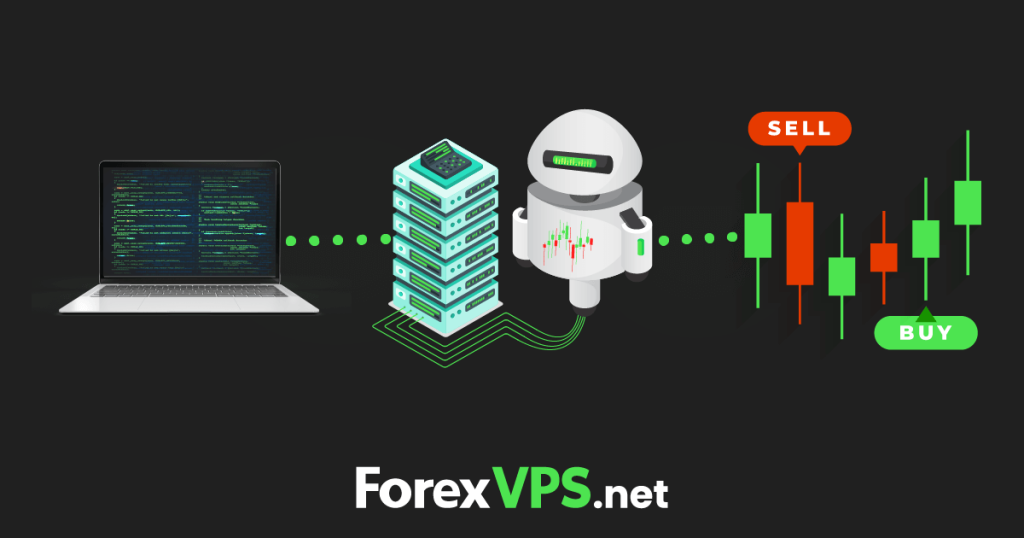
An Expert Advisor (EA) is an automated trading program, often called a trading robot, that runs on the MetaTrader 4 (MT4) or MetaTrader 5 (MT5) platforms to execute trades based on a pre-defined set of rules and algorithms. These robots can monitor markets, identify trading opportunities, and manage positions without any manual intervention from the trader. EAs are written in the MQL4 or MQL5 programming language and can be customized to implement nearly any trading strategy, from simple indicator-based entries to complex multi-layered logic. They operate 24 hours a day, five days a week, so you never miss a potential trading signal. This automation helps maintain discipline and executes trades with speed and precision that a human trader cannot always match. For traders, this means strategies are applied consistently without hesitation or second-guessing.
To understand this better, let’s look at the specific advantages of pairing an EA with a cent account.

A primary benefit is the capacity for low-risk strategy testing. A cent account treats one dollar as 100 cents, so a deposit of $50 shows up as 5,000 cents. This allows an EA to open very small trade sizes, often as low as 0.01 micro lots (which is 0.0001 standard lots). When you test a new EA, you want to see how it behaves in live market conditions, not just in a simulation. On a standard account, even the smallest trade size might risk too much of a small balance. With a cent account, you can run an EA with real money and observe its performance, drawdowns, and recovery, but the actual dollar amount at risk is tiny. For instance, a 500-cent loss is only a $5 loss, making it a very affordable way to gather live performance data.
Another key advantage is its suitability for small capital. Many aspiring traders do not have thousands of dollars to start with. Cent accounts are designed for them. An EA that might require a $1000 minimum balance on a standard account could potentially run on just $100 (10,000 cents) in a cent account. This opens the door for traders with limited funds to access automated trading. The EA can manage lot sizes proportionally to the cent balance, allowing for proper risk management principles (like risking 1-2% per trade) to be applied even with a small initial deposit. This helps build trading experience and grow a small account over time without the pressure of a large initial investment.
Finally, using an EA removes emotional trading. Fear and greed are two of the biggest obstacles for any trader. An EA does not feel fear during a losing streak or greed after a series of wins. It sticks to its programmed logic, no matter what. This is especially helpful on a small account where emotional swings can be intense. A trader might be tempted to close a winning trade too early or hold a losing trade for too long. An EA will follow its take-profit and stop-loss rules without emotion, which leads to more consistent application of the trading strategy over the long run. By handing execution over to an EA on a cent account, you can focus on strategy analysis and improvement rather than the emotional stress of managing live trades.
What are the Top 5 Expert Advisors for a Cent Account?
The top five Expert Advisors well-suited for a cent account are Centurion Scalper, Guardian FX, Trend Rider Pro, Grid Master Cent, and Momentum Volatility Bot, each selected for its unique strategy, risk management, and performance profile on small accounts. These EAs offer a range of methodologies, from low-risk scalping to high-reward trend following, providing options for various trader preferences. They are all compatible with the MT4 or MT5 platforms and are designed to function efficiently with the smaller trade sizes and unique balance structure of a cent account. Choosing among them depends on your personal risk appetite and trading goals.
Here is a detailed look at each of these five EAs to help you identify which one aligns best with your needs.
Centurion Scalper: What is its Core Trading Strategy and Performance Record?
Centurion Scalper’s core trading strategy is high-frequency scalping, designed to capture small profits from minor price fluctuations on low-spread currency pairs, with a verified monthly gain of around 4-7% and a maximum drawdown below 18%. This EA operates on short timeframes, typically the M1 or M5 charts, where it can identify and execute dozens of trades per day. The underlying logic relies on a combination of a fast-moving average for trend direction and a stochastic oscillator to identify overbought or oversold conditions for entry points. It is built to get in and out of the market quickly, often holding trades for only a few minutes. The goal is not to catch large market moves but to accumulate small, consistent wins that add up over time. Because it trades so frequently, it is highly dependent on a broker with very low spreads and fast execution speeds, which is a common feature among brokers offering cent accounts.
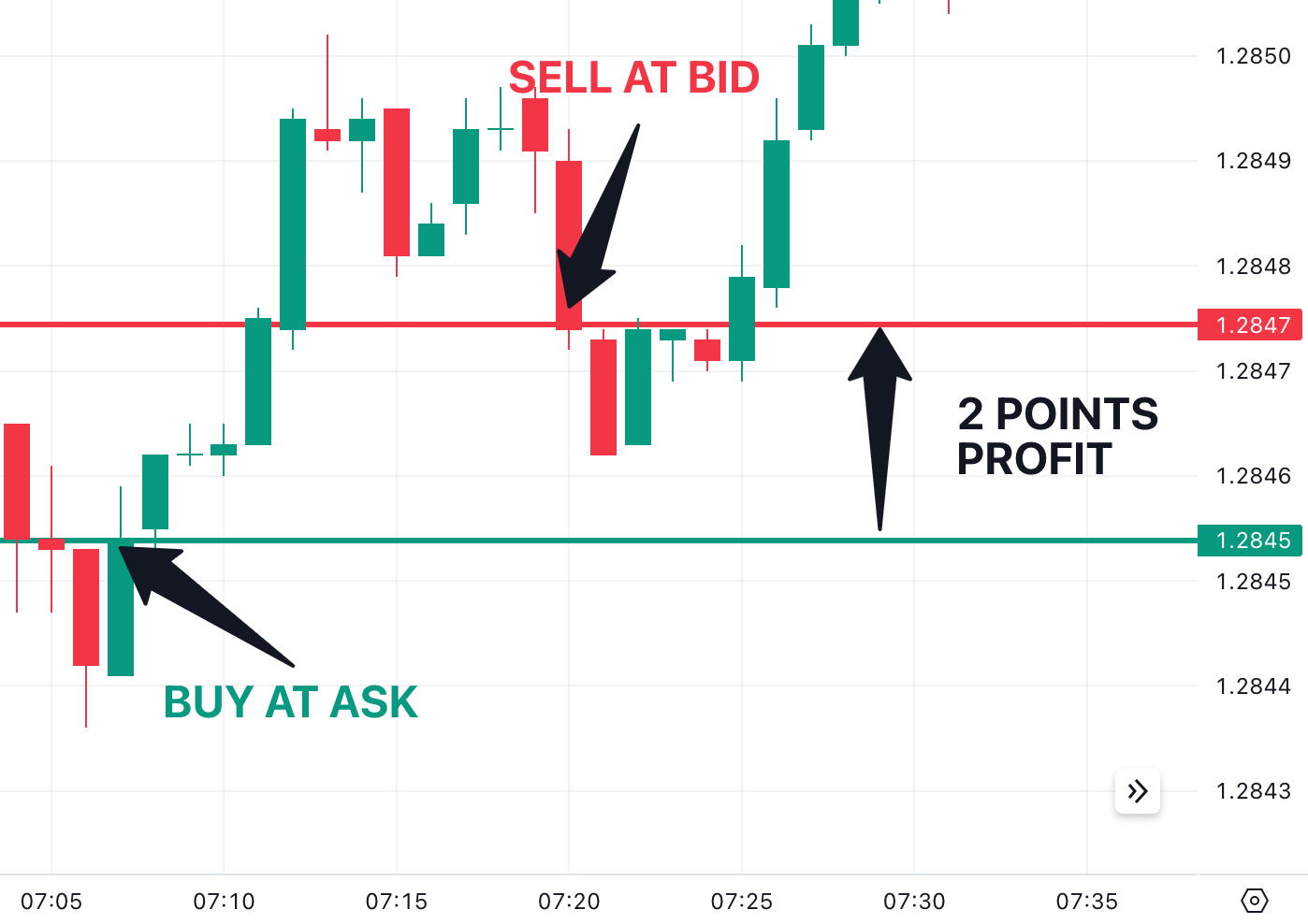
To illustrate its performance, let’s look at its typical metrics found on verified signal pages.
- Monthly Gain: Historical data from verified Myfxbook accounts consistently shows an average monthly profit between 4% and 7%. This is not a get-rich-quick system but one focused on steady, incremental growth.
- Drawdown: The maximum drawdown is a key indicator of risk. Centurion Scalper maintains a historical drawdown below 18%. This means that from a peak in equity, the account has not seen a dip greater than 18%, suggesting that its risk management is effective at containing losses during unfavorable market periods.
- Profit Factor: Its profit factor generally stays above 1.4. A profit factor is calculated by dividing the total profit by the total loss. A value greater than 1 indicates profitability, and 1.4 suggests that for every dollar lost, 1.4 dollars were gained, reflecting a healthy risk-to-reward balance over its many trades. The strategy is best suited for major pairs like EUR/USD and USD/JPY where spreads are tightest.
Guardian FX: How Does it Manage Risk and Protect Capital?
Guardian FX manages risk and protects capital through a multi-layered system that includes a dynamic stop-loss, a configurable equity protection feature, and an automatic lot sizing calculator based on a percentage of the account balance. This EA is built with capital preservation as its primary objective, making it a strong choice for risk-averse traders using a cent account. Instead of using a fixed stop-loss for every trade, its system is more adaptive. It calculates the stop-loss for each position based on recent market volatility, typically using the Average True Range (ATR) indicator. This means that in volatile markets, the stop-loss is placed further away to avoid being stopped out prematurely, while in calmer markets, it is placed tighter to protect profits. This dynamic approach helps the EA adapt to changing market conditions.

Specifically, here is how its risk features work together to protect a small account.
- Equity Protection: This is a master control feature. You can set a maximum drawdown percentage for your entire account (for example, 20%). If the account’s floating loss ever reaches this threshold, Guardian FX will automatically close all open positions and cease trading for a configurable period (e.g., 24 hours). This acts as a circuit breaker, preventing a catastrophic loss during an unexpected market event or a severe losing streak. For a cent account, this feature provides peace of mind that your entire deposit will not be wiped out.
- Auto Lot Sizing: You do not have to manually calculate the lot size for each trade. Instead, you tell the EA what percentage of your account balance you are willing to risk per trade (e.g., 1% or 2%). Guardian FX then automatically calculates the appropriate lot size for each new position based on the account’s current equity and the dynamically calculated stop-loss distance. This method maintains consistent risk exposure as the account grows or shrinks, which is a cornerstone of disciplined trading.
- Maximum Spread and Slippage Control: Guardian FX includes settings to prevent it from opening trades if the broker’s spread is too wide or if slippage is too high. Since it is a precision-based system, it avoids entering the market under poor execution conditions, further protecting the account from unnecessary costs and losses.
Trend Rider Pro: What are its Primary Features and Cost?
Trend Rider Pro’s primary features include a sophisticated trend-detection algorithm, a trailing stop function to lock in profits, and a built-in news filter to avoid high-volatility events, with a one-time cost of $249. This Expert Advisor is designed for both the MT4 and MT5 platforms, offering flexibility for traders regardless of their preferred platform version. Its main purpose is to identify and follow strong market trends on higher timeframes like H1 and H4, making it a “set and forget” style of EA that does not require constant monitoring. It works best on major currency pairs known for trending behavior, such as EUR/USD, GBP/USD, and AUD/USD. The trend-detection algorithm uses a combination of the Average Directional Index (ADX) to measure trend strength and multiple moving averages to confirm direction before entering a trade.
:max_bytes(150000):strip_icc()/dotdash_Final_Top_Indicators_for_a_Scalping_Trading_Strategy_Sep_2020-01-c530bea4f4a84a34a89a4d74fdae1be8.jpg)
Let’s break down its key features and associated costs.
- Trailing Stop Function: This is one of its most valuable features. Once a trade is in profit by a certain number of pips, the trailing stop automatically moves the stop-loss up behind the price. This action protects profits if the market suddenly reverses while still allowing the trade to continue capturing gains if the trend continues. It helps maximize the profit from winning trades, which is essential for a trend-following system’s long-term profitability.
- News Filter: High-impact news events (like NFP or interest rate announcements) can cause extreme and unpredictable market volatility. Trend Rider Pro includes a built-in news filter that connects to an economic calendar. The EA can be programmed to pause trading before, during, and after major news releases, preventing it from getting caught in erratic price spikes that could lead to large losses.
- Cost and Licensing: Trend Rider Pro is sold for a one-time fee of $249. This price includes a license for one live account and an unlimited number of demo accounts. The purchase comes with lifetime updates and customer support. There are no recurring subscription fees, which makes it a more predictable investment compared to EAs that charge a monthly or annual fee. This one-time cost structure is often preferred by traders who plan to use the EA for the long term.
Grid Master Cent: What Trading Strategy Does This EA Employ?
Grid Master Cent employs a pure grid trading strategy, which involves placing a series of buy and sell orders at pre-defined intervals above and below the current market price, designed to profit from ranging markets. This EA does not rely on traditional trend indicators. Instead, its core logic is based on the assumption that the price will fluctuate within a certain range. It sets up a “grid” of pending orders. For example, it might place buy stop orders every 20 pips above the current price and sell stop orders every 20 pips below it. As the price moves up or down and triggers these orders, the EA manages the basket of open positions. The primary goal is to close the group of trades in a net profit once a certain profit target is reached. This strategy thrives in markets that are consolidating or moving sideways without a strong directional bias.

When comparing its approach to other EAs on this list, you’ll notice some distinct differences.
- Compared to Trend Rider Pro: The strategies are complete opposites. Trend Rider Pro is designed for strongly trending markets and will likely perform poorly when the market is flat. In contrast, Grid Master Cent excels in those flat, ranging conditions but can be very risky during a strong, sustained trend. If a strong trend develops, it can accumulate a large number of losing positions without a price reversal, leading to a substantial drawdown. For this reason, it is often recommended for use on currency pairs that are known to range, such as EUR/CHF or AUD/NZD.
- Compared to Centurion Scalper: While both may trade frequently, their profit objectives are different. Centurion Scalper opens one trade at a time and aims for a quick, small profit with a defined stop-loss. Grid Master Cent, however, works with a basket of trades. It may have multiple positions open at once, some in profit and some in loss. The overall profitability depends on the net result of the entire basket, not individual trades. It typically does not use a hard stop-loss on individual orders but relies on the overall basket profit target and equity protection settings to manage risk. This makes its risk profile fundamentally different and generally higher than a scalping EA.
Momentum Volatility Bot: What is its Performance and Risk Profile?
Momentum Volatility Bot’s performance is characterized by the potential for high monthly gains, often between 10% and 30%, but this is accompanied by a high-risk profile with drawdowns that can exceed 40%. This EA is a high-risk/high-reward system designed to capitalize on strong market momentum and volatility breakouts. Its strategy is to enter a trade when the price makes a sudden, powerful move in one direction, often following a period of consolidation. It uses indicators like the Bollinger Bands and Relative Strength Index (RSI) to identify these breakout opportunities. The bot is most effective during active market sessions, such as the London or New York open, when volatility is highest. It is best suited for volatile currency pairs like GBP/JPY or commodities like Gold (XAU/USD).

Understanding its risk profile is essential before using this EA.
- Performance: Historical performance on verified accounts shows a spiky equity curve. There can be periods of rapid growth where the account balance increases substantially in a short amount of time. However, these periods are often followed by sharp corrections. The average monthly return can be very attractive, but it is not consistent. A user might see a +25% gain one month and a -15% loss the next. This EA is not for traders seeking steady, predictable growth. It is designed for those with a high risk tolerance who are aiming for aggressive account growth and can withstand significant drawdowns.
- Risk Profile: This EA is definitively high-risk. The strategy of trading breakouts means it is often entering the market at points of maximum uncertainty. A breakout can sometimes be false, leading to a quick reversal and a losing trade. Because it chases momentum, its stop-losses are typically wider to accommodate the volatility. A drawdown of 40% or more is a realistic possibility. Therefore, it is recommended to use this EA with capital that you are fully prepared to lose. For a cent account, this means starting with a small deposit, perhaps $50 to $100, to limit the potential real-dollar loss while still giving the EA enough margin to operate.
How Do You Compare and Select the Best EA for Your Needs?
To compare and select the best EA for your needs, you should create a checklist evaluating each robot based on its trading strategy, risk management features, verified performance metrics, cost, and platform compatibility. A systematic comparison helps you move beyond marketing claims and focus on the factors that will actually impact your trading results. The ideal EA for one person may not be right for another, as the choice depends heavily on your personal risk tolerance, capital, and trading goals. Using a comparative table can simplify this process by placing all the essential information side-by-side, allowing for a clear and objective decision. The goal is to find an EA whose operational logic aligns with your expectations for risk and reward.
Below is a comparative table and further explanation of the key criteria to help you make an informed choice.
| Feature | Centurion Scalper | Guardian FX | Trend Rider Pro | Grid Master Cent | Momentum Volatility Bot |
|---|---|---|---|---|---|
| Strategy | High-Frequency Scalping | Balanced/Adaptive | Trend Following | Grid Trading | Momentum/Breakout |
| Risk Level | Low to Medium | Low | Medium | High | Very High |
| Ideal Market | Low Volatility, Ranging | All Conditions | Strong Trends | Sideways/Ranging | High Volatility |
| Timeframe | M1, M5 | M15, M30 | H1, H4 | Any | M15, H1 |
| Avg. Monthly Gain | 4-7% | 3-6% | 5-10% | 5-15% (Variable) | 10-30% (Variable) |
| Max Drawdown | < 18% | < 15% | < 25% | > 35% | > 40% |
| Cost | $199 (One-Time) | $299 (One-Time) | $249 (One-Time) | $149 (One-Time) | $349 (One-Time) |
| Best For | Stable, slow growth | Capital preservation | “Set and forget” traders | Ranging pairs | Aggressive growth |
What is the Difference Between Backtesting Results and Live Performance?
The primary difference is that backtesting results are derived from a simulation using historical data, while live performance reflects how an EA actually performs in a real, dynamic market with real money. Backtests can be misleading because they are often “over-optimized.” This means the EA’s settings have been perfectly tuned to produce the best possible results on a specific set of past data. This perfect configuration is unlikely to perform as well on future, unseen data. A backtest does not account for real-world trading variables like internet connection issues, server latency, slippage, or widening spreads during news events. These factors can turn a profitable backtest into a losing live account.
To evaluate performance data critically, you should prioritize live results.
- Seek Verified Third-Party Tracking: Look for performance records verified by platforms like Myfxbook or MQL5 Signals. These services connect directly to a live trading account and cannot be easily manipulated. They provide transparent data on gain, drawdown, profit factor, and trade history.
- Analyze the Duration: A live record of only a few weeks is not sufficient. Look for accounts that have been running for at least six months, preferably over a year. This longer duration shows how the EA has handled various market conditions, including periods of trending, ranging, and high volatility.
- Check the Broker and Account Type: The performance can also be influenced by the broker. Check if the live account is with a reputable broker. Ideally, the verified account should also be a cent account or a similar micro account, as this will most closely resemble the conditions you will be trading under. Performance on a standard account with a large balance may not be replicable on a small cent account.
Is a Higher Price Indicative of a Better EA?
No, a higher price is not indicative of a better EA; performance, strategy alignment, verified results, and ongoing support are far more important factors than the cost. There is no direct correlation between the price tag of an EA and its ability to generate profits consistently. Many expensive EAs have failed to deliver on their promises, while some affordable or even free EAs have performed reliably. The price is often more a reflection of the developer’s marketing strategy and perceived value rather than its actual trading capability. An expensive EA might include complex features that you do not need, while a cheaper one might have a simple, robust strategy that perfectly fits your goals.

When comparing the value proposition, consider the following.
- Premium EAs: A higher-priced EA should come with tangible benefits. These typically include comprehensive user guides, dedicated customer support to help with installation and settings, and regular updates to adapt the EA to changing market conditions. If you are paying a premium, you are paying for this service package as much as for the trading logic itself.
- Free vs. Affordable EAs: Many free EAs are available, but they often come with risks. They may be outdated, lack any support, or be designed for market conditions that no longer exist. However, some developers offer free versions of their EAs as a way to attract customers to their paid products. Low-cost EAs (under $200) can offer excellent value if they have a solid, verified track record. The key is to judge them by the same performance criteria as you would an expensive one. Ultimately, an EA that costs $100 and makes a steady 5% per month is a much better value than a $1000 EA that loses money.
What Are the Hidden Risks and Advanced Considerations When Using EAs?
Beyond the initial setup, using an Expert Advisor involves hidden risks like broker dependency, over-optimization, and technical failures that require advanced consideration for long term success. Furthermore, traders must look past the surface level appeal of automation and understand the deeper mechanics that influence an EA’s behavior in live market conditions. These elements often separate profitable automated trading from a series of disappointing results. When you select an EA, you are not just choosing a strategy; you are also engaging with a complex system where every component, from the broker’s servers to the EA’s internal code, plays a part. What happens when one of these components fails to perform as expected? Let’s see some of the specific areas that demand a more detailed look.
How Do Free EAs Compare to Paid EAs for Cent Accounts?
The distinction between free and paid Expert Advisors often comes down to support, reliability, and the sophistication of the underlying strategy. Free EAs can appear attractive, especially for traders starting with a small cent account, as they eliminate an upfront cost. However, this lack of a price tag frequently comes with hidden costs. Many free EAs are built on simplistic or outdated trading logic that may not adapt well to current market dynamics. They almost never receive updates from their creators, leaving them vulnerable to changes in market behavior. Additionally, support is typically nonexistent, so if you encounter a problem, you are on your own. Some are even offered by brokers as an incentive, potentially designed to work suboptimally.
Conversely, paid EAs usually represent a developer’s ongoing project. The purchase price often funds continuous development, updates, and customer support. This means the trading logic is more likely to be refined over time, and you have a resource to turn to for technical assistance. Developers of commercial EAs have a reputation to maintain, which encourages them to provide verified performance records and transparent strategy explanations. For a cent account, where capital preservation is paramount, a well supported paid EA with a proven track record can offer a more stable foundation for growth. The initial investment can be a worthwhile trade off for enhanced reliability and peace of mind.
Can Your Forex Broker’s Conditions Affect an EA’s Performance?
A Forex broker’s trading conditions can profoundly influence an Expert Advisor’s results, sometimes turning a profitable strategy into a losing one. This concept, known as broker dependency, is especially true for strategies that rely on speed and precision, such as scalping. An EA is only as good as the environment it operates in, and the broker provides that environment. Therefore, selecting a broker with favorable conditions is just as important as selecting a good EA, particularly when trading on a cent account where every fraction of a pip matters.
Three primary broker conditions directly impact EA performance. Let’s look at them.
- Spreads: The spread is the difference between the buy and sell price. Scalping EAs that target very small profits of just a few pips can be rendered useless by high or variable spreads. If the spread is too wide, the trade is already at a loss upon execution, and the price must move a greater distance just to break even.
- Slippage: This occurs when an order is filled at a different price than requested. While minor slippage is normal, frequent or large slippage, common during volatile periods or with slow brokers, can erode profits and invalidate an EA’s backtested results.
- Execution Speed: This is the time it takes for a broker to execute your trade order. A slow execution speed can lead to significant slippage and missed trading opportunities. For EAs that trade frequently, milliseconds can make the difference between a winning and losing position.
What Is a News Filter and Is It Essential for a Cent Account EA?
A news filter is a specialized function coded into an Expert Advisor that prevents it from opening new trades during high impact economic news events. It works by monitoring an economic calendar and temporarily disabling the EA’s trading activity for a set period before and after a major announcement, such as an interest rate decision or a non farm payrolls report. This feature is not just a convenience; for a cent account, it serves as an essential risk management tool. Major news releases often inject extreme volatility into the market, causing spreads to widen dramatically and prices to move erratically in both directions.
For a small cent account, this environment is particularly dangerous. The sudden price spikes can easily trigger a stop loss, while widened spreads can instantly make a trade unprofitable. A single trade executed during a volatile news event has the potential to wipe out a substantial portion of a small account’s balance. By automatically pausing trading, a news filter protects the account from these unpredictable and high risk periods. It allows the EA to operate only in more stable market conditions where its strategy is most likely to perform as expected. Because capital preservation is the top priority for a cent account, an EA equipped with a reliable news filter provides a critical layer of defense against catastrophic losses.
How is Automated Trading with an EA Different from Manual Trading?
Automated trading with an Expert Advisor presents a fundamentally different approach compared to manual trading, each with its own set of strengths and weaknesses. The primary advantage of an EA is its ability to operate with complete discipline and objectivity. The software will execute its pre programmed strategy without hesitation, fear, or greed, which are emotions that often lead manual traders to make poor decisions. An EA can also monitor the markets 24 hours a day, five days a week, capitalizing on opportunities that a human trader might miss while sleeping or away from their screen. The speed of execution is another benefit, as an EA can place trades in a fraction of a second.

On the other hand, manual trading offers adaptability and intuition that an EA lacks. A human trader can interpret nuanced market context, such as political events or shifts in market sentiment, and adjust their strategy accordingly. An EA is rigid; it can only follow its code and cannot adapt to unforeseen “black swan” events or market conditions that fall outside its programming. Manual traders can learn and evolve from their experiences, while an EA’s performance is fixed unless its code is updated. The primary difference boils down to a trade off between the unwavering discipline and speed of a machine versus the flexibility and contextual awareness of the human mind.
