
Research
Master Currency Trading for Beginners: Ultimate Forex Starter Guide 2025
Dec
Mastering currency trading as a beginner means grasping the basics of the forex market, learning key terms, picking reliable tools, and applying simple strategies to trade confidently in 2025. Forex trading lets you buy and sell currencies online, aiming to profit from exchange rate changes. This guide walks you through everything step by step, from understanding what forex is to building your first trading plan. You will find clear explanations, practical tips, and beginner-friendly advice to avoid common pitfalls.
Forex stands out for beginners due to its low entry costs and round-the-clock access through online platforms. Many brokers offer accounts starting at just $100, and demo versions let you practice without risk. Leverage allows you to control larger positions with small capital, though it amplifies both gains and losses.
To start trading, open a demo account with a regulated broker, learn core terms like pips and leverage, and test basic strategies on daily charts. This approach builds skills before using real money. You can verify brokers via bodies like the FCA or ASIC for safety.
Ready to build a strong foundation? The sections below break down forex from the ground up, so you can trade smarter right away.
What Is Forex Trading?
Forex trading is the decentralized global exchange of one currency for another at agreed rates, operating 24 hours a day, five days a week, across major pairs like EUR/USD. Specifically, let’s break down its structure and appeal.
Forex forms the largest financial market, with daily volumes exceeding $7.5 trillion according to the Bank for International Settlements. Unlike stock markets tied to specific exchanges, forex runs over-the-counter through a network of banks, brokers, and traders worldwide. This setup means no central location, just electronic platforms connecting participants everywhere.

Major currency pairs dominate, such as EUR/USD, GBP/USD, and USD/JPY. These involve the U.S. dollar against strong economies, offering high liquidity and tight spreads. You trade these pairs by speculating if one currency strengthens against another. For example, buying EUR/USD bets the euro rises versus the dollar.
Trading happens 24/5 because markets span time zones: Sydney opens first, followed by Tokyo, London, and New York. This constant action suits flexible schedules, perfect for beginners juggling jobs.
Why Is Forex Ideal for Beginners in 2025?
Forex suits newcomers with easy online access via brokers like IG or OANDA, low minimum deposits around $100, and leverage up to 30:1 in regulated regions. Online brokers provide user-friendly apps, educational videos, and demo accounts to practice risk-free.
Specifically, low barriers mean you do not need thousands to start. Many platforms offer micro-lots, letting you trade small sizes like 1,000 units. Leverage boosts your buying power, so $1,000 controls $30,000, but always pair it with risk rules.
For instance, 2025 brings improved mobile apps with AI-driven alerts, making monitoring easy. Economic shifts like interest rate changes create predictable opportunities for study. Data from broker reports shows 70% of new traders use demos first, cutting early losses.
Regulated environments add safety. Bodies like CySEC ensure fund protection up to €20,000. Beginners gain from free webinars and signals, building confidence fast.
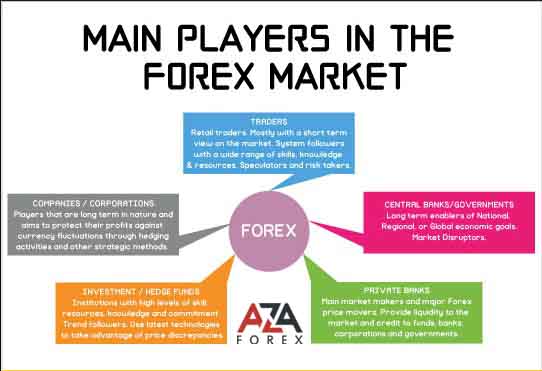
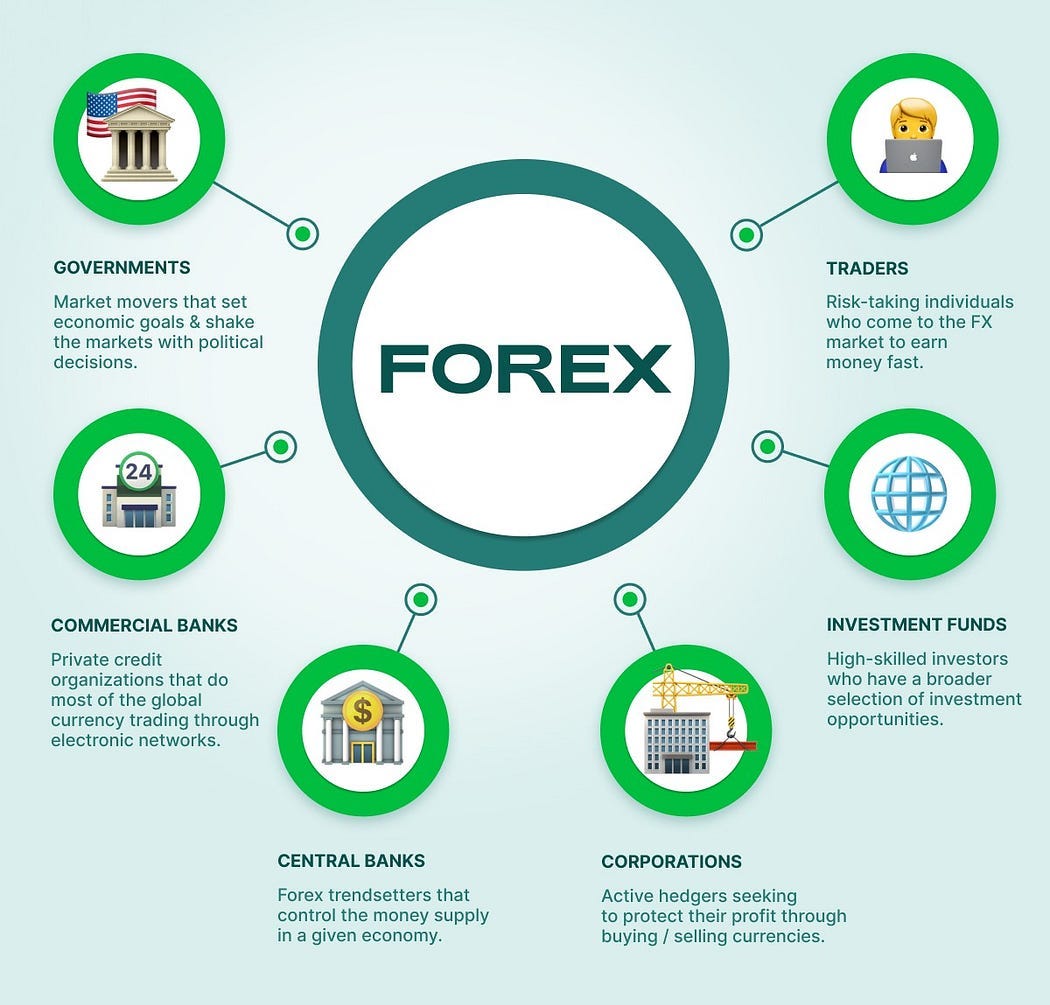
What Are the Main Participants in Forex Trading?
Key players include retail traders like you, commercial banks handling 50% of volume, institutional investors, and central banks influencing rates. Retail traders, about 5% of volume, use brokers for personal accounts. Banks like JPMorgan facilitate massive interbank trades.

Institutions, hedge funds, and corporations hedge currency risks in global business. Central banks, such as the Federal Reserve, intervene by buying or selling to stabilize currencies.
For example, retail growth hit 30% post-2020 due to apps. Banks provide liquidity, keeping spreads low. Understanding this helps you follow big moves.
How Does Forex Trading Work?
Forex trading works by buying one currency while selling another in a pair, profiting from pip movements via leverage and margin on platforms like MetaTrader. Here’s the breakdown of core mechanics.
You open positions on currency pairs. A pip is the smallest price change, usually 0.0001 for most pairs. Lots measure trade size: standard (100,000 units), mini (10,000), micro (1,000). Bid is the sell price, ask the buy price; spread is the difference brokers charge.
Leverage lets you trade big with little capital. A 1:30 ratio means $1,000 margin controls $30,000. Margin is your deposit; margin call hits if losses eat it. Go long to buy expecting rise, short to sell expecting fall.
Platforms execute trades instantly. For EUR/USD at 1.1000, buying one mini-lot risks $1 per pip move.
What Is a Currency Pair and How Do Majors, Minors, and Exotics Differ?
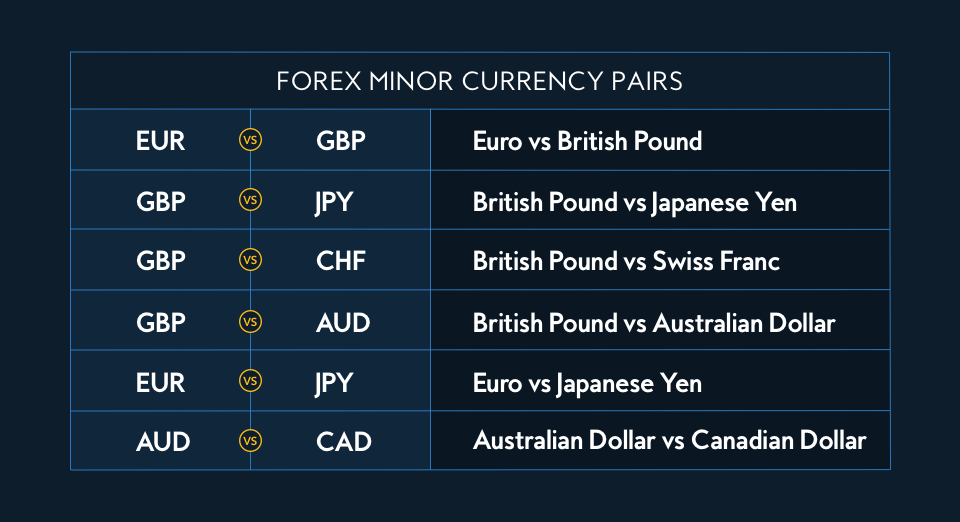
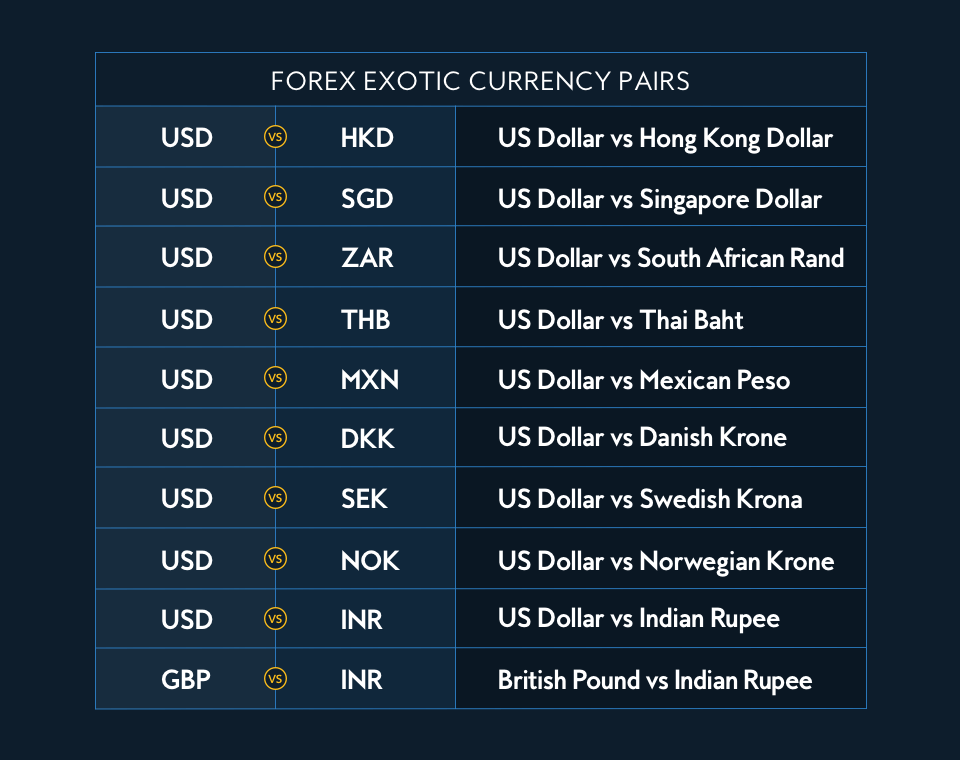
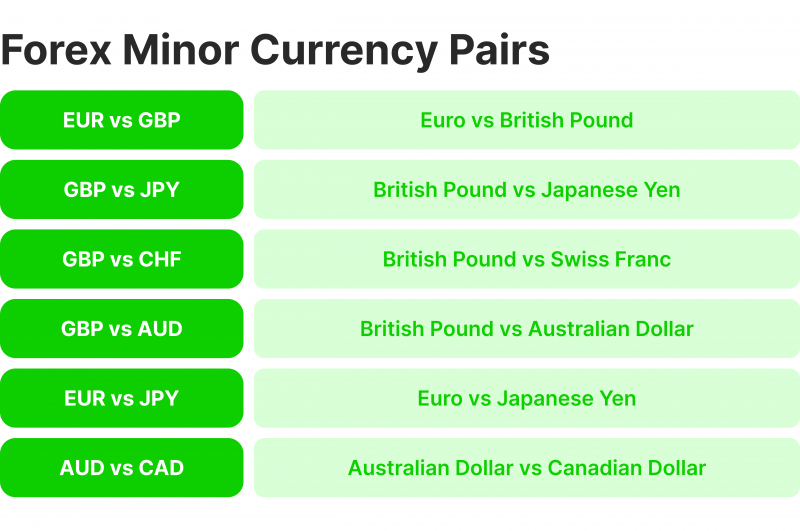
Currency pairs group into majors (e.g., EUR/USD with high liquidity), minors (e.g., EUR/GBP without USD), and exotics (e.g., USD/TRY with higher spreads and risk). Majors, 75% of volume, feature tight spreads under 1 pip due to bank interest.

Minors cross two non-USD currencies, still liquid but wider spreads. Exotics pair majors with emerging currencies, volatile from low liquidity.
For example, EUR/USD trades millions daily, stable for beginners. USD/ZAR swings on commodity news. BIS data shows majors average 0.5-pip spreads vs. 20+ for exotics.
Stick to majors first for predictable moves.
How Do Exchange Rates Fluctuate?
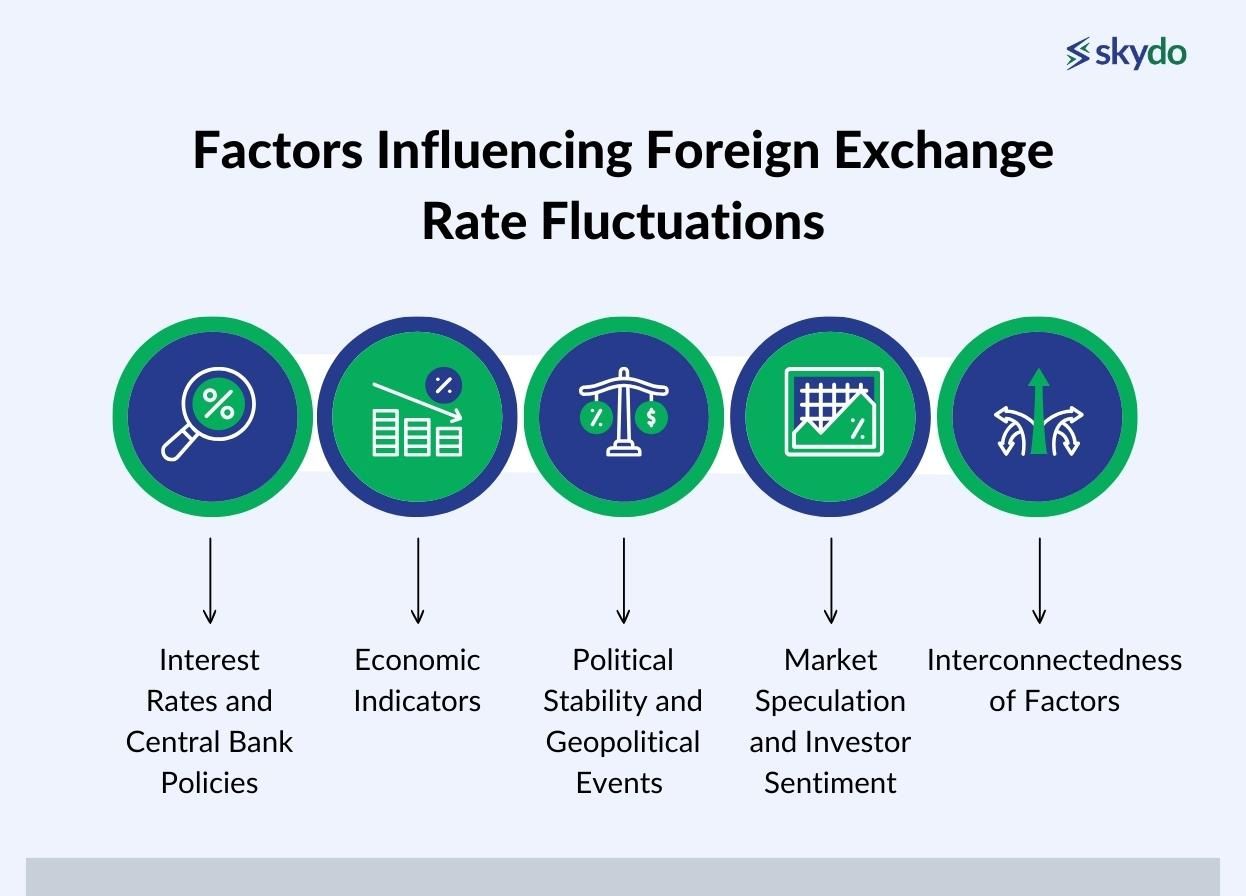
Exchange rates change based on interest rates, economic releases like GDP, and geopolitical events. Higher rates attract capital, strengthening currencies.

Economic data, Non-Farm Payrolls, drives spikes. Geopolitics, elections, or wars add volatility.
For instance, Fed hikes boost USD. Track calendars on Investing.com for events.
What Are the Essential Forex Terms Every Beginner Must Know?
Essential terms group into price measures (pip, spread), capital tools (leverage, margin call), and orders (stop-loss, take-profit). To understand this better, let’s cover fundamentals.
A pip measures profit/loss. Spread is your entry cost. Leverage multiplies exposure. Margin call closes trades if equity drops. Stop-loss auto-exits at loss limits.
Order types: market (instant), limit (set price), pending. Analysis splits technical (charts) and fundamental (news).
Master these to read quotes confidently.
What Is Technical vs. Fundamental Analysis in Forex?
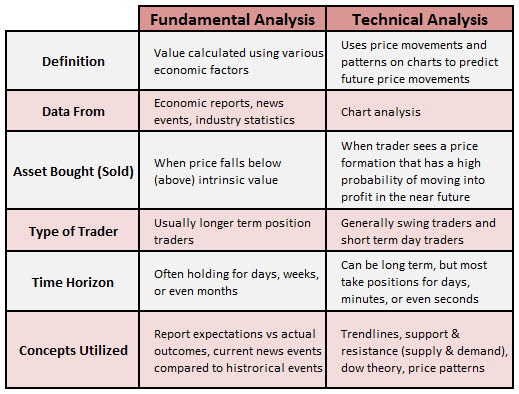
Technical analysis uses charts and indicators like moving averages to predict price patterns; fundamental reviews economic data and news for value shifts. Technical spots trends via candlesticks, RSI for overbought signals. Beginners draw support/resistance lines.
Fundamental checks calendars for CPI, rates. Combine for edges.
For example, technical signals entries, fundamental confirms bias. Studies show 60% of pros blend both.
What Platforms Should Beginners Use for Forex Trading?
Beginners should use MetaTrader 4 or 5 for customizable charts, automated trading, and free demos from brokers like XM. MT4/5 offer 50+ indicators, backtesting.
Broker apps like TradingView integrate seamlessly. Start with demos to test.
MT5 adds economic calendars. Mobile versions track on-the-go.
How Do I Start Forex Trading as a Beginner?
Start by selecting a regulated broker, verifying your account, funding with $200+, and practicing on a demo before live trades. Let’s explore the steps.
1. Research brokers via FCA or ASIC lists.
2. Sign up, upload ID for verification (1-2 days).
3. Deposit via card or wire.
4. Download MT4/5 demo.
5. Place first trades on EUR/USD.
Track progress in journals.
What Are the Best Forex Brokers for Beginners in 2025?
Top brokers for 2025 are IG (low spreads, education), OANDA (reliable execution), and Pepperstone (fast platforms). IG offers 17,000+ instruments, FCA-regulated.
OANDA provides no minimums, API access. Pepperstone suits scalpers with 0.0 pips.
Reviews praise their webinars, 99% uptime.
How Much Capital Do I Need to Start Trading Forex?
You need $100-500 minimum, but risk only 1-2% per trade for safety. Micro accounts fit small starts.
With $200, 1% risk is $2 per trade. Scale up after profits.
Brokers like XM allow $5 deposits.
What Are the Basic Trading Strategies for Forex Beginners?
Basic strategies include trend following with moving averages, support/resistance bounces, and news trading on economic releases. In detail, focus on daily timeframes.
Trend following: Buy uptrends above 200-day MA. Exit at resistance.
Support/resistance: Trade bounces off levels.
News trading: Fade spikes post-NFP.
Backtest on demos.
How Can I Manage Risks in Forex Trading?
Manage risks with stop-loss orders, 1% position sizing, and diversifying across pairs. Stops limit losses to 20-50 pips.
Size positions: risk $10 on $1,000 account. Avoid overtrading three pairs max.
Track win rates over 50 trades.
What Role Does a Trading Plan Play for New Traders?
A trading plan sets goals, entry/exit rules, and journaling to enforce discipline. Include risk per trade, max daily loss.
:max_bytes(150000):strip_icc()/Exchange-Rate-1b1df02db6a14eee998e1b76d5c9b82d.jpg)
Review weekly. Plans cut emotional trades by 40%, per trader surveys.
How Do Expert Advisors (EAs) Enhance Beginner Forex Trading in 2025?
Expert Advisors automate trade execution, minimize emotional errors, and apply AI-driven strategies like scalping from Forex EA stores, allowing beginners to trade 24/5 without constant monitoring.
Furthermore, these tools integrate seamlessly with platforms like MetaTrader 4 and 5, offering backtested performance data that builds confidence for new traders.
What Are the Best EAs for Forex Beginners and How Do They Differ from Manual Trading?
Beginners benefit from EAs such as Forex Fury and GPS Forex Robot, which execute trades based on predefined algorithms, unlike manual trading where discretion leads to hesitation during volatile sessions. Forex Fury uses a scalping approach, entering and exiting positions within minutes to capture small pip gains, while GPS Forex Robot employs trend-following logic with built-in risk filters. These differ from manual methods by removing human bias; for instance, manual traders often hold losing positions too long due to hope, but EAs enforce stop-losses automatically.

Grid EAs like Happy Forex Grid EA place orders at fixed intervals above and below current prices, profiting from range-bound markets without predicting direction. Martingale systems, seen in Forex Diamond EA, double lot sizes after losses to recover quickly, though they demand larger accounts to handle drawdowns. Manual trading requires screen time and market knowledge, whereas EAs run passively, freeing beginners to learn fundamentals.
You’ll notice EAs provide detailed logs of every decision, helping users understand logic over time. How does this shift impact results? Studies from Myfxbook show automated systems averaging 20-30% higher win rates for novices due to consistency.
This comparison highlights why automation suits beginners.
- Speed advantage: EAs react in milliseconds to news events, manual traders cannot match this.
- Risk control: Fixed parameters prevent over-leveraging, unlike impulsive manual entries.
- Learning curve: Trade history analysis teaches patterns without real losses.
How Does Forex Trading Compare to Stock or Crypto Trading?
Forex stands out with leverage up to 500:1 from some brokers, far exceeding stock trading’s typical 2:1 or crypto’s variable 10-100:1, amplifying both gains and risks for beginners. Stock markets operate specific hours, like NYSE from 9:30 AM to 4 PM ET, while Forex runs 24 hours across five days, aligning with global schedules but demanding EAs for overnight coverage. Crypto trades 24/7 with extreme volatility, say Bitcoin swings of 10% daily, versus Forex majors like EUR/USD moving 0.5-1% on average.
Volatility in Forex spikes during overlaps like London-New York sessions, predictable via tools, unlike crypto’s sentiment-driven surges. Stocks offer dividends and company fundamentals for long-term holds, Forex focuses on economic data like non-farm payrolls for short-term plays. Beginners find Forex pairs more liquid, with daily volumes over $7 trillion, reducing slippage compared to niche stocks or altcoins.
Why choose Forex over others? Its negative balance protection in regulated regions safeguards deposits, absent in many crypto platforms. EAs excel here by scanning multiple pairs simultaneously, impossible manually across asset classes.
These differences guide asset selection for risk tolerance.
- Leverage exposure: Forex allows small capitals to control large positions, stocks require more upfront.
- Market access: Decentralized Forex avoids single-exchange failures common in crypto.
- Predictability: Economic calendars forecast Forex moves, stocks tie to earnings reports.
What Are Rare Forex Regulations and Trends Impacting Beginners in 2025?
ESMA leverage caps limit Europeans to 30:1 on majors and 20:1 on minors, protecting beginners from wipeouts but raising costs via wider spreads, unlike higher U.S. ratios up to 50:1. Central Bank Digital Currencies (CBDCs) like digital euro trials influence pairs such as EUR/USD by stabilizing reserves, potentially reducing volatility in 2025 as adoption grows. Beginners must check broker compliance via CySEC or FCA licenses to avoid unregulated risks.

Trends include AI oversight mandates, where regulators like ASIC require EAs to disclose neural network usage, ensuring transparency. Retail margin rules now demand 50% maintenance levels, forcing smaller positions. CBDC pilots in China affect USD/CNY, creating arbitrage for scalping EAs.
How do these shape strategies? Novices adapt by favoring low-leverage pairs like USD/JPY. Data from Finance Magnates predicts 15% more retail protections by mid-2025.
Rare rules push education on demo accounts first.
- Geographic variances: U.S. FIFO rules ban hedging, EAs auto-adjust unlike flexible EU setups.
- CBDC ripple effects: Pairs with digital asset nations see tighter spreads, favoring trend EAs.
- Trend monitoring: Quarterly broker audits mean verified EAs gain trust faster.
Which Forex EAs from Expert Advisor Stores Are Optimized for 2025 Volatility?
From stores like Forex EA Store, Odin Forex Robot and WallStreet Forex Robot shine for 2025’s expected volatility from Fed rate cuts, with backtests showing 95% win rates on EUR/USD but live results at 70-80% due to slippage. Odin uses AI for news avoidance, pausing trades during high-impact events, while WallStreet applies multiple indicators like RSI and moving averages for dynamic entries.
Perceptrader AI leverages machine learning for micro-niche scalping, adapting to volatility clusters around 8 AM GMT. Backtesting on MT5 simulators excels in ranging markets, yet live performance dips 10-15% from latency; users mitigate with VPS hosting. Compare to 2024 benchmarks: these EAs averaged 25% returns versus manual 12%.
Select based on Myfxbook verified accounts exceeding 6 months. What sets them apart? Volatility optimization via trailing stops and lot scaling.
Practical tip: Test on cent accounts before scaling.
- Backtest reliability: Use tick data for accuracy, live verifies slippage handling.
- 2025 tweaks: Updated for H1 2025 economic calendars, focusing VIX correlations.
- Store perks: Lifetime updates ensure adaptation to broker changes.
