
Research
Unlock the Complete Currency Pairs List: Majors, Minors & Exotics for Forex Traders
Dec
Currency pairs represent the core of Forex trading, grouped into majors like EUR/USD and USD/JPY, minors such as EUR/GBP and GBP/JPY, and exotics including USD/TRY and USD/ZAR. These pairs let traders bet on exchange rate movements between two currencies. Majors dominate with the highest trading activity, minors connect major currencies without the US dollar, and exotics pair developed money with those from growing economies. You’ll find over 80% of daily Forex volume in majors alone, making this breakdown key for spotting opportunities.
Majors offer the tightest spreads and best liquidity for everyday trades. Think of pairs like GBP/USD or AUD/USD, where the US dollar pairs with strong economies like the eurozone or Australia. Traders favor them because news from central banks moves them predictably.
Minors provide diversity without US dollar risk, with pairs like EUR/JPY leading in cross-currency action. These show how European and Asian sessions overlap, creating steady moves. Exotics add spice but come with wider spreads.
Ready to trade smarter? This guide breaks down each category with full lists, traits, and tips tailored for your strategy. Let’s start with the basics of currency pairs.
What Are Currency Pairs in Forex Trading?
Currency pairs are exchange rate quotes between two national currencies, forming the backbone of the $7.5 trillion daily Forex market. Specifically, let’s break down their definition, classifications, and trader value.
How Are Currency Pairs Classified into Majors, Minors, and Exotics?
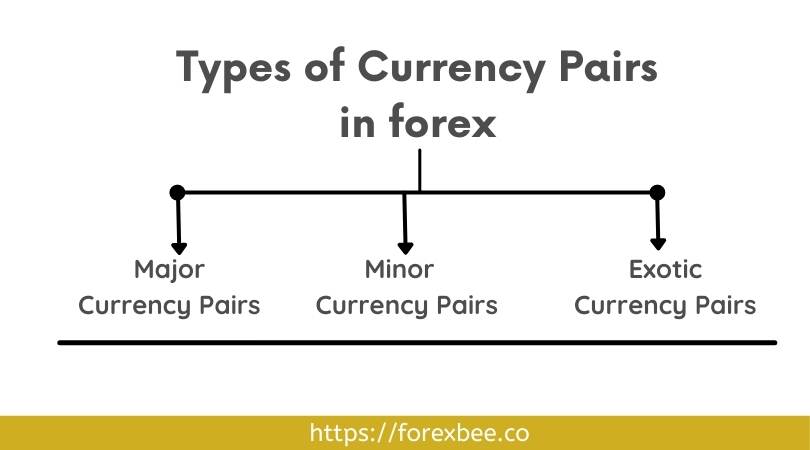
Currency pairs fall into three groups based on liquidity, trading volume, and economic ties. Majors include the US dollar against six key currencies, minors pair major currencies without the dollar, and exotics mix majors with emerging market money.

Majors boast top liquidity from heavy global trade. For example, EUR/USD trades over $1 trillion daily because Europe and the US drive world commerce. Minors, or crosses, link currencies like the euro and pound, with solid volume from session overlaps. Exotics feature currencies from places like Turkey or South Africa, traded less often due to smaller economies.
Liquidity decides spreads: majors have the narrowest, often under 1 pip. Volume data from the Bank for International Settlements shows majors at 80-85% of trades. Emerging pairs suffer thinner books, spiking costs during news.
Why group them this way? It matches trader needs. High-volume pairs suit scalpers, while exotics fit swing traders chasing big swings. For instance, USD/ZAR jumps on commodity prices, unlike stable EUR/GBP.
Why Is Understanding Currency Pair Categories Essential for Forex Traders?
Grasping these categories shapes your edge in Forex. Know them to pick pairs matching your risk level, capital, and schedule.
First, liquidity affects execution. Majors fill orders instantly, avoiding slippage in fast markets. Minors offer balance, good for Europeans trading London-Tokyo overlaps. Exotics demand patience, as low volume leads to gaps.
Second, volatility varies. Majors move 50-100 pips daily on average, predictable from Fed or ECB talks. Minors like GBP/JPY hit 150 pips during yen flows. Exotics? Think 300+ pips on local crises, rewarding but risky.
Third, correlations matter. Majors tie to USD strength, so EUR/USD and USD/CHF often inverse. Minors diversify portfolios. Tools like MT4 pair selectors help scan by type.
Real traders win by focusing: beginners stick to majors for practice. Pros mix minors for hedges. Ever wonder why your exotic trade stalled? Low liquidity. Master categories, and you’ll align strategies with market reality, boosting win rates over time.
What Are the Major Currency Pairs?
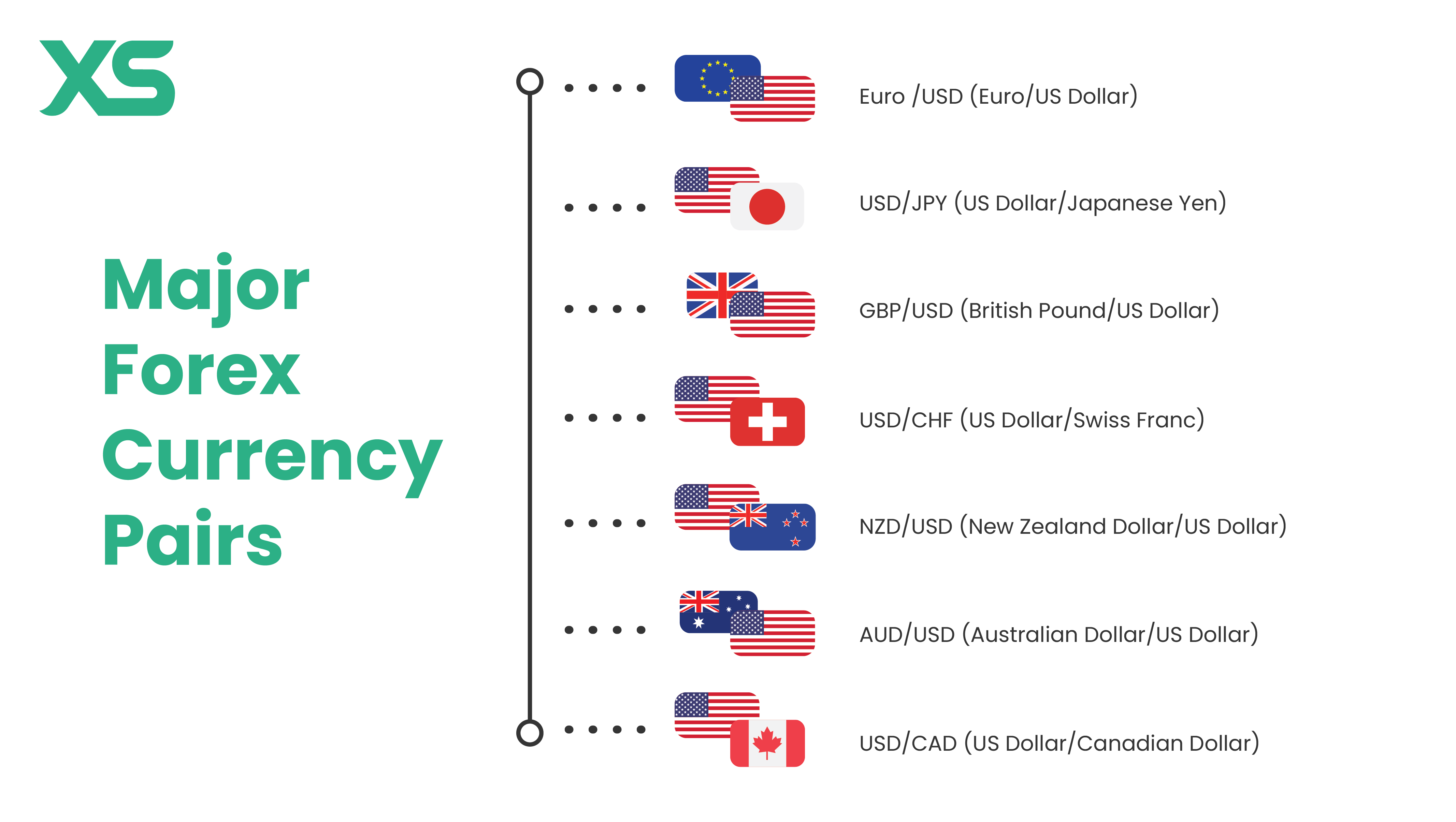
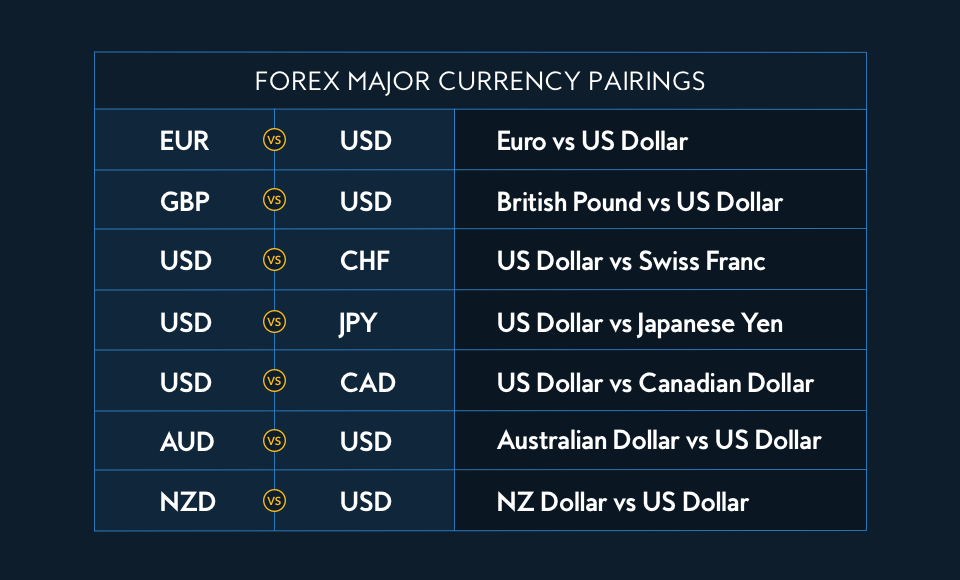
The seven major currency pairs are EUR/USD, USD/JPY, GBP/USD, USD/CHF, AUD/USD, USD/CAD, and NZD/USD, handling over 80% of global Forex volume with top liquidity. Here’s the breakdown on their structure and beginner appeal.
Which Major Pairs Feature the US Dollar as the Base or Quote Currency?
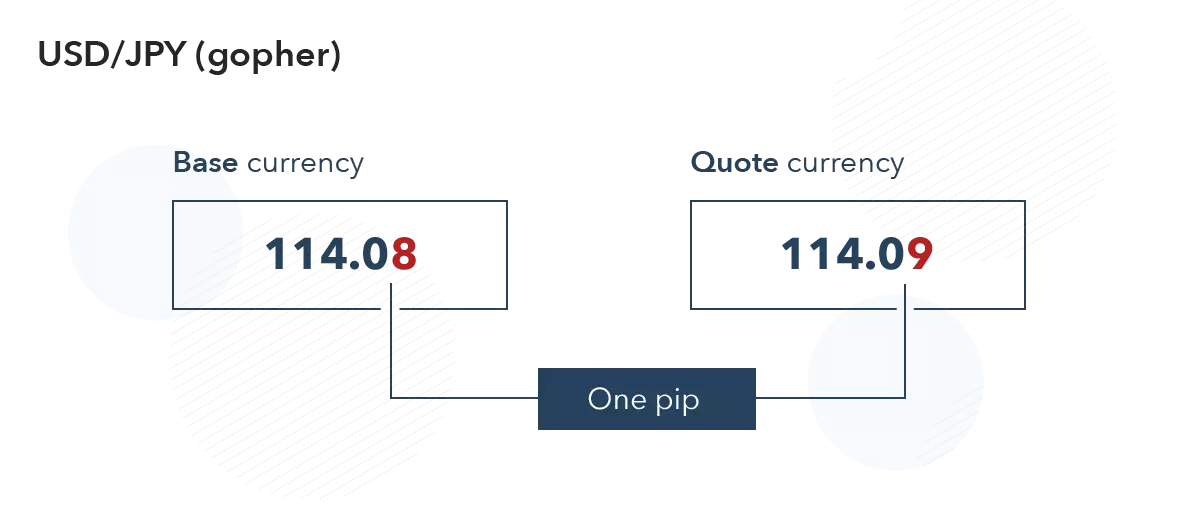
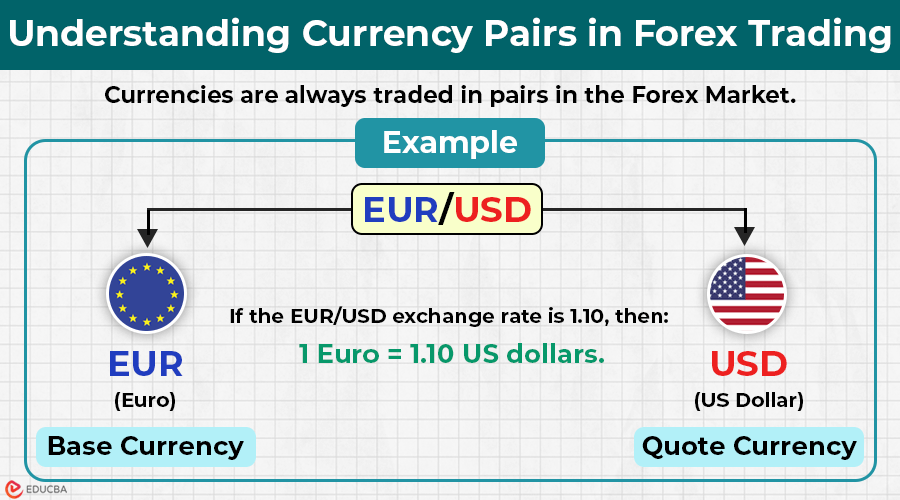
All majors involve the US dollar, either as base (first) or quote (second). EUR/USD (euro base, USD quote, nicknamed the Fiber), USD/JPY (USD base, Japanese yen quote, the Gopher), GBP/USD (British pound base, Cable), USD/CHF (Swiss franc quote, Swissy), AUD/USD (Aussie dollar base, Ozzie), USD/CAD (Canadian dollar quote, Loonie), and NZD/USD (Kiwi base).
EUR/USD leads with 24% market share, per BIS data, moving on ECB-Fed policy gaps. USD/JPY follows at 17%, sensitive to Bank of Japan yields. GBP/USD, at 12%, reacts to Brexit echoes and BOE rates.
USD/CHF inversely tracks safe-haven franc demand. AUD/USD ties to commodities, USD/CAD to oil. NZD/USD mirrors dairy exports. Daily volumes exceed $200 billion combined, ensuring 0.5-pip spreads on brokers like IC Markets.
Nicknames help quick chats: Fiber for EUR/USD’s steady flow. Trade them during New York sessions for peak action. Why list them? Spot USD trends across pairs, like strength pushing USD/JPY up.
What Makes Major Pairs Ideal for Beginner Forex Traders?
Majors suit new traders with low costs and reliable patterns. Their tight spreads (under 1 pip), high volume, and 24/5 availability make them perfect starters.
:max_bytes(150000):strip_icc()/currencypair.asp-final-dc06deceae3b4bc29a3a80915e45ce61.png)
Low spreads save money: a 0.6-pip EUR/USD trade costs $6 per lot versus 5 pips on exotics. High liquidity means no requotes, vital for learning stops.
Predictability comes from news. Non-farm payrolls swing USD pairs 100 pips. Charts show clear trends, like EUR/USD uptrends on euro strength.
All platforms offer them: MT4, cTrader, even apps. Demo accounts let you practice GBP/USD breakouts risk-free.
Beginners ask: which first? Start EUR/USD for volume, add AUD/USD for Asia sessions. Avoid overtrading; one pair mastery beats scattering. Data shows 70% of retail starts here, with better survival rates.
What Are the Minor Currency Pairs?
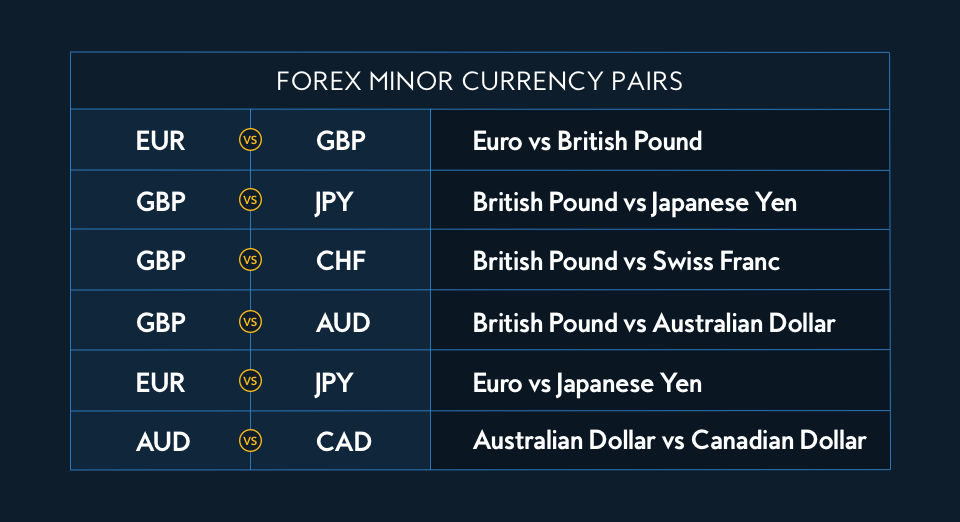
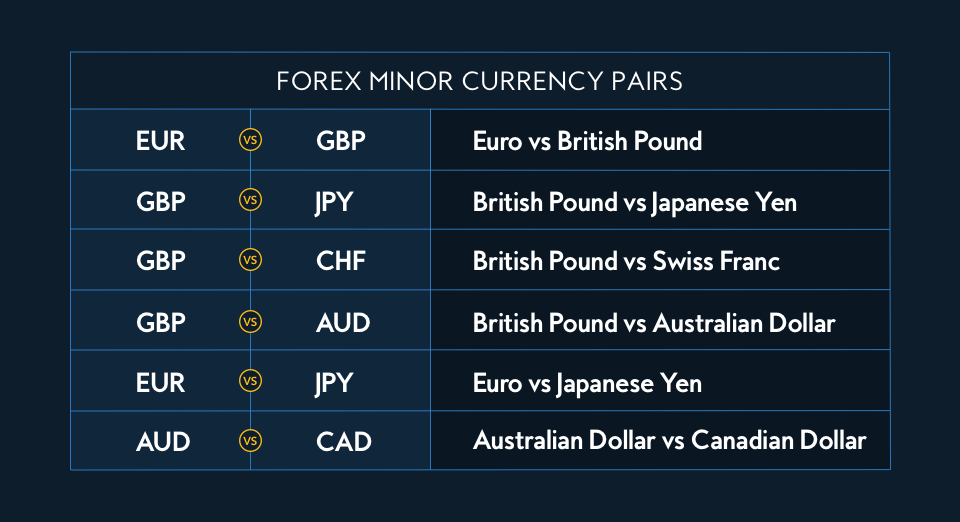
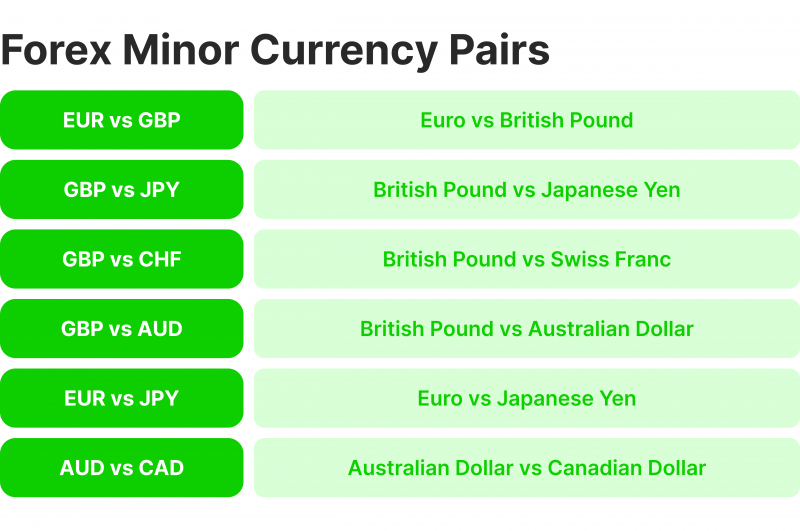
Minor currency pairs, also called crosses, include EUR/GBP, EUR/JPY, EUR/AUD, EUR/CHF, GBP/JPY, GBP/AUD, GBP/CHF, AUD/JPY, CAD/JPY, CHF/JPY, EUR/NZD, GBP/NZD, AUD/NZD, NZD/JPY, AUD/CAD, EUR/CAD, GBP/CAD, NZD/CAD, CAD/CHF, and more, linking major currencies without the US dollar. In detail, explore their differences and top traders.
How Do Minor Pairs Differ from Majors in Terms of Trading Characteristics?
Minors lack USD but keep decent liquidity, with wider spreads and unique volatility. Compared to majors, minors show 2-5 pip spreads, higher swings from dual influences, and best trades in overlapping sessions.

EUR/GBP moves 60-80 pips daily on BOE-ECB news, less than EUR/USD’s 100. GBP/JPY spikes 150 pips on yen carry trades. Volatility stems from no USD buffer.
Sessions matter: EUR/JPY peaks London-Tokyo overlap. AUD/NZD grinds slow, tied to RBA-RBNZ rates.
List of 20+ commons:
- EUR/GBP (top cross, 3% volume)
- EUR/JPY (carry favorite)
- GBP/JPY (Guppy, volatile)
- AUD/JPY
- EUR/AUD
- GBP/AUD
- EUR/CHF
- GBP/CHF
- AUD/NZD (range-bound)
- NZD/JPY
- CAD/JPY
- CHF/JPY
- EUR/NZD
- GBP/NZD
- AUD/CAD
- EUR/CAD
- GBP/CAD
- NZD/CAD
- CAD/CHF
- AUD/CHF
Majors correlate to USD; minors diversify. For example, EUR/GBP avoids dollar noise.
What Are the Most Traded Minor Currency Pairs?
EUR/GBP tops minors at 3-4% volume, followed by EUR/JPY and GBP/JPY. Prioritize EUR/GBP for stability, GBP/JPY for volatility, EUR/AUD for commodity plays.
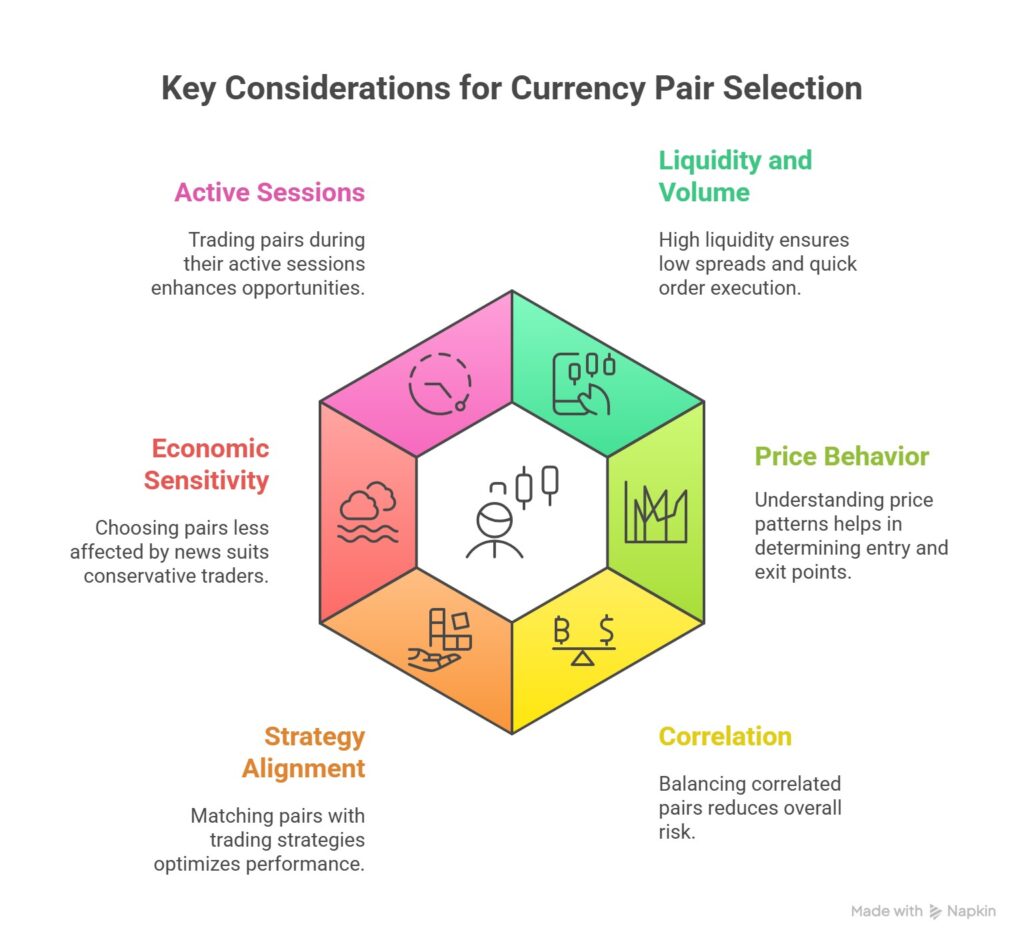
EUR/GBP trades steady on UK-EU ties, 70-100 pips range. EUR/JPY benefits yen weakness, 120 pips average. GBP/JPY leads risk appetite, 200 pips on good days.
Lower ones like AUD/NZD suit ranges, 40-60 pips. CAD/JPY tracks oil-yen flows.
Why these? BIS ranks EUR/GBP first among crosses. Traders use them for hedges: long EUR/GBP offsets EUR/USD shorts.
What Are the Exotic Currency Pairs?
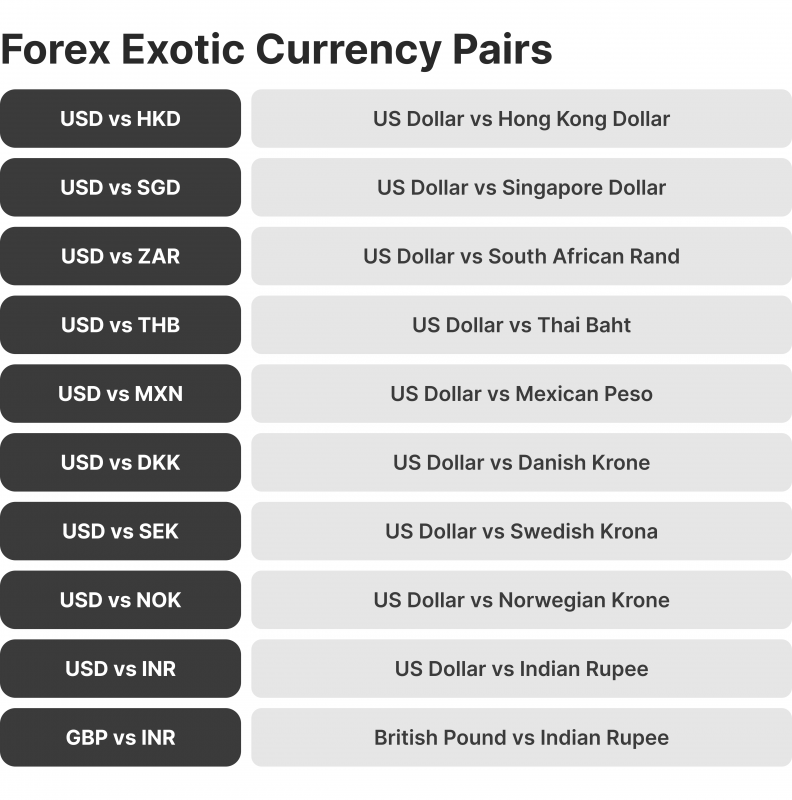
Exotic currency pairs pair a major currency with one from emerging markets, such as USD/TRY, USD/ZAR, USD/MXN, USD/SGD, USD/SEK, EUR/TRY, GBP/ZAR, USD/NOK, USD/PLN, USD/HKD, EUR/ZAR, USD/BRL, USD/CLP, USD/CZK, USD/RUB, and others, marked by wide spreads and sharp moves. Let’s examine their types and suitability.
Which Exotic Pairs Involve Major Currencies Paired with Emerging Markets?
Exotics blend majors with currencies from Asia, Latin America, Africa, and Middle East. Key ones: Asia (USD/SGD, USD/KRW, USD/INR), Latin America (USD/MXN, USD/BRL, USD/CLP, USD/COP), Africa (USD/ZAR, USD/NGN), Middle East (USD/TRY, USD/AED).
USD/TRY leads with Turkish lira volatility, 500+ pips on inflation. USD/ZAR follows rand on gold, Africa category.
Latin: USD/MXN (peso, oil-linked), USD/BRL (real, commodities). Asia: USD/SGD (stable), USD/INR (rupee controls).
EUR/TRY, GBP/ZAR add euro/pound flavor. Full 15+ list:
- USD/TRY
- USD/ZAR
- USD/MXN
- USD/BRL
- USD/SGD
- USD/SEK (Nordic edge)
- USD/NOK
- EUR/TRY
- GBP/ZAR
- USD/PLN
- USD/HKD
- EUR/ZAR
- USD/CLP
- USD/CZK
- USD/RUB
Spreads hit 20-50 pips. Regions drive traits: TRY geopolitical, ZAR metals.
Are Exotic Pairs Suitable for All Forex Traders?
Exotic pairs fit experienced traders only, due to high volatility, wide spreads, and geopolitical risks. Low liquidity causes slippage, unlike majors.
Geopolitics swings them: TRY hikes on elections, ZAR on strikes. Volumes under 1%, per BIS.
Spreads eat profits: 30 pips on USD/ZAR versus 1 on EUR/USD. Volatility tempts, but gaps wipe accounts.
Not for beginners; need $10k+ capital, news filters. Pros use for diversification, 1-2% portfolio.
Ever chased an exotic breakout? Patience wins. Stick to brokers with deep liquidity like Pepperstone for these.
How Do Currency Pairs Compare in Volatility, Spreads, and Liquidity?
Majors boast high liquidity and tight spreads with moderate volatility, minors balance these via cross pairs without USD, and exotics deliver extreme volatility but suffer wide spreads and low liquidity.
Furthermore, these differences shape trading strategies across categories.
What Are the Tightest Spread Currency Pairs for Scalping Strategies?
Scalping thrives on pairs with spreads under 1 pip, where quick entries and exits minimize costs. EUR/USD leads with average spreads of 0.1 to 0.6 pips during peak hours, thanks to its massive daily volume exceeding $1 trillion. GBP/USD follows at 0.4 to 0.8 pips, driven by London-New York overlap. USD/JPY offers 0.2 to 0.7 pips, benefiting from Tokyo session liquidity. AUD/USD and USD/CAD round out the top five, both averaging 0.5 to 0.9 pips, supported by commodity ties and North American trading.
You’ll notice these majors dominate scalping because brokers compete fiercely on them, often providing raw spreads plus commissions. Data from brokers like IC Markets shows EUR/USD hitting 0.0 pips in ideal conditions. For scalpers, this means higher win rates on high-frequency trades.
Traders often ask how to verify these spreads in real time.
- Check broker demo accounts during London-New York sessions for live quotes.
- Use tools like Spread Monitor on MT4 to track averages over 24 hours.
- Prioritize ECN brokers for sub-1 pip consistency, avoiding market makers.
Which Exotic Pairs Offer the Highest Volatility Opportunities?
Exotics like USD/TRY and USD/ZAR provide volatility spikes over 300 pips daily, far exceeding majors’ 50-100 pips. USD/SEK averages 200-250 pips, influenced by Swedish economic data. EUR/NOK hits similar ranges, tied to oil prices and Norwegian policy shifts. These pairs swing wildly due to lower liquidity and external factors like geopolitical events.

For swing traders, this means larger profit potential per trade, but risks amplify too. Historical data from 2022 shows USD/TRY surging 1,000 pips in weeks amid Turkish inflation. Compare this to EUR/USD’s steady 70-pip days; exotics demand wider stops.
What draws traders here beyond majors?
- Position sizing drops to 0.01 lots to manage drawdowns from sudden gaps.
- Pair with news calendars to anticipate central bank surprises in emerging markets.
- Backtest on platforms like Forex Tester for volatility-adjusted returns.
How Do Minors Compare to Majors in Expert Advisor Compatibility?
Minors, or crosses like EUR/GBP and EUR/JPY, lag majors in EA compatibility due to wider spreads (1-3 pips vs. 0.5 pips) and optimization challenges. Majors optimize easily on USD pairs, where EAs like those from Forex Expert Advisor Store run on standard settings. Crosses require custom tweaks for slippage, as liquidity dips outside Europe-Asia overlaps.
EAs perform 20-30% better on majors per backtests, thanks to predictable volatility. For minors, grid or martingale strategies falter on news-driven gaps, unlike majors’ smoother trends.
How do you adapt EAs for minors?
- Recalibrate stop-losses 50% wider for crosses like AUD/NZD.
- Use multi-timeframe filters to avoid choppy sessions in GBP/JPY.
- Test on tick data from Dukascopy for realistic minor pair simulations.
What Are Lesser-Known Exotic Pairs for Advanced Diversification?
Pairs like USD/PLN and AUD/SGD offer diversification with low correlations to majors (under 0.3 with EUR/USD). USD/PLN moves on Polish rate decisions, averaging 150 pips daily, while correlating inversely with EU growth. AUD/SGD tracks Asia-Pacific risk, with 100-200 pip ranges and ties to commodity exports.

These add portfolio balance; a 2023 study by BIS notes exotics reduce overall variance by 15% in diversified baskets. Unlike hyper-volatile USD/TRY, they provide steady swings.
Why seek these for advanced setups?
- Monitor Eastern European bonds for USD/PLN edges over traditional pairs.
- Track Singapore dollar strength against AUD for carry trade insights.
- Combine with correlation matrices in TradingView for low-beta exposure.
How Can Traders Use Currency Pair Strength Meters Across Categories?
Strength meters, like those in MT4 indicators or OANDA’s tool, measure relative currency power via price momentum, revealing majors’ stability versus exotics’ extremes. For majors, EUR strengthens against USD when above 50 on a 0-100 scale, signaling buys. Exotics like USD/SEK show erratic swings, useful for spotting reversals.
Across categories, meters highlight divergences: strong JPY weakens USD/JPY majors, while minor EUR/GBP confirms trends. Daily resets help compare liquidity-rich majors to thin exotics.
You’ll find these tools answer, “Which currency drives the pair?”
- Apply to majors for trend confirmation during high-volume hours.
- Use on exotics cautiously, filtering false signals with volume overlays.
- Integrate into EAs via scripts for automated strength-based entries.
