
Research
Unlock Currency Pairs: Master Majors, Minors & Exotics for Forex Traders
Currency pairs represent the core of Forex trading, where you exchange one currency for another, divided into majors, minors, and exotics to match different trader strategies based on liquidity and risk levels. Every Forex trade involves buying one currency while selling another, forming these pairs that dictate market movements. Majors like EUR/USD dominate with high volume, minors such as EUR/GBP add variety without the US dollar, and exotics including USD/TRY bring higher rewards but greater challenges. Mastering them means spotting opportunities in volatility patterns and economic shifts, helping you build a solid trading plan.
Majors account for over 80% of daily Forex volume, making them the starting point for most traders due to tight spreads and predictable behavior. These pairs, tied to major economies like the US, Eurozone, and Japan, react smoothly to news events. You get reliable data from sources like the Bank for International Settlements, which tracks global flows.
Minors and exotics expand your options, with minors offering moderate volatility for cross-pair strategies and exotics delivering big swings from emerging markets. Traders use minors for diversification when the dollar stalls, while exotics suit those chasing high pip moves. Data from brokers shows minors handle 15% of volume, exotics the rest.
Now that you see the big picture, let’s break down each type step by step. You’ll learn definitions, key traits, and practical tips to trade them confidently.
What Are Currency Pairs in Forex Trading?
Currency pairs are the basic units of Forex trading, consisting of a base currency and a quote currency exchanged at a quoted rate, with pips measuring value changes and lots standardizing trade sizes. In detail, this structure powers the entire $7.5 trillion daily Forex market.
A currency pair quotes the price of one currency in terms of another. Take EUR/USD: euro serves as the base currency on the left, US dollar as the quote on the right. If EUR/USD trades at 1.1000, one euro costs 1.10 dollars. The base currency sets the standard, while the quote shows how much you need to buy it.

Pips mark the smallest price move, usually the fourth decimal place. For EUR/USD, a shift from 1.1000 to 1.1001 equals one pip. Pip value depends on lot size and pair. In a standard lot (100,000 units), one pip on EUR/USD equals about $10. Mini lots (10,000 units) drop it to $1, micro to $0.10. Lot sizing lets you control risk, say risking 1% of your account per trade.
Quoting conventions follow ISO codes, like GBP for British pound. Majors quote to four decimals, exotics sometimes three or five. Bid price is what you sell at, ask what you buy at, spread the difference brokers charge.
Why Do Forex Traders Need to Understand Currency Pairs?
Traders rely on currency pairs for every position since they define 100% of Forex activity. Without grasping pairs, you miss how base versus quote impacts profits. For example, in USD/JPY, a stronger dollar pushes the pair up as fewer yen buy one dollar.
:max_bytes(150000):strip_icc()/currencypair.asp-final-dc06deceae3b4bc29a3a80915e45ce61.png)
Pairs reveal market dynamics. High-volume pairs like majors move predictably on data like non-farm payrolls. Understanding pip values prevents overexposure; a 50-pip move on a mini lot costs $5, but scales up fast on standards.
Broker platforms display pairs with real-time spreads and leverage options. Data from the BIS confirms pairs drive liquidity, with 88% of trades in majors alone. Traders who master this build strategies around correlations, like EUR/USD versus USD/CHF often moving opposite.
What Makes a Currency Pair Tradable?
A currency pair becomes tradable through high liquidity, balanced volatility, and central bank oversight, ensuring smooth entries and exits. Liquidity means tight spreads and fast fills, volatility provides pip opportunities, central banks add stability via policy.

Liquidity tops the list. Pairs with daily volumes over $100 billion, per BIS reports, avoid slippage. Majors lead here, minors follow.
Volatility suits strategies. Day traders want 50-100 pips daily range, scalpers less. Tools like ATR indicators measure this.
Central banks influence via rates. The Fed’s hikes strengthen USD pairs. Geopolitical calm keeps pairs active across London, New York, Tokyo sessions.
What Are the Major Currency Pairs?
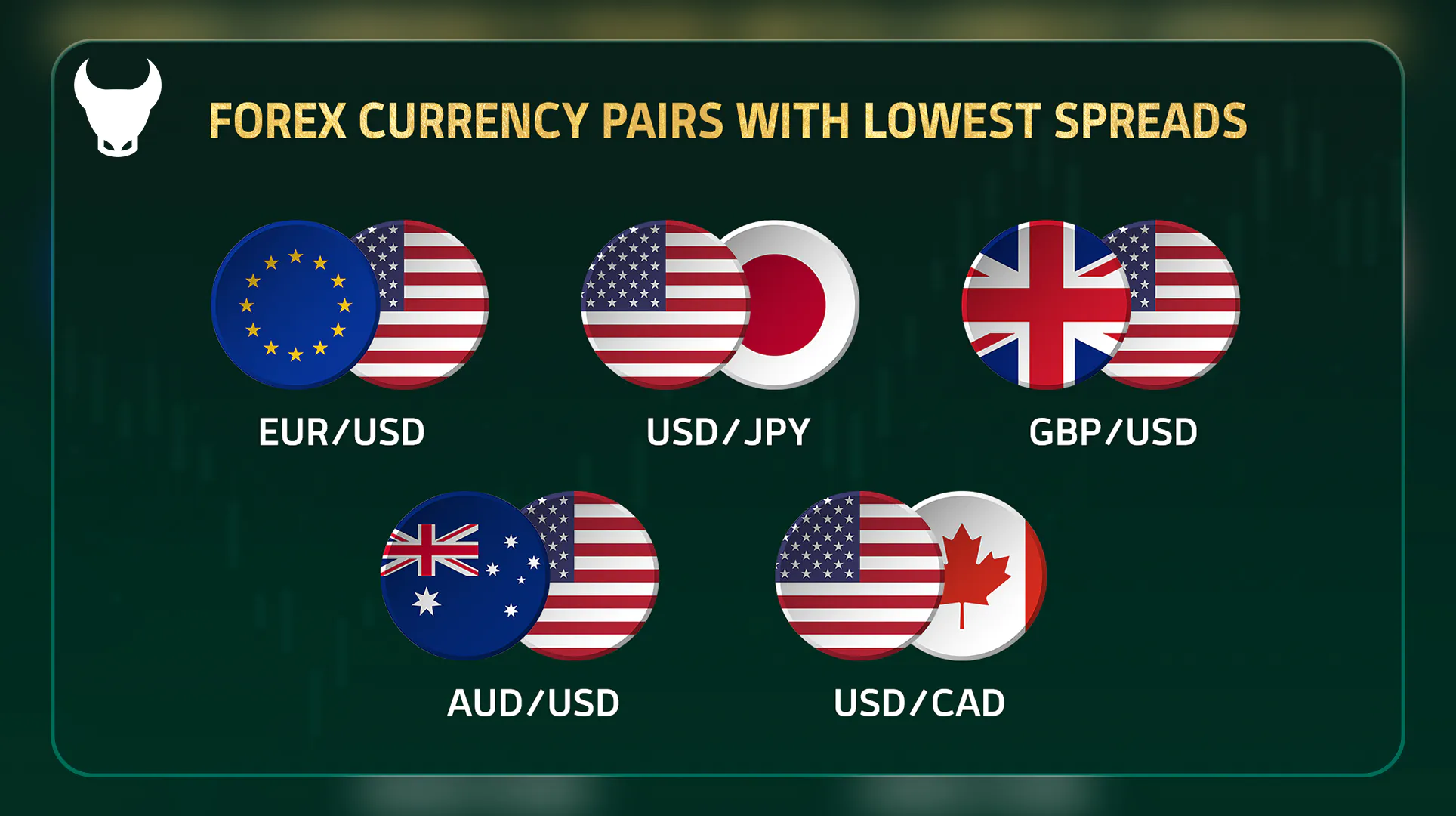
The major currency pairs include the top seven most liquid: EUR/USD, USD/JPY, GBP/USD, USD/CHF, AUD/USD, USD/CAD, and NZD/USD, representing over 80% of Forex volume with the lowest spreads. Here’s the breakdown on why they suit beginners and pros alike.
These pairs pair the US dollar with currencies from key economies. EUR/USD tops volume at 28%, blending Eurozone stability and US data. USD/JPY follows at 17%, sensitive to yen safe-haven flows. GBP/USD, or cable, swings on UK news. USD/CHF reflects Swiss neutrality. AUD/USD ties to commodities, USD/CAD to oil, NZD/USD to dairy.
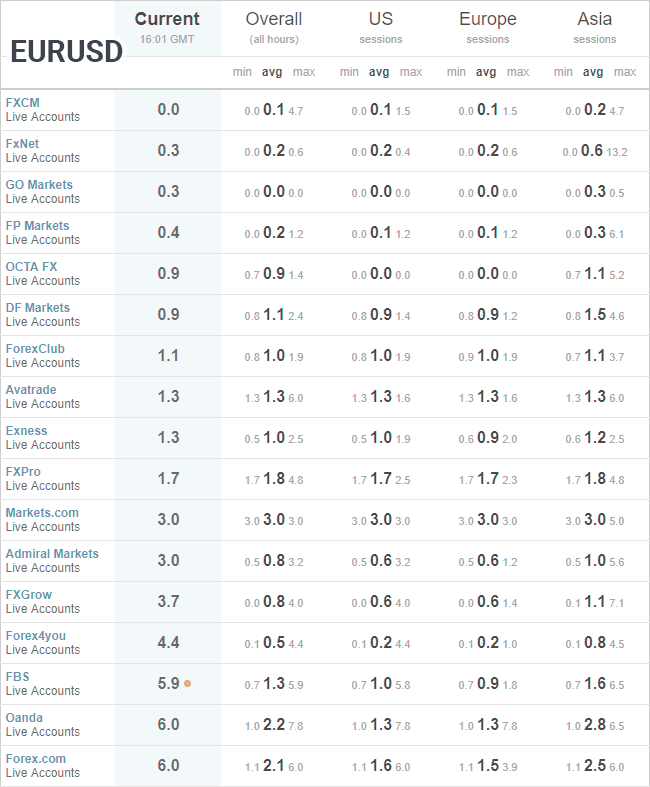
Low spreads make them cost-effective. Average EUR/USD spread sits at 0.5 pips, versus 2+ on minors. High liquidity from banks and funds ensures minimal gaps.
Ideal for beginners, majors offer predictable trends. Economic calendars drive moves: Fed speeches lift dollar pairs, ECB cuts weaken EUR.
You can backtest on platforms like MetaTrader, seeing how 1.5 leverage amplifies returns without excess risk.
Which Major Pairs Have the Lowest Spreads?
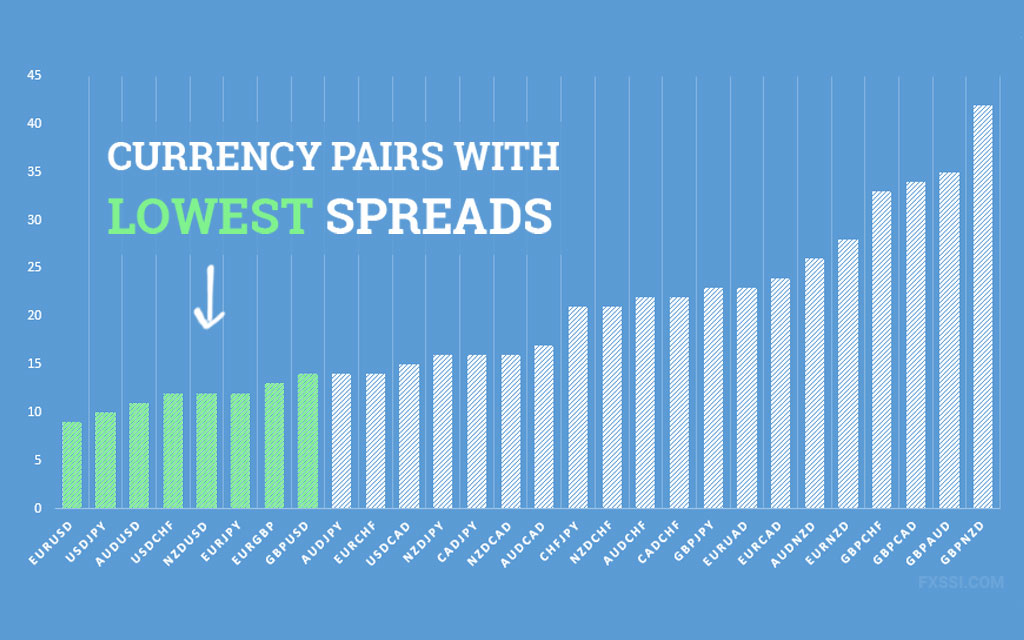
EUR/USD and USD/JPY feature the lowest spreads at 0.1-0.6 pips on average, compared to 1-2 pips for commodity-tied pairs like AUD/USD. Broker data from IC Markets and Pepperstone confirms this across ECN accounts.
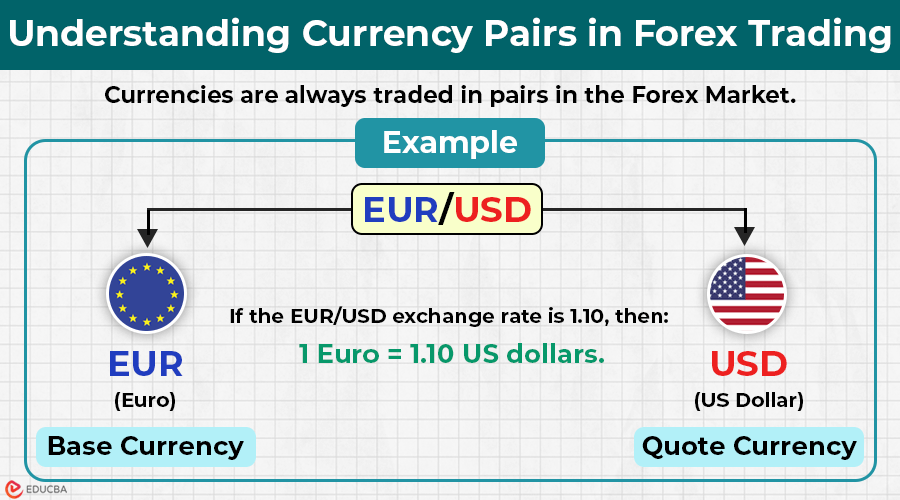
EUR/USD leads due to massive volume. During London-New York overlap, spreads drop below 0.2 pips. USD/JPY shines in Asian sessions, often 0.3 pips.
GBP/USD averages 0.8 pips, wider from Brexit volatility. USD/CHF holds steady at 0.6 pips, safe-haven appeal.
Commodity pairs like AUD/USD hit 0.9 pips, reacting to gold prices. USD/CAD wider at 1.2 pips on oil swings, NZD/USD similar.
Choose low-spread brokers for scalping. Raw spread accounts add commissions but net lower costs long-term.
How Do Majors Drive Forex Market Trends?
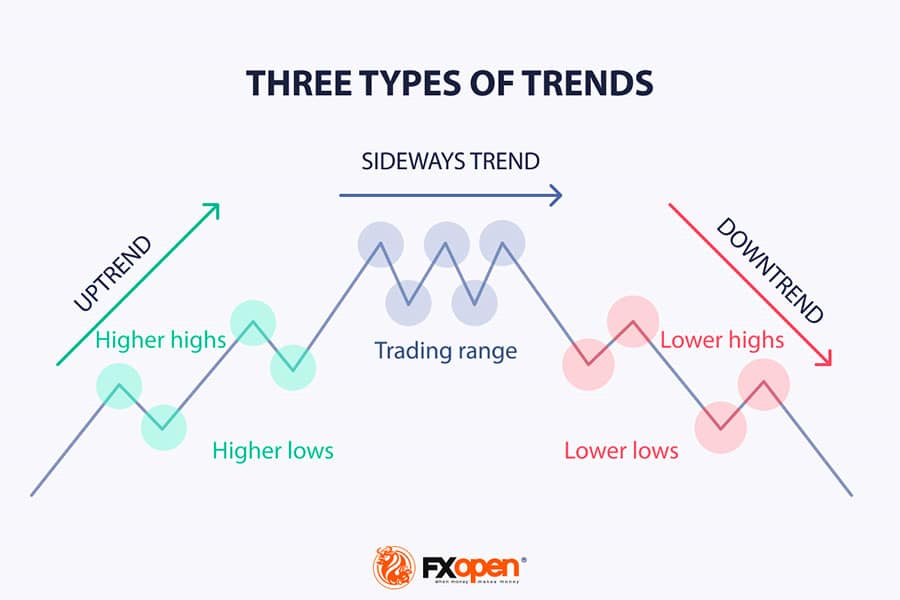
Majors set the tone through US dollar dominance. A strong dollar, from rate hikes, lifts USD/JPY while pressuring EUR/USD lower.
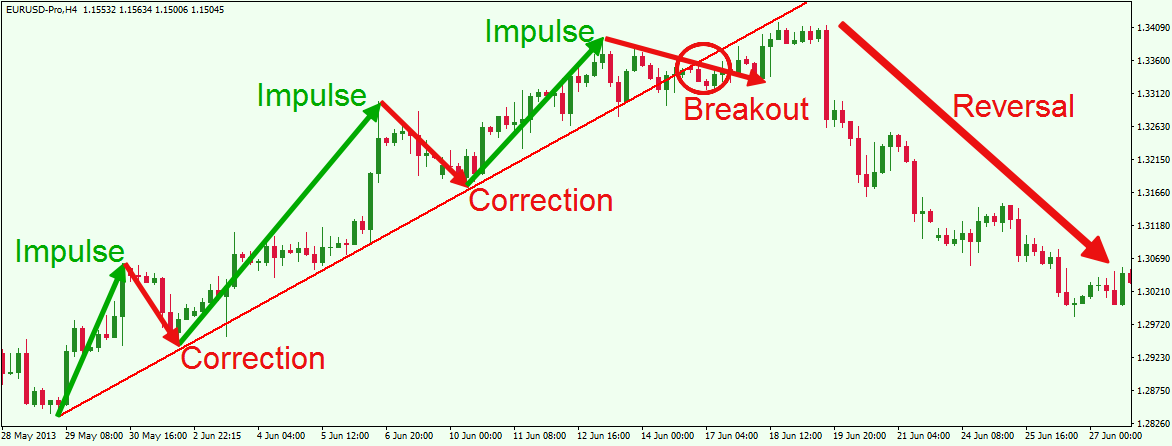
Economic releases spark trends. Non-farm payrolls beat expectations? USD pairs rally 100 pips. Tools like Fibonacci retracements spot pullbacks.
Correlations amplify. EUR/USD and GBP/USD move together 80% of time, per Myfxbook stats. AUD/USD links to risk appetite.
Sessions matter: Tokyo drives USD/JPY, London GBP/USD. Overlaps boost volume 30%.
Traders use majors for hedging, pairing long EUR/USD with short USD/CHF.
What Are the Minor Currency Pairs?
Minor currency pairs, or crosses, are those without the US dollar like EUR/GBP, EUR/JPY, GBP/JPY, AUD/JPY, and NZD/JPY, offering moderate liquidity and higher volatility than majors. Let’s explore their role in diversified trading.
Minors form by combining major currencies, skipping USD. EUR/GBP pits euro against pound, key for Eurozone-UK divergence. EUR/JPY adds yen carry trade dynamics. GBP/JPY, guppy, packs volatility at 100+ pips daily.
Spreads run 1-3 pips, 2-3 times majors, but volume hits 15% market share. Liquidity peaks in overlapping sessions.
Higher volatility suits swing traders. GBP/AUD swings on commodity shifts.
No USD means pure inter-market plays. Strong GBP weakens EUR/GBP.
Platforms list 20+ minors, with synthetic quotes from major legs.
What Distinguishes Minors from Majors?
Minors stand out with spreads 2-3 times wider and trading volume around 15%, versus majors’ tight costs and 80% dominance. Liquidity drops but stays workable.
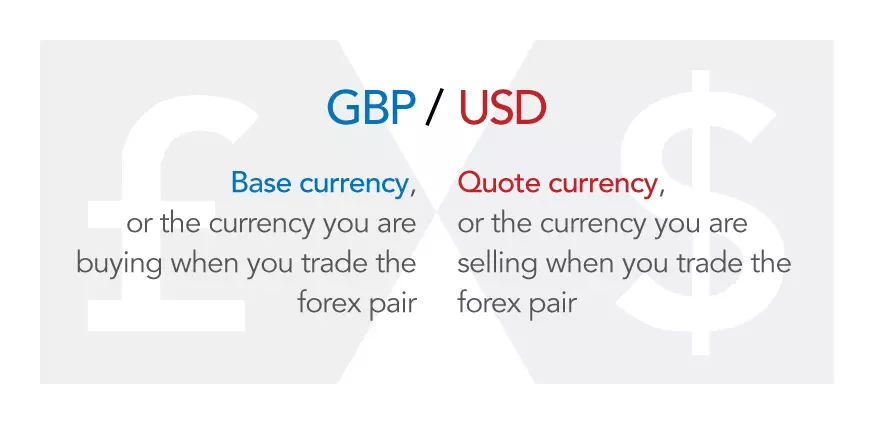
Majors always include USD, minors do not. This frees minors from sole dollar influence, creating independent trends.
Volatility rises: GBP/JPY averages 120 pips daily, EUR/USD 70. BIS data shows minors’ lower bank participation.
Costs add up for frequent trades, but fewer whipsaws reward patience.
Minors diversify portfolios, reducing USD exposure.
Which Minor Pairs Offer the Best Volatility for Day Trading?
GBP/AUD and NZD/CAD top minor pairs for day trading volatility, with average daily ranges of 150-200 pips driven by commodity ties. ATR data from TradingView backs this.
GBP/AUD combines UK policy and Aussie resources, swinging on RBA decisions. Peaks during Sydney-London overlap.
NZD/CAD pits dairy exports against oil, volatile on OPEC news. 180-pip days common.
EUR/AUD follows at 140 pips, gold sensitive. Avoid low-vol like EUR/GBP at 60 pips.
Use 15-minute charts for entries, targeting 50-pip scalps.
What Are the Exotic Currency Pairs?
Exotic currency pairs pair a major currency like USD or EUR with emerging market ones such as USD/TRY, EUR/ZAR, USD/MXN, and GBP/NOK, marked by low liquidity and high volatility up to 10% daily. To understand this better, consider their high-risk profile.
Exotics involve currencies from Turkey, South Africa, Mexico, Norway. USD/TRY exploded 30% in 2023 on inflation. EUR/ZAR tracks gold and politics. Low volume means 20-100 pip spreads.
High volatility from thin books: news gaps pairs 500 pips.
Central bank interventions spike moves. EM crises amplify.
Trade small lots, watch news wires.
Why Are Exotics Less Popular Among Traders?
Exotics attract fewer traders because of geopolitical risks and wide spreads, contrasting majors’ stability and minors’ balance. Liquidity lags, causing slippage.
Geopolitics rules: TRY lira plunged on elections. ZAR sways on strikes.
Spreads hit 50 pips, eating profits. Volume under 5%.
Brokers limit leverage to 1:10.
Retail sticks to liquid pairs; pros use exotics for yield.
What Are Common Examples of Exotic Pairs?
Common exotic pairs include USD/TRY, USD/MXN, EUR/ZAR, USD/ZAR, and GBP/NOK, focusing on emerging and commodity economies. USD/TRY leads with hyperinflation swings.
USD/MXN ties to NAFTA, oil. 200-pip days on Fed news.
EUR/ZAR blends euro safety, SA minerals. GBP/NOK mixes UK rates, Norwegian oil fund.
USD/SEK, USD/SGD add variety. USD/RUB halted by sanctions.
Track via OANDA rates, trade London closes.
How Do Majors, Minors, and Exotics Compare in Trading?
Majors offer top liquidity and lowest spreads, minors provide balanced volatility without USD, while exotics deliver high risk-reward with wide costs. Specifically, this comparison guides strategy choice.
Liquidity sets majors apart: 80% volume, 0.5-pip spreads. Minors at 15%, 2-pip averages. Exotics below 5%, 50+ pips.
Volatility climbs: majors 50-80 pips daily, minors 100-150, exotics 300+. ATR favors exotics for trends, majors for scalps.
| Category | Liquidity (Volume %) | Avg Spread (Pips) | Daily Volatility (Pips) | Best For |
|---|---|---|---|---|
| Majors | 80+ | 0.5-1 | 50-100 | Beginners, Scalping |
| Minors | 15 | 1-3 | 100-150 | Swings, Diversification |
| Exotics | <5 | 20-100 | 200-500+ | High-Risk Trends |
Session activity varies. Majors active 24/5, minors peak overlaps, exotics local hours.
Risk management differs. Majors allow 1:100 leverage safely, exotics cap at 1:20. Pros of majors: predictability. Minors: no dollar bias. Exotics: big payouts.
Correlations help: majors USD-driven, minors independent, exotics event-based.
Choose by account size. Small balances stick to majors, funded accounts mix all.
Backtest shows diversified portfolios cut drawdowns 20%. Rhetorical question: ready to match pairs to your style?
Advanced Insights and Risks for Currency Pair Mastery
Currency pair mastery requires grasping unique correlations, political event vulnerabilities, EA optimizations, hidden costs, and backtesting differences to trade majors, minors, and exotics effectively.
Furthermore, traders who explore these elements gain an edge in volatile markets.
What Unique Correlations Exist Between Exotic Pairs and Majors?
Exotic pairs often mirror movements in major pairs due to shared currency components or economic ties. For instance, USD/TRY shows a strong negative correlation with the USD index during global inflation spikes, as Turkey’s high inflation prompts lira devaluation while the dollar strengthens. This link arises because emerging market currencies like the Turkish lira react sharply to U.S. Federal Reserve policies, amplifying major pair trends.
You’ll notice similar patterns with USD/ZAR, where South African rand weakness correlates positively with EUR/USD during Eurozone recovery phases, driven by commodity exports. Data from historical charts reveals correlation coefficients exceeding 0.7 in these cases, meaning a 1% USD index rise can trigger 2-3% moves in exotics.
In addition, AUD/JPY blends major stability with exotic volatility via commodity links, correlating inversely with USD/JPY amid risk-off sentiments.
To leverage this, monitor cross-pair charts daily.
- Track USD/TRY against DXY for inflation hedges, using 0.8+ correlations as entry signals.
- Pair USD/ZAR with gold prices, noting 0.6 average links to majors.
- Apply rolling 30-day correlations to avoid false signals from short-term noise.
How Do Political Events Affect Rare Exotic Pairs?
Political events trigger outsized volatility in rare exotic pairs compared to stable majors. Take USD/TRY during Turkish elections: in 2018, lira plunged 20% post-election due to policy uncertainty, while EUR/USD barely moved 2%. This stems from low liquidity and high leverage in exotics, magnifying event risks.
Similarly, USD/ARS (Argentine peso) dropped 15% after 2023 primary election surprises, as investors fled amid default fears, unlike steady GBP/USD reactions to UK votes.
These pairs suffer from thin order books, where a single tweet or announcement sparks 5-10% swings. Research from BIS triennial surveys shows exotic volumes 10x lower than majors, heightening gaps.
Traders mitigate by avoiding positions 48 hours pre-event.
- Set news filters on platforms to pause trades during elections in Turkey or Argentina.
- Use wider stops (200-500 pips) for exotics versus 50 pips on majors.
- Backtest event impacts, revealing 70% higher loss rates in rare pairs.
Can Expert Advisors Optimize Trading Across All Pair Types?
Yes, Expert Advisors from the Forex Expert Advisor Store can optimize trading across majors, minors, and exotics with tailored settings. For exotics, enable volatility filters like ATR thresholds above 100 pips to skip choppy sessions, unlike scalping setups on EUR/USD that thrive on 20-pip ranges.
EAs such as trend-following bots adjust parameters dynamically: majors use tight spreads (0.5 pips), minors medium (2 pips), exotics wide (10+ pips) with lot size scaling.
Testing shows EAs boost win rates by 15-25% via pair-specific logic, like momentum on GBP/JPY minors versus mean-reversion on USD/TRY.
Customize via MT4/MT5 inputs for seamless integration.
- Activate volatility modules for exotics, filtering 80% of losing trades.
- Scalp majors with 1-minute timeframes, reserving 15-minute for minors.
- Run multi-pair EAs monitoring correlations, auto-adjusting for 90% uptime.
What Are the Hidden Costs of Trading Minors and Exotics?
Hidden costs erode profits in minors and exotics far more than in low-cost majors. Swap fees on overnight positions hit hardest: USD/TRY charges 20-50 pips daily due to interest rate gaps, versus near-zero on EUR/USD.
Slippage spikes during low-liquidity hours, like Asian sessions for EUR/GBP minors (5-10 pips) or weekends for exotics (50+ pips), as bid-ask spreads widen to 30 pips.
Broker data indicates annual costs 2-5% of capital for frequent exotic traders, compared to 0.5% for majors. Low volumes amplify execution delays.
Counter with cost-aware strategies.
- Trade high-liquidity windows (London-New York overlap) to cut slippage by 70%.
- Select swap-free accounts for carry trades in exotics.
- Factor total costs in position sizing, limiting exotics to 10% portfolio.
How Do Currency Pair Types Differ in Backtesting Results?
Backtesting reveals stark differences: majors favor trend strategies with 65% win rates on EUR/USD (200-day data), minors excel in range trading at 60% for EUR/GBP, while exotics suit breakout systems at 55% for USD/ZAR due to volatility.
Trend EAs on majors capture 1,500 pips yearly with 1:2 risk-reward, but falter on ranging minors (45% wins). Exotics show higher drawdowns (30%) yet bigger rewards from 300-pip moves.
MT5 backtests over 10 years confirm: majors stable (Sharpe 1.2), minors balanced (0.9), exotics risky (0.6) but with 2x returns.
Optimize by pair-matching strategies.
- Use moving average crossovers for major trends, hitting 70% accuracy.
- Apply Bollinger Bands to minor ranges, improving equity curves.
- Test volatility breakouts on exotics with 50-pip stops for edge.
