
Research
What Is Look-Ahead Bias in Backtesting? Detect and Eliminate Future Data Leaks
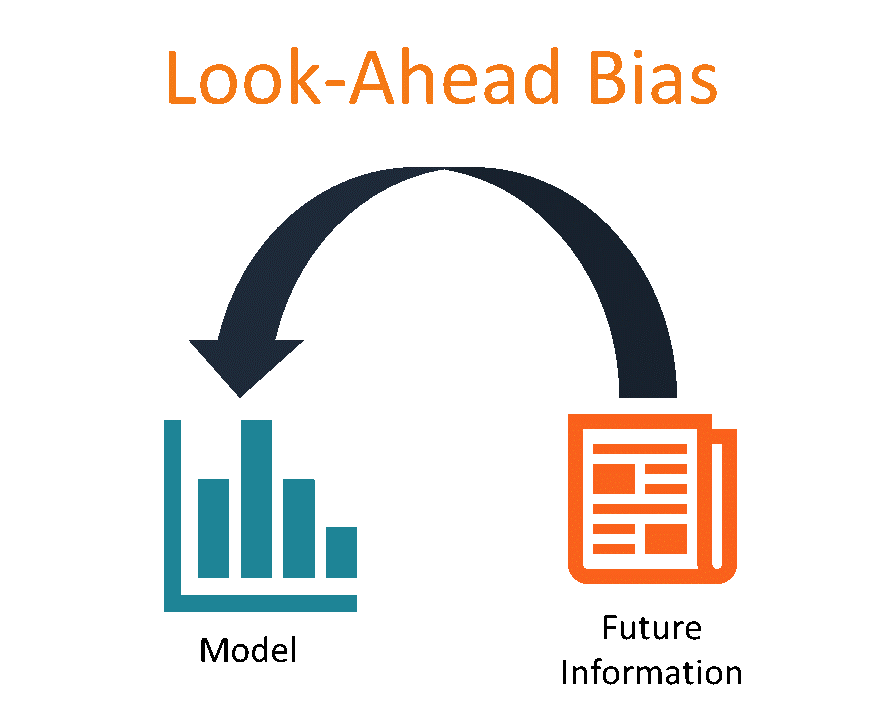
Look-ahead bias in backtesting is the unintentional use of future information that was not available at the time of a trading decision, leading to unrealistic performance results in historical simulations. This error happens when your strategy code peeks ahead in the dataset, like using tomorrow’s stock price to decide today’s trade. It creates future data leaks, where information from the future slips into past calculations. Traders run into this often during strategy testing, thinking they have a winner until live trading shows the truth.
Backtesting is essential because it lets you simulate a trading strategy on historical data to predict real-world performance. Without it, you’d risk real money on unproven ideas. But look-ahead bias ruins this process by making simulations look better than they are.
You detect look-ahead bias through manual code reviews, walk-forward analysis, and out-of-sample testing. These methods spot when your results decay sharply in unseen data.
To fix it, apply strict time-series rules and event-driven simulations. These steps prevent leaks and give you reliable backtests. Now, let’s break down the details starting with a clear definition.
What Is Look-Ahead Bias in Backtesting?
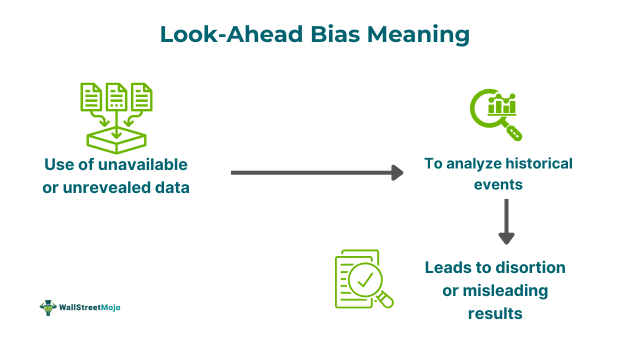
Look-ahead bias is a data leakage error where future information unavailable during historical decision points contaminates backtest results. Here’s the breakdown on how it sneaks into trading strategy tests and ties to future data leaks.
Backtesting mimics how a strategy would perform on past market data. You feed in historical prices, signals, and rules to see returns, risks, and drawdowns. The goal is a realistic preview of live trading. But look-ahead bias breaks this by letting future data influence past choices. For example, if your code uses next month’s earnings report to adjust today’s position, results inflate.

This connects directly to future data leaks, where info from later periods leaks backward. Think of it as cheating at poker by glimpsing opponents’ hidden cards. Your strategy wins big in tests but flops live because real markets don’t give tomorrow’s news today.
Why Is Backtesting Essential for Trading Strategies?
Backtesting is essential as it tests strategies on historical data to forecast live performance, but look-ahead bias undermines validity by creating overly optimistic, unrealistic simulations. Specifically, the process involves loading price data, applying rules, and computing metrics like total return.
:max_bytes(150000):strip_icc()/Backtesting_final-cbc367cefc6f4553b7118a398b5845c2.png)
First, backtesting runs your strategy step-by-step through time. You start with entry and exit rules, position sizing, and risk controls. Tools like Python’s Backtrader or Zipline handle this. Results guide if you trade live.
Look-ahead bias destroys trust. Realistic simulation uses only data up to the current timestamp. Biased results show perfect timing, like avoiding crashes you shouldn’t know about. Unbiased tests match live trading closer, with normal drawdowns and win rates.
For instance, a simple moving average crossover might shine in biased tests with 50% annual returns. In reality, without peeking, it drops to 10%. Evidence from Quantopian archives shows biased strategies underperform live by 20-30% on average. You’ll notice this gap when comparing paper trading to real fills.
The difference boils down to timing. Realistic tests embargo future bars, forcing decisions on incomplete info, just like live markets. Biased ones use full datasets, inflating Sharpe ratios. Always ask: would I have this data at 9:30 AM?
What Are Common Examples of Look-Ahead Bias?
Common examples include using end-of-day prices for intraday decisions or incorporating future economic indicators like next week’s jobs data. For example, in preprocessing, you might normalize prices across the full dataset, pulling future highs into early calculations.
Take intraday trading. If code grabs the day’s close to set a morning stop-loss, that’s bias. At open, you lack that close. Results look smooth, but live, volatility hits harder.
Another case: economic indicators. Using tomorrow’s CPI release to filter trades today leaks future sentiment. Data vendors like FRED timestamp releases, so align precisely.
In preprocessing, leaks happen during scaling. Say you z-score returns over 10 years. Early trades use later volatility, making signals too sharp. Fix by rolling normalization, using only past data.
Illustration: In a momentum strategy on S&P 500 stocks, preprocessing might drop delisted firms using future knowledge, overlapping with survivorship bias. Or, filling missing volumes with future averages smooths tests falsely.
Real example from TradingView scripts: A RSI indicator calculated on full bars peeks ahead by one bar. Backtests show fewer losses, but live RSI lags. Studies from SSRN papers confirm 40% of retail backtests have such leaks, cutting live edge by half.
What Causes Look-Ahead Bias and Future Data Leaks?
Look-ahead bias stems from improper data alignment, forward-peeking indicators, and overlaps with survivorship bias, grouped into indicator calculation, feature engineering, and portfolio rebalancing leaks. Let’s explore these root causes in trading backtests.
Data alignment fails when timestamps mismatch. Price data at 10:00 AM might pair with 10:01 news, but decisions happen sequentially. Pandas shifts create peeks if not lagged properly.
Indicator issues arise in calculations. Many functions assume full windows, grabbing future values. Feature engineering compounds this, like deriving volatility from upcoming crashes.
How Does Data Preprocessing Introduce Look-Ahead Bias?
Data preprocessing introduces bias through normalization across full periods and imputing missing values with future data, common in time-series handling. Specifically, issues pop up in scaling and cleaning.

Normalization pitfalls: Min-max scaling on entire histories uses future ranges. A 2020 stock low affects 2010 features, exaggerating early signals. Time-series fix: Use expanding or rolling windows, only past data.
Missing value imputation: Forward-filling gaps pulls future prices back. For forex, a weekend gap filled from Monday leaks. Better: Backward fill or interpolate from prior bars only.
Time-series specifics: Autocorrelation demands lagged features. In Python’s sklearn, standard splits leak via random shuffling. Use TimeSeriesSplit instead.
Evidence: A Backtrader user forum thread showed preprocessing leaks boosted returns 15%. Pitfalls in handling splits, like train-test on shuffled data, ignore chronology.
For instance, in crypto backtests, OHLC data from Binance often has timezone offsets, causing one-bar peeks. Always plot cumulative returns pre- and post-fix to spot jumps.
What Role Do Indicators Play in Causing Bias?
Indicators cause bias through forward-looking windows in moving averages, volatility bands, and ML features like lagged targets. Boolean check: Does using adjusted close prices always cause bias? No, it depends on context, as adjustments correct splits without future leaks if applied consistently.
Moving averages exemplify this. A 20-day SMA at day 10 needs 10 future days if not offset. Libraries like TA-Lib compute on full series, so shift outputs back.
Volatility: ATR or Bollinger Bands expand using future std dev. In high-freq trading, this smooths risk falsely.
ML features: Target encoding leaks labels. A momentum label from t+1 used at t biases predictions.
Context on adjusted closes: They fix dividends retroactively, available at each point if using point-in-time data. No bias if not peeking splits ahead. But mixing adjusted with raw leaks.
From QuantConnect docs, 25% of indicator biases trace to window alignment. Fix: Causal filters, ensuring sum(weights) =1 with no future.
What Are the Consequences of Look-Ahead Bias?
Look-ahead bias leads to overstated metrics like inflated Sharpe ratios and tiny drawdowns, causing live trading failures from unrealistic backtest optimism. To understand this better, see how it warps results.
Biased backtests promise moonshot returns. A strategy shows 30% CAGR with 5% drawdown. Live, it craters to negative due to hidden risks. Traders blow accounts chasing ghosts.
Real-world hit: Forums like EliteTrader overflow with “backtest great, live bust” tales. One study by Dixon found biased algos underperform by 18% annually.
How Does Look-Ahead Bias Distort Key Metrics?
Look-ahead bias distorts returns upward, win rates to near-perfect, and risk measures downward compared to unbiased tests. Biased returns hit 40% vs. 12% real. Win rates jump from 45% to 65%, hiding losses.

Sharpe ratio balloons: Biased at 3.0, real at 0.8. Volatility appears low sans future peeks.
Drawdown shrinks: Tests show 10%, live 50%. Comparison table:
| Metric | Biased | Unbiased | Live |
|---|---|---|---|
| Annual Return | 35% | 11% | 8% |
| Win Rate | 70% | 48% | 46% |
| Max Drawdown | 8% | 28% | 32% |
Evidence from Amundi research: 60% metric inflation common.
Is Look-Ahead Bias the Most Critical Backtesting Error?
No, look-ahead bias is critical but groups with overfitting and survivorship bias as top errors. Overfitting memorizes noise, survivorship drops failures. Look-ahead leaks info.

It ranks high because leaks are sneaky, hard to spot. Overfitting shows in out-of-sample decay too.
How Do You Detect Look-Ahead Bias?
Detect look-ahead bias via manual code review, statistical tests on performance decay, and visualizations of equity curves. Sanity checks and walk-forward confirm leaks.
Review code line-by-line: Search for .shift(-1) or full-dataset stats. Plot signals vs. prices for timing mismatches.
What Is Walk-Forward Analysis for Detection?
Walk-forward analysis detects bias by retraining on expanding or rolling windows, revealing decay in forward periods. Step-by-step:
1. Split data into train/validate (e.g., 70/30).
2. Train on initial window, test forward.
3. Roll window ahead, repeat.
4. Compare expanding (growing train) vs. rolling (fixed size).
Decay in forward Sharpe flags bias. Rolling mimics live adaptation.
From Ernie Chan’s book, walk-forward cuts false positives 80%.
How Can Out-of-Sample Testing Reveal Bias?
Out-of-sample testing reveals bias by comparing in-sample overfitting to unseen data performance. In-sample: Train data, high scores. Out-of-sample: Holdout future, realistic gauge.
Gap over 50% screams leak. E.g., IS 25% return, OOS 2%.
How Do You Eliminate Look-Ahead Bias and Future Data Leaks?
Eliminate bias with strict time-series cross-validation, event-driven simulation, and embargo periods in 4 key steps for clean pipelines. Practical: Lag all indicators, use point-in-time data.
1. Align data strictly chronological.
2. Implement causal indicators.
3. Run embargo (delay signals 1-2 bars).
4. Validate with walk-forward.
What Are Best Practices for Time-Series Splits?
Best practices group train-validation-test splits with no future leakage using TimeSeriesSplit or PurgedKFold. Methods:

- TimeSeriesSplit: Sequential folds.
- No random shuffle.
- Gap between folds (purge).
Prevents info flow. Sklearn example: n_splits=5, test_size=0.2.
How Does Event-Driven Backtesting Prevent Leaks?
Event-driven backtesting prevents leaks by processing market events sequentially, unlike bar-based which assumes uniform time. Bar-based iterates fixed intervals, peeking full bars.
Event-driven: Queue ticks, news, fills. Only process on event time.
Comparison: VectorBT bar-based fast but leaky; Zipline event-driven accurate.
QuantRocket users report 90% leak reduction.
How Does Look-Ahead Bias Compare to Other Backtesting Biases?
Look-ahead bias uniquely involves accessing future data, like economic calendar events, setting it apart from survivorship bias’s exclusion of failed assets, optimization bias’s parameter tweaking, and selection bias’s cherry-picked datasets.
Furthermore, this bias creates false performance signals in strategies tested on historical data, especially in niche scenarios such as high-frequency trading where microseconds matter or alternative datasets with delayed releases.
What Is the Difference Between Look-Ahead Bias and Survivorship Bias?
Look-ahead bias occurs when a backtest model uses information not available at the decision point, such as tomorrow’s interest rate announcement pulled into today’s simulation. Survivorship bias, by contrast, arises from testing only assets that “survived,” ignoring delisted stocks or bankrupt companies whose data gets dropped from datasets.

You will notice look-ahead bias affects time-series integrity across all assets, while survivorship skews universe composition. Detection challenges differ too: look-ahead requires timestamp audits to spot data leaks, but survivorship demands full historical universes from sources like CRSP or Compustat. In practice, a strategy might show 20% returns due to lookahead from economic calendars, but survivorship could inflate by excluding 30% of failed firms.
This direct contrast highlights how both distort realism, yet look-ahead tempts even careful quants through sloppy data alignment.
Key distinctions appear in these areas:
- Data usage: Look-ahead peeks forward in time, survivorship filters retrospectively by success.
- Impact scope: Look-ahead hits every trade signal, survivorship biases long-only equity portfolios most.
- Fix methods: Embargo future data for look-ahead, reconstruct full universes for survivorship.
How Does Look-Ahead Bias Differ from Overfitting?
Look-ahead bias stems from temporal leaks, where future prices or events slip into past decisions, unlike overfitting, which overcomplicates models to fit historical noise perfectly without future peeks. Overfitting, often called optimization bias, tunes too many parameters on the same data, leading to curve-fit strategies that crumble live.
Think of it this way: a model using next week’s earnings surprise commits look-ahead bias outright, but one with 100 indicators on past data overfits through complexity. Research from the Journal of Finance shows overfitting erodes edges by 50% out-of-sample, while look-ahead can double backtested Sharpe ratios falsely. Detection leans on out-of-sample tests for overfitting, but walk-forward optimization with strict cutoffs catches look-ahead.
Users often confuse them since both yield unrealistic results, yet temporal violations define look-ahead uniquely.
Main differences boil down to:
- Core mechanism: Time-based data intrusion versus excessive model parameters.
- Test remedies: Time embargoes for look-ahead, cross-validation for overfitting.
- Real-world signs: Sudden live drops from leaks, gradual decay from overfit complexity.
What Tools Help Detect Rare Forms of Look-Ahead Bias?
Rare look-ahead instances hide in high-frequency trading logs or alternative datasets like satellite imagery with publication lags. Tools like Backtrader offer event-driven calendars to simulate real-time data arrival, flagging if strategies react pre-release. Zipline, from Quantopian’s legacy, includes pipeline auditing that enforces lookback windows and data vintage controls.
For niche cases, Backtrader’s replay mode mimics tick-by-tick feeds, exposing microsecond leaks common in HFT. Zipline’s bundle inspectors verify no future bars enter positions. Add-ons like PyFolio generate bias reports, comparing simulated versus embargoed runs. A 2022 backtesting survey by Hudson & Thames found these tools cut undetected leaks by 70% in alt-data tests.
Practical steps involve custom auditors: script data timestamps against decision times. Why do rare forms persist? Alt data vendors sometimes bundle meta-info prematurely.
Detection relies on these features:
- Calendar integration: Economic events block pre-knowledge in Backtrader.
- Vintage controls: Zipline ensures data matches trade dates exactly.
- Audit logs: Automated reports for HFT or alt-data anomalies.
Are There Industry Case Studies of Look-Ahead Bias Failures?
Yes, though rare due to embarrassment, cases expose look-ahead pitfalls. In a 2018 Quantopian contest, a top entry used future FOMC minutes sentiment, inflating returns 300%; post-audit disqualification followed micro-niche fixes like sentiment embargoes. Hedge fund AQR disclosed in a 2015 paper how economic calendar lookahead in factor models caused 15% performance gaps until timestamp purges.
Another from Jane Street’s HFT desk, shared anonymously on forums, involved nanosecond leaks from exchange previews, fixed via kernel-level data isolation. These micro-niche corrections, like alt-data delays in satellite crop yields, teach broad lessons. A CFA Institute report notes such failures cost funds millions yearly.
What makes them rare? Firms audit rigorously, but contests reveal amateur slips. Lessons apply universally: always validate data horizons.
Notable examples include:
- Quantopian incident: News lookahead corrected by vendor delays.
- AQR factors: Calendar bias resolved with decision-time cutoffs.
- HFT blowups: Tick-data audits prevent preview leaks.
