
Research
What is a Forex EA? Uncovering The Automated Trading Robot for MT4/MT5
A Forex Expert Advisor (EA) is a type of software that automates trading decisions on the MetaTrader platforms (MT4/MT5), operating based on pre-programmed rules and algorithms to execute trades without manual intervention. This automated trading robot analyzes the foreign exchange market, identifies potential trading opportunities according to its internal strategy, and can open, manage, and close positions on behalf of the trader. By adhering strictly to its coded logic, an EA removes the emotional component of trading, such as fear or greed, which often leads to poor decision-making for human traders.
The core function of an automated trading robot is to execute a specific trading strategy 24 hours a day, five days a week, without requiring the trader to be present at their computer. This allows for the capitalization on opportunities that may arise during different market sessions around the globe. The EA connects directly to the trading platform and continuously scans market data, such as price movements and technical indicator values, to find conditions that match its predefined entry and exit criteria.
Unlike a simple trading indicator that only provides visual signals or data points on a chart, a Forex EA is capable of acting on those signals autonomously. An indicator might show that a currency pair is in an overbought condition, but it is up to the trader to interpret that information and decide whether to place a trade. An EA, on the other hand, can be programmed to automatically execute a sell order the moment that same overbought condition is detected, making it a fully automated trading tool.
While these automated tools present a powerful way to approach the markets, their effectiveness is entirely dependent on the quality of their underlying strategy and proper configuration. They are not a guarantee of profit but are sophisticated instruments for systematically applying a trading plan. This guide will walk you through exactly how they work, their benefits and drawbacks, and what you need to know to use them properly.
What Exactly is a Forex Expert Advisor (EA)?
A Forex Expert Advisor (EA) is a piece of software, or an automated trading robot, designed to execute trading strategies on the MetaTrader 4 (MT4) and MetaTrader 5 (MT5) platforms. It functions by following a set of pre-programmed rules and algorithms based on technical analysis to make trading decisions and manage trades from start to finish.
To understand this better, let’s break down its core functions and how it compares to other trading tools. An EA is essentially a script written in a specific programming language (MQL4 for MT4 and MQL5 for MT5) that can be attached to a currency chart within the trading platform. Once active, it monitors every new price tick that comes from the broker. Based on the logic coded into it, the EA decides if the current market conditions meet the criteria for opening a buy or sell trade, managing an existing trade, or closing a position. This entire process happens without any direct input from the trader, allowing for a completely hands-off trading experience once the initial setup is complete. This automation is its defining characteristic, setting it apart from manual trading where every decision and action is performed by a person.

What is the core function of an automated trading robot?
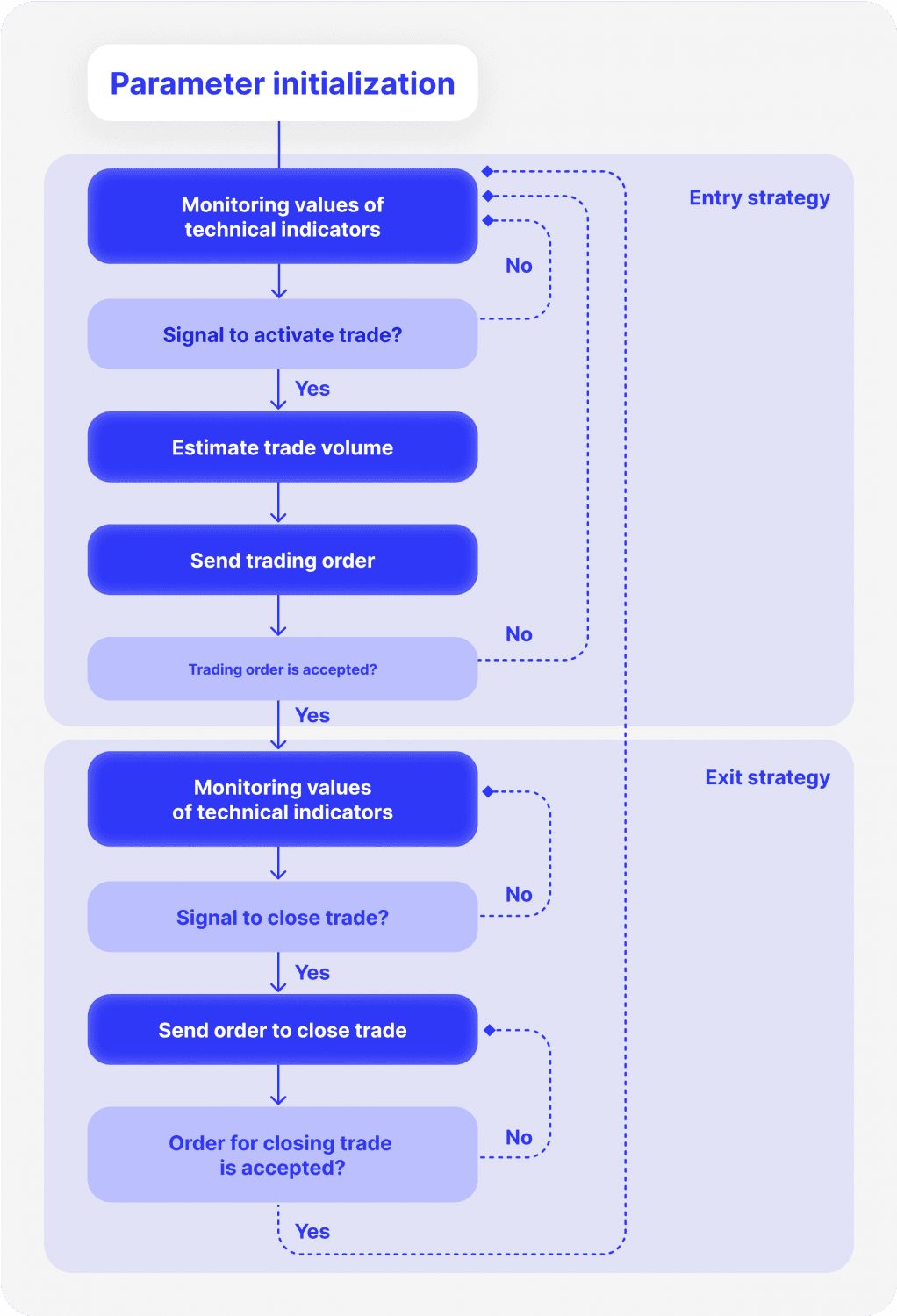
The core function of an automated trading robot, or Forex EA, is to systematically execute trades without any manual intervention, based on a predefined and coded trading strategy. This involves three key automated actions: opening, managing, and closing positions. The robot is designed to remove the human element from the execution process, thereby enabling disciplined and emotionless trading. It operates continuously, monitoring the financial markets for opportunities that align with its internal logic. When the specific conditions outlined in its algorithm are met, it instantly sends an order to the broker’s server.
:max_bytes(150000):strip_icc()/ForexTradingRobot-final-50777b292b124cfda8e84599d0c62167.png)
Cụ thể, the process is driven entirely by its code.
- Opening Positions: The EA constantly analyzes incoming market data, such as price action, chart patterns, and the values of various technical indicators like Moving Averages, RSI, or MACD. For instance, a simple strategy coded into an EA might be: “If the 50-period moving average crosses above the 200-period moving average, open a buy order.” When the EA detects this specific event on the chart it is attached to, it will automatically execute a long position.
- Managing Positions: Once a trade is open, the EA’s job is not over. Its programming also includes rules for trade management. This can involve automatically setting a stop-loss order to limit potential losses and a take-profit order to secure gains at a specific price level. More advanced EAs might employ dynamic management techniques, such as a trailing stop that adjusts the stop-loss level as the trade moves into profit, helping to lock in gains while giving the position room to grow.
- Closing Positions: The EA will close the trade based on one of several pre-programmed conditions. This could be when the price hits the take-profit or stop-loss level. Alternatively, it could be based on a counter-signal. Using the earlier example, the EA might be coded to close the buy position if the 50-period moving average crosses back below the 200-period moving average, indicating a potential reversal in the trend.
How does an EA differ from a trading indicator?
An EA differs from a trading indicator primarily in its capability to take action; an indicator only provides information, whereas an EA can act on that information autonomously. A trading indicator is a tool used in technical analysis that takes raw price and volume data and applies a mathematical formula to it. The result is a visual representation on a trading chart, such as a line, a set of bars, or an oscillator. Its sole purpose is to help traders analyze market conditions and identify potential patterns, trends, or reversal points. For example, the Relative Strength Index (RSI) indicator displays a value between 0 and 100 to suggest whether an asset is overbought or oversold. It presents this data, but it cannot do anything with it.

Cụ thể hơn, the distinction lies in function and execution.
- Functionality: An indicator is passive. It is a diagnostic tool, much like a thermometer shows you the temperature. It provides a reading, but it does not change the room’s temperature. In trading, an indicator might signal a potential buy opportunity, but the trader must see the signal, interpret it, decide on trade parameters like position size, and then manually click the buy button. It is a decision-support tool, not a decision-making tool.
- Execution: An EA is active. It is an execution tool, combining both the diagnostic function of an indicator and the ability to act. You can program an EA to read the data from an indicator like the RSI. For instance, the EA’s rules could state: “If the RSI drops below 30 (indicating an oversold condition) and then crosses back above it, execute a buy order of 0.1 lots with a stop-loss of 50 pips and a take-profit of 100 pips.” In this case, the EA is not just showing the RSI value; it is interpreting the data and performing a complete trading action based on that interpretation. It bridges the gap between analysis and execution, making the entire process automated.
How Does a Forex EA Operate on MT4/MT5?
A Forex EA operates on MT4/MT5 by running a script written in the MQL4 or MQL5 programming language, which continuously analyzes real-time market data on a specific chart to execute trades based on its coded logic. The EA is installed directly into the MetaTrader platform and must be attached to a specific currency pair chart and timeframe to function.
Let’s see the practical steps involved in getting an EA running and testing its strategy. Once attached to a chart, the EA receives a constant stream of market information, known as “ticks,” which are the smallest possible price movements. With every new tick, the EA re-evaluates the market based on its internal rules. These rules can be simple, like “buy when one moving average crosses another,” or they can be highly complex, involving multiple indicators, price action patterns, and volume analysis. If all the predefined conditions for a trade entry are met, the EA sends a command to the trade server to open a position. It then continues to monitor the open position, managing it according to its coded instructions for stop-loss, take-profit, or trailing stops, until a condition is met to close the trade. This entire cycle runs automatically as long as the platform is connected to the internet and the EA is active.
What are the key steps to install and activate a Forex EA?
Installing and activating a Forex EA is a straightforward process that involves placing the EA’s file into the correct folder within your MetaTrader platform and then enabling it on a chart. The process is nearly identical for both MT4 and MT5, with the main difference being the specific folder name. You do not need any programming knowledge to get a pre-made EA up and running on your account. The entire setup can typically be completed in just a few minutes by following a clear sequence of actions. It is designed to be user-friendly, allowing traders to quickly deploy their automated strategies.

Để minh họa, here are the key steps to follow:
1. Download the EA File: First, you need to obtain the EA file. These files typically have a .ex4 extension for MetaTrader 4 or a .ex5 extension for MetaTrader 5. You might purchase an EA from a marketplace or download one from a developer’s website. Save this file to an easily accessible location on your computer.
2. Open MetaTrader: Launch your MT4 or MT5 trading platform provided by your broker. Make sure you are logged into your trading account.
3. Go to File > Open Data Folder: In the top menu of the platform, click on “File” and then select “Open Data Folder” from the dropdown menu. This will open the main directory where all of MetaTrader’s essential files, including EAs and indicators, are stored.
4. Place the EA File in the Experts Folder: Inside the Data Folder, you will see a folder named “MQL4” (for MT4) or “MQL5” (for MT5). Double-click to open it. Inside this folder, locate and open the “Experts” folder. Copy the .ex4 or .ex5 file you downloaded in the first step and paste it into this “Experts” folder.
5. Refresh the Navigator Panel: Return to your MetaTrader platform. Find the “Navigator” panel, which is usually located on the left side of the screen. Right-click anywhere inside this panel and select “Refresh.” This action forces the platform to scan its folders and recognize the new EA you just added. Your EA should now appear under the “Expert Advisors” list.
6. Drag the EA onto a Chart and Configure Settings: Click on your new EA in the Navigator panel and drag it onto the chart of the currency pair and timeframe you want it to trade on. A settings window will pop up. In the “Common” tab, make sure to check the box for “Allow live trading.” In the “Inputs” tab, you can adjust the EA’s settings, such as lot size, risk parameters, and indicator values. After configuring the settings, click “OK.” You should see a smiley face icon in the top-right corner of the chart, indicating the EA is active and running.
What is backtesting in the context of a Forex EA?
Backtesting is the process of simulating a Forex EA’s performance on historical price data. It is a critical evaluation method that allows traders to see how a specific automated strategy would have performed over a past period, such as the last month, year, or even decade. By running the EA on historical data, traders can gather performance statistics, such as total profit, drawdown, and win rate, without risking any real capital. The Strategy Tester tool built into both MT4 and MT5 platforms facilitates this process, providing a controlled environment to analyze an EA’s behavior across different market conditions that have occurred in the past.

Cụ thể hơn, backtesting serves several important purposes.
- Strategy Validation: The primary goal is to validate the trading logic. Does the strategy actually have a positive expectancy? If an EA performs poorly on historical data, it is highly unlikely to be profitable in live market conditions. Backtesting helps filter out flawed or underperforming strategies before they can cause financial losses. It acts as a first-line defense against ineffective automated systems.
- Performance Evaluation: Backtesting generates a detailed report that provides insights into the EA’s characteristics. Key metrics include the profit factor (gross profit divided by gross loss), maximum drawdown (the largest peak-to-trough decline in account equity), and the percentage of winning trades. These figures help a trader understand the risk and reward profile of the EA. For example, an EA might be profitable overall but have a very large drawdown, which may not be suitable for a trader with low-risk tolerance.
- Parameter Optimization: Most EAs have input parameters that can be adjusted, such as the period for a moving average or the stop-loss distance. Backtesting allows traders to test different combinations of these settings to find the optimal configuration for a particular currency pair or market condition. This optimization process can help improve the EA’s performance, but it must be done carefully to avoid “over-optimization,” where the settings are so perfectly tailored to past data that they fail to adapt to new, live market data.
What are the Advantages and Disadvantages of Using Forex EAs?
The primary advantages of using Forex EAs include emotion-free trading and 24/7 operation, while the main disadvantages involve risks from poor strategy design, technical failures, and unpredictable market volatility. Using an automated trading robot offers a disciplined and systematic approach to trading, but it is not without its own set of challenges and potential pitfalls.
To make an informed decision, it’s useful to look at both sides of the coin. On one hand, EAs provide a level of consistency and speed that is impossible for a human trader to replicate. They can execute trades based on complex calculations in a fraction of a second and can monitor dozens of currency pairs simultaneously without fatigue. This removes the psychological pressures of trading. On the other hand, an EA is only a tool. It cannot think for itself or adapt to unforeseen market events like a major news release unless it has been specifically programmed to do so. A poorly designed EA will simply automate losses, and technical glitches like a lost internet connection can prevent it from functioning correctly. A balanced perspective is essential for anyone looking to incorporate EAs into their trading plan.
What are the primary benefits of trading with an EA?
The primary benefits of trading with a Forex EA stem from its ability to overcome common human limitations and to execute a trading strategy with precision and consistency. These advantages are centered around removing psychological biases, leveraging speed, maintaining discipline, and operating around the clock. By automating the trading process, traders can ensure their strategy is implemented exactly as designed, without the interference of fear, greed, or other emotional factors that often disrupt manual trading plans. The systematic nature of an EA allows for a more objective and data-driven approach to the markets.

Để minh họa, let’s explore these benefits in more detail:
- Eliminating Emotional Trading: This is perhaps the most significant benefit. Human traders are susceptible to emotions like fear, which can cause them to exit a winning trade too early, and greed, which can lead them to hold a losing trade for too long. An EA operates purely on logic. It does not feel anxiety during a drawdown or excitement during a winning streak. It follows its pre-programmed rules without hesitation, ensuring that every trade is executed according to the strategy’s plan.
- 24/7 Market Operation: The foreign exchange market operates 24 hours a day, five days a week. It is impossible for a human to monitor the markets continuously. An EA, however, never needs to sleep. It can run on a Virtual Private Server (VPS) and monitor the markets nonstop, identifying and executing trading opportunities across all global sessions, including times when the trader is asleep or away from their computer.
- Faster Execution Speed: In fast-moving markets, a few milliseconds can make a difference in trade execution price. An EA can react to market changes and execute orders far faster than any human. As soon as a trading signal is generated, the EA can send the order to the broker’s server instantly, minimizing slippage and ensuring the best possible entry price.
- Ability to Backtest Strategies Rigorously: Before risking real money, an EA’s strategy can be thoroughly tested on historical data. This backtesting process allows traders to evaluate the viability of a strategy, analyze its performance metrics like profitability and drawdown, and optimize its parameters. This ability to test a strategy over years of data in just a few minutes provides a level of analytical insight that is difficult to achieve with manual trading.
Can a Forex EA guarantee profits?
No, a Forex EA cannot guarantee profits. This is an unequivocal fact in trading. No trading system, whether automated or manual, can be 100% foolproof or promise a certain return. The financial markets are inherently complex and unpredictable, influenced by a multitude of economic, political, and social factors. An EA is simply a tool that executes a specific strategy. If the underlying strategy is flawed, or if market conditions change in a way that renders the strategy ineffective, the EA will lose money. Believing in a guarantee of profits is one of the most dangerous misconceptions in automated trading.

Cụ thể hơn, there are several reasons why profitability is never certain:
- Strategy Limitations: An EA’s performance is entirely dependent on the quality of its trading logic. Many EAs are designed based on specific market behaviors, such as trending or range-bound conditions. If the market shifts from a trending environment to a sideways one, an EA built for trends will likely start to perform poorly and generate losses. The EA cannot adapt its core logic unless a human reprograms it.
- Market Volatility and Unforeseen Events: Sudden and extreme market movements, often triggered by major news events like interest rate decisions or geopolitical crises, can cause significant losses. An EA following standard technical rules may not be programmed to handle such “black swan” events, leading to trades that hit their stop-loss or experience severe slippage.
- Technical Failures: An EA relies on technology to function. Potential points of failure include a loss of internet connection, a power outage, a computer crash, or a problem with the broker’s server. While using a Virtual Private Server (VPS) can mitigate some of these risks, they can never be eliminated entirely. A technical issue could prevent an EA from closing a losing trade or opening a profitable one.
- The Fallacy of Over-Optimization: During backtesting, it is possible to “over-optimize” an EA’s settings so that they are perfectly tailored to historical data. This often creates a strategy that looks incredibly profitable in tests but fails completely in live trading because it is not robust enough to handle new and different market data. The EA has been curve-fitted to the past, not prepared for the future.
What Should You Consider Before Choosing and Using a Forex EA?
Before using a Forex Expert Advisor, you should evaluate its trading strategy, performance history, cost structure, and the technical requirements for it to run properly. Making a choice without reviewing these areas can lead to unexpected losses and frustration. Furthermore, the market is filled with options, each with its own logic and operational needs, so a careful review is a fundamental step for any trader looking to automate their process.
What is the difference between a free Forex EA and a paid one?
The primary distinction between free and paid Forex EAs often comes down to quality, support, and transparency. A free EA might seem attractive, but it frequently comes with hidden costs or risks. For instance, the coding might be simple or contain flaws that are not apparent until the EA loses money in a live market. Support from the developer is usually nonexistent, leaving you on your own if issues arise. Many free EAs are also used as marketing tools to upsell you to a paid version or are outright scams designed to fail.
On the other hand, a reputable paid EA generally offers a higher level of service and a more sophisticated product. The developers have a financial incentive to maintain and update the software to adapt to changing market conditions. You can often expect access to customer support, detailed user guides, and a community of other users. Reputable vendors will also provide verified performance records on third party sites, offering a transparent look at the EA’s historical results.
Exploring the differences helps you weigh the potential benefits against the risks.
- Support and Updates: Paid EAs typically include ongoing developer support and regular updates. Free EAs are usually offered “as is” with no assistance or future improvements.
- Strategy Complexity: Paid products often feature more advanced and well tested trading strategies. Free versions may rely on overly simple or high risk logic like the Martingale system without proper risk controls.
- Code Quality and Security: Premium EAs are less likely to contain malicious code. Free EAs, especially from unknown sources, can pose a security risk to your trading account and personal information.
What are the common types of trading strategies used by Forex EAs?
Forex EAs operate based on pre programmed rules, and their trading logic falls into several common categories. The strategy an EA uses dictates how it identifies opportunities, manages trades, and controls risk. Knowing the type of strategy helps you align the robot’s behavior with your own risk tolerance and trading goals. Each approach has its own strengths and weaknesses in different market environments, so one type is not universally better than another.

Let’s look at the most widespread strategies you will find.
- Trend Following: These EAs are designed to identify the direction of the market and place trades that follow that momentum. They often use technical indicators like Moving Averages or the Average Directional Index (ADX) to confirm a trend before entering a position, aiming to capture large price movements.
- Scalping: A scalping EA executes a high volume of trades to profit from very small price changes. This strategy requires extremely fast execution speeds and a low spread broker. The robot will open and close positions within minutes or even seconds, accumulating small gains that add up over time.
- Grid and Martingale: These are higher risk strategies. A grid EA places a series of buy and sell orders at predefined intervals above and below a set price, creating a “grid” of trades. A Martingale EA increases the trade size after a loss, hoping a winning trade will recover previous losses. Both can generate steady profits in ranging markets but face large drawdowns if the market trends strongly against their positions.
- Hedging: Some EAs use hedging as a risk management technique. If a trade starts to move into a loss, the EA might open an opposing position in the same currency pair. This action can limit further losses while the EA waits for a more favorable market condition to close both trades.
How does automated trading with an EA differ from manual trading?
Automated trading with an EA and manual trading represent two fundamentally different approaches to engaging with the forex market. The core distinction lies in the execution of trades and the role of human psychology. An EA operates on pure logic and pre defined rules, executing trades automatically once its conditions are met. This removes the emotional element that often hinders manual traders. Fear, greed, and hesitation do not affect a robot’s decisions.
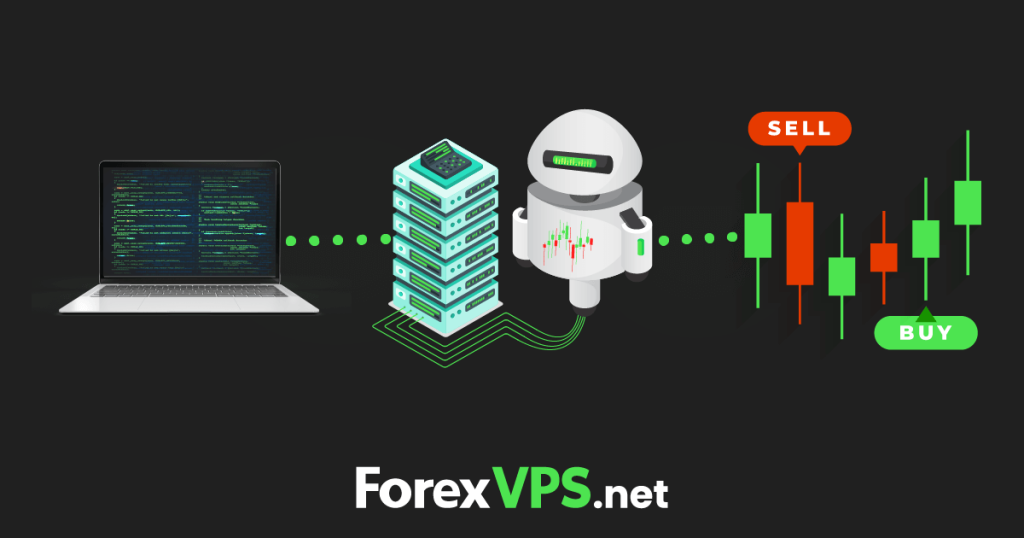
In contrast, manual trading relies entirely on a human’s analysis, judgment, and direct action to open, manage, and close positions. While this allows for greater flexibility and the ability to interpret nuanced market events like news releases, it also exposes the trader to psychological pressures. A manual trader might exit a winning trade too early out of fear or hold a losing trade too long hoping for a reversal.
The practical differences in execution and commitment are also substantial.
- Speed and Efficiency: An EA can scan multiple currency pairs and indicators simultaneously, executing trades in a fraction of a second. A manual trader cannot match this speed or capacity for data processing.
- Time Commitment: An EA can operate 24 hours a day, five days a week, without needing rest. Manual trading requires a trader to be present at their screen, which can be time consuming and lead to missed opportunities during off hours.
- Discipline: An EA adheres strictly to its programmed strategy, maintaining discipline in all market conditions. A manual trader’s discipline can waver, leading them to deviate from their trading plan based on emotion or a gut feeling.
Why is a Virtual Private Server (VPS) essential for running an EA effectively?
A Virtual Private Server (VPS) is a remote, cloud based server that runs independently of your personal computer, and it is a necessary tool for serious automated trading with an EA. The reason is simple: a Forex EA must be running continuously to monitor the market and execute trades. The MT4 or MT5 platform on which the EA operates needs to be online 24/7 without any interruptions. If you run the EA on your home or office computer, any shutdown, power outage, or internet disconnection will stop the EA from working.

When an EA stops, it cannot manage open positions or identify new trading signals. This could lead to a small winning trade turning into a major loss or missing a profitable entry altogether. A VPS solves this problem by hosting your trading platform in a professional data center with redundant power and internet connections. This setup provides a stable and continuous environment for your EA to function as designed.
You will notice a VPS provides other important advantages for automated trading.
- Reduced Latency: Latency is the time delay between your EA sending a trade order and the broker’s server executing it. VPS providers often have servers located in the same data centers as major forex brokers. This proximity dramatically reduces latency, leading to faster trade execution and less slippage, which is when the entry price differs from the expected price.
- Constant Connectivity: A VPS guarantees your EA is always connected to the market. This removes any reliance on the stability of your home internet service, which can be unreliable.
- Security and Accessibility: A VPS provides a secure environment for your trading activities. You can also access your trading platform from any device with an internet connection, allowing you to check on your EA without being tied to your primary computer.
