
Research
Unlock Consistent Profits: The Verified EURUSD Trend EA Robot

Dec
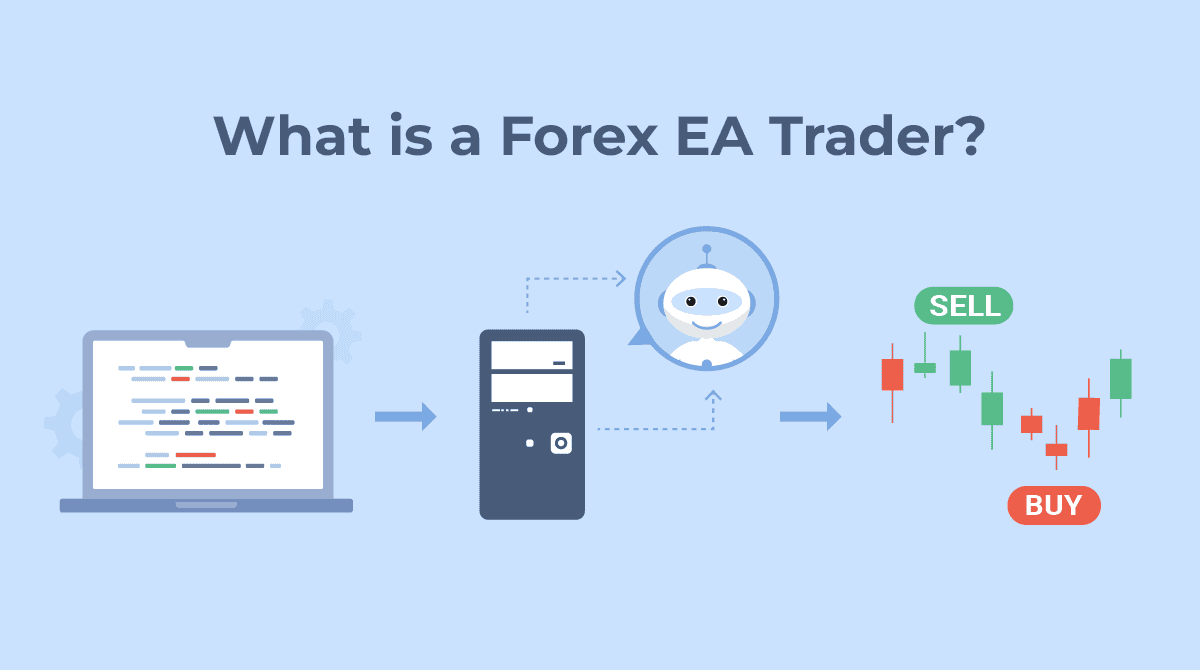
The Verified EURUSD Trend EA Robot is an automated trading software designed to identify and execute trades on the EURUSD currency pair by following market trends, with its performance substantiated through historical backtests and live third-party tracking. This expert advisor removes the emotional and manual burden of trading by operating based on a pre-defined algorithm. Its primary function is to analyze price movements, determine the direction of a prevailing trend, and automatically open and manage positions to generate profit from that momentum. The system is built to function within the popular MetaTrader 4 (MT4) platform.
This expert advisor’s key features center on its sophisticated trend-following algorithm, a full suite of adjustable risk management tools, and user-configurable trade parameters. These components work together to create a structured trading approach. You will find settings like Stop Loss and Take Profit to protect each trade, alongside more advanced options like a Trailing Stop to secure gains as the market moves favorably. The ability to adjust inputs such as lot size gives you direct control over your risk exposure.
The performance of the EA is verified through a two-pronged approach: extensive historical data backtesting and transparent live forward-testing on independent platforms like Myfxbook. The backtesting reveals how the strategy would have performed over years of past market data, highlighting potential profitability and drawdown. More importantly, the live results provide a real-time, unchangeable record of its performance in current market conditions, offering a clear picture of its capabilities.
This combination of automated strategy and verifiable results aims to provide a reliable tool for traders seeking to capitalize on the EURUSD market. The following sections will explore the robot’s operational mechanics, its specific features, and the data that supports its performance claims.
What is the Verified EURUSD Trend EA Robot?
The Verified EURUSD Trend EA Robot is an automated software program, or expert advisor, that executes trades on the EURUSD currency pair within the MetaTrader 4 platform, with its main purpose being to identify and capitalize on market trends. To understand this better, let’s break down exactly what this tool does and who can benefit from it. This EA acts as your personal trading assistant, working 24 hours a day, five days a week, without emotion or fatigue. It constantly scans the market for specific conditions that indicate the start of a new trend or the continuation of an existing one. Once its criteria are met, it automatically places a trade on your behalf and manages it until a logical exit point is reached.
How does the core trend-following algorithm operate?
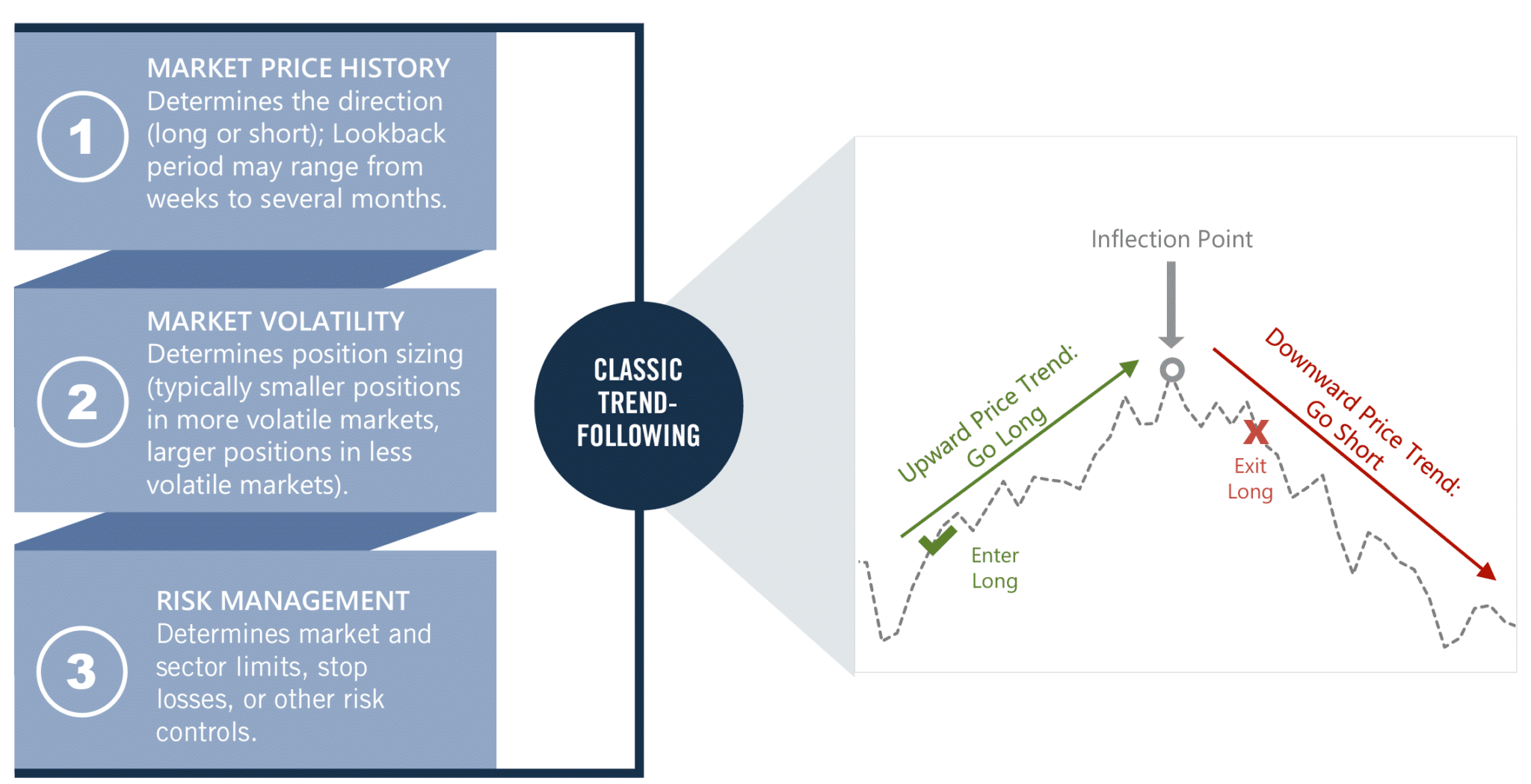
The core trend-following algorithm operates by using a combination of technical indicators to identify the direction and strength of a market trend before executing a trade. While the exact proprietary formula is unique, the principle is based on established trading concepts. The system primarily relies on moving averages and a momentum indicator to make its decisions. For example, the algorithm may use two moving averages: a short-term one and a long-term one. When the short-term moving average crosses above the long-term one, it generates a potential “buy” signal, suggesting that upward momentum is building. Conversely, a cross below suggests a “sell” signal.


To avoid false signals, a momentum indicator like the Relative Strength Index (RSI) or a custom-built oscillator is used as a filter. For a buy signal from the moving averages to be confirmed, the momentum indicator must also show that buying pressure is strong and the market is not yet overbought. If both conditions are met, the EA will execute a buy order. The same logic applies to sell trades, requiring confirmation that downward momentum is solid. The algorithm doesn’t just enter trades; it also calculates the optimal placement for a Stop Loss to manage risk and a Take Profit target to secure gains, all based on recent market volatility and price structure.
Is this Expert Advisor suitable for beginner traders?
Yes, this Expert Advisor is suitable for beginner traders because it automates the most difficult aspects of trading: analysis, execution, and discipline. The EA comes with pre-optimized settings that have been tested for the EURUSD pair, meaning a new user can get started without needing to understand the complex inner workings of the algorithm. Installation is straightforward, typically involving copying the EA file into the correct MetaTrader 4 folder and attaching it to a EURUSD chart. The automation removes the emotional pressure that causes many beginners to make mistakes, such as closing winning trades too early or holding onto losing trades for too long.
However, its suitability also comes with a recommendation. While the EA handles the trading, a beginner should still take the time to learn the basics of the platform and the included risk management settings. Understanding what a Stop Loss or a Lot Size is will empower the user to make informed decisions about how much risk they are comfortable with. The EA provides the tool, but the user still holds the responsibility for managing their overall account risk. The user-friendly design and default settings make it accessible, while the adjustable parameters offer a learning path for those who wish to become more involved over time.
What are the Key Features and Parameters of the EA?
The key features and parameters of the EA are categorized into two main groups: robust risk management settings designed to protect your capital and essential input parameters that allow you to configure the EA’s trading behavior to match your risk tolerance. These features are the control panel for the expert advisor, giving you command over how it operates on your account. Having direct access to these settings is fundamental for long-term trading success, as no single setting is perfect for every trader or every market condition. These tools allow for a high degree of customization without altering the core logic of the trend-following strategy itself. Let’s see what these settings are and how they function.
What are the primary risk management settings included?
The primary risk management settings included are Stop Loss, Take Profit, Trailing Stop, Max Spread, and an equity protection feature. These are the built-in safety mechanisms that manage risk on both a per-trade and per-account level.
- Stop Loss (SL): This is a mandatory setting on every trade. It defines the maximum amount of loss you are willing to accept on a single position. If the market moves against your trade and hits this predetermined price level, the EA will automatically close the position to prevent further losses. It is your primary defense against unexpected market reversals.
- Take Profit (TP): This is the opposite of a Stop Loss. It sets a specific profit target for each trade. When the price reaches this level, the EA automatically closes the position and secures the profit. This helps enforce discipline by taking gains at a logical point rather than hoping for more and risking a reversal.
- Trailing Stop: This is a dynamic Stop Loss that follows your trade as it moves into profit. For instance, if you set a 20-pip trailing stop on a buy trade, the stop loss will move up every time the trade gains 20 pips. This protects your accumulated profits while still giving the trade room to grow.
- Max Spread: This setting prevents the EA from entering a trade if the broker’s spread (the difference between the buy and sell price) is too high. High spreads occur during volatile news events or low-liquidity periods and can immediately put a trade at a disadvantage. This feature helps with entry precision.
- Equity Protection: This is a master safety feature that monitors your entire account. You can set a maximum drawdown percentage (e.g., 20%). If your account equity drops by this amount, the EA will cease all trading activity to protect the remaining capital.
What are the essential input parameters for configuration?
The essential input parameters are the settings you can adjust to control the EA’s operational logic and trade volume. These allow you to customize the robot’s behavior to fit your specific account size, broker conditions, and personal trading style. The most common parameters are Lot Size, Magic Number, and indicator settings.

- Lot Size: This parameter determines the volume of each trade. You can set a fixed lot size (e.g., 0.01 lots per trade) or use an auto-lot function that automatically calculates the trade size as a percentage of your account balance. The auto-lot feature helps scale your trading up or down as your account grows or shrinks, maintaining consistent risk management.
- Magic Number: This is a unique identifier for the trades placed by this specific EA. If you are running multiple EAs or trading manually on the same account, the Magic Number allows this robot to manage only its own trades. This prevents it from accidentally closing or modifying positions opened by another system or by you.
- Indicator Settings: While the core strategy is fixed, the EA may allow you to adjust certain indicator inputs, such as the periods for the moving averages or the levels for the momentum oscillator. For instance, you might be able to change the short-term moving average from a period of 10 to 12. These adjustments are generally intended for advanced users who wish to experiment with optimizing the strategy for different timeframes or market conditions. For most users, the default settings are recommended.
How is the Performance of the EURUSD Trend EA Verified?
The performance of the EURUSD Trend EA is verified through a combination of comprehensive historical backtesting over many years of market data and, more importantly, through transparent forward-testing on a live trading account tracked by a trusted third-party service. This two-step verification process is designed to build confidence and provide a realistic picture of the EA’s capabilities. Backtesting shows how the strategy would have theoretically performed in the past, while live forward-testing proves how it actually performs in the present, unpredictable market environment. Relying on both methods gives a more complete assessment than just looking at one alone. What do these tests actually show?
What do the historical backtest results demonstrate?
The historical backtest results demonstrate the strategy’s potential profitability, risk level, and consistency over a long period of past market data. A typical backtest report, generated from the MetaTrader 4 Strategy Tester, will highlight several key performance metrics. For example, a backtest run on the EURUSD H1 timeframe from 2015 to 2023 might show a total net profit of 500% with a maximum drawdown of 18%. The “total net profit” indicates the overall gain, while “maximum drawdown” reveals the largest peak-to-trough decline in account equity, serving as a key indicator of risk.
Another important metric is the “Profit Factor,” which is the gross profit divided by the gross loss. A profit factor of 1.8 would mean that for every $1 of loss, the EA made $1.80 in profit. Generally, a profit factor above 1.5 is considered robust. The backtest will also show the total number of trades, the percentage of winning trades, and the average win and loss size. These figures help you understand the nature of the strategy. Does it win often with small profits, or does it have fewer wins but with much larger gains? This data provides a baseline expectation of performance before you ever run the EA on a live account.
How do live trading results compare to backtest data?
Live trading results are compared to backtest data to confirm the strategy’s viability in the current, real market environment. This comparison is often facilitated through embedded widgets or public links to account tracking services like Myfxbook or FxBlue. These platforms connect directly to a live trading account and record every trade in real-time, creating a verifiable and unchangeable performance record. When comparing, you look for consistency in the key metrics. For example, is the monthly return seen in the live results in line with the average monthly return from the backtest? Is the live drawdown staying within the maximum drawdown observed in the historical data?
Some small differences are expected. Live trading involves factors not present in backtesting, such as variable spreads, slippage, and execution speed. A robust EA will show live performance that closely mirrors its backtested results, proving it was not “curve-fit” or over-optimized for past data. For instance, if the live account shows a profit factor of 1.6 and the backtest showed 1.8, this is a strong sign of consistency. Conversely, if a backtest shows massive profits but the live account is struggling, it indicates the strategy is not adaptable to real market conditions. The live results are the ultimate proof of an EA’s performance.
How does the EURUSD Trend EA compare to other trading approaches?
The EURUSD Trend EA offers a systematic, emotion-free execution method, standing in contrast to the adaptable but psychologically demanding nature of manual trading and the higher risk profiles of other automated systems. Furthermore, understanding where this tool fits within the larger trading landscape helps clarify its specific advantages and intended use case. Different methods suit different temperaments, risk appetites, and market conditions. Let’s see how they stack up.
What are the differences between using this EA and discretionary manual trading?
The primary distinction between using this EA and discretionary manual trading lies in the execution process and psychological involvement. A discretionary trader analyzes the market in real time, making subjective judgments based on experience, intuition, and a changing set of data. This allows for great flexibility. For instance, a manual trader can react instantly to unexpected geopolitical news or a central bank’s sudden policy shift, closing positions to protect capital in a way an automated system cannot. They can adapt their strategy on the fly to fit a market that has shifted from trending to ranging.
In contrast, the EURUSD Trend EA operates on a foundation of pure logic and pre-defined rules. It executes trades with mechanical precision, entirely free from the emotional pressures of fear and greed that often lead manual traders to make errors. The EA never gets tired, never second guesses a valid signal, and applies its strategy consistently 24 hours a day. This removes psychological bias, which is a major hurdle for human traders. While the EA lacks human intuition, it provides a level of discipline and consistency that is difficult for a person to maintain over the long term.
Exploring the core differences helps to identify the right tool for a trader.
- Emotional Input: The EA has zero emotional input, executing trades based solely on its algorithm. A manual trader’s performance is heavily influenced by their psychological state.
- Speed and Consistency: The EA can identify and act on trading signals faster than a human. It applies the same strategy without deviation on every single trade.
- Adaptability: A manual trader holds the advantage in adapting to unforeseen, non-technical market events. The EA is confined to the market conditions it was programmed to handle.
What distinguishes a “Trend EA” from a “Grid” or “Martingale” EA?
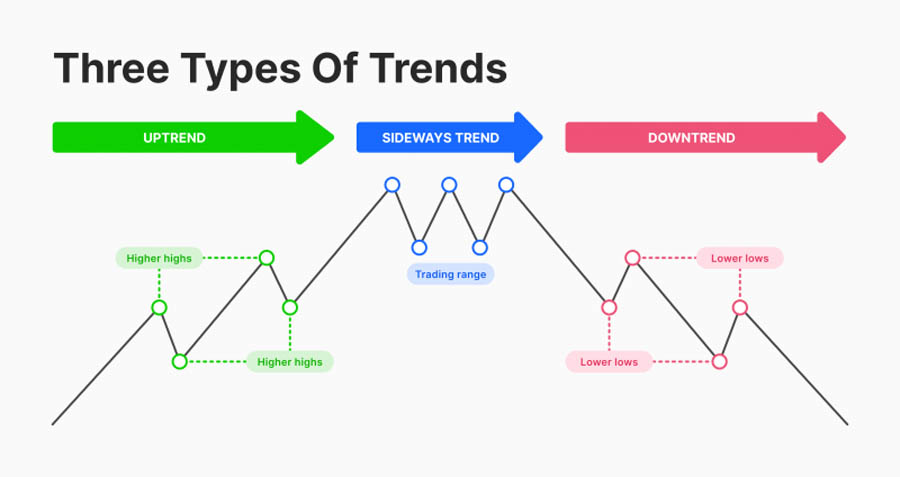
The fundamental distinction between a “Trend EA” and “Grid” or “Martingale” EAs is their core strategy and approach to risk management. A Trend EA, like the EURUSD Trend EA, is built to identify market direction. It uses technical indicators to determine if a currency pair is in an uptrend or a downtrend and then opens positions that align with that momentum. A key feature of this strategy is the use of stop loss orders. The goal is to capture large profits during sustained moves while cutting losses relatively small when the market moves against the position. It attempts to profit by being right about the market’s direction.

Grid and Martingale EAs operate on entirely different principles. A Grid EA does not try to predict market direction. Instead, it places a series of buy and sell orders at set intervals above and below the current price. It profits from price fluctuations within a range. The danger arises when the market enters a strong, one directional trend against its open positions, leading to a rapid accumulation of losses. A Martingale EA employs a cost averaging strategy where it doubles its trade size after each loss. The theory is that a single winning trade will recover all previous losses plus a profit. This is an extremely high risk method, as a prolonged losing streak can quickly deplete an entire trading account.
These strategic differences have direct consequences for a trader’s account.
- Risk Management: Trend EAs are designed with defined risk per trade using stop losses. Grid and Martingale EAs often have undefined or exponentially increasing risk.
- Profit Generation: A Trend EA seeks a few large wins. Grid and Martingale EAs aim for many small wins, but with the potential for a catastrophic loss.
- Market Condition Suitability: Trend EAs perform well in trending markets. Grid EAs work best in ranging, sideways markets. Martingale strategies are not tied to a specific market condition but carry inherent high risk in all of them.
Should you turn off the EA during major news events like NFP?
Yes, it is a widely accepted best practice to deactivate any automated trading system, including the EURUSD Trend EA, during high impact news events like the Non Farm Payrolls (NFP) report. The market environment during these releases is fundamentally different from normal trading conditions, and it introduces risks that a technical, trend based system is not designed to handle. The primary reason is extreme volatility. News events can cause prices to move hundreds of pips in a matter of seconds, often in both directions, before a clear direction is found. This “whipsaw” action can trigger an EA’s entry and stop loss orders in rapid succession, resulting in unnecessary losses.
Another serious concern is the degradation of trading conditions offered by brokers. During news, the spread between the bid and ask price can widen dramatically, making it much more expensive to enter or exit a trade. More importantly, slippage becomes a major issue. Slippage is the difference between the price you expect your order to be filled at and the actual price it is filled at. During a volatile news release, a stop loss order might be filled at a much worse price than intended, leading to a loss far greater than what the EA calculated as acceptable risk. A system built on precise technical entries and risk parameters cannot function reliably in such a chaotic environment.
To safeguard your capital, pay close attention to the economic calendar.
- Unpredictable Price Swings: The market’s reaction to data can be irrational and is not based on the technical patterns the EA follows.
- Increased Transaction Costs: Spreads widen significantly, which can turn a potentially profitable setup into a loss from the start.
- Execution Uncertainty: High slippage means your stop loss may not protect you at the intended price level, exposing your account to larger than planned losses.
How does its performance on EURUSD differ from its potential use on other currency pairs?
The EURUSD Trend EA’s performance is specifically calibrated for the EURUSD pair, and its results would likely differ substantially if applied to other currency pairs without recalibration. The reason for this specialization is that each currency pair has a unique personality. These characteristics include its typical daily volatility, its tendency to trend or range, its reaction to specific news events, and its trading session behavior. The algorithm within the EA, including the settings for its indicators, take profit levels, and stop loss distances, has been fine tuned over extensive historical data to match the specific behavior of EURUSD.

For example, EURUSD is the most traded pair in the world, giving it immense liquidity. This usually translates to tighter spreads and smoother price action, which is ideal for a trend following algorithm that needs clear signals. A pair like GBPJPY, known as “the Dragon,” is far more volatile and can experience much faster and more erratic price swings. Applying an EA optimized for the steady trends of EURUSD to the wild nature of GBPJPY would likely result in frequent false signals and premature stop outs. Similarly, an exotic pair like USD/TRY would have much wider spreads and less predictable movements, again making it unsuitable for an algorithm not designed for it. The EA’s success is not just in its logic, but in the precise tuning of that logic to one specific market environment.
The choice of EURUSD is a deliberate part of the EA’s design.
- Market Liquidity: EURUSD’s high trading volume reduces transaction costs and allows for cleaner technical analysis, which the EA relies on.
- Trending Characteristics: The pair often exhibits sustained directional moves that a trend following strategy is built to capture. Other pairs might spend more time in choppy, sideways consolidations.
- Algorithmic Calibration: The internal parameters of the EA are mathematically optimized for the average pip movement and price structure of EURUSD. Using it on another pair would be like using a tool for a job it was not designed for.
