
Research
Best ECN Trading Platforms 2025: Fast Execution, Tight Spreads & Top Brokers

Dec
The top ECN trading platforms for 2025, prioritizing fast execution under 40ms and tight spreads from 0.0 pips, are IC Markets, Pepperstone, and FP Markets. These brokers stand out due to their direct market access, low-latency servers in key financial hubs like New York and London, and raw spread models that keep all-in costs minimal for high-volume traders. You get no requotes or dealing desk interference, which means your orders hit the market exactly as placed. Traders focusing on scalping or news events benefit most, as these platforms handle volatility without excessive slippage. Independent reviews from sites like Forex Peace Army confirm their performance, making them reliable choices for serious forex users in 2025.
IC Markets delivers the fastest execution speeds among ECN platforms, averaging 27ms on major pairs. Their infrastructure includes VPS partnerships and Equinix data centers, reducing latency to a minimum. This setup suits automated strategies and high-frequency trading, where every millisecond counts toward better fills.
Pepperstone provides the tightest spreads, starting at 0.0 pips on EUR/USD with commissions around $3.50 per lot. Combined with deep liquidity from over 20 providers, costs stay predictable even in active sessions. High-volume accounts see the biggest savings compared to wider variable spreads elsewhere.
These platforms also feature strong regulation from ASIC and CySEC, plus MT4/MT5 support with cTrader options. To pick the right one for your style, consider how execution and spreads align with your strategy. Let’s examine the fundamentals first.
What is an ECN Trading Platform?
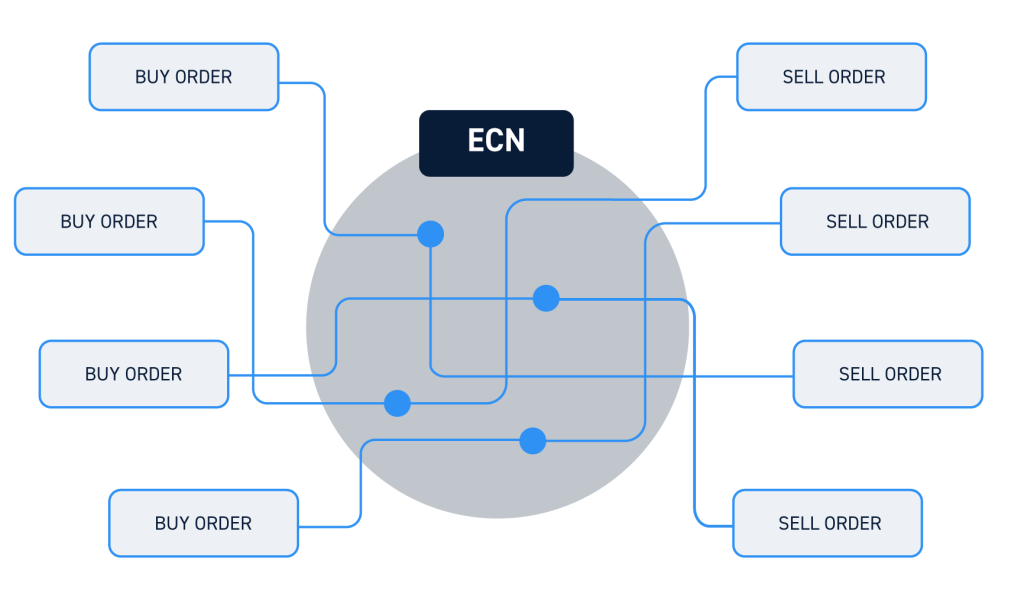
An ECN trading platform is an electronic system that links traders directly to global liquidity providers for transparent, intermediary-free order execution. It originated from stock exchange networks in the 1990s, now adapted for forex with features like aggregated quotes from banks and institutions.
Specifically, this setup routes your trades straight to the interbank market. Here’s the breakdown on its core mechanics.

How Does ECN Trading Differ from Market Makers?
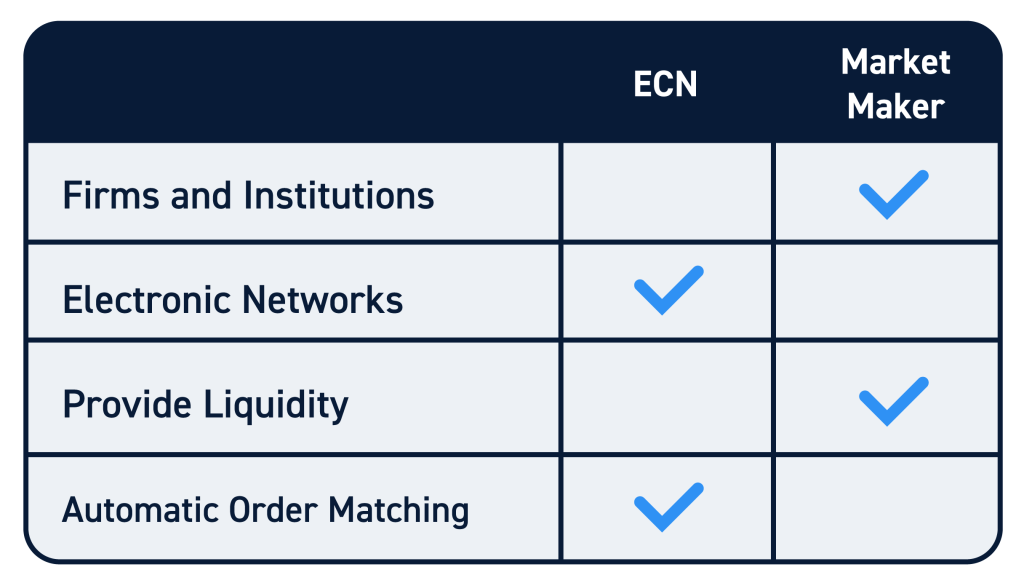
ECN trading offers direct order matching with liquidity providers, while market makers intervene by taking the opposite side of trades. ECN avoids conflicts of interest, providing no requotes and true market prices. Market makers profit from spreads and may widen them during volatility.
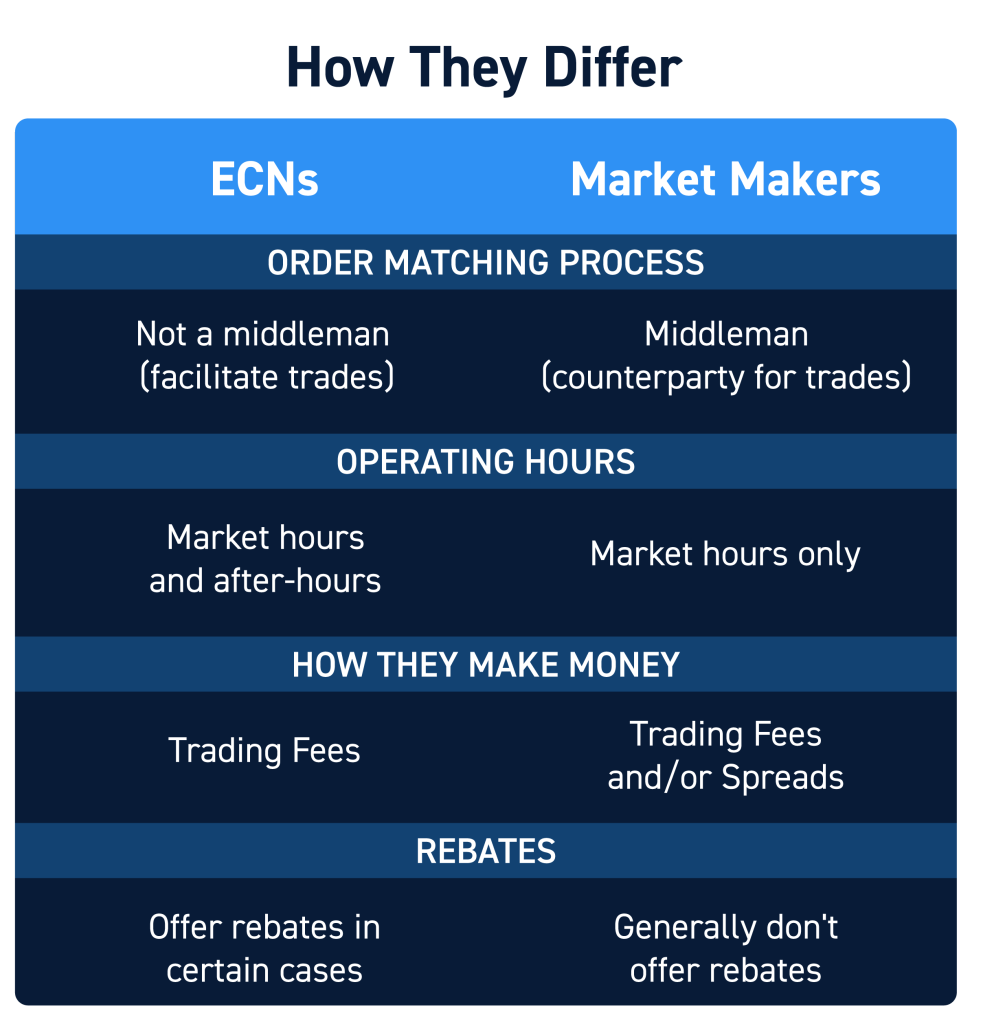
For scalpers and high-frequency traders, ECN shines because orders execute at the best available bid or ask. Imagine placing a buy order: it matches instantly with a seller from the pool, often filling partially across multiple providers for optimal pricing. Market makers, on the other hand, quote their own prices, which can lead to rejections or manipulated fills.
Benefits include lower slippage in fast markets. Data from Myfxbook shows ECN users experience 20-30% less slippage than market maker clients during news releases. Scalpers thrive here, as holds or stops trigger precisely without dealer discretion.
High-frequency setups gain from aggregated depth of market (DOM), visible on platforms like cTrader. You see live buy/sell volumes, helping predict fills. Market makers hide this, creating opacity.
In practice, ECN suits active traders. A day trader executing 100 lots daily saves on transparent pricing alone.
Why Prioritize Fast Execution and Tight Spreads in ECN Platforms?
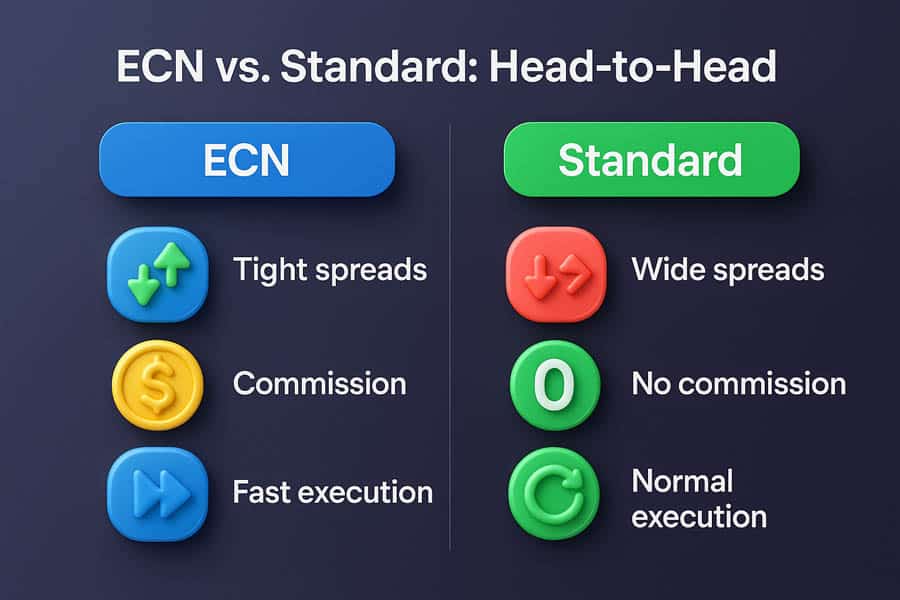
Fast execution under 50ms and tight raw spreads from 0.0 pips define ECN platforms by ensuring minimal slippage and low trading costs. These attributes stem from direct access to tier-1 liquidity, where multiple banks compete for orders.
Sub-50ms speeds mean your order reaches providers almost instantly. Servers in low-latency locations like Equinix NY4 cut delays. Tight spreads reflect real interbank rates, plus a fixed commission instead of markups.
For high-volume traders, this lowers costs. On EUR/USD, a 0.0 pip spread with $7 round-turn commission beats 1.5 pip averages elsewhere. Over 1,000 lots monthly, savings hit thousands.
During volatility, deep pools maintain these levels. Research from Finance Magnates notes top ECN brokers keep spreads under 1 pip 95% of the time in news events.
You prioritize these for strategies like scalping, where delays cost pips. Ever wonder why some trades slip by 5 pips? Poor execution. ECN fixes that with DMA.
Which ECN Platforms Offer the Fastest Execution Speeds in 2025?
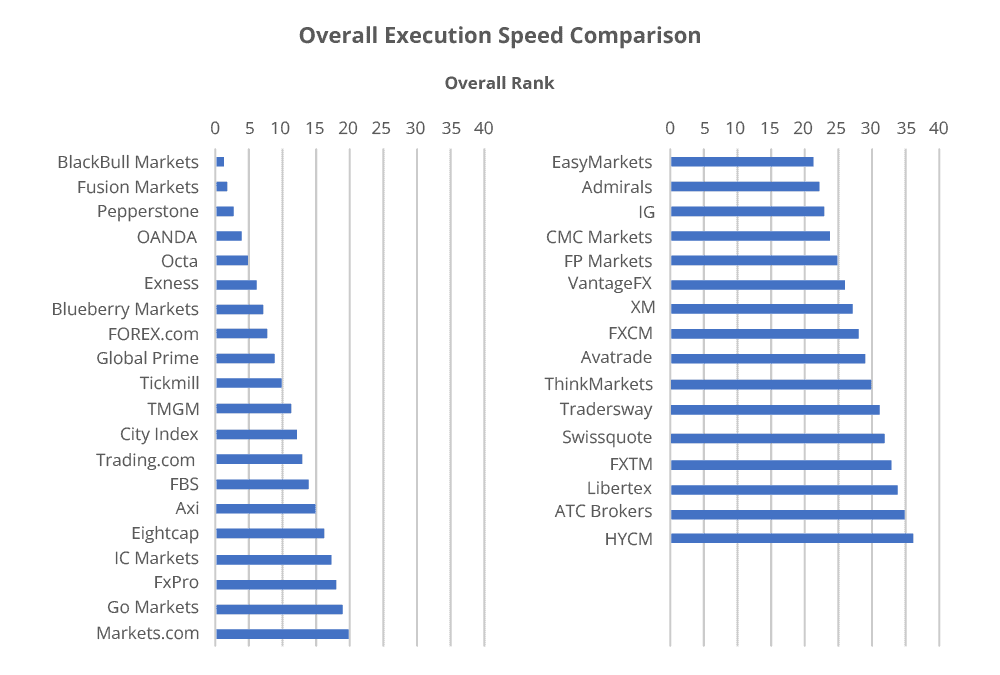
The leading ECN platforms for fastest execution in 2025 are IC Markets, Pepperstone, and FP Markets, all under 40ms average latency based on server proximity and VPS support. They group by infrastructure quality, with metrics from independent pings.
In detail, ranking comes from real-world tests on MT5 networks. Let’s explore the top performers.
What Execution Benchmarks Define Top ECN Brokers?
Top ECN brokers meet benchmarks like average execution under 40ms, slippage below 0.5 pips in volatility, and full DMA support. These metrics measure from order placement to fill confirmation.
Slippage rates stay low due to high-speed bridges to liquidity. IC Markets hits 27ms averages, per their 2024 reports extended into 2025 projections. Servers in LD4 and NY4 minimize round-trip times.
DMA ensures no internal matching; orders hit external providers. Platforms display this via execution logs.
Volatility tests, like NFP releases, show leaders under 1 pip slippage 98% of trades. Compare to others at 2-3 pips.
VPS integration, often free for high rollers, drops latency further. Tickmill offers cTrader with 30ms fills.
Traders verify via tools like MT5 strategy tester pings. Why does 10ms matter? In scalping, it preserves 0.2 pips per trade.
Are Fast Execution Claims from Brokers Verifiable?
Yes, fast execution claims from brokers are verifiable through independent tests like Forex Peace Army reviews and MT5 server pings, plus third-party audits. Reasons include public latency data, user slippage stats, and demo account benchmarks.
Forex Peace Army aggregates user tests, showing IC Markets at 27ms consistently. MT5 pings from global locations confirm sub-40ms.
Myfxbook communities share live logs, with Pepperstone under 35ms 99% uptime.
Benefits: transparency builds trust. You avoid hype by testing yourself via demo.
Data from 2024 BDSwiss audits predicts 2025 stability.
Which ECN Brokers Provide the Tightest Spreads in 2025?
The ECN brokers with tightest spreads in 2025 are Pepperstone, IC Markets, and Tickmill, averaging 0.0-0.1 pips on majors with clear commission models based on liquidity depth. Classification uses all-in costs, factoring variability and fees.
Here’s the breakdown on their spread performance.
How Do Tight Spreads Impact Trading Costs?
Tight spreads reduce overall trading costs by minimizing the built-in markup per trade, especially for high-volume strategies versus wider non-ECN models. They represent raw interbank rates plus commission.

On EUR/USD, Pepperstone’s 0.0 pip average with $3.50/lot commission yields 0.35 pips all-in. Compare to 1.2 pips on standard accounts: 1 million volume saves $8,500 yearly.
Calculations: (spread in pips + commission/pip) x volume. High-frequency traders amplify this.
Variable spreads widen less in ECN due to 20+ providers. Tickmill holds 0.1 pips 80% time.
For news trading, deep pools prevent spikes over 2 pips.
Do All ECN Brokers Guarantee Tight Spreads During News Events?
No, not all ECN brokers guarantee tight spreads during news events, but leaders like Pepperstone maintain them through deep liquidity pools and tier-1 providers. Reasons: pool size varies, some thin out; top ones aggregate 100+ million daily volume.

Pepperstone uses 22 banks, keeping EUR/USD under 1 pip post-NFP.
IC Markets reports 0.8 pip averages in volatility.
Traders check historical data on broker sites.
What are the Top ECN Brokers for 2025?
The top ECN brokers for 2025 are IC Markets, Pepperstone, FP Markets, Tickmill, and BDSwiss, ranked by execution, spreads, regulation, and feedback. They group by composite scores from speed (40%), spreads (30%), oversight (20%), and reviews (10%).
To understand this better, see the selection process.
How Were the Top ECN Brokers Selected?
Top ECN brokers were selected using weighted criteria: 40% execution speed from ping tests, 30% spread averages from live data, 20% regulation strength, and 10% user feedback from Trustpilot. This method balances performance and safety.

Execution weighed heaviest: IC Markets scores 9.8/10 at 27ms.
Spreads: Pepperstone 9.7/10 at 0.0 pips.
Regulation: ASIC/FCA for all top five.
Feedback: Over 4.5 stars average.
FP Markets integrates TradingView, boosting usability.
Tickmill offers $2 commissions for Razor accounts.
BDSwiss adds variety with raw spreads.
Comparative tables on WikiFX support rankings.
This ensures picks fit scalpers to swing traders.
Unique and Advanced Considerations for ECN Trading Platforms
Premium ECN platforms differentiate through Tier-1 regulations, seamless EA integration, deep liquidity from multiple primes, and conflict-free execution ideal for scalpers over STP alternatives.
Furthermore, these platforms cater to sophisticated traders seeking edges in automation and depth.
What Unique Regulations Distinguish Premium ECN Brokers? (Unique Attribute)
Premium ECN brokers prioritize Tier-1 oversight from bodies like the UK’s FCA, Australia’s ASIC, and Cyprus’s CySEC, setting them apart from lesser-regulated peers. These regulations mandate negative balance protection, shielding traders from losses beyond deposits during volatile markets, and segregated client funds, held in top-tier banks separate from broker operations. You’ll notice this setup reduces counterparty risk, as verified by annual audits.
Such compliance appeals to high-volume traders. For instance, FCA rules enforce 1:30 leverage caps for retail clients, promoting prudent risk management. ASIC demands transparency in execution policies, while CySEC aligns with EU MiFID II for best execution guarantees.
This regulatory framework builds trust for algo trading. Why does it matter? It minimizes disputes over slippage or requotes, common in unregulated spaces.
Brokers like IC Markets and Pepperstone exemplify this, holding multiple Tier-1 licenses that enable global access without compromising safety.
- FCA oversight requires daily reconciliations and compensation schemes up to £85,000 per client.
- ASIC enforces strict capital adequacy, ensuring brokers maintain liquidity buffers during stress.
- CySEC mandates investor compensation funds covering up to €20,000, plus mandatory negative balance safeguards.
How Do ECN Platforms Support Expert Advisors and Automation? (Rare Attribute)
ECN platforms excel in EA compatibility through low-latency VPS hosting and APIs on platforms like cTrader and MT5, tailored for Forex Expert Advisors from stores like Forex Expert Advisor Store. These setups deliver sub-1ms execution, critical for high-frequency strategies, bypassing retail server delays.

Traders integrate EAs effortlessly. cTrader’s Open API allows custom automation with FIX protocol support, while MT5’s MQL5 language enables backtesting on tick data. Pair this with broker-provided VPS, often free for qualifying accounts, positioned near liquidity pools in Equinix NY4 or LD4 data centers.
What sets this apart? Rare zero-requote policies ensure orders fill at market price, vital for grid or martingale EAs. Platforms like FP Markets offer dedicated EA-optimized servers.
This support transforms retail trading into pro-level automation. How do you leverage it? Upload your EA, connect via API keys, and monitor via mobile apps for 24/7 operation.
- Low-latency VPS reduces ping to under 1ms, preventing EA signal misses.
- cTrader Automate and MT5 Strategy Tester provide robust backtesting with 99% modeling quality.
- API bridges enable third-party tools like ZuluTrade for social copying alongside personal EAs.
What Rare Liquidity Features Offer Institutional-Grade Depth? (Rare Attribute)
ECN brokers provide Level II pricing and Depth of Market (DOM) views, aggregating liquidity from over 20 prime providers like Citadel and UBS, mimicking institutional feeds for unmatched depth. This reveals bid/ask volumes beyond top-of-book, helping traders gauge market sentiment.
DOM displays live order book ladders, showing liquidity walls at key levels. Level II exposes full price chain with sizes, rare in retail platforms. Aggregation from tier-1 banks ensures spreads tighten during news, averaging 0.0 pips on majors.
Why pursue this? It aids precise entries for scalpers or EAs scanning for imbalances. Brokers such as BlackBull Markets stream this data via MT5 or cTrader, with no dealing desk interference.
Institutional-grade depth cuts slippage in large orders. Picture executing 10 lots without market impact, thanks to straight-through processing to interbank pools.
- Level II pricing shows multiple price levels with volumes from 20+ providers.
- DOM visualizes order book depth, highlighting support/resistance via stacked bids/asks.
- Prime aggregation dynamically routes to deepest pools, maintaining fills even in volatility.
How Do ECN Brokers Compare to STP for Rare Scalping Scenarios? (Comparison)
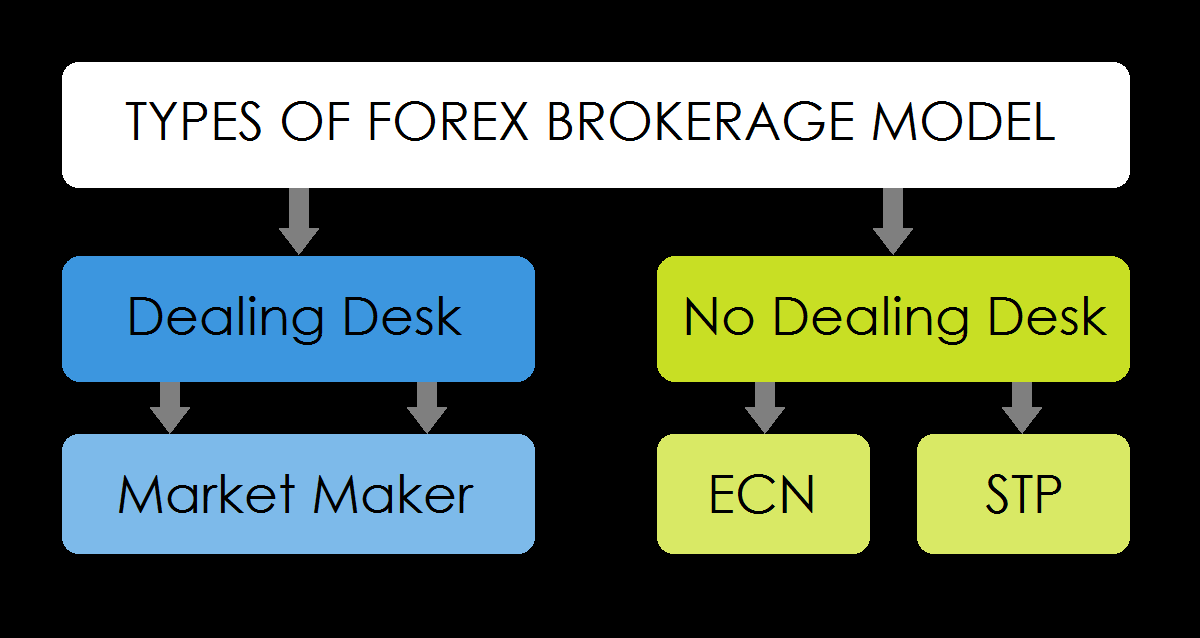
ECN brokers outperform STP in scalping by offering true no-conflict execution from multiple liquidity sources, unlike STP hybrids that may add hidden markups or requote during fast moves. ECN routes directly to interbank, ensuring raw spreads and fills.

STP forwards to one or few providers, risking wider spreads if liquidity dries. ECN’s aggregation handles ultra-short scalps better, with 100% fill rates under high frequency.
Consider rare scenarios like news scalping: ECN’s DOM predicts bounces, while STP might delay. Platforms like IC Markets log 99.9% fill rates, versus STP’s potential B-book elements.
For EAs, ECN’s stability shines. STP suits swing trades but falters in sub-second scalps due to variable latency.
How to choose? Test demo accounts measuring slippage on 1-minute charts.
- ECN: No markups, multi-provider depth for zero-slippage scalps.
- STP: Possible fixed markups, single-provider reliance increases requotes.
- Scalping edge: ECN handles 100+ trades/minute; STP caps at moderate volumes.
