
Research
Unlock ECN Forex Trading: Direct Access, Raw Spreads, and Scalper Advantages
Dec
ECN Forex trading gives traders direct access to the interbank market through an Electronic Communication Network, offering raw spreads from 0 pips and key advantages for scalpers like ultra-fast execution and no requotes. This model skips traditional brokers acting as middlemen. Instead, it links you straight to banks and liquidity providers for transparent pricing. You get real market rates without markups, which lowers costs on every trade. Scalpers benefit most because they thrive on tiny price moves, and ECN setups deliver the speed and precision needed for high-volume, short-term plays. Think of it as plugging into the market’s core engine.
Direct access in ECN trading routes your orders instantly to liquidity providers, cutting out dealer interference for true market prices. This setup means your buy or sell hits the interbank pool right away. No hidden adjustments from a dealing desk. You see the same bids and asks as big institutions, which builds trust in every position you open.
Raw spreads on ECN accounts start at 0 pips and vary with market conditions, paired with a small commission for overall lower costs. Unlike fixed spreads that stay wide regardless of conditions, these reflect live interbank rates. During quiet times, spreads tighten to almost nothing. In busy sessions, they widen naturally but stay competitive without broker padding.
Many traders wonder if ECN fits their style. It shines for active strategies, especially scalping. Now, let’s break down the basics starting with what ECN really means.
What is ECN Forex Trading?
ECN Forex trading is an Electronic Communication Network model that connects traders directly to liquidity providers like banks, featuring no dealing desk intervention and transparent, variable pricing. Specifically, this approach transforms how you interact with the forex market.
ECN, short for Electronic Communication Network, emerged in the 1990s to democratize access to interbank liquidity. Traditional brokers often act as market makers, quoting their own prices and taking the other side of trades. ECN brokers, however, operate differently. They aggregate quotes from multiple sources, such as major banks like JPMorgan or Deutsche Bank, and route your orders straight through.

You’ll notice the root attributes right away: direct market access and transparent pricing. Without intermediaries, there’s no conflict of interest. Your stop-loss or take-profit triggers at actual market levels, not manipulated ones. This transparency shows in the order book, where you can see depth of market (DOM) – the live queue of buy and sell orders at various price levels.
How Does Direct Access Work in ECN Trading?
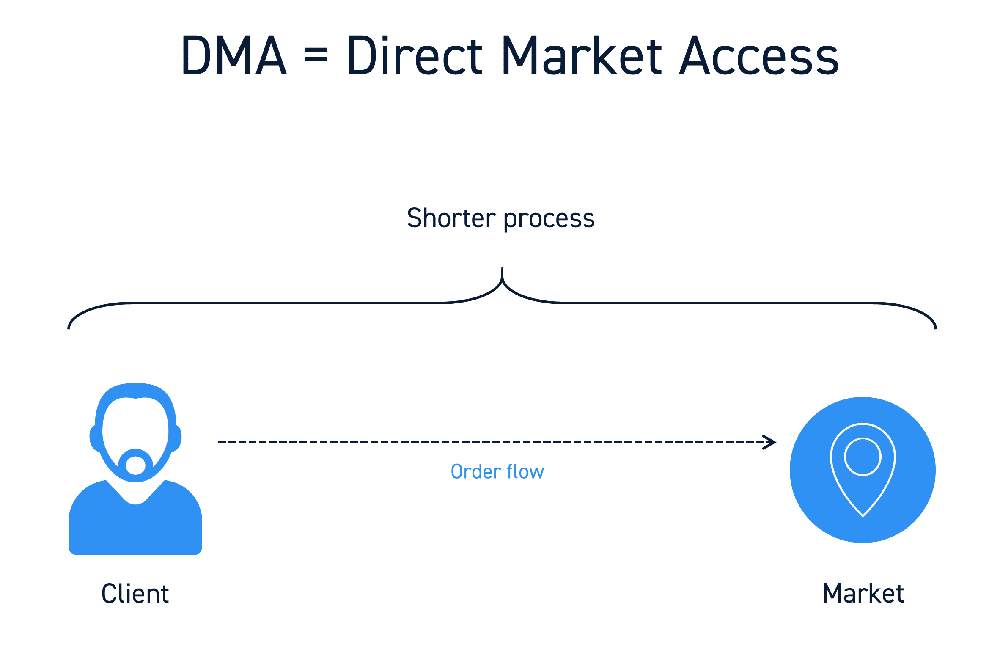
Direct access works through straight-through processing in four main steps: order submission to the ECN platform, instant routing to liquidity providers, matching in the interbank market, and confirmation back to your account, resulting in minimal slippage. Here’s the breakdown.
First, you place an order on your MT4 or MT5 platform linked to an ECN broker. The broker’s server forwards it electronically to the ECN network without alteration. For example, if you’re buying EUR/USD at 1.1000, it hits the pool of providers offering that rate or better.
Second, the network matches your order against available liquidity. Banks and institutions post bids and asks continuously. Your trade fills partially or fully from the best available prices. This happens in milliseconds because ECN uses high-speed data centers, often co-located near exchanges.
Third, any unfilled portion queues or rejects if no match exists, but high liquidity means rare issues. Benefits include reduced slippage – the difference between expected and executed price. In volatile news events, like NFP releases, slippage drops compared to market maker brokers.
Finally, execution confirms instantly on your terminal. Studies from brokers like IC Markets show average fills under 40ms. This reliability lets you trade confidently, knowing prices reflect the real market. Scalpers love it because even in fast moves, orders execute without dealer delays.
Raw spreads tie into this seamlessly, amplifying the efficiency.
What are Raw Spreads in ECN Accounts?
Raw spreads are variable interbank rates starting from 0 pips on major pairs, charged with a fixed commission per lot to cover access costs. In detail, they mirror the pure difference between buy and sell prices from liquidity providers.

Picture the interbank market: banks lend to each other at razor-thin margins. ECN brokers pass this on, minus a commission like $3.50 per standard lot round-turn. On EUR/USD, spreads might hit 0.0 pips 90% of the time during London-New York overlap, per data from brokers like Pepperstone.
Compare to fixed spreads: those average 1-2 pips always, baked into the broker’s markup. Fixed might cost $10 per lot in quiet markets, while raw ECN totals $6-7 with commission. During volatility, fixed stays wide; raw widens to 1-3 pips but reverts quickly.
This cost efficiency matters for volume traders. Over 100 trades, savings add up. Platforms display live spreads, so you pick entry times wisely. Minor pairs like USD/TRY see wider averages, around 2-5 pips, but still transparent.
Traders report 20-30% lower all-in costs versus standard accounts. Regulators like ASIC oversee this fairness, ensuring no hidden fees. Raw spreads make ECN the choice for precision-focused traders.
ECN trading reshapes your edge with these mechanics, setting up advantages for specific styles like scalping.
What are the Key Advantages of ECN for Scalpers?
Key advantages of ECN for scalpers include ultra-fast execution under 50ms, no requotes, and deep liquidity supporting hundreds of daily high-frequency trades based on low latency and raw pricing. Let’s explore how these group into game-changers for tight-profit strategies.
Scalpers aim for 5-20 pips per trade, entering and exiting dozens of times daily. ECN delivers through no dealing desk (NDD) execution. Brokers can’t reject or requote because orders bypass them. You get filled at market, even if adverse.
High liquidity pools prevent price gaps. Major pairs offer millions in depth, so your 0.01 lot doesn’t move the market. Low latency from VPS hosting near broker servers keeps ping under 1ms.
Raw pricing enables tight stop-losses. With 0-pip spreads, your breakeven is closer, boosting win rates. Commissions stay predictable, unlike widening fixed spreads.
Why is ECN Ideal for Scalping Strategies?
ECN supports scalping by minimizing costs through raw spreads and direct access on frequent short-term trades, boosting profitability in volatile sessions. Specifically, costs drop on high volume.
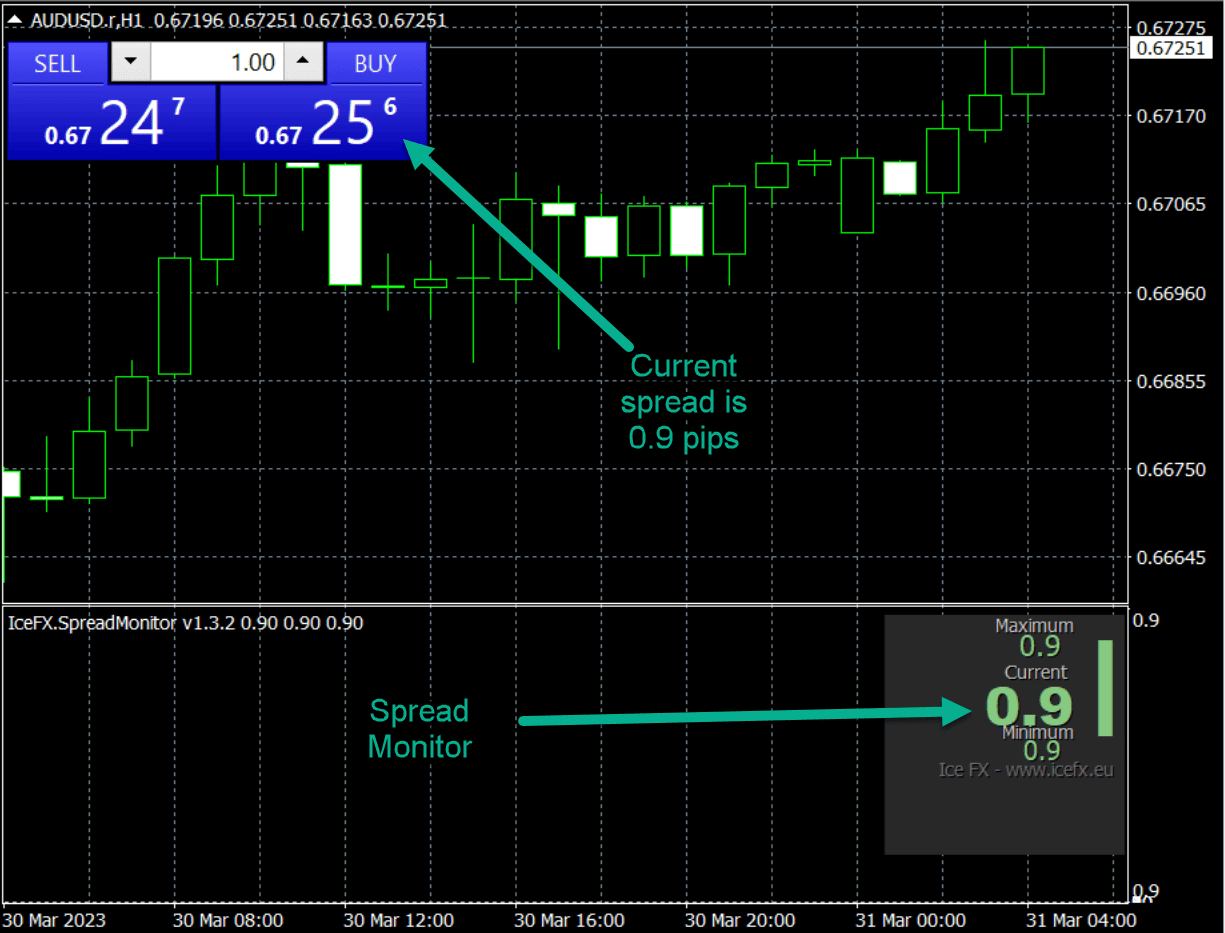
Scalpers face spread costs multiplying quickly. Raw ECN averages 0.1 pips plus commission versus 1.5 pips fixed. On 50 trades daily at 0.1 lot, you save $20-30 per session. For instance, during Asian volatility on GBP/JPY, spreads hit 0.3 pips, letting you scalp 10-pip ranges profitably.
Direct access cuts slippage to near zero. In a 20-pip news spike, your order fills at requested price, unlike dealer re-quotes. Strategies like 1-minute EMA crossovers thrive here.
High liquidity absorbs entries without hunting stops. Brokers provide Level II pricing, showing order flow. Data from Myfxbook shows ECN scalpers averaging 5-10% monthly returns versus 2-4% on standard accounts.
You’ll notice patterns: London open offers tight spreads for AUD/USD scalps. Backtests confirm 15% higher Sharpe ratios due to lower drawdowns. Pair with EAs from stores like Forex Expert Advisor Store for automated precision.
Does ECN Provide Faster Execution Speeds?
Yes, ECN provides faster execution speeds averaging under 50ms through straight-through processing, low-latency servers, and NDD routing, preventing delays in fast markets. To understand this better, consider the tech.
Straight-through processing (STP) automates the flow: order in, match, out. No human review means sub-50ms fills, as reported by Dukascopy. Compare to market makers’ 100-300ms.
Low-latency infrastructure uses fiber optics and cloud servers in hubs like London or New York. Scalpers avoid ping delays by using VPS, hitting 1ms response.
Impact on scalpers: in 10-second bursts, like ECB announcements, delays cost pips. ECN keeps you in the trade. Independent tests by Forex Peace Army log 99% fills under 100ms.
Benefits stack: combine with raw spreads for sub-1 pip entries. High-frequency traders scale to 1,000 trades daily without throttling. Regulated ECN brokers guarantee this speed, building reliability.
These edges make ECN a scalper’s toolkit, far beyond basic trading.
Advanced ECN Features and Comparisons
ECN brokers deliver No Dealing Desk (NDD) execution, Depth of Market (DOM) visibility, and direct EA integration for scalping, setting them apart from STP and market maker models through superior transparency and liquidity access.
In addition, these features enable traders to access raw interbank pricing from multiple sources, which supports automated strategies in ways other models cannot.
What is the Difference Between ECN and STP Brokers?
ECN brokers connect traders directly to a network of liquidity providers, such as banks and institutions, for true NDD execution. Orders match instantly against the best available bids and asks, with spreads reflecting live market conditions. STP brokers, by contrast, route orders to a single liquidity aggregator or a few providers, which can introduce slight delays or requotes during volatile periods. ECN’s multiple liquidity streams reduce slippage, making it ideal for scalpers chasing tiny price movements.
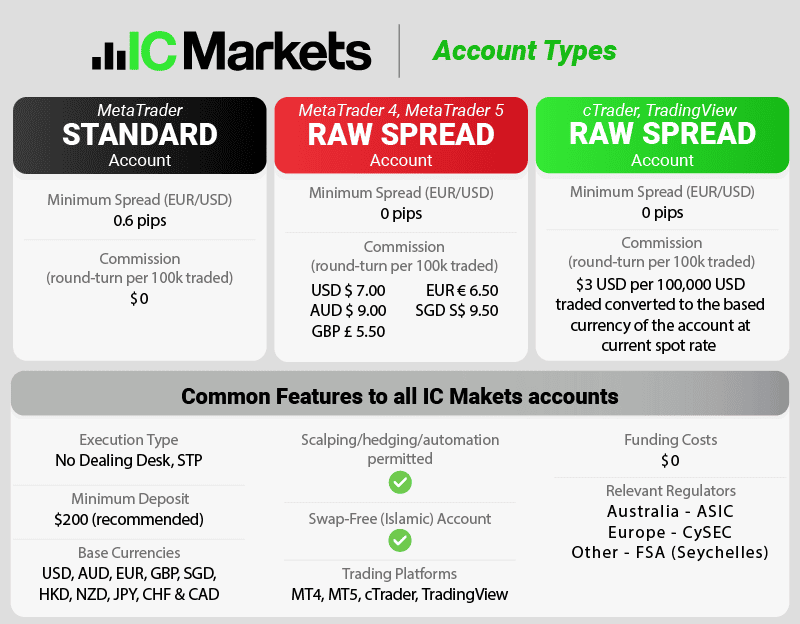
You’ll notice ECN accounts show actual depth via DOM, revealing order book sizes, while STP hides this layer. For example, during news events, ECN might fill at 0.1 pips wider than quoted, but STP could widen more due to aggregation limits. Research from broker reviews on sites like Myfxbook shows ECN averaging 20% less slippage in high-volume pairs like EUR/USD.
This distinction matters for EAs, as ECN’s raw feeds suit high-speed bots better than STP’s processed signals.
To grasp the core benefits, consider these factors:
- ECN pulls from 20+ providers for tighter averages, STP relies on 1-5.
- ECN charges commissions but offers raw spreads from 0.0 pips, STP marks up spreads without commissions.
- ECN supports DOM for order flow analysis, unavailable in standard STP setups.
How Does ECN Compare to Market Maker Models?
ECN eliminates broker intervention by matching orders externally, ensuring no conflicts of interest where the broker acts as counterparty. Market makers internalize trades, profiting from spreads and potentially widening them against clients during losses. Transparency defines ECN: every fill traces to external liquidity, while market makers obscure execution paths, raising doubts about fairness.

Scalping thrives on ECN due to unrestricted high-frequency trades and low latency, but market makers often impose minimum hold times or ban aggressive EAs to protect their book. Data from regulatory filings, like those with ASIC, indicates market makers reject 15-30% of scalper accounts, versus near-zero for ECN.
Rhetorical question: why settle for opaque pricing when ECN DOM lets you see incoming orders? This visibility aids scalpers in avoiding thin liquidity traps.
Beyond basic execution, examine these contrasts:
- ECN avoids requotes via straight-through processing, market makers requote 5-10% of volatile trades.
- ECN raw spreads average 0.2 pips on majors, market makers fix at 1-2 pips.
- ECN allows hedging and news trading freely, market makers restrict both to manage risk.
Which ECN Brokers Offer the Best Scalper Conditions?
Top ECN brokers prioritize scalpers with zero-commission raw spreads, ultra-low latency, and VPS partnerships for EAs. IC Markets leads with spreads from 0.0 pips on 60+ pairs, cTrader platform for DOM, and New York server proximity under 1ms ping. Pepperstone matches with Razor accounts, zero requotes, and free VPS for high-volume traders depositing $5,000+.

FP Markets stands out for MT5/ECN hybrid, supporting 1,000+ instruments, and zero-commission options via IRESS feeds. Tickmill offers raw spreads plus deep liquidity pools from Citadel and UBS, ideal for gold scalping. These brokers average execution speeds of 40-100ms, per independent tests from Forex Peace Army.
For EA users, look for MT4/MT5 compatibility and API access. Avoid generic ECNs lacking scalper policies.
Here’s a quick ranking based on scalper metrics:
- IC Markets: Best for latency (0.8ms average), VPS included over $1k volume.
- Pepperstone: Zero-commission promo, 500:1 leverage for EAs.
- FP Markets: Niche pools for exotics, raw +0.0 GBPUSD.
- Tickmill: Ultra-competitive commissions at $2/lot, no scalping bans.
Can ECN Accounts Support High-Frequency Trading EAs?
Yes, ECN accounts excel for high-frequency trading (HFT) EAs due to low-latency APIs, NDD execution, and DOM data feeds that bots process in microseconds. Platforms like cTrader or MT5 on ECN brokers provide FIX API protocols, bypassing retail delays for server-direct access. Latency drops to sub-1ms with colocated VPS, enabling 100+ trades per minute without throttling.

Regulatory aspects vary: EU brokers under CySEC cap leverage at 30:1, slowing HFT, while ASIC-regulated ones like IC Markets allow 500:1, suiting scalper bots. US NFA rules prohibit full HFT, pushing traders offshore. Compatibility hinges on broker APIs; Pepperstone’s Edge API handles tick-by-tick data for custom EAs.
Test EAs on demo first, as slippage spikes in low-liquidity hours. Studies from QuantStart show ECN HFT yielding 2-5% edge over non-ECN in backtests.
Key considerations for setup include:
- API support: FIX 4.4 for raw market data, essential for arbitrage bots.
- Latency optimization: Use broker VPS near data centers like Equinix NY4.
- Regulations: Offshore ECNs like Tickmill avoid FIFO rules, enabling grid scalpers.
