
Research
Master Currency Carry Trade: Borrow Low, Invest High for Maximum Profits
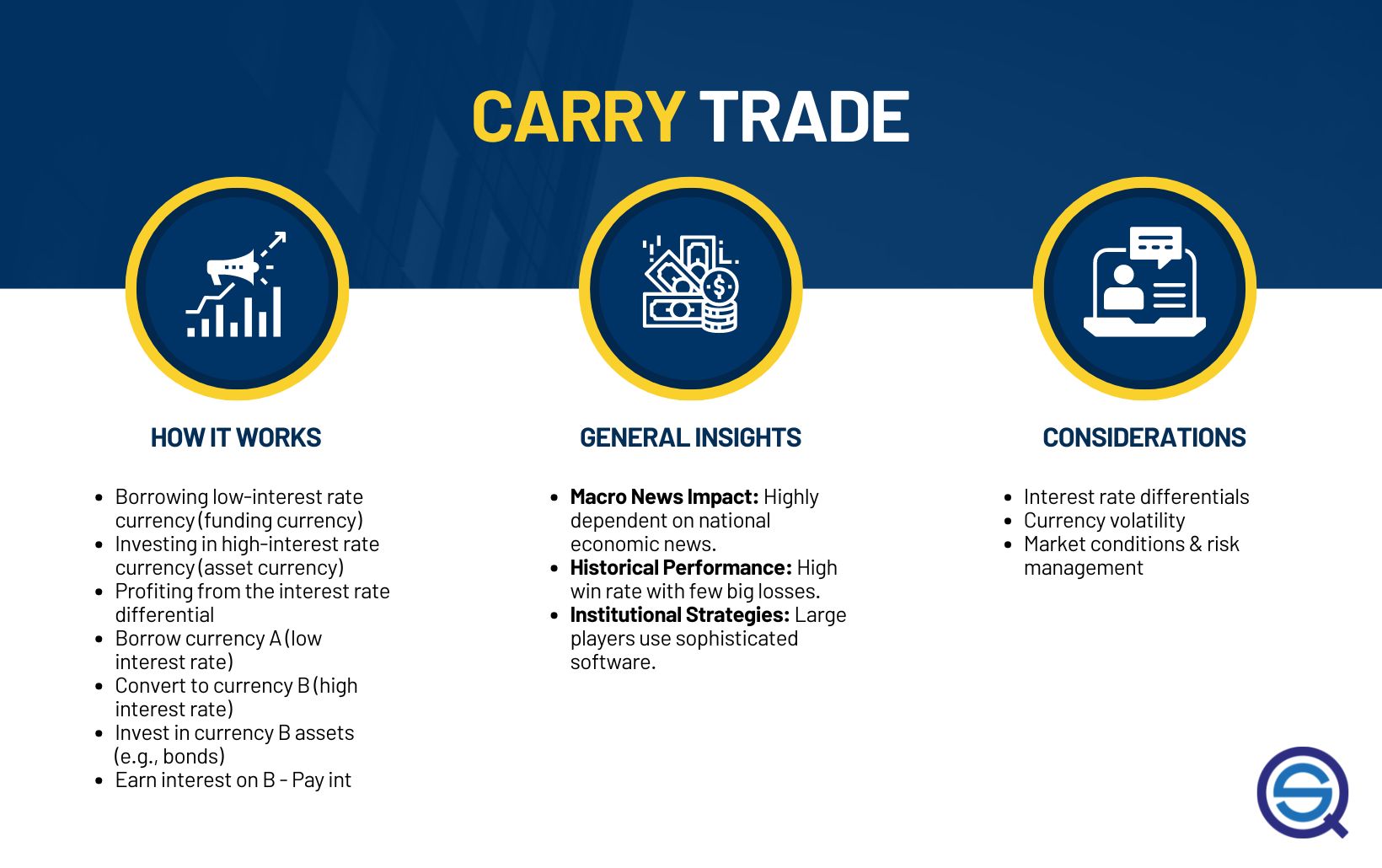
Currency carry trade lets you borrow money in a low-interest-rate currency and invest it in a high-interest-rate currency to earn steady profits from the interest rate gap, often amplified by leverage for bigger gains. This strategy, popular among forex traders, relies on the difference in overnight interest rates between countries. You short the low-yield currency, like the Japanese yen, and go long on a high-yield one, such as the Australian dollar. Over time, your broker pays you the positive swap rate daily, which can add up significantly if you hold positions for weeks or months. The key to maximum profits lies in selecting pairs with wide interest differentials, using moderate leverage, and managing risks from currency swings. Traders have used this for decades, especially in stable rate environments.
Carry trades shine with pairs like AUD/JPY or NZD/JPY, where gaps exceed 4-5% annually. These combinations offer reliable swap income because funding currencies like JPY stay near zero rates, while commodity-linked currencies from Australia or New Zealand carry higher policy rates. You pick pairs based on central bank policies, checking sites like Investing.com for live swap rates.
Risks exist from sudden yen surges or rate hikes, but diversification across pairs cuts exposure. Even with positive carry, a 5% adverse move can erase months of interest, so tools like trailing stops protect gains. Proper position sizing keeps drawdowns under 2-3% per trade.
Ready to apply this? The sections below break down the definition, practical steps, and risks, so you can start trading carry strategies with confidence.
What Is Currency Carry Trade?
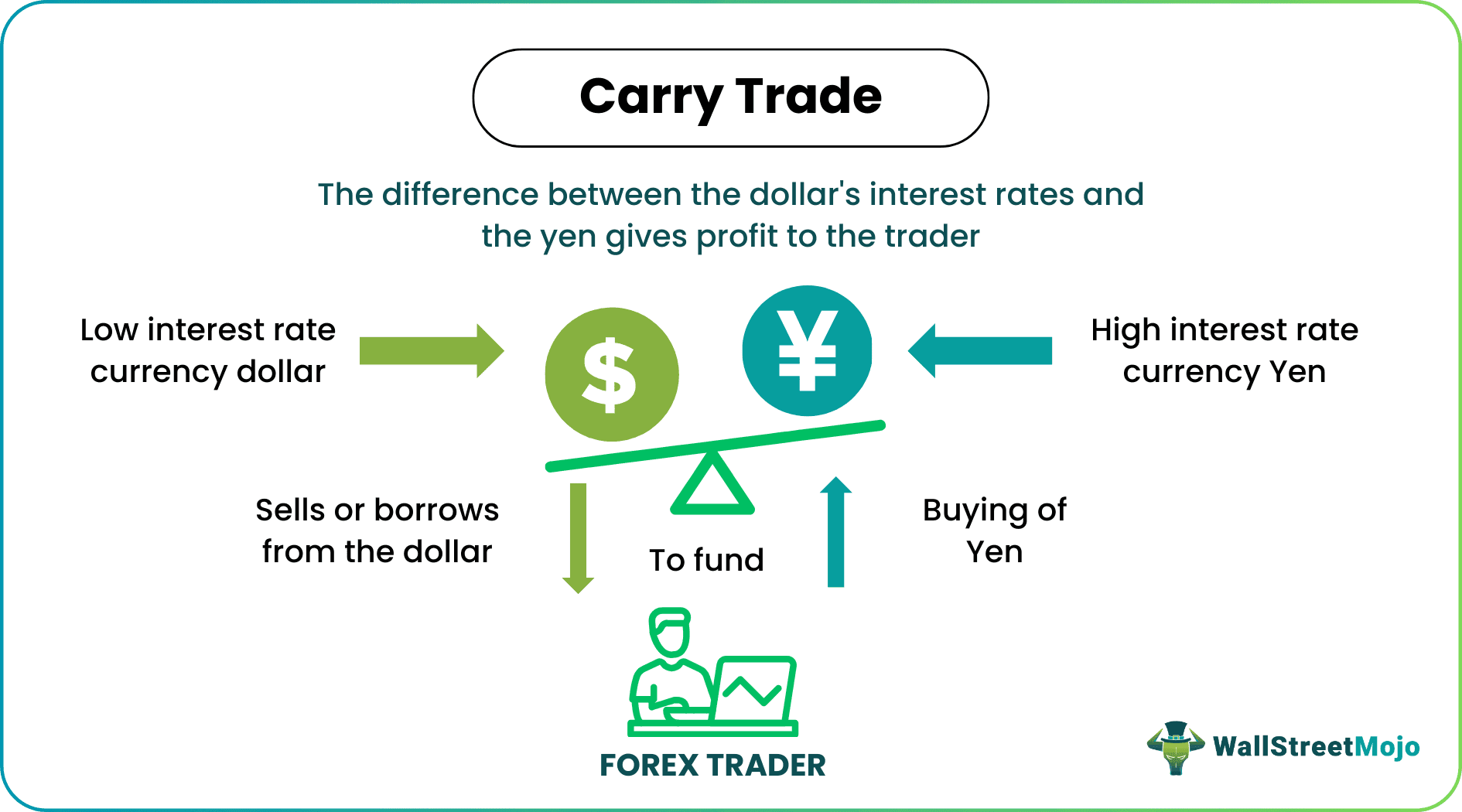
Currency carry trade is a forex strategy where you borrow in a low-interest currency and place funds into a high-interest one to capture the interest differential as profit. Specifically, this approach thrives on global rate disparities set by central banks.
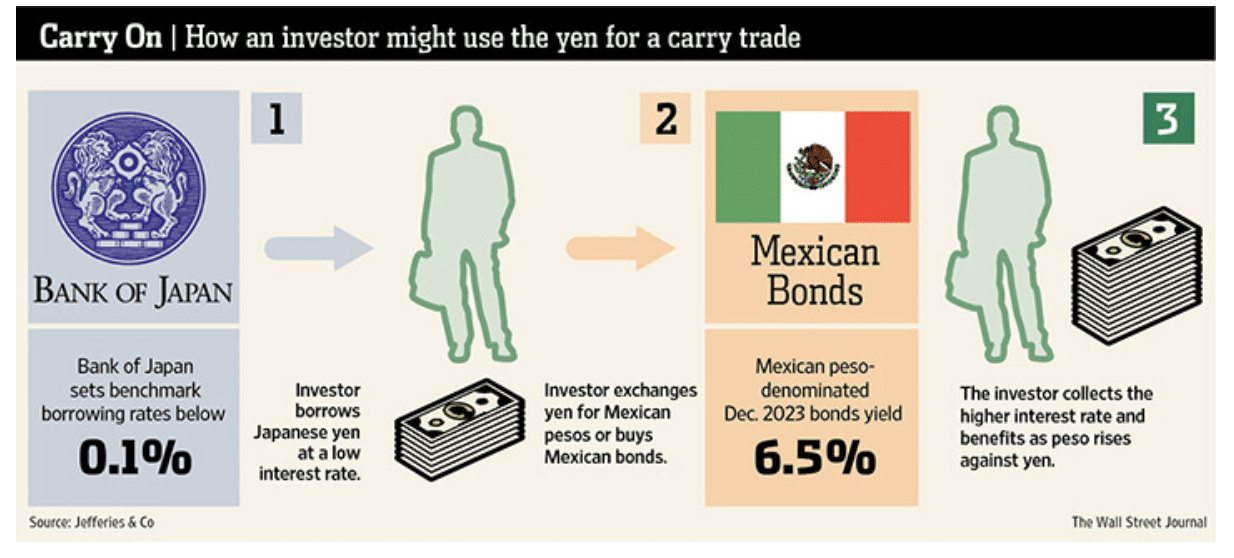
Let’s explore the core mechanics. At its heart, carry trade exploits the “borrow low, invest high” principle. Imagine Japan’s near-zero rates versus Mexico’s 10% policy rate. You borrow yen cheaply, convert to pesos, and invest. Your broker charges low overnight interest on the yen short and credits high interest on the peso long. The net positive carry builds daily.

This isn’t new; it gained fame in the 2000s when yen-funded trades fueled global booms. Key features include swap payments (also called rollover interest), which brokers calculate based on interbank rates like LIBOR or SOFR equivalents. Positive carry means you earn more on the long side than you pay on the short.
You’ll notice swaps quoted in pips per lot, varying by broker. For example, a standard AUD/JPY lot might yield 3-5 pips daily, equating to $30-50 on a $100,000 position. Over 30 days, that’s $900-1,500, before any price moves.
Why does this work? Central banks set divergent policies. Safe-haven currencies like JPY, CHF, or EUR (pre-ECB hikes) fund trades, while emerging or commodity currencies like TRY, ZAR, or MXN pay higher yields.
How Does Carry Trade Generate Profits?
Carry trade generates profits mainly through swap or rollover interest from positive carry, compounded over holding periods, plus potential spot price appreciation. Brokers settle this daily at 5 PM EST, crediting or debuting your account based on rate gaps.
:max_bytes(150000):strip_icc()/carry-trade-definition-4682656-final-3df24cc4da6f48398f8dcb157a48e7c9.png)
Specifically, positive carry happens when the long currency’s rate exceeds the short’s. For instance, with NZD/JPY, New Zealand’s 5.5% rate dwarfs Japan’s 0.1%. A broker might pay 4 pips per day on a mini lot. Over a year, unleveraged, that’s about 1,460 pips or 14.6% return, ignoring price changes.
For example, compounding kicks in as daily credits buy more base currency, snowballing gains. Traders holding for months maximize this, but weekends triple swaps, boosting income.
Here’s the breakdown: Swap = (Interest Long – Interest Short) x Position Size x Days Held / 360. Positive carry ensures net inflow.
Evidence shows this power. In 2022, USD/TRY carry yielded over 20% annualized swaps amid Turkey’s high rates, per Myfxbook data. Yet, pips from favorable trends add more; a 200-pip gain on top of 1,000 swap pips doubles returns.
Main point: Volatility can help if high-yield currencies strengthen, as often happens in risk-on markets.
What Are the Requirements to Start Carry Trading?
To start carry trading, select a broker with competitive swaps like IC Markets or Pepperstone, use 1:50 leverage max, meet 2-5% margin needs, and size positions at 1% account risk. These basics keep you in the game long-term.
Transition to broker choice: Low-spread ECN brokers shine here, as they pass true interbank swaps without markups. Check swap tables on their platforms; avoid those with negative adjustments.
Leverage basics: Forex allows 1:100 or more, but for carry, 1:20-1:50 suits. A $10,000 account with 1:30 leverage controls $300,000, enough for multiple pairs.
Margin requirements tie to this: Typically 3.33% for majors at 1:30. Position sizing formula: Risk Amount / (Stop Loss Pips x Pip Value). For 1% risk on $10k ($100), a 100-pip stop means 1 mini lot.
For instance, fund $5,000 minimum, verify with MT4/MT5 demo. Track economic calendars for rate decisions.
Guidelines include diversifying 3-5 pairs, holding 1-6 months. Start small to learn swap variations by broker.
How Does the Borrow Low, Invest High Strategy Work in Practice?
The borrow low, invest high strategy works in 5 steps: spot rate differentials over 3%, short low-yield currency, long high-yield, hold for swaps, exit on targets, yielding 10-20% annualized returns. In detail, this process turns rate gaps into passive income.
Here’s the breakdown. Step 1: Scan pairs via tools like Babypips interest rate table or Forex Factory calendar. Target gaps >4%, like 5%+ now in USD/ZAR.
Step 2: Enter positions. Short JPY (borrow), long AUD (invest). Use market orders during London/New York overlap for fills.
For example, on AUD/JPY at 95.00, buy 1 lot. Daily swap credits appear in MT4 history.
Step 3: Hold periods maximize income. Aim 3-12 months; short-term misses compounding.
Root attributes: Currency selection favors stable funding (JPY, CHF) vs. yielders (AUD, NZD). Why hold? Swaps compound, and trends favor high-yielders in growth phases.
Step 4: Monitor via equity curve. Trail stops at 200 pips.
Step 5: Exit on rate convergence or targets. Profits = swaps + pips.
Practical tip: Automate with EAs from Forex Expert Advisor Store for hands-off execution.
What Are the Best Currency Pairs for Carry Trade?
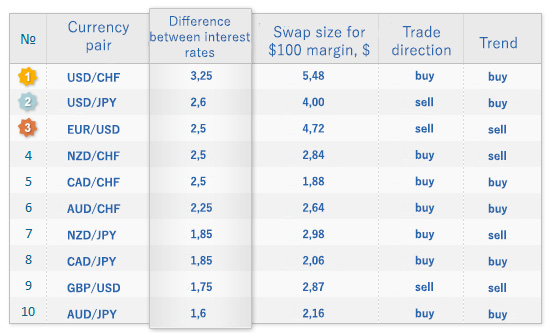
Popular carry pairs group into JPY crosses like AUD/JPY, NZD/JPY (3-6% gaps), commodity pairs like USD/ZAR, and exotics like USD/TRY (10%+ gaps) based on yield differentials. These deliver consistent swaps in low-vol environments.
Classification by gap size: Traditional JPY pairs suit beginners. AUD/JPY offers 4-5% annual carry, stable due to RBA-BoJ policy clash. NZD/JPY mirrors this, with kiwi’s dairy boost.
Commodity group: USD/ZAR or EUR/ZAR, South Africa’s 8% rate vs. US 5%. Gaps hit 3%, but rand volatility demands care.
Exotics like USD/TRY top lists; Turkey’s 50% rate (recently) crushes USD’s 5%, but inflation risks loom.
For instance, 2023 data from Dukascopy shows AUD/JPY swapped 450 pips yearly per lot.
Quantitative factors: Check live rates on TradingView. Best now: NZD/JPY (gap 5.2%), GBP/ZAR (6%).
Why these? Liquidity ensures tight spreads, easy exits.
How Is Carry Trade Profit Calculated?
Carry trade profit combines daily swap rates via (High Rate – Low Rate) x Size / 360 formula, plus pip gains/losses from spot moves, totaled as Total Return = Swaps + Pips x Value. Brokers display this transparently.

Break it down. Daily swap = Triple for weekends. For 1 standard lot AUD/JPY: Assume 4.5 pips/day x 365 = 1,642 pips/year. At $10/pip, $16,420 unleveraged.
Add pips: If pair rises 500 pips, +$5,000. Formula: Profit = (Swap Pips + Price Pips) x Pip Value x Lots.
For example, $10k account, 1:20 leverage, 0.5 lots NZD/JPY. Monthly swap ~$150, yearly $1,800 base.
Total return % = (Swaps + Cap Gains – Fees) / Margin Used x 100. Leverage multiplies: 20x boosts to 20%+ if flat price.
Tools like MT5 calculator or Myfxbook simulator verify. Adjust for commissions (0.5 pips round-turn).
Real case: 2010s AUD/JPY carry netted 15-25% yearly, per BIS reports, blending 10% carry + 5-15% trends.
What Are the Primary Risks in Carry Trade?
Primary risks in carry trade include exchange rate volatility, sudden central bank rate shifts, and liquidity squeezes during crises. To understand this better, these threats can wipe gains fast, so mitigation matters.
Exchange rate volatility tops the list. High-yield currencies drop in risk-off times, like JPY surges in 2008 crashing AUD/JPY 30%.
Sudden rate changes follow. A BoJ hike or RBA cut narrows gaps, halving swaps overnight.
Liquidity risks hit exotics; wide spreads or gaps during news trap positions.
Root attributes: Use stop-losses at 1-2% risk, diversify 4-6 pairs.
For instance, 2022 USD/JPY unwind cost carry traders billions as Fed hikes strengthened USD.
Risk mitigation: Set stops 150-300 pips away, based on ATR. Diversify across regions.
Rhetorical question: Ever wonder why 80% of carries fail short-term? Adverse moves outweigh daily 0.1% carry.
Can Carry Trade Lead to Losses Despite Positive Interest?
Yes, carry trade can lead to losses despite positive interest when adverse currency moves exceed swap income by 5x or more, due to volatility spikes and unwind events.
Specifically, a 1,000-pip drop erases 200 swap pips easily. 1998 LTCM collapse showed this; Russian default tanked RUB carries.
For example, 2015 CHF peg break ruined EUR/CHF shorts, losses hit 20% despite 2% carry.
Main point 1: Boolean triggers like elections amplify. Track COT reports for overcrowding.
Main point 2: Evidence from JPMorgan: 70% carry drawdowns from trends, not rates.
Main point 3: Hedge with options or correlate pairs inversely.
How to Manage Leverage and Margin in Carry Trades?
Manage leverage and margin in carry trades by capping at 1:20-1:30 ratios, risking 1% per trade, and monitoring margin levels above 300% via economic calendars. This prevents calls.
Guidelines start with ratios: Pros use 1:10 for safety. On $20k account, 1:20 controls $400k, but size for 1% risk.
Monitor indicators: Fed minutes, RBA meetings. Use MT4 margin calculator.
For instance, position size = (Account x Risk%) / (SL Pips x Pip Value). 100-pip SL, $200 risk: 2 minis.
Safe practices: Keep free margin >50%, avoid news hours. Trail to lock swaps.
Diversify limits total exposure to 5%. Weekly reviews catch drifts.
Real traders at Forex Expert Advisor Store automate this for steady holds.
Advanced Insights into Carry Trade Execution
Carry trades thrive on borrowing low-interest currencies to buy high-interest ones, with advanced execution leveraging emerging pairs, historical lessons, trading comparisons, and EAs for swap optimization.
Furthermore, traders gain an edge by targeting niche opportunities and tools that handle volatility and risks.
What Are Unique High-Yield Emerging Market Pairs for Carry Trade?
Emerging market pairs offer the highest swap differentials, often exceeding 10% annually, making them prime for carry trades despite elevated risks. USD/ZAR and EUR/TRY stand out due to South Africa’s and Turkey’s high interest rates paired against stable low-rate funding currencies. USD/ZAR benefits from the rand’s 8-12% rates versus the dollar’s near-zero, yielding daily swaps of 20-50 pips. EUR/TRY pushes further with Turkey’s policy rates over 40% at times, creating extreme positives but prone to 20%+ swings from political shocks.
You’ll notice these pairs differ from majors like AUD/JPY, which cap at 4-5% differentials. USD/ZAR reacts to commodity prices and U.S. yields, while EUR/TRY ties to lira inflation and EU tensions. Traders use three-month rolling swaps from brokers like IC Markets or Pepperstone to lock positives, avoiding triple swaps on Wednesdays.
Why prioritize these? They amplify returns in low-vol environments but demand tight stops.
This focus on exotics leads to questions about past failures.
- USD/ZAR averaged 15% annualized carry from 2015-2020 per BIS data, outperforming G10 pairs.
- EUR/TRY delivered 25%+ swaps in 2023, but lost 30% in value during hikes.
- Risk management involves 1:10 leverage caps to survive 500-pip drawdowns.
How Did Past Carry Trade Crises Unfold?
Carry trade crises erupt when funding currencies strengthen rapidly, forcing mass unwinds and amplifying losses. The 2008 yen carry collapse exemplifies this: Traders borrowed yen at 0.5% to fund AUD or NZD at 7%, building $1 trillion positions. As U.S. markets crashed, risk aversion spiked yen by 25% in weeks, wiping $400 billion per IMF estimates.

Similarly, the 1998 Russian crisis hit USD/RUB trades, with defaults triggering global contagion. Fast-forward to 2022-2023 yen unwinds, where BOJ rate hints caused USD/JPY drops of 20%, erasing years of swaps for levered accounts.
What triggers them? Sudden policy shifts, like rate hikes, create risk reversals where positives flip negative. Lessons include monitoring COT reports for overcrowding and using options for protection.
These events highlight the need for comparisons to other strategies.
- Yen carry peaked at 5% of global FX flows before 2008 unwind.
- Unwinds averaged 15-30% pair reversals within months.
- Hedge with 10% portfolio in yen puts to offset crashes.
What Is the Difference Between Carry Trade and Momentum Trading?
Carry trade earns from interest rate gaps, holding positions long-term for daily swaps, while momentum trading chases price trends via breakouts or moving averages for quick gains. Carry ignores short-term charts, prioritizing swap calendars from brokers like XM; momentum scans RSI or MACD for entries, often netting zero swaps.
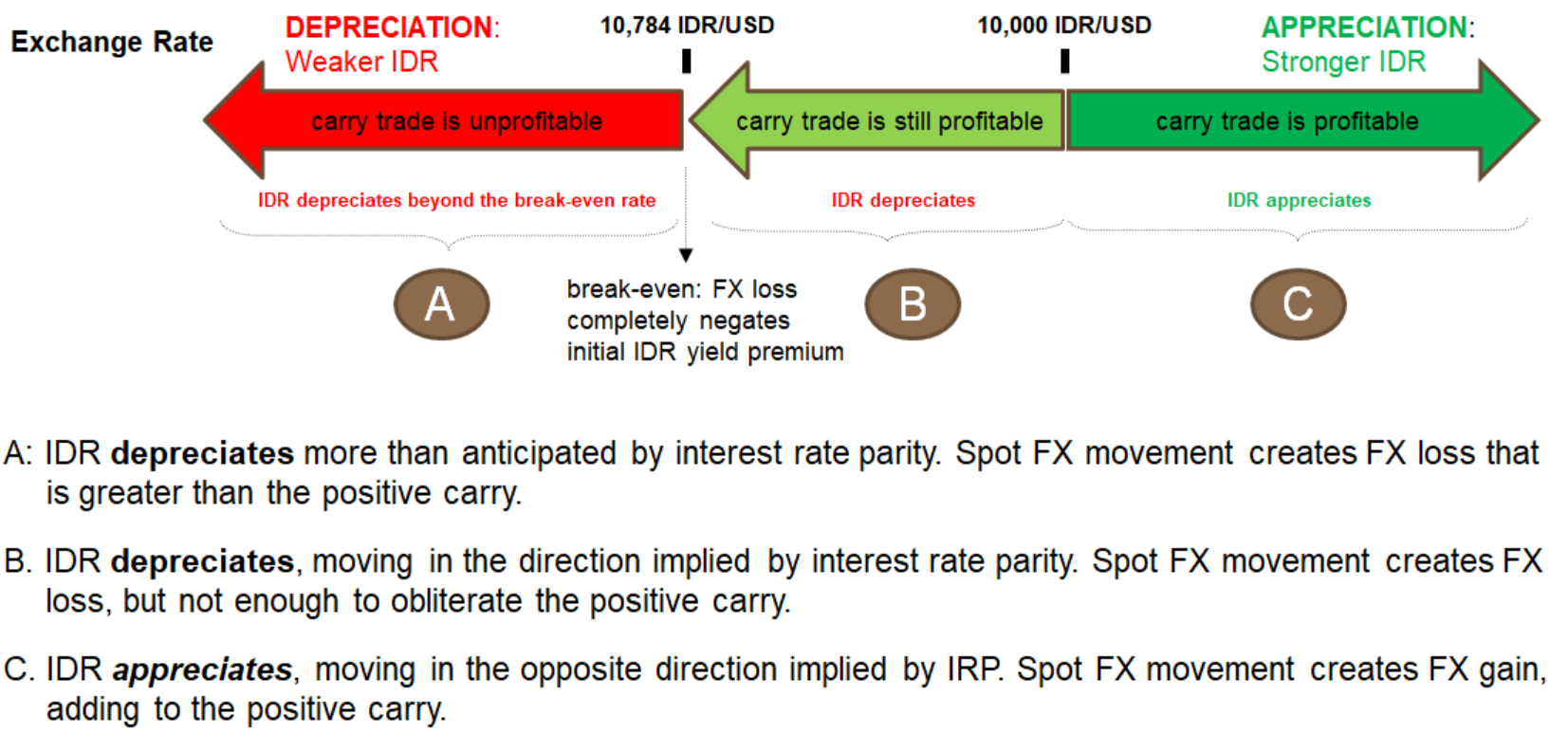
For instance, a carry trader buys AUD/JPY for 4% positive roll, unconcerned by 100-pip dips. A momentum trader sells it on bearish engulfing, targeting 200 pips regardless of rates. Carry suits patient investors with 70% win rates from holds; momentum demands 60% accuracy amid whipsaws.
How do drawdowns compare? Carry risks slow bleeds from unwinds, momentum faces stop-outs in ranges. Data from Myfxbook shows carry EAs yielding 12% annually with 25% max drawdown, versus momentum’s 18% with 40%.
This distinction raises automation needs.
- Carry: Passive income from holds, low trade frequency.
- Momentum: Active signals, high turnover, swap-neutral.
- Combine via hybrid EAs monitoring both rates and trends.
How Can Forex Expert Advisors Automate Carry Trades?
Forex Expert Advisors (EAs) from stores like Forex Expert Advisor Store automate carry by scanning swap rates 24/7, entering high-positive pairs and trailing stops. Tools like CarryTrade EA optimize via broker APIs, filtering USD/TRY or GBP/ZAR above 15 pips daily swap, auto-hedging with correlates like gold during volatility.
Setup involves MT4/MT5 backtesting on 10-year data, setting 0.01 lot per $1,000 to cap risks. Advanced EAs use machine learning for rate forecasts, avoiding trades pre-NFP. Pepperstone’s cTrader integrates swap-positive filters, while EAs add news avoidance.
Why automate? Manual monitoring misses overnight rolls; EAs capture 95% opportunities, per user logs. Pair with VPS for uptime.
Automation contrasts short-term styles.
- Swap trailing exits on negatives, holds positives.
- Auto-hedge opposites like short ZAR/USD on longs.
- Backtests show 20% edge over manual in volatile pairs.
Carry Trade vs. Scalping: Which Yields Higher Long-Term Profits?
Carry trade outperforms scalping long-term, generating 10-20% annual returns from compounded swaps versus scalping’s 5-15% eroded by spreads. Carry holds weeks to years for passive income; scalping grabs 5-20 pips dozens of times daily, relying on ultra-low latency.
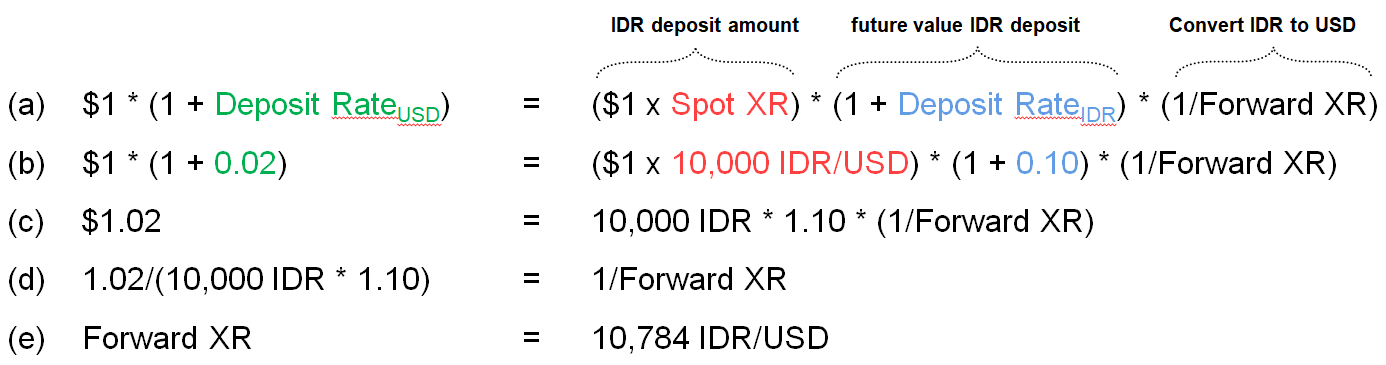
Consider metrics: A $10,000 carry account on USD/ZAR at 12% swap nets $1,200 yearly minus 2% drawdown. Scalping EUR/USD at 10 pips average, 100 trades/month yields $1,000 but faces 1-2% commissions. Over five years, carry compounds to $16,000; scalping plateaus at $12,000 per QuantConnect sims.
Scalpers thrive in trends but bleed in ranges; carry weathers them via rolls. Rhetorical question: Would you prefer steady drips or high-frequency stress?
Data favors carry for retail: 65% profitable accounts vs. 40% scalpers.
- Carry: Low frequency, swap-driven, suits part-timers.
- Scalping: High costs, execution-dependent, pro-only.
- Long-term: Carry wins with diversified pairs reducing vol.
