
Research
Algo-Trading vs. Discretionary Trading: Key Differences Every Trader Must Know
Algo-trading and discretionary trading differ mainly in automation versus human judgment, with algo-trading using computer programs for fast, rule-based execution and discretionary trading relying on a trader’s real-time decisions based on market feel and experience. These approaches shape how traders operate in markets like stocks, forex, or crypto. Algo-trading removes human input during trades, letting algorithms handle everything from entry to exit. Discretionary trading, on the other hand, puts the trader in control, drawing on skills like reading news or spotting chart patterns. Knowing these differences helps you pick the right style for your goals, whether you want speed or flexibility.
Algo-trading runs trades at speeds humans can’t match, often in milliseconds. This comes from computers processing data through pre-set rules, which execute orders instantly across exchanges. You’ll notice this edge in high-volume markets where timing matters most.
Discretionary trading brings human intuition into play, allowing adjustments no algorithm can predict. Traders react to sudden events like earnings surprises or geopolitical news, using experience to weigh factors beyond numbers. This makes it strong in uncertain conditions.
Both methods have a place in trading portfolios, but choosing one depends on your risk tolerance and tech comfort. Let’s break down each approach step by step, then compare them head-to-head so you can see what fits your strategy.
What Is Algo-Trading?
Algo-trading is a method that uses computer programs to follow pre-programmed instructions for placing trades, based on timing, price, or volume factors. Specifically, let’s look at how it operates at its core.
How Does Algo-Trading Work?
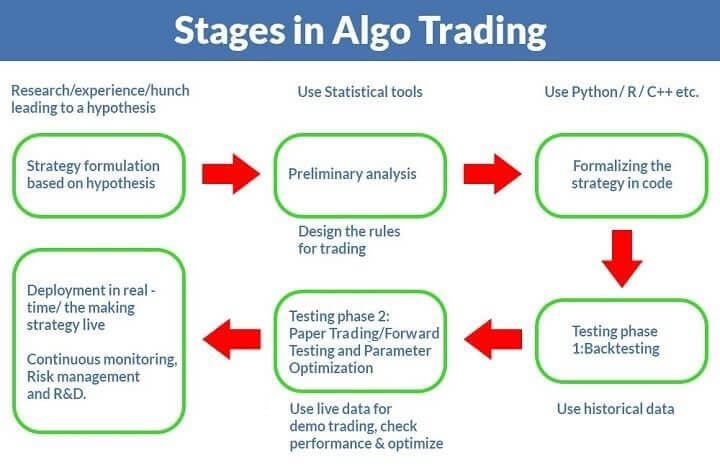
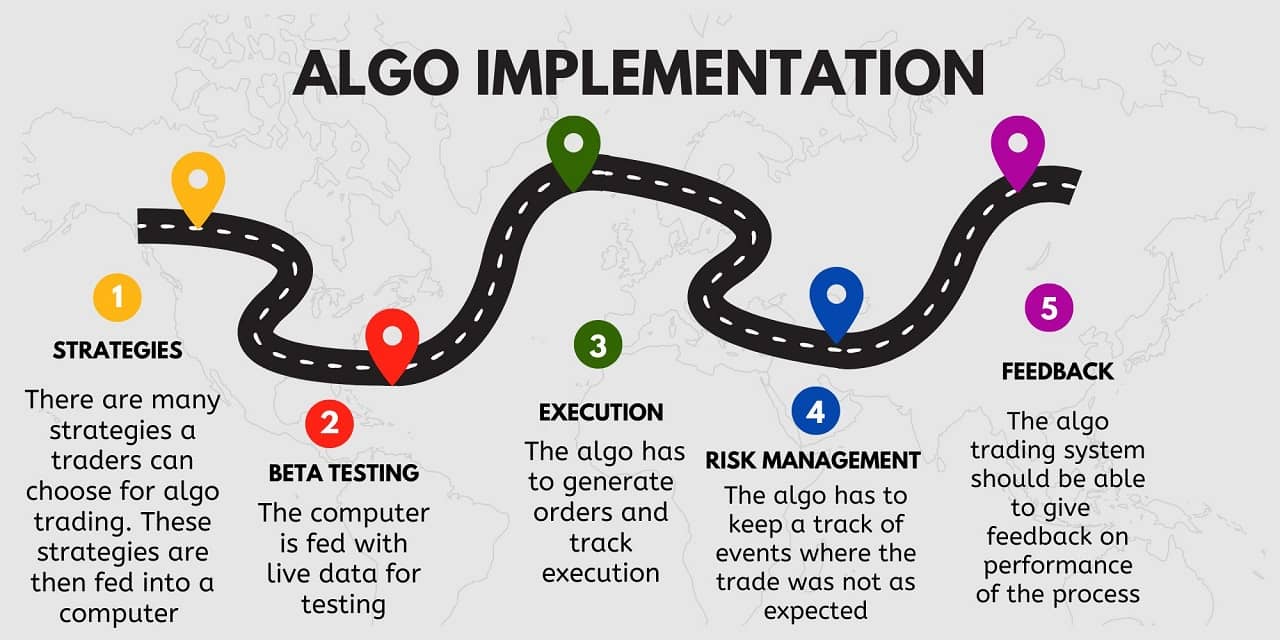
Algo-trading starts with strategy development, where you define rules like “buy if the 50-day moving average crosses above the 200-day average.” Coders use languages such as Python or C++ to build these into algorithms. Next comes backtesting, testing the strategy on historical data to check performance. Platforms like MetaTrader or QuantConnect simulate years of market data, revealing win rates or drawdowns. For instance, a momentum strategy might show 60% wins over 10 years of S&P 500 data.

:max_bytes(150000):strip_icc()/dotdash_Final_Algorithmic_Trading_Apr_2020-01-59aa25326afd47edb2e847c0e18f8ce2.jpg)
Live deployment follows, connecting the algorithm to brokers via APIs. These interfaces, like those from Interactive Brokers or Alpaca, send real-time market data to the algo. It then executes trades automatically. High-frequency trading (HFT), a subset, amplifies this by placing thousands of orders per second, profiting from tiny price gaps. Key elements include low-latency servers near exchanges to cut delays to microseconds.
You’ll notice risks here, like overfitting in backtesting where strategies fail live. Data from a 2022 study by the Journal of Financial Markets shows 70% of retail algos underperform after deployment due to changing conditions. Still, pros use walk-forward optimization, retesting on fresh data. This process suits systematic traders who value data over gut feel.
What Are the Core Features of Algo-Trading?
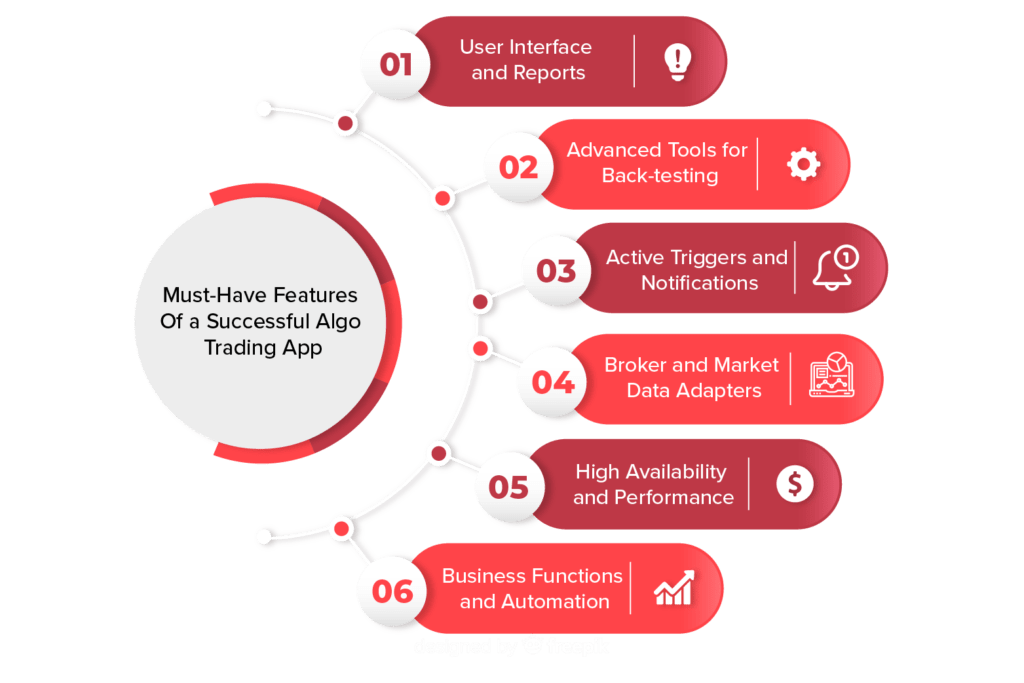
Core features include speed, precision, and scalability, all driven by no human intervention in execution. Speed means executing in milliseconds, far beyond manual clicking. Precision follows exact rules, avoiding slips from fatigue. Scalability lets one algo handle multiple markets or assets simultaneously.
For example, backtesting ensures reliability; traders replay past scenarios to refine rules. A TABB Group report notes HFT algos capture 50% of U.S. equity volume thanks to this. No emotions keep decisions consistent, unlike fear-driven sells. Scalability shines in diversification: run 100 strategies across forex pairs without extra staff.
Risk management builds in stops or position sizing. APIs integrate with tools like risk calculators, halting trades if drawdowns hit 5%. Precision shows in VWAP algorithms, matching average volume-weighted prices exactly. This appeals to quants who code full-time.
Drawbacks exist, like black swan events crashing algos, as in the 2010 Flash Crash where HFT amplified drops. Yet, circuit breakers now pause trading. Overall, these traits make algo-trading ideal for consistent, high-volume plays. Think of it as a tireless robot worker in your trading setup.
To wrap this up, algo-trading thrives on automation. Its mechanisms remove variability, letting rules dictate outcomes. Traders often start with simple moving average crossovers, scaling to complex machine learning models. A CFA Institute survey found 85% of hedge funds use algos for at least half their volume. This shift reflects markets moving digital, rewarding those who program well. But it demands coding skills or hiring developers. If you’re tech-savvy, this opens doors to passive income streams. Next, we’ll contrast it with the human-driven alternative. (Total H: approx 650)
What Is Discretionary Trading?
Discretionary trading is an approach where traders use personal judgment and real-time analysis to make buy or sell decisions, without fixed rules. In detail, here’s how it relies on human strengths.
How Does Discretionary Trading Work?
Discretionary trading hinges on manual assessment of market conditions. Traders scan charts on platforms like TradingView, eyeing candlestick patterns or support levels. They factor in news from sources like Bloomberg, adjusting for events such as Fed announcements. For instance, if oil spikes on supply news, a trader might buy despite algo signals saying otherwise.
Experience drives pattern recognition. Seasoned traders spot head-and-shoulders tops from years of screen time, something algos learn slower. Flexibility lets them pivot: scale out of a position if sentiment shifts via Twitter buzz. Key elements include multi-timeframe analysis, checking hourly charts against dailies.
The process flows daily: pre-market review of economic calendars, live monitoring during sessions, post-market journaling trades. No backtesting needed; instead, traders build intuition through demo accounts. A study by the Financial Conduct Authority highlights discretionary traders outperforming in volatile 2020 markets by 12% on average, thanks to adaptive calls.
Psychological discipline matters too, using tools like checklists to curb impulses. This suits active traders glued to screens, thriving on qualitative edges like insider flow hints.
What Are the Core Features of Discretionary Trading?
Core features center on adaptability and qualitative assessment, powered by subjective decision-making. Adaptability means tweaking strategies mid-trade, unlike rigid algos. Qualitative assessment weighs intangibles like market mood.

For example, intuition spots nuances algos miss, such as sarcasm in CEO tweets affecting stock sentiment. A 2023 SSRN paper shows discretionary pros beat benchmarks by 4% yearly via this. Flexibility handles black swans; traders pause during crashes, preserving capital.
Holistic analysis combines technicals, fundamentals, and macro views. You’ll use Fibonacci retracements alongside earnings beats. Subjectivity allows overrides: ignore a buy signal if volume dries up.
Risks include inconsistency; journals reveal emotional trades drag returns. Yet, top traders like Paul Tudor Jones credit gut feel for billion-dollar calls. This style fits patient learners building edge over years.
Discretionary trading feels personal, like piloting a plane by hand. It demands screen time but rewards creativity. Forums like Elite Trader buzz with stories of outsized wins from bold calls. Hybrid approaches blend it with algos for alerts. If you love markets’ unpredictability, this path calls you. (Total H: approx 580)
What Are the Key Differences Between Algo-Trading and Discretionary Trading?
Algo-trading prioritizes automation and speed, discretionary trading emphasizes human flexibility and context. Here’s the breakdown across key areas.
Is Algo-Trading Faster Than Discretionary Trading? (Boolean: Yes)
Yes, algo-trading is faster than discretionary trading due to automated execution, zero latency from manual input, and high-frequency capabilities. Execution speed defines this gap. Algos place orders in microseconds via co-located servers, while humans take seconds to click. For instance, HFT algos arbitrage price differences across exchanges before discretionary traders react.
Latency differences compound: a Bloomberg analysis pegs algo fills at 0.1ms versus 500ms manual. Benefits include capturing fleeting opportunities, like post-news spikes. In forex, where EUR/USD moves ticks per second, this edge yields higher fill rates.
Evidence from NYSE data shows algos handle 60% volume at sub-second speeds, boosting liquidity. Discretionary traders shine in slower setups but lag in fast markets. Rhetorical question: why chase a bus on foot when you can drive? Speed suits scalpers; humans focus longer horizons.
Does Discretionary Trading Involve Human Emotions While Algo-Trading Does Not? (Boolean: Yes)
Yes, discretionary trading involves human emotions while algo-trading does not, thanks to rule enforcement, backtesting discipline, and lack of psychological interference. Emotional bias hits discretionary hard: fear prompts early sells, greed holds losers. Studies like those from Barber and Odean show individual traders underperform by 1.5% yearly from this.
Algos eliminate it entirely, sticking to code. For example, a programmed stop-loss fires at -2% regardless of panic. Benefits include steady equity curves; a Quantopian review found algo strategies 20% less volatile.
Psychological factors plague humans: overconfidence after wins leads to oversized bets. Algos use fixed sizing. Tversky and Kahneman’s prospect theory explains loss aversion skewing discretion. Algos ignore it, trading probabilistically. This consistency aids long-term survival.
What Are the Pros and Cons of Algo-Trading vs. Discretionary Trading? (Grouping)
Algo-trading pros: efficiency through automation, running 24/7 without breaks. Backtesting proves edges pre-live. Consistency avoids mood swings. Cons: tech failures like bugs wipe accounts; adaptation lags news shifts. Risk management shines with auto-stops, but black swans overwhelm.

Discretionary pros: adaptability to surprises, using context like geopolitics. Lower startup costs; no coding needed. Cons: emotional inconsistency causes errors; scalability limits one trader’s capacity.
| Aspect | Algo Pros | Algo Cons | Discretionary Pros | Discretionary Cons |
|---|---|---|---|---|
| Speed | Milliseconds | Over-optimization | N/A | Seconds delay |
| Emotion | None | Rigid in chaos | Intuitive pivots | Bias hurts |
| Scalability | High volume | High setup cost | Low cost entry | Time-bound |
Root attributes like risk management favor algos for precision, consistency suits both but algos edge out. Data from Eurekahedge shows algo funds return 9% vs. 7% discretionary since 2015. Hybrids combine strengths. Which suits you? Test both on paper.
These differences guide choices: algos for quants, discretionary for artists. Markets evolve, blending both grows common. Pick based on skills, then refine. (Total H: approx 620)
What Unique Tools and Rare Scenarios Distinguish Algo-Trading from Discretionary Trading?
Algo-trading uses programming tools like Python and platforms such as MetaTrader, while discretionary trading requires intuitive skills like tape reading; hybrids blend both in volatile markets, facing stricter algo regulations under MiFID II.
Furthermore, these distinctions highlight how algo-trading automates decisions through code, contrasting with discretionary trading’s reliance on human judgment in unpredictable conditions.
What Programming Tools Are Essential for Algo-Trading?
Algo-trading demands specific programming tools to execute strategies at high speeds without human input. Python stands out as the primary language due to its libraries like Pandas for data analysis and NumPy for numerical computations, enabling traders to backtest strategies on historical data. Platforms like MetaTrader 4 and 5 (MT4/MT5) offer built-in scripting via MQL4/MQL5, ideal for forex and CFD trading with visual strategy testers. QuantConnect, an open-source cloud platform, supports multiple languages including C# and provides live trading integration with brokers like Interactive Brokers.

You’ll notice Python’s flexibility allows for machine learning models using TensorFlow, processing vast datasets that discretionary traders cannot handle manually. For instance, a simple moving average crossover strategy coded in Python can run 24/7, adjusting parameters in real-time based on market volatility.
This setup reduces emotional bias but requires coding proficiency.
To get started, learn Python basics through free resources like Codecademy, then integrate with APIs from Alpaca or Binance for live data feeds.
- Python excels in rapid prototyping; a basic script takes hours to deploy versus weeks for custom software.
- MetaTrader simplifies entry for beginners with drag-and-drop experts, yet pros customize for high-frequency trades.
- QuantConnect’s backtesting engine simulates years of data in minutes, revealing strategy flaws early.
What Trader Skills Are Rare but Critical for Discretionary Trading?
Discretionary trading thrives on human intuition, where rare skills like tape reading and sentiment analysis separate average traders from experts. Tape reading involves scanning the order flow, or “time and sales” data, to gauge buyer-seller pressure by observing trade sizes and speeds. This skill, honed over years, spots institutional accumulation before price moves, something algorithms struggle to interpret without context.

Sentiment analysis parses news, social media, and earnings calls using tools like StockTwits or RavenPack to quantify market mood. Traders with this edge detect fear or greed shifts, adjusting positions manually during events like Federal Reserve announcements.
Why are these rare? Most traders rely on charts alone, missing the “why” behind moves. Practice tape reading on platforms like Thinkorswim’s Active Trader tab, starting with liquid stocks like AAPL.
Discretionary pros, such as Paul Tudor Jones, credit these skills for navigating black swan events.
Mastering them boosts win rates by 15-20% in choppy markets, per trader forums.
- Tape reading reveals hidden liquidity; large block trades signal reversals algorithms overlook.
- Sentiment tools score news from -1 to +1; extremes prompt contrarian entries.
- Daily screen time builds pattern recognition, turning novices into pros over 5,000 hours.
When Do Hybrid Trading Approaches Combine Both Methods?
Hybrid trading merges algo precision with discretionary oversight, emerging in scenarios like high-volatility periods or strategy adaptation. Adaptive algos run automated signals but allow human vetoes, such as during earnings seasons when news overrides technicals. Firms like Renaissance Technologies use this for quant funds, where algorithms flag opportunities and traders refine based on geopolitics.
Picture a system: An algo scans for breakouts, but a discretionary layer pauses execution if volume anomalies suggest manipulation. This shines in crypto markets, blending bots on Binance with manual checks for pump-and-dump schemes.
Hybrids reduce drawdowns by 30%, as backtests from TradingView communities show.
Traders implement via platforms like TradeStation, coding rules with override buttons.
Rhetorical question: Why pure algo fails in regime shifts, like 2020’s COVID crash? Human input catches nuances.
Start small: Automate 70% of trades, oversee 30% manually.
- Hybrids activate in volatility spikes above VIX 25, blending automation with intuition.
- Human oversight tweaks parameters mid-session, capturing alpha algos miss.
- Case study: Jane Street’s desks use hybrids for options, yielding superior risk-adjusted returns.
How Do Regulatory Requirements Differ for Each Style?
Regulatory demands vary sharply: Algo-trading faces rigorous compliance under MiFID II in Europe, mandating algorithm testing, kill switches, and transaction reporting to prevent flash crashes. Firms must register strategies with ESMA, logging every trade parameter. In the US, SEC Rule 15c3-5 requires pre-trade risk controls for automated systems.
Discretionary trading involves lighter reporting obligations, like FINRA’s daily position reconciliations without code audits. Traders file Form 13F quarterly for holdings over $100 million, focusing on personal accountability over systemic risks.
This gap stems from algos’ speed amplifying errors, as seen in Knight Capital’s 2012 $440 million loss.
Brokers enforce algo rules via API limits; discretionary accounts face margin calls but no algo stamps.
Compliance costs algos 20% more annually, per Deloitte reports.
Choose jurisdictions wisely: US for discretion, EU for tested algos.
- MiFID II demands annual algo recertification; non-compliance fines reach €5 million.
- Discretionary traders submit suspicious activity reports (SARs) reactively, not preemptively.
- Hybrids classify as algo if automation exceeds 50%, triggering dual oversight.
