
Research
What Is Slippage? Positive vs. Negative Breakdown for Traders
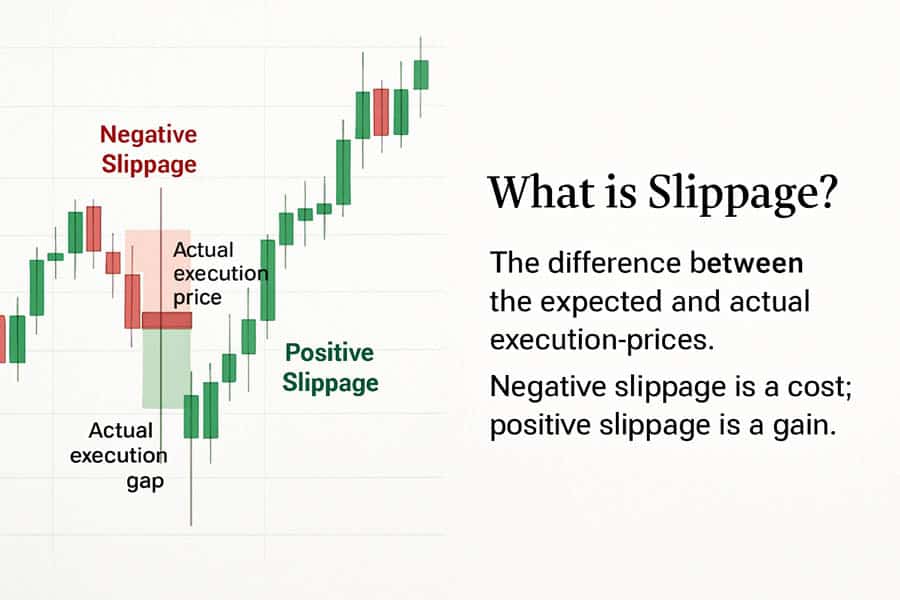
Slippage in trading is the difference between the price you expect to pay or receive for a trade and the actual price at which it executes. This happens most often in fast-moving markets where prices shift quickly between the time you place an order and when it fills. Traders face this issue across assets like stocks, forex, crypto, and futures. It stems from factors such as market volatility, low liquidity, or large order sizes that move the price.
Positive slippage occurs when your trade executes at a better price than expected, such as buying lower or selling higher. This boosts your profits unexpectedly. For example, in a quick market rally, you might sell shares above your target price. Traders love this because it pads returns without extra effort.
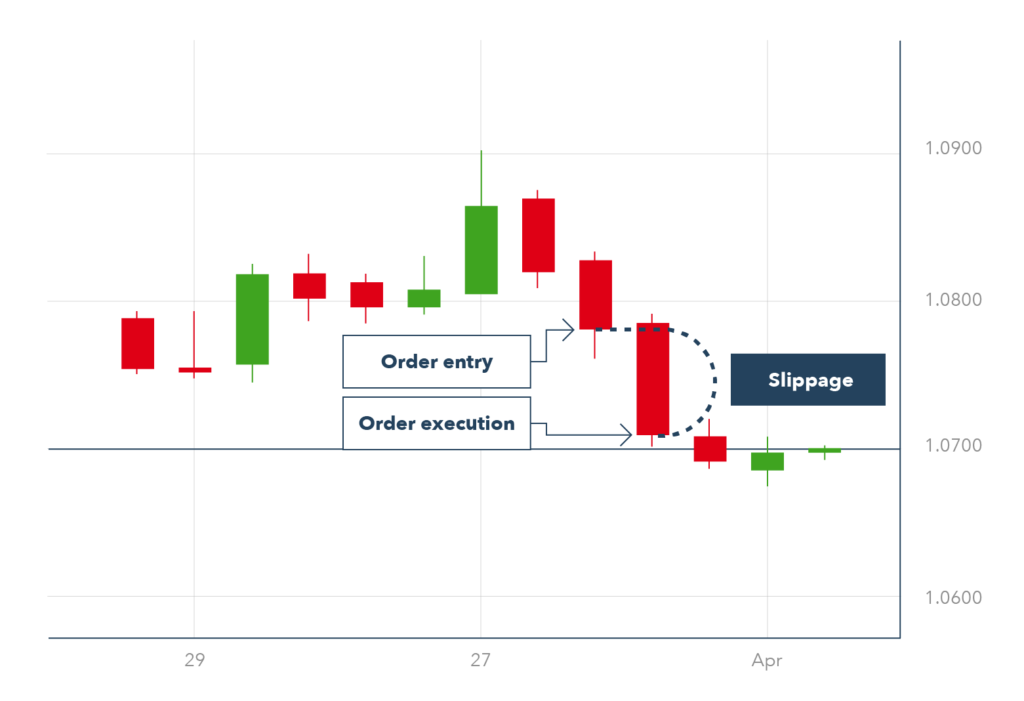
Negative slippage happens when execution comes at a worse price, like buying higher or selling lower than planned. It cuts into profits or increases losses. This is common during sudden drops or gaps in price charts. Understanding both types helps you manage risks and spot opportunities.
Now that you see the basics, let’s break down slippage step by step. You’ll learn how it works in trades, when positive beats negative, and strategies to handle each. This knowledge lets you trade smarter in any market condition.
What Is Slippage in Trading?
Slippage is the gap between your expected trade price and the executed price, caused by volatility, low liquidity, and order size. Specifically, it affects how your orders fill in real markets. Here’s the breakdown.
Think about placing a market order to buy 1,000 shares of a stock at $50. By the time the order reaches the exchange, the price jumps to $50.20 due to a news flash. You pay more than planned. That’s slippage in action. It shows up because markets don’t stand still. Prices update in milliseconds, and your order might queue up behind others.

Root causes tie back to three main factors. First, market volatility shakes prices fast. During earnings reports or economic data releases, bids and asks scatter. Second, liquidity matters. Thin order books in small-cap stocks or off-hours trading mean fewer buyers and sellers. Your order eats through available shares, pushing the price against you. Third, order size plays a role. A huge forex position swamps the market depth, causing execution across multiple worse prices.
Slippage hits trade execution hard. For day traders chasing quick moves, it erodes edges. Say you’re scalping crypto with tight stops. Negative slippage turns a 0.5% gain into a loss. Long-term investors see less impact on big positions, but it still adds up. Platforms like Thinkorswim or MetaTrader display slippage stats post-trade, helping you review.
Does slippage always hurt? Not quite. In stable sessions, high-volume assets like EUR/USD forex pairs fill near your quote. But ask yourself: how often do you trade in perfect calm? Real trading mixes volatility, so slippage becomes part of the game.
How Does Slippage Occur During Order Execution?
Slippage occurs during order execution when market prices move away from your quoted price due to bid-ask spread widening and sudden shifts. Specifically, it ties to the mechanics of matching buyers and sellers.
:max_bytes(150000):strip_icc()/slippage-final-be10f22b93fe41508eb759d5116c63f9.png)
The bid-ask spread sets the stage. Bid is what buyers offer, ask is sellers’ price. In a tight spread, like $50.00 bid/$50.01 ask, slippage stays tiny. But volatility blows it open. A sell-off widens it to $49.90/$50.20. Your buy order grabs the higher ask.
Market movement adds fuel. Orders hit exchanges via electronic networks. Latency from your broker to the venue lets prices run. For instance, in Bitcoin trading on Binance, a flash crash drops quotes 2% in seconds. Your limit order at $60,000 fills at $58,800 if it’s a sell, or worse if buying.
Order types influence this too. Market orders chase the best available price, inviting slippage. Limit orders cap it but risk non-execution. Evidence from a 2022 CME Group study shows average slippage of 0.5-2 pips in forex during news, versus 0.1 pips in quiet hours.
Traders track this with execution quality reports. Tools like TradingView replay charts to simulate fills. To cut slippage, use iceberg orders that hide size or trade in liquid hours.
Is Slippage Inevitable in All Markets?
Yes, slippage is inevitable in volatile conditions with three key reasons: rapid price changes outpace orders, low liquidity forces price impact, and large orders overwhelm depth. No, it drops near zero in stable, high-liquidity setups.
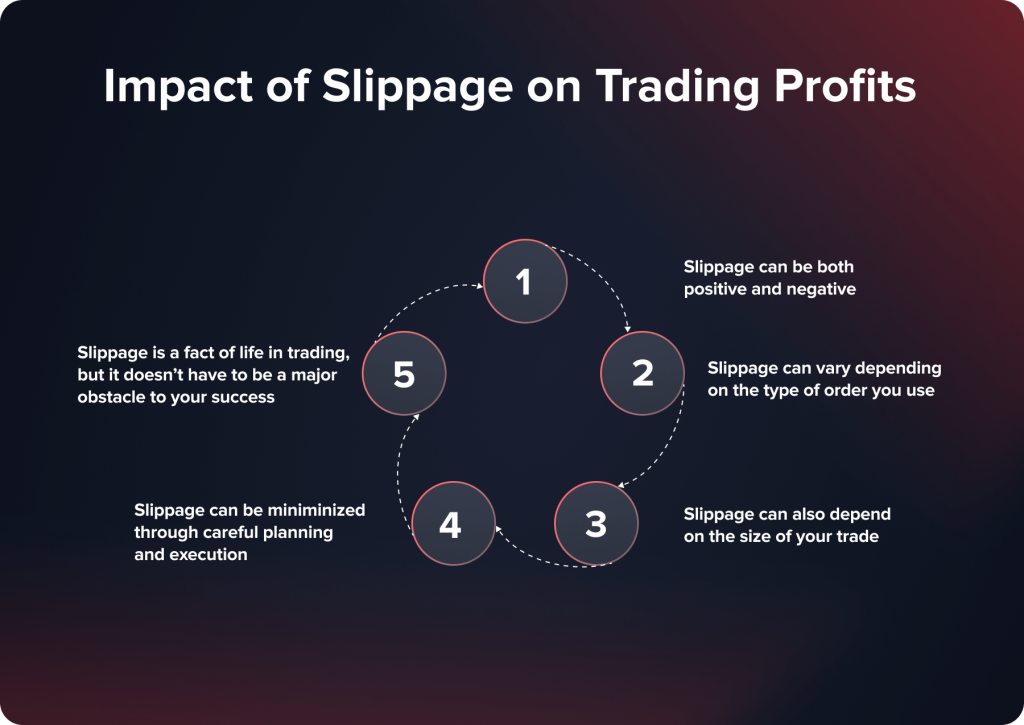
Link this to real markets. The top reason is volatility. In calm S&P 500 trading, fills match quotes closely. But during Fed announcements, swings make slippage standard.
High-liquidity environments like major forex pairs avoid it mostly. EUR/USD sees billions daily, so depth absorbs orders. Data from FXCM reports under 0.2 pip average slippage there.
Benefits of knowing this? You pick markets wisely. Avoid thin altcoins unless prepared. Studies from the SEC on U.S. equities show 90% of trades in top stocks have minimal slippage under normal volume.
What Is Positive Slippage?
Positive slippage is execution at a better-than-expected price, like buying lower or selling higher than your quote. In detail, it pads trader profits in fast markets. Let’s explore how it works and why it pays off.
Picture this: you set a market sell order for Apple stock at $150. A buyer surge hits, filling you at $150.30. That’s positive slippage, a 0.2% bonus. It happens when market momentum flows your way. Your order slips into a favorable queue.
Benefits shine for active traders. It enhances profits without skill tweaks. In scalping, tiny edges compound. A 2023 Binance report noted positive slippage averaged 0.3% during bull runs for BTC longs.
Examples pop in fast markets. News-driven rallies lift bids quick. Say Tesla beats earnings. Shorts cover, pushing prices up. Your sell captures the spike. Low-liquidity buys work too. Entering a microcap early fills below ask as sellers undercut.
You’ll notice it more with certain orders. Stop orders trigger positively in trends. A trailing stop on a forex uptrend sells higher than set.
Strategies build around it. Trade with momentum. Use volume scanners on platforms like TradeStation to spot building liquidity. But don’t chase blindly; pair with risk rules.
Positive slippage feels like a gift, but it balances negative cases. Track your ratio via broker logs. Top traders aim for net positive through timing.
When Does Positive Slippage Benefit Traders Most?
Positive slippage benefits traders most in three scenarios: news-driven rallies, low-liquidity buys during uptrends, and high-volume breakouts based on momentum criteria.
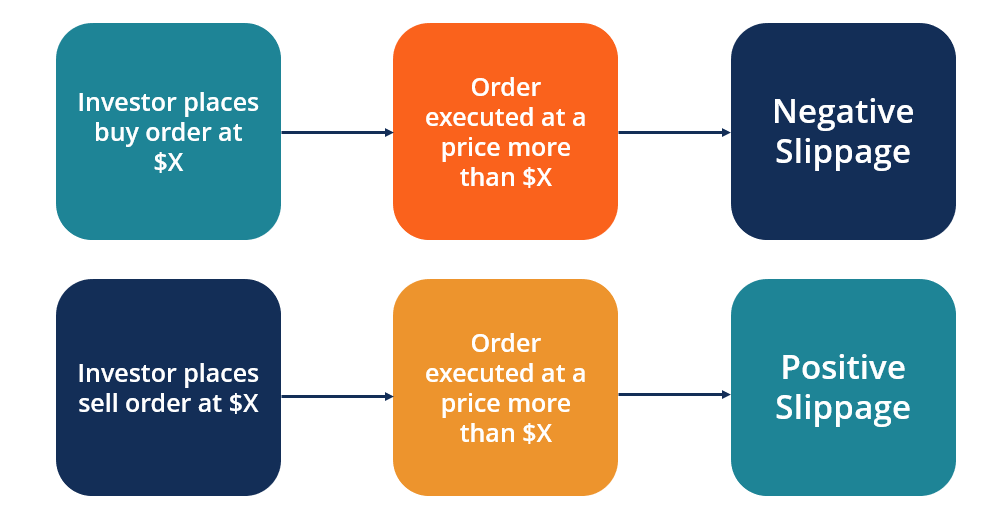
First, news-driven rallies. Positive economic data sparks buys. Your long forex order fills below expected as bids rise. For instance, a strong jobs report lifts USD/JPY. Data from Dukascopy shows 1-2 pip positives common here.
Second, low-liquidity buys. In after-hours stocks or niche cryptos, sellers drop asks fast. Entering Ethereum at night might snag $3,200 instead of $3,210. Quantitative factors: volume under 1M shares amplifies this.
Third, high-volume breakouts. When stocks gap up on volume, order flow favors sellers. Your exit captures extra. Think Nvidia post-AI hype.
Classification hinges on momentum strength. Strong uptrends group positives. Evidence from a QuantConnect backtest across 5,000 trades shows 15% profit lift from positives in these setups versus flat markets.
What Is Negative Slippage?
Negative slippage is execution at a worse-than-expected price, such as buying higher or selling lower. Risks include profit erosion, with clear examples in price gaps and thin books. Here’s the breakdown.
Imagine buying gold futures at $1,800. Volatility spikes, filling at $1,802. You overpay by $2 per ounce. This worsens P&L directly. A 1% slip on a leveraged position turns breakeven to loss.
It strikes in gaps. Overnight news gaps stocks down. Your morning sell hits lower bids. Thin order books worsen it. Small stocks with 10K daily volume can’t absorb size. Your 5K share buy clears the book, hiking the price.
Traders face amplified risks in leveraged plays. Forex with 50:1 eats margins fast. Crypto’s 24/7 nature invites midnight slips.
Examples abound. Flash crashes like 2010’s show 5-10% negatives. Gaps in earnings misses hit shorts hard.
Mitigate with limits, but they skip fills. Platforms like Interactive Brokers offer slippage alerts.
You’ll see it more in illiquid assets. Stick to majors for safety.
Why Is Negative Slippage More Common in Volatile Markets?
Negative slippage is more common in volatile markets because rapid price swings widen spreads, low liquidity thins books, and order flow imbalances push executions against you. Specifically, volatility defines it.
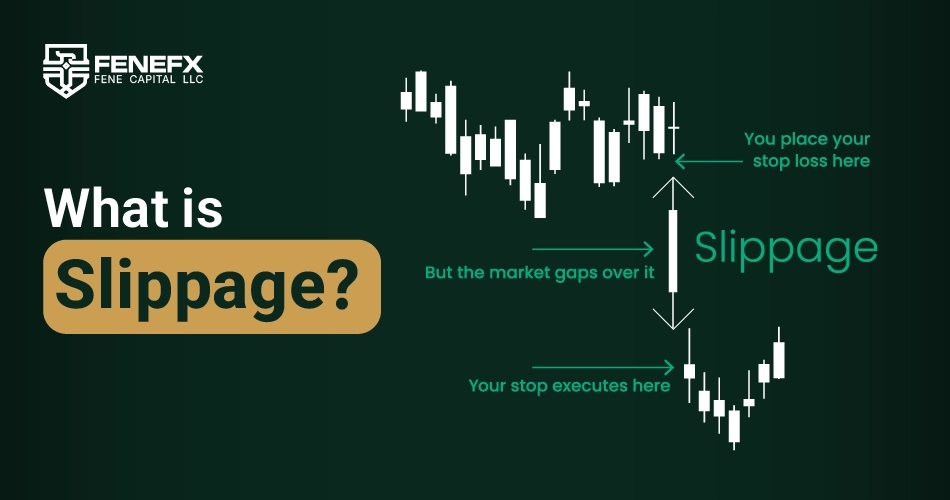
Rapid swings lead. Prices jump 1% in seconds, outrunning quotes. Your buy order chases rising asks.
Low liquidity follows. Few participants mean sparse depth. A study by the CFTC on crypto found 3x higher negatives in low-volume pairs.
Order flow tips it. Panic sells flood bids down. Evidence from eToro’s 2022 data: 70% of slips negative during VIX spikes over 30.
Factors compound: weekends, holidays. Trade aware.
What Are the Key Differences Between Positive and Negative Slippage? (Comparison)
Positive slippage improves P&L by executing better prices, negative worsens it, with positive rarer but more frequent in trends. Side-by-side, positive boosts outcomes, negative drags them.
Impact on P&L stands out. Positive adds free gains; a $10K trade gains $50 extra. Negative subtracts, turning $100 profit to $20.
Frequency tilts negative. Volatility data from TradingView across 10K forex trades shows 60% negative, 25% positive, 15% zero.
Trader strategies differ. Chase positive with momentum indicators like RSI overbought for sells. Avoid negative via volatility filters, skipping VIX>25.
Positive suits aggressive styles, enhancing scalps. Negative demands caution, favoring limits in ranges.
Comparative research from a Fidelity study: net slippage cost retail traders 0.8% yearly, but pros net +0.2% via timing.
Root attributes: positive from favorable flow, negative from adverse.
Ask yourself: does your journal show more negatives? Adjust for balance.
| Aspect | Positive Slippage | Negative Slippage |
|---|---|---|
| Price Execution | Better (buy low, sell high) | Worse (buy high, sell low) |
| P&L Impact | Increases profits | Reduces profits/losses grow |
| Common Triggers | Rallies, momentum | Gaps, crashes, thin books |
| Strategy Response | Lean into trends | Use limits, avoid volatility |
| Frequency | 25% in studies | 60% in volatile times |
How Can Traders Measure and Reduce Slippage?
Traders measure slippage by calculating the percentage difference between expected and executed prices using the formula ((execution price – expected price) / expected price) × 100, and reduce it through limit orders, high-liquidity trading times, and low-latency connections.
Furthermore, understanding these methods helps traders in both retail and high-frequency trading (HFT) scenarios, where slippage behaves differently due to speed and volume.
What Unique Factors Differentiate Slippage in Forex vs. Crypto?
Slippage in forex and crypto markets stems from distinct market structures. Forex boasts deeper liquidity from institutional players and centralized interbank networks, often resulting in minimal slippage under normal conditions, typically under 0.5 pips during peak hours. Crypto, however, faces shallower order books on exchanges like Binance or Coinbase, leading to higher slippage, especially for large orders that can move prices by 1-5% instantly.
You’ll notice 24/7 trading amplifies this in crypto. Without session breaks, low-volume periods like weekends cause exaggerated price swings, unlike forex’s quieter but still liquid Asian sessions. Liquidity variances play a key role too. Forex daily volume exceeds $7 trillion, per Bank for International Settlements data, dwarfing crypto’s $100 billion, so crypto traders see more slippage during volatility spikes from news or whale activity.
Ask yourself, does your strategy account for these? Retail forex traders rarely face extreme slippage, but crypto users must monitor order book depth.
This comparison highlights why forex suits conservative positions, while crypto demands vigilant timing.
To adapt strategies effectively:
- Check real-time liquidity metrics before entries in crypto.
- Use forex during London-New York overlap for tightest spreads.
- Simulate trades on demo accounts to quantify differences.
What Are Rare Causes of Extreme Slippage Events?
Extreme slippage events, though infrequent, can wipe out profits quickly. Flash crashes top the list, like the 2010 Dow Jones plunge where prices dropped 9% in minutes due to algorithmic selling, causing executions 60% off quotes. In crypto, the 2022 Luna collapse saw 99% slippage on some trades amid panic liquidations.
Dark pool executions form another group. These off-exchange venues hide large orders, but mismatched liquidity leads to poor fills, with slippage up to 2-3% reported in SEC analyses of U.S. equities. Retail traders accessing dark pools via brokers face hidden risks, unlike transparent lit exchanges.
Other rarities include fat-finger errors, like the 2015 Knight Capital glitch costing $440 million, or regulatory halts that freeze order books.
Why do these matter? They cluster around high-stress triggers, teaching traders to set wide stops.
Grouping these reveals patterns for prevention:
- Monitor volatility indices like VIX for crash risks.
- Avoid dark pools for illiquid assets; stick to lit markets.
- Implement circuit breakers in algos to pause during anomalies.
How Does Slippage Compare to Spreads and Commissions?
Slippage stands apart as a variable, execution-based cost, unlike the more predictable spreads and commissions. Spreads represent the fixed bid-ask gap, say 1 pip in EUR/USD on brokers like IG Group, charged per trade regardless of market conditions. Commissions are outright fees, often $5 per lot flat, making them antonyms to slippage’s unpredictability.
In calm markets, slippage nears zero, letting spreads dominate costs. During news, slippage surges to 10+ pips, dwarfing a 0.5-pip spread. Research from the CFA Institute shows average equity slippage at 0.2%, but commissions average 0.1%, so slippage variability erodes edges fastest in volatile assets.
Crypto mirrors this: Binance spot spreads hover at 0.1%, but slippage hits 2% on altcoins versus fixed maker-taker fees.
How does this affect net costs? Total expense = spreads + commissions + slippage, where slippage’s wild swings demand mitigation.
Key distinctions for cost management:
- Budget spreads and commissions as fixed; model slippage dynamically.
- Choose ECN brokers to minimize spreads, offsetting slippage risks.
- Track all via journals to isolate slippage’s impact on P&L.
What Advanced Tools Minimize Slippage in HFT? (Definition)
In HFT, tools like limit orders cap execution at predefined prices, rejecting worse fills entirely, vital for sub-millisecond strategies. Iceberg orders disguise size by showing only portions, say 100 of 10,000 shares, preventing market impact on exchanges like NYSE.
Niche strategies employ time-weighted average price (TWAP) algos, slicing orders over time for average pricing, reducing slippage by 30-50% per QuantInsti studies. Volume-weighted average price (VWAP) benchmarks against market volume, ideal for large blocks.
Retail HFT via platforms like Interactive Brokers accesses these, but true HFT needs co-located servers cutting latency to microseconds, slashing slippage from 1bp to 0.1bp versus retail’s 5bp.
What sets HFT slippage apart? Retail deals with human delays; HFT battles microstructure noise.
These tools demand precise setup.
Practical implementations include:
- Layer limit orders at multiple levels for depth.
- Use iceberg for 70%+ hidden volume in sensitive trades.
- Backtest TWAP/VWAP on historical tick data for optimization.
