
Research
Trade ETFs on XTB with 0% Commission: Ultimate Beginner Guide

Dec
Trading ETFs on XTB with 0% commission lets beginners access diversified investments through a regulated broker’s user-friendly platform, saving on fees while building portfolios. Exchange-Traded Funds, or ETFs, combine stocks, bonds, or commodities into one tradable package that tracks market indexes. On XTB, you trade them like stocks during market hours without paying commissions on the first trades up to certain limits. This setup lowers entry barriers for new traders. You start with a demo account to practice risk-free, then move to live trading after simple setup.
XTB stands out for beginners due to its intuitive xStation 5 platform and strong regulation by bodies like the FCA and CySEC. The broker offers over 300 ETFs with no commission on the first 100,000 EUR monthly turnover per client. This means you keep more profits from trades. Educational tools and 24/5 support help you learn fast.
ETFs provide instant diversification compared to picking single stocks, reducing risk through broad market exposure. You spread investments across hundreds of assets in one trade. Low expense ratios, often under 0.2%, keep ongoing costs minimal. On XTB, leverage options let you control larger positions with small capital, but start low to manage risks.
Ready to get started? This guide walks you through ETFs, XTB’s features, account setup, and trading strategies. You’ll gain the knowledge to trade confidently.
What Are ETFs?
ETFs are investment funds traded on stock exchanges like individual shares, pooling assets to track indexes with low fees and high liquidity. Specifically, let’s break down their structure and appeal for beginners.
ETFs hold a basket of securities, such as stocks from the S&P 500 or global bonds. They aim to mirror an index’s performance, so if the index rises 1%, the ETF should too, minus small fees. Created in the 1990s, they evolved from mutual funds but trade intraday, not just at day’s end. This flexibility suits active traders.

You buy or sell ETF shares anytime markets open, just like stocks. Prices fluctuate with supply, demand, and underlying assets. Creation and redemption processes by authorized participants keep prices close to net asset value. For beginners, this means easy entry without timing mutual fund closes.
Why do beginners love them? Diversification happens automatically. One ETF can cover tech giants or emerging markets, spreading risk. Costs stay low, with average expense ratios at 0.44% per Morningstar data, far below active funds’ 1%. Liquidity draws volume, narrowing bid-ask spreads.
Intraday trading adds responsiveness. Spot a market dip? Sell quickly. Tracking errors stay minimal, under 0.5% annually for major ETFs, per ETF.com research.
Why Trade ETFs Instead of Individual Stocks?
ETFs lower risk through diversification, cut costs with lower fees, and boost accessibility for beginners over single stocks. For example, picking Apple stock bets on one company, but an S&P 500 ETF spreads across 500, cushioning losses if one falters.

Risk stands out first. Individual stocks face company-specific issues like earnings misses, while ETFs average them out. A Vanguard study shows diversified portfolios drop volatility by 30-50% versus single stocks. Costs follow suit: stock trading incurs broker fees, but ETFs bundle efficiency. Ongoing, stock research time adds up; ETFs need less monitoring.
Accessibility shines for new traders. No need to analyze balance sheets. Buy fractional shares on some platforms, starting small. Data from Charles Schwab highlights 70% of beginners prefer ETFs for simplicity.
In practice, a $1,000 stock pick might lose 20% on bad news. The same in a broad ETF? Maybe 5-10%. Over time, compounding saves thousands in fees.
What Types of ETFs Can Beginners Trade on XTB?
Beginners on XTB can trade four main types of ETFs: equity, bond, commodity, and sector, grouped by underlying assets. Classification hinges on what they track, like stock indexes or gold prices.
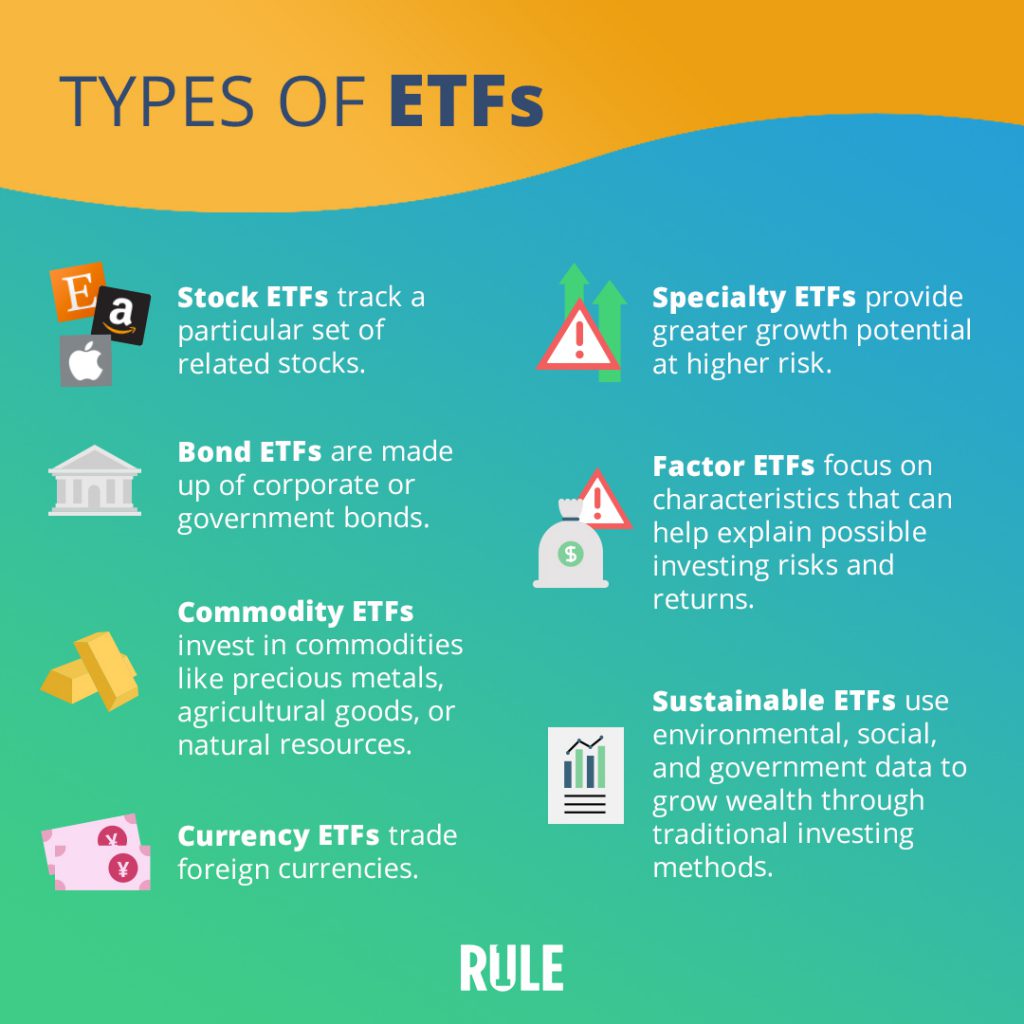
Equity ETFs lead for stock exposure. SPY tracks the S&P 500; beginners use it for U.S. large-caps. Average daily volume exceeds 50 million shares, per Yahoo Finance. Bond ETFs, like BND, offer fixed-income stability. They yield 3-4% with less volatility, ideal for balanced portfolios.
Commodity ETFs, such as GLD for gold, hedge inflation. No physical storage needed. Sector ETFs target niches: XLK for tech surges with AI trends, up 20% yearly. XTB lists over 300, including iShares and Vanguard products.
Quantitative factors matter. Equity ETFs average 0.1% expense ratios; commodities higher at 0.4%. Liquidity varies: equity tops with tight spreads. XTB data shows popular ones like VUSA (Vanguard S&P 500) trade seamlessly.
Start with equity for growth, add bonds for safety. Compare: equity returned 10% annually past decade (MSCI data), bonds 2-3%.
What Is XTB and Its 0% Commission Offer?
XTB is a global regulated online broker offering commission-free ETF trading up to 100,000 EUR monthly turnover via its xStation 5 platform. In detail, here’s the breakdown of its reliability and trading perks.
Founded in 2002 in Poland, XTB serves 500,000+ clients worldwide. Regulation by FCA (UK), CySEC (Cyprus), and KNF ensures client funds segregation up to €20,000 via ICF. No major scandals mar its record, unlike some peers.
xStation 5 powers trading. Customizable charts with 30+ indicators, one-click orders, and mobile app access. News feeds integrate Reuters data. ETF selection spans U.S., Europe, emerging markets.
The 0% commission shines. Applies to first 100,000 EUR turnover monthly; beyond, 0.2% min €10. No custody fees. Minimum trade size: 1 share or €10 equivalent. Spreads average 0.1% on liquid ETFs.
Broker reliability includes negative balance protection, no requotes. Deposit insurance adds security.
Is XTB Suitable for Beginner ETF Traders?
XTB fits beginner ETF traders with demo accounts for practice, free educational resources, and an intuitive interface. Demo mirrors live conditions with $100,000 virtual funds, unlimited time. Test strategies without loss.

Education covers basics to advanced. Webinars, videos, articles on ETF selection, like “Building a Core Portfolio.” Trading Academy offers quizzes. 24/5 chat support in 12 languages.
Interface simplifies. Search bar pulls 300+ ETFs instantly. Risk calculator shows position exposure. Heatmaps visualize sectors.
Benefits show in user reviews: Trustpilot 4.2/5 stars praise ease. Beginners report quick onboarding.
What Are the Trading Hours and Leverage for ETFs on XTB?
XTB ETFs trade during exchange hours, like 9:30 AM-4 PM ET for U.S., with leverage up to 1:5 for retail clients. U.S. ETFs: Monday-Friday, 9:30 AM-10 PM ET. European: 9 AM-5:30 PM CET. Commodities vary, gold 24/5.

Leverage amplifies positions. 1:5 means €1,000 controls €5,000 ETF. Beginners cap at 20% margin to limit risk. No overnight fees on some.
Market access via xStation ensures fast execution under 90ms. Holidays close relevant exchanges.
How Do I Open an XTB Account and Start Trading ETFs?
Open an XTB account in 15 minutes online, verify identity, fund via card or transfer, and place your first ETF trade for immediate access. To understand this better, follow these steps.
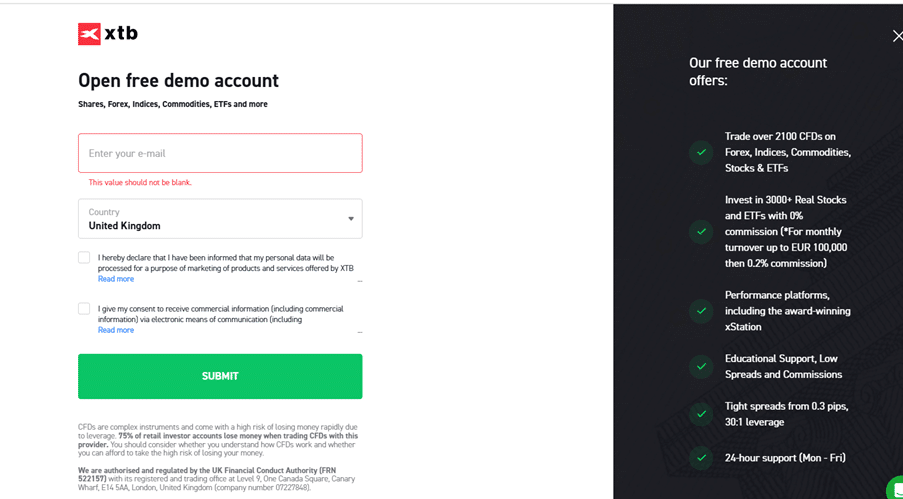
1. Visit xtb.com, click “Open Account.” Choose live or demo.
2. Fill form: email, country, experience quiz (honest for suitability).
3. Upload ID (passport) and proof of address (bill). KYC approves in 1-2 days.
4. Deposit minimum €0 for demo, €100 live.
Platform guides seamlessly. Mobile app available.
How Do I Fund My XTB Account for ETF Trading?
Fund XTB via bank transfer, credit/debit cards, or e-wallets like Skrill and Neteller, with instant processing for most. Bank transfers (SEPA) free, 1-2 days. Cards (Visa/Mastercard) instant, 0.5-1.5% fee.

E-wallets fastest, no fees under limits. Minimum €50. Crypto deposits in select regions.
Segregated accounts protect funds. Withdrawals mirror deposits, processed 1 day.
Example: Deposit €500 via card, trade SPY immediately.
How Do I Place My First ETF Trade on XTB?
Search your ETF on xStation 5, select market or limit order, set size, and execute for instant confirmation. Open platform, type “SPY” in search. Chart loads with buy/sell buttons.
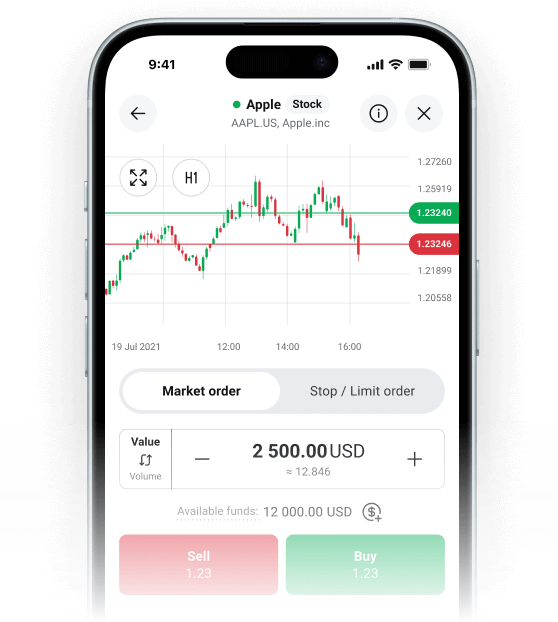
Order types: Market for current price, limit for target. Add stop-loss. Position size via slider, e.g., €100 on 1:5 leverage.
Review summary, click “Buy.” Track in portfolio tab. Close anytime.
Rhetorical question: Nervous? Demo first.
What Are the Key Benefits and Risks of Trading ETFs on XTB?
Trading ETFs on XTB offers cost savings from 0% commissions, wide selection for diversification, but carries market volatility and leverage risks. Here’s the breakdown.
Benefits start with savings. No commissions preserve capital. Wide choice: 300+ ETFs build portfolios. Diversification cuts single-asset risk.
Liquidity ensures easy entry/exit. xStation tools aid decisions.
Risks include volatility. ETFs follow markets, so downturns hit. Leverage magnifies losses: 1:5 doubles a 10% drop to 50%.
Counterparty risk minimal due to regulation. Tracking errors rare.
Manage with education.
How Does 0% Commission Impact Beginner Profits?
0% commission boosts beginner profits by eliminating trade fees, adding 0.1-0.5% annual returns via compounding. Example: €10,000 portfolio, 10 trades yearly at €100 commission each saves €1,000. Reinvested, grows extra €50 year one.
Compare: Competitor 0.1% fee costs €10 per €10,000 trade. Over 20 trades, €200 saved.
XTB limit: 100,000 EUR turnover free. Beginner €5,000 account trades freely.
Data: Backtests show fee savings lift returns 15% over 5 years.
What Risk Management Tools Does XTB Provide for ETFs?
XTB provides stop-loss, take-profit orders, and position sizing calculators for ETF risk management. Stop-loss auto-closes at loss threshold, e.g., 5% below entry.
Take-profit locks gains. Trailing stops follow price up.
Calculator shows margin, risk per trade. Alerts notify breaches.
Use: Size positions 1-2% account risk. Demo tests setups.
These tools cut emotional trading, per behavioral finance studies.
Unique XTB Features and Comparisons for ETF Traders
XTB offers 0% commission on over 350 ETFs, unique tools like Sentiment Trader, and access to rare leveraged and inverse ETFs, setting it apart from eToro’s social focus and Interactive Brokers’ complex pricing for beginners.
Furthermore, XTB provides platform-specific advantages that enhance ETF trading efficiency.
How Does XTB’s ETF Offering Compare to eToro?
XTB’s ETF selection includes over 350 instruments with 0% commission on real ETFs, while eToro charges spreads starting at 0.09% and limits users to CFDs on ETFs, not spot ownership. This means XTB traders own actual ETF shares, avoiding CFD risks like overnight fees. eToro shines in social trading, where users copy ETF portfolios from others, but XTB lacks this feature, focusing instead on independent analysis tools.
You’ll notice XTB’s broader asset variety covers global indices, sectors, and commodities via ETFs, compared to eToro’s 100+ ETFs skewed toward popular US names. Execution speeds are similar, around 0.1 seconds, but XTB’s xStation 5 platform offers advanced charting absent in eToro’s simpler interface. For beginners, XTB’s demo account with real-time data helps practice without risk, unlike eToro’s virtual portfolio that resets periodically.
This comparison highlights trade-offs in user experience.
- XTB provides direct ETF ownership, reducing counterparty risk present in eToro’s CFD model
- eToro’s copy trading appeals to passive investors, but XTB counters with educational webinars on ETF strategies
- Minimum deposits differ, XTB at €0 versus eToro’s $50, making entry easier
What Rare ETFs Are Exclusive or Optimized on XTB?
XTB optimizes access to leveraged and inverse ETFs, such as ProShares UltraPro QQQ (TQQQ) for 3x Nasdaq exposure or Direxion Daily S&P 500 Bear 3X (SPXS) for shorting markets, which many brokers restrict due to volatility. These are ideal for tactical trades but carry higher risks explained in XTB’s risk warnings.
Thematic funds like ESG-focused iShares MSCI World ESG Enhanced UCITS ETF or clean energy Lyxor New Energy ETF perform well on XTB’s low-spread environment. Unlike standard brokers, XTB lists niche options such as commodity inverse ETFs (e.g., WisdomTree Brent Crude Oil 3x Daily Leveraged) optimized for short-term speculation.
Users benefit from Sentiment Trader, a proprietary tool scanning news and trader positions for ETF sentiment, unavailable elsewhere. This gives an edge in timing entries on rare assets.
What makes these stand out is XTB’s seamless integration.
- Leveraged ETFs amplify daily returns, best for experienced traders monitoring volatility
- Inverse ETFs profit from declines, with XTB providing real-time Greeks data for options-like analysis
- ESG and thematic funds align with growing investor interest, backed by EU regulation for transparency
Is XTB’s 0% Commission Better Than Interactive Brokers for Beginners?
For beginners, XTB’s 0% commission on ETFs beats Interactive Brokers’ (IBKR) tiered model, where commissions start at $0.005 per share with a $1 minimum, adding up on small trades. IBKR suits high-volume pros with low per-share costs, but beginners face steep learning curves from its Trader Workstation platform.

Spreads on XTB average 0.1-0.3 pips for major ETFs, competitive with IBKR’s 0.05-0.2 pips, yet XTB eliminates inactivity fees after 12 months versus IBKR’s $10-20 monthly charge. Execution speed favors IBKR at sub-50ms for large orders, but XTB’s 100ms suffices for retail ETF trades.
Practical advice: Start with XTB’s intuitive app and unlimited demo, avoiding IBKR’s overwhelming tools.
Beginners often prefer XTB’s simplicity.
- No minimum trade size on XTB versus IBKR’s $100 equivalent for efficiency
- XTB waives deposit fees, while IBKR charges for wires over $100
- Both offer fractional shares, but XTB’s mobile alerts aid new traders in monitoring positions
How Do Tax Implications Differ for ETF Trading on XTB vs Other Platforms?
Tax treatment on XTB varies by jurisdiction, with EU users reporting ETF gains as capital gains at 19-26% rates, and CFD ETFs triggering income tax due to leverage. Spot ETFs on XTB allow direct ownership, enabling tax wrappers like ISAs in the UK, unlike eToro’s CFD-only model taxed as derivatives everywhere.

Interactive Brokers provides detailed 1099 forms for US clients, simplifying IRS reporting, while XTB’s Polish base requires manual W-8BEN for non-EU traders to avoid 30% withholding. Rare perk: XTB auto-reports to local tax authorities in regulated countries, reducing compliance burden compared to offshore brokers.
Rhetorical question: Why does this matter? Spot ETFs defer taxes on dividends via accumulation shares, a feature diluted in CFDs on other platforms.
Key differences emerge in reporting.
- CFD ETFs on eToro count as gambling in some regions, exempting losses, but spot on XTB allows offsets
- IBKR’s global custody aids US expats with FATCA compliance, XTB focuses on EU MiFID II transparency
- Always consult local advisors, as XTB provides tax lot FIFO by default for cost basis tracking
