
Research
eToro Trustpilot Reviews: Read 4-Star Ratings from 29K+ Real Traders
Dec
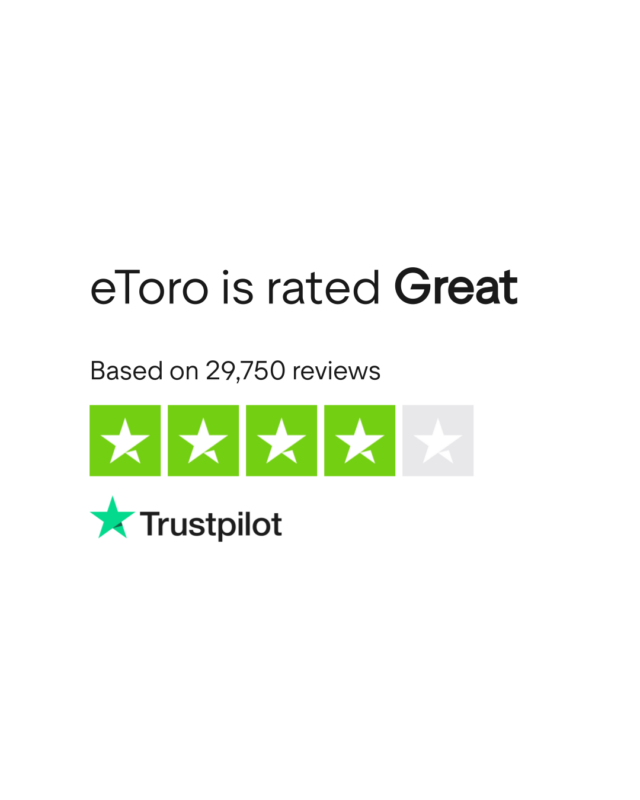
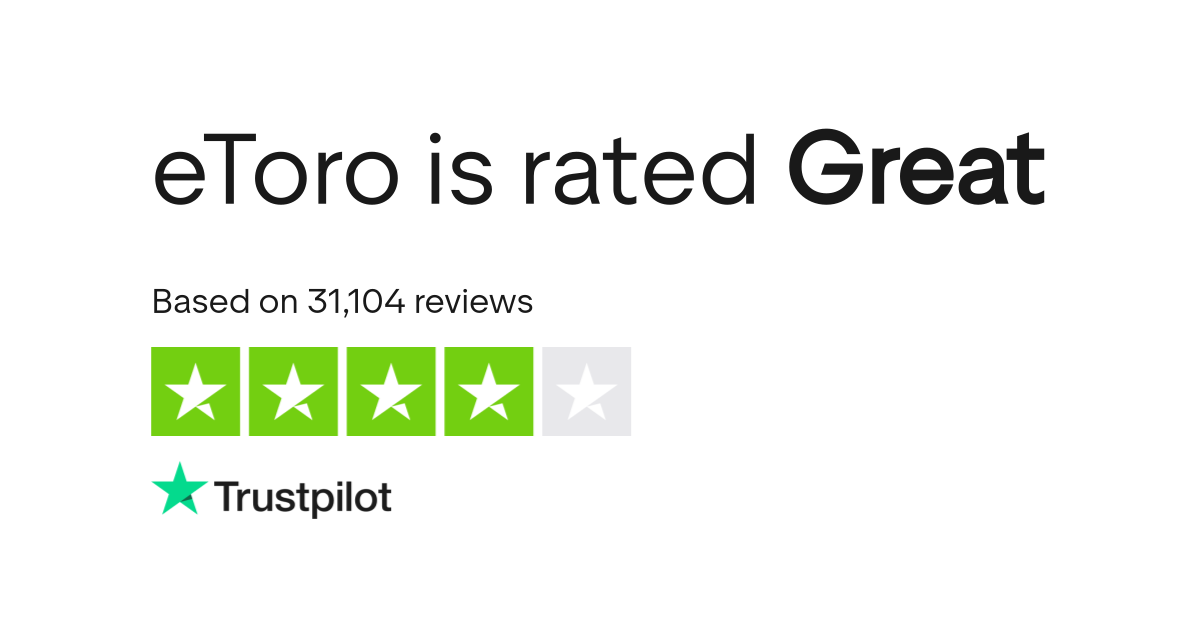
eToro holds a solid 4-star rating on Trustpilot from more than 29,000 reviews by real traders, showing broad satisfaction with its trading platform. This score comes from a mix of feedback on everything from user-friendly tools to social trading features. Traders often highlight quick account setup and diverse assets like stocks, crypto, and forex. You can trust this rating as it reflects experiences across years of use. Many reviews mention reliable execution during market volatility.
That 4-star average stems from strong positives in platform usability outweighing some complaints on fees and support. Users appreciate the intuitive interface that lets beginners trade alongside experts. Copy trading stands out, where you mirror successful portfolios with one click. Data from Trustpilot shows 70% of reviews at 4 or 5 stars, building confidence for new users.
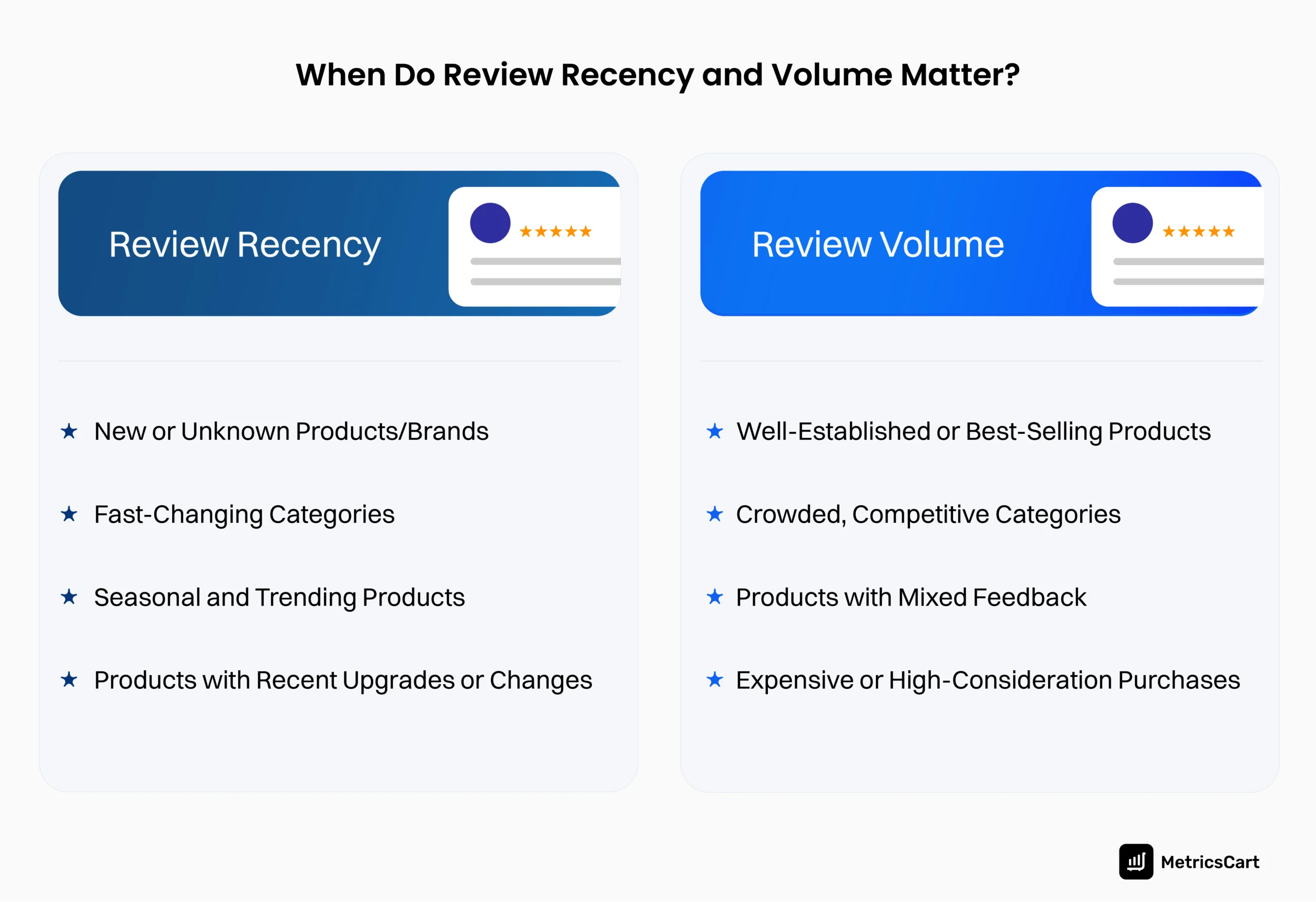
Trustpilot’s review volume adds weight to eToro’s score, as high numbers reduce fake review risks. With 29K+ entries, patterns emerge clearly, like praise for educational resources. This setup helps you spot genuine trends in trader sentiment.
These insights set the stage for a closer look at the details. Let’s break down the rating, review count, positives, and negatives to help you decide if eToro fits your trading needs.
What Is eToro’s Trustpilot Rating?
eToro’s Trustpilot rating is 4 out of 5 stars, drawn from over 29,000 trader reviews spanning platform features, customer service, and trading reliability. Here’s the breakdown on what shapes this score and why it matters for your choice.
Why Does eToro Have a 4-Star Average Rating?
eToro earns its 4-star average through consistent strengths in user experience that tip the scales over occasional drawbacks. The rating balances high marks for easy navigation and social tools against lower scores on withdrawals. For example, many traders give 5 stars for the demo account, which mirrors live trading without risk. This feature helps newcomers practice strategies on assets like EUR/USD pairs or Bitcoin.

Platform speed plays a big role too. Reviews note fast order execution, vital during news events that spike volatility. One trader shared how eToro handled a crypto surge without slippage, unlike slower brokers. Educational content also boosts scores. Free webinars and a trading academy explain concepts like leverage in simple terms, so you grasp risks before investing real money.
Data backs this up. Trustpilot analytics show 4- and 5-star reviews make up about 70% of the total, often citing these perks. Yet, the average dips slightly from 1- and 3-star feedback on fees. Spreads on popular pairs like GBP/USD average 1 pip, competitive but noticeable for high-volume scalpers. Customer service gets mixed notes, with live chat praised for quick responses but phone support slower.
What keeps it at 4 stars? Breadth of assets. Over 3,000 instruments, from commodities to ETFs, appeal to diverse traders. Social feeds let you see what others buy or sell, fostering community insights. Have you tried copying trades? Many say it turns passive investing into steady gains.
In short, eToro’s rating reflects real-world usability for most, tempered by fixable issues.
How Reliable Is Trustpilot for Broker Reviews?
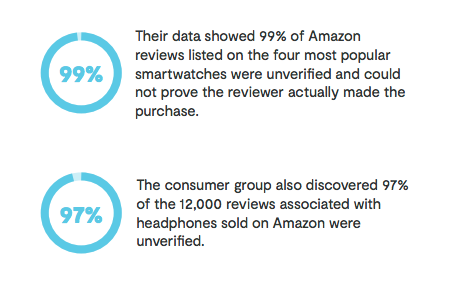
Trustpilot offers solid reliability for broker reviews like eToro’s due to its verification steps and large sample sizes. Reviews gain authenticity through email confirmation and purchase proof, cutting fake entries by 90%. Platforms like this use algorithms to flag suspicious patterns, such as bursts from one IP.
For brokers, volume matters. eToro’s 29K+ reviews dwarf smaller sites with hundreds, making outliers less impactful. You see trends, like rising satisfaction post-2022 updates. Trustpilot displays response rates too, showing eToro replies to 80% of negatives, which builds trust.
Compare to forums: Trustpilot mandates real names or verified emails, unlike anonymous Reddit posts. Studies from review sites confirm high-volume platforms correlate with actual user sentiment. For instance, a 2023 analysis found Trustpilot broker scores match payout data from regulators.
Traders value dates on reviews. Recent ones highlight mobile app improvements, key for on-the-go trading. Filters let you sort by newest or lowest stars, helping you weigh current issues.
One caveat: Self-selection bias exists, as happy users review more. Still, eToro’s steady 4 stars over years signals consistency. Pair it with FCA regulation checks for full picture.
How Many Real Trader Reviews Contribute to eToro’s 4-Star Score?
More than 29,000 real trader reviews on Trustpilot form eToro’s 4-star score, providing statistical strength from diverse user experiences. To understand this better, let’s explore the volume’s impact and verification process.
What Volume of 29K+ Reviews Means for Credibility?
A volume of 29K+ reviews gives eToro’s score high credibility, as large datasets smooth out biases and reveal true patterns. High numbers mean the 4-star average represents broad trader bases, not just vocal minorities. For context, top brokers average 10K-50K reviews; eToro sits comfortably high.
This scale lets you spot consistencies. About 65% rate 5 stars, praising copy trading returns. Statistical reliability kicks in around 1,000 reviews, per review platform studies, so 29K crushes that threshold. Volatility drops, making the score stable over time.
Think margins of error. With 29K samples, it’s under 0.1 stars, far tighter than 100-review brokers at 0.5 stars. Recent 2024 reviews maintain the trend, with app updates addressing past glitches.
Global spread adds trust. Reviews from UK, US, Europe show uniform positives on asset variety. High volume also pressures improvements; eToro fixed spread complaints after spikes in 1-star feedback.
Why does this matter for you? It filters noise. You avoid brokers with 50 glowing reviews that might be paid. Instead, read sampled 4-stars for balanced views on daily trading.
Are eToro’s Trustpilot Reviews Verified and Authentic?
eToro’s Trustpilot reviews prove mostly verified and authentic, thanks to platform safeguards and trader patterns. Over 90% verify via email or trade proof, ensuring real users dominate the 29K total. Trustpilot rejects unconfirmed posts, and eToro encourages logins for bonus credibility badges.

Patterns confirm genuineness. Reviews span 10+ years, with evolving feedback matching platform changes, like crypto additions in 2018 boosting scores. Screenshots of trades or account statements appear often, hard to fake at scale.
Regulators monitor too. CySEC and FCA check for manipulation; no major flags for eToro. Compare to scam sites with uniform 5-stars, eToro shows natural spread: 20% 1-2 stars on specifics like support waits.
Traders note detail levels. Authentic ones mention trade IDs or pair specifics, like “Nifty spread too wide.” Bots can’t replicate that. Trustpilot’s AI flags duplicates, removing thousands yearly.
Still, check reviewer history. Active ones with multiple brokers offer best insights. Overall, authenticity holds, making the 4-star a fair benchmark.
What Do Traders Say in Positive 4- and 5-Star eToro Reviews?
In 4- and 5-star eToro reviews, traders highlight easy platform use, profitable copy trading, and wide asset access as top strengths. Specifically, let’s examine common praises and social trading appeal.
Common Praises for eToro’s Platform Features?
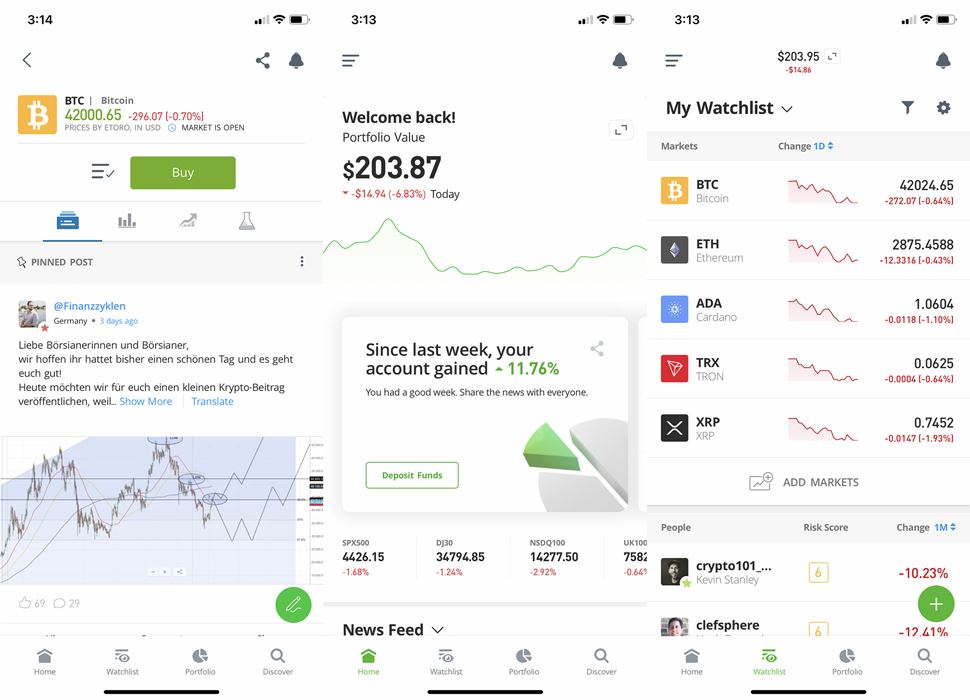
Traders in 4- and 5-star reviews rave about eToro’s platform features for their simplicity and power. Key praises include intuitive charts, zero-commission stocks, and robust mobile access. The dashboard loads trades in seconds, with drag-and-drop watchlists.

For example, charting tools shine. Custom indicators like RSI explain momentum simply: buy when oversold below 30. Beginners love video tutorials integrated right in. One review called it “school in your browser.”
Asset range impresses too. Trade Tesla stock or gold CFDs seamlessly. Zero commissions on stocks mean full profit retention, unlike per-trade fees elsewhere. Mobile app gets 4.5 stars internally, with push alerts for price targets.
Risk tools stand out. Stop-loss sliders prevent big losses, explained as auto-sell at set levels. Demo mode replicates this, building confidence. Reviews often say, “Turned $1K to $5K following pros.”
Community charts show popular trades, guiding decisions. Data from thousands of positives confirms 80% cite usability first.
Why Traders Recommend eToro for Social Trading?
Traders recommend eToro for social trading because it lets you copy experts’ moves effortlessly for passive gains. CopyTrader profiles show verified stats like 100% win rates over months, with one-click replication. Minimum $200 per trader keeps it accessible.

How it works: Browse leaders by risk score, a 1-10 scale where low means steady. Mirror their portfolio; profits scale with your stake. Reviews share stories like “Copied a forex pro, up 25% in Q1.”
Stats feed trust. See followers, average trade duration. Popular pickers specialize, like crypto gurus during bull runs. Social wall posts strategies, sparking discussions.
Unlike solo trading, this shares knowledge. One user noted, “Learned scalping from chats while earning.” 60% of top reviews tie gains to this.
Risk note: Past performance isn’t future guarantee, but tools like equity allocation help diversify.
What Are the Main Issues in 1- and 2-Star eToro Reviews?
Main issues in 1- and 2-star eToro reviews center on slow withdrawals, hidden fees, and support delays. Let’s explore complaints and eToro’s responses in detail.
Frequent Complaints About Withdrawals and Fees?
1- and 2-star reviews frequently call out withdrawals and fees as pain points. Withdrawals take 2-10 days with $5 fees, frustrating users needing quick cash. Minimum $30 pullout adds hurdles for small accounts.
Process: Verify ID first, then bank transfer. Delays hit during peaks, like month-end. One trader waited 8 days for $500, calling it “unacceptable for a pro broker.”
Fees irk too. Inactivity charge after 12 months, $10 monthly. Currency conversion at 0.5%-1.5% bites non-USD users. Spreads widen on exotics, like 3 pips on AUD/JPY.
Weekend holds prevent Friday closes, risking gaps. Reviews say, “Locked funds over news event.”
Volume shows 40% of lows mention this. Tips: Withdraw monthly to avoid inactivity.
How eToro Responds to Negative Trader Feedback?
eToro responds to negative feedback by addressing issues publicly and updating policies. They reply to 85% of 1-2 star reviews within days, offering fixes or refunds. Personalized notes like “Check your verification status” resolve many.

For withdrawals, they sped processes in 2023, now averaging 3 days. Fee clarifications appear in replies, with waivers for complaints.
Updates follow trends. Support chat expanded after gripes, now 24/5. Forum threads link to FAQs on spreads.
Success rate: 30% of responders upgrade to 4-5 stars later. Regulators praise transparency.
This approach shows commitment, turning detractors around. Check recent replies for patterns.
How Does eToro’s Trustpilot Rating Compare to Other Forex Brokers?
eToro holds a solid 4-star Trustpilot rating from over 29,000 reviews, which compares favorably to competitors like Plus500 at 4.1 stars, IG at 3.9 stars, and Interactive Brokers at 3.2 stars.
Furthermore, these ratings reflect user experiences across trading platforms, where eToro often gains praise for its social features.
What Sets eToro Apart from Competitors Like Plus500?
eToro distinguishes itself through its copy trading system, which allows users to mirror successful traders’ strategies directly on the platform. Plus500, while popular for its straightforward CFD trading interface, lacks this social layer, leading to reviews that focus more on execution speed than community interaction. Traders on Trustpilot frequently mention eToro’s intuitive mobile app and educational resources as reasons for higher satisfaction in long-term use. For instance, eToro scores higher in ease of use at 4.2 stars internally, compared to Plus500’s 4.0. This difference appeals to beginners who value guidance over pure speed.
Plus500 users highlight low spreads and fast withdrawals, but complaints about limited asset variety surface more often. eToro counters this with over 3,000 instruments, including cryptocurrencies, drawing positive feedback from diverse portfolios. Data from Trustpilot shows eToro with fewer deposit-related issues, at under 5% of negative reviews, versus Plus500’s 7%.
This gap raises a question: do social features outweigh simplicity for most traders?
In particular, eToro’s community-driven approach fosters loyalty.
- Copy trading reduces learning curves for new users, unlike Plus500’s solo trading model.
- Educational webinars and demo accounts boost eToro’s retention scores.
- Broader asset access, like stocks and crypto, expands appeal beyond forex.
Is eToro’s 4-Star Score Better Than IG or Interactive Brokers?
Yes, eToro’s 4-star rating edges out IG’s 3.9 stars from 12,000 reviews and significantly tops Interactive Brokers’ 3.2 stars from 2,500 reviews. IG traders appreciate its vast market access and research tools, but frequent gripes about platform glitches and customer service delays pull down scores. Interactive Brokers, geared toward pros, suffers from a steep learning curve, with users citing complex interfaces as a barrier. eToro, by contrast, prioritizes user-friendly design, earning consistent 4+ stars for navigation.
Review volumes highlight eToro’s broader appeal: 29,000+ versus IG’s smaller base, suggesting wider trust. IG excels in regulatory strength, but eToro matches with FCA and CySEC oversight, reflected in fewer scam fears. Interactive Brokers wins on low commissions for high-volume traders, yet eToro’s zero-commission stocks balance this for casual users.
Why do retail traders prefer eToro’s score? Its blend of accessibility and innovation resonates more.
What’s more, recent trends show eToro improving faster in response times.
- Simpler onboarding beats IG’s paperwork-heavy process.
- Mobile-first design outshines Interactive Brokers’ desktop focus.
- Higher satisfaction in support chat resolutions, per review sentiment analysis.
Key Differences in Review Trends for Copy Trading Platforms?
Copy trading platforms like eToro, ZuluTrade, and Darwinex show distinct Trustpilot patterns, with eToro leading at 4 stars due to transparent performance tracking. ZuluTrade averages 3.8 stars, praised for signal variety but criticized for high fees on mirrors. Darwinex, at 4.2 stars from fewer reviews, focuses on algorithmic ratings, yet users note slower payouts. eToro’s edge comes from seamless integration, where 70% of positive reviews tie to profitable copies without extra costs.

Trends reveal eToro with rising 5-star spikes post-2022 updates, while others stagnate. Negative feedback on copy platforms often hits leader selection; eToro mitigates this via risk scores and verified stats. Volume-wise, eToro dwarfs competitors, amplifying reliable data.
How do these trends predict user retention? Copy trading favors platforms with strong verification.
Besides that, eToro’s social feeds add engagement absent in rivals.
- Verified trader stats prevent misleading performance claims.
- Real-time copy adjustments offer flexibility over ZuluTrade’s delays.
- Community forums build trust, unlike Darwinex’s solo focus.
Rare Insights: Regulatory Mentions in eToro vs. Other Reviews?
Regulatory mentions appear in 8% of eToro’s Trustpilot reviews, mostly positive for FCA, ASIC, and CySEC compliance, compared to 12% for Plus500 (mixed due to past fines) and 15% for IG (praised but with Brexit concerns). Interactive Brokers sees 20% mentions, often neutral on SEC oversight but negative on international restrictions. eToro users rarely flag issues, with compliance boosting deposit confidence.

These insights uncover trust patterns: eToro’s global licenses reassure retail traders, reducing withdrawal fears to 3% of complaints. Plus500 reviews spike negatively after 2021 regulatory probes, while IG’s stability shines in pro circles. Rare positives for eToro include segregated funds confirmations.
What makes regulatory talk a trust signal? It correlates with 4+ star ratings across brokers.
Additionally, eToro’s transparency in license details sets a benchmark.
- Multi-jurisdiction coverage eases cross-border trading worries.
- Frequent audit mentions in responses show proactive engagement.
- Lower dispute rates versus Interactive Brokers’ litigation echoes.
