
Research
CFD Accounts Explained: Trade Global Markets Without Owning Assets
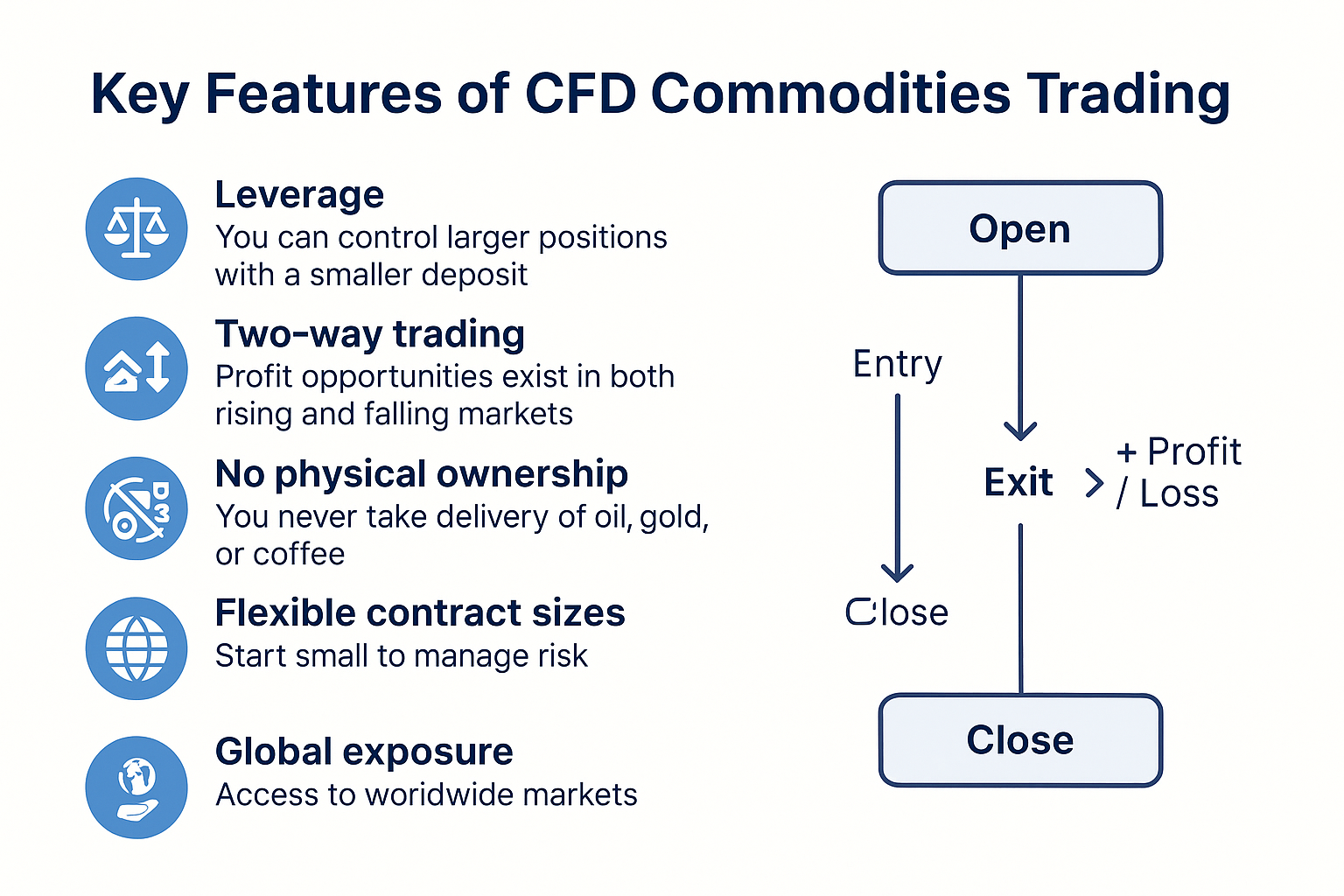
CFD accounts let you trade global markets like forex, stocks, indices, commodities, and cryptocurrencies without owning the underlying assets. These accounts use contracts for difference, or CFDs, which are agreements to exchange the difference in an asset’s price from when you open a position to when you close it. You speculate on price movements up or down through a broker, often with leverage to control larger positions. This setup means no physical delivery of assets, just cash settlement based on price changes. Traders gain access to diverse markets from one account, focusing purely on price action.
You can open a CFD account with brokers like those from the Forex Expert Advisor Store to start trading immediately. These platforms provide the tools and interfaces needed for quick setup, often with demo accounts to practice. Regulation from bodies like the FCA or ASIC ensures safety, and deposits start low, sometimes as little as $100.
Leverage in CFD accounts amplifies both gains and losses, allowing control of big positions with small capital. For example, a 1:30 ratio means $1,000 controls $30,000 worth of assets. This feature suits active traders chasing short-term moves across markets.
Many wonder about costs and accessibility. CFD accounts often charge spreads and swaps but skip ownership fees like stamp duty. Now, let’s break down the details to see how these accounts fit your trading goals.
What Are CFD Accounts?
CFD accounts involve contracts for difference, derivative instruments for speculating on asset price movements without owning the assets, through agreements with brokers to exchange price differences. Specifically, here’s the breakdown of how they operate at their core.
Can You Trade Global Markets with CFDs Without Owning Assets?
Yes, CFDs allow trading global markets like forex, stocks, indices, commodities, and crypto without owning assets because they use leveraged positions focused on price speculation, with no physical delivery required. This setup opens doors to thousands of instruments worldwide. For instance, you can bet on the euro rising against the dollar or gold prices climbing, all from your account.


No need to buy shares or hold commodities in a vault. The broker handles the underlying exposure, and you settle in cash. This keeps things simple and cost-effective. Imagine watching the S&P 500 rally without purchasing actual stocks, or shorting Bitcoin during a dip without owning the crypto.
Leverage multiplies your reach. With a small deposit, you control large trades. Regulated brokers offer negative balance protection, so losses stay within your funds. Data from brokers shows over 70% of retail traders use CFDs for forex alone, drawn by this asset-free access.
How Does a CFD Account Differ from a Traditional Brokerage Account?
CFD accounts focus on price differences with cash settlement, leverage, and short-selling, while traditional brokerage accounts involve actual asset ownership. Let’s compare key points. In a standard stock account, you buy shares and own them, facing dividends or voting rights but also custody fees. CFDs skip this, settling only the profit or loss in cash.
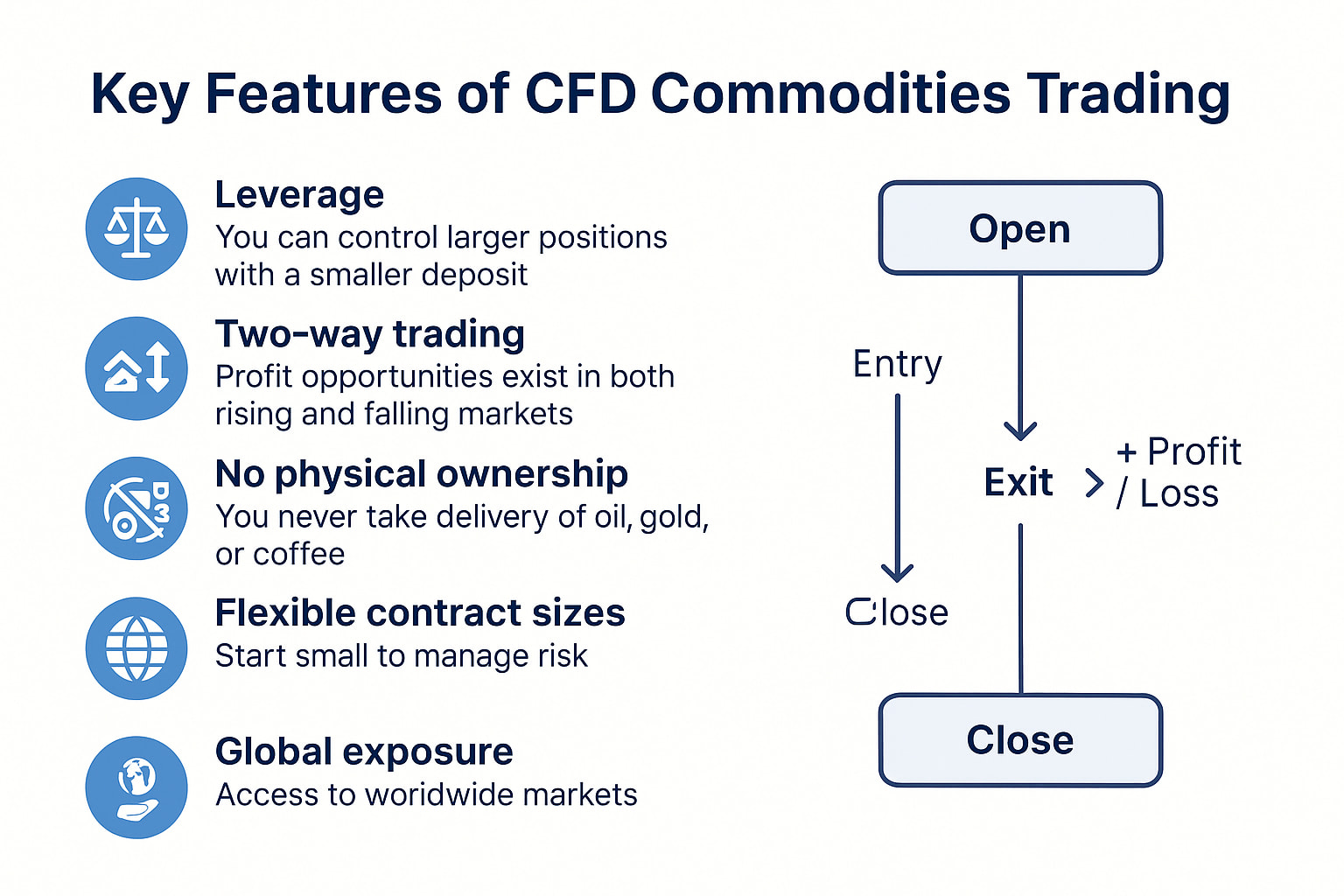
Leverage sets them apart too. Traditional accounts rarely offer more than 2:1, but CFDs go to 1:30 or higher under rules like ESMA. Short-selling shines in CFDs, letting you profit from falls without borrowing assets, unlike traditional setups needing locates.
Costs differ as well. No stamp duty on CFDs since no ownership transfers. Spreads replace commissions, and swaps cover overnight holds. Research from the FCA notes CFDs suit short-term traders, with 76% losing money due to leverage, but they provide flexibility absent in buy-and-hold brokerage.
Both need regulation, but CFDs demand margin monitoring. Traditional accounts hold assets long-term, while CFDs target quick moves. You’ll notice CFDs fit active strategies better, freeing capital across markets.
CFDs emerged in the 1990s in London for retail access to institutional tools. Brokers like IG Group popularized them. Today, millions trade via platforms offering one-click execution.
Margin acts as collateral, say 3.3% for 1:30 leverage. Profits calculate as (close price – open price) times position size. Short positions reverse this.
Risk tools like stop-loss orders protect trades. Overall, CFD accounts streamline global trading without asset hassles, ideal for speculators.
How Do CFD Accounts Work?
CFD accounts work by opening long or short positions on asset prices with leverage, meeting margin requirements, and settling profit or loss in cash upon closing, typically in 4 main steps. Let’s explore the mechanics step by step.
You pick an asset, say EUR/USD forex pair. Choose long if you expect a rise, short for a fall. Enter position size, like 1 lot (100,000 units). Leverage applies, so 1:30 means $3,333 margin for a $100,000 position.
Broker quotes bid-ask spread, your entry cost. Trade executes instantly. As prices move, unrealized profit/loss updates in real-time.
Hold or close when ready. Calculation: for long, (close – open) x size x pip value. Pips measure changes, 0.0001 for most forex.
Overnight swaps charge for rolls, positive or negative based on interest rates.
What Are the Key Components of CFD Trading?
Margin splits into initial (to open) and maintenance (to keep open). Drop below, and margin call hits, auto-closing if ignored. Leverage ratios like 1:30 cap retail exposure per ESMA.

Pips and lots size positions. Forex lot sizes: standard 100,000, mini 10,000. Risk 1% per trade by sizing right.
Stop-loss sets auto-exit levels, say 50 pips below entry. Take-profit locks gains.
Position sizing formulas help: risk amount / (stop distance x pip value). This keeps losses controlled.
Spreads average 0.6 pips on majors, per broker data. Swaps vary, e.g., long gold pays, short pays.
What Assets Can You Trade Using CFD Accounts?
Forex pairs dominate, 50+ like GBP/JPY, 24/5 access.
:max_bytes(150000):strip_icc()/CFD-2676f84c6638433fac5db6023f01cdf5.png)
Equity indices: S&P 500, FTSE 100, track baskets without stock picks.
Commodities: gold (XAU/USD), oil (WTI), via futures-like CFDs.
Individual stocks: Apple, Tesla, trade US hours from anywhere.
Cryptocurrencies: Bitcoin, Ethereum, 24/7 with tight spreads.
Bonds and ETFs round it out. One account covers all, no separate logins.
Diversity aids hedging, like pairing gold CFDs against stock drops.
Brokers list 10,000+ instruments, per industry reports.
Opening: Fund account, verify ID, select CFD type.
1. Choose asset and direction.
2. Set size, leverage auto-applies.
3. Add orders.
4. Monitor via MT4/MT5 platforms.
Closing matches profit/loss.
You’ll see MT4 common, with EAs from Forex Expert Advisor Store automating.
Negative balance protects from debts.
This process repeats for scalps to swings.
What Are the Benefits of CFD Accounts?
CFD accounts offer high liquidity, low entry barriers, long/short flexibility, global access, and no stamp duty since you avoid owning assets. To understand this better, think about how they solve common trader pain points.
Liquidity flows from major markets. Forex alone sees $7.5 trillion daily, per BIS data, so tight spreads and fast fills.
Low barriers mean $100-500 starts you. No big capital like stock ownership.
Flexibility lets you go long or short anytime. Profit from rises or falls equally.
Global reach in one platform: Tokyo stocks at night, oil by day.
No stamp duty, as cash-settled. UK traders save 0.5% on shares.
Leverage boosts returns. $1,000 at 1:30 equals $30,000 exposure.
24/5 forex, extended for others. Crypto 24/7.
Hedging allowed, offset risks across assets.
Demo accounts build skills risk-free.
Mobile apps trade on go.
Tax treatment often favorable, profits as income.
Data shows CFDs popular for diversification.
Short-term focus avoids long holds.
You’ll notice quick funding via cards, e-wallets.
Compared to futures, lower minimums.
Brokers provide analysis tools, signals.
This setup matches the title’s promise: trade globals without assets.
High volume ensures minimal slippage.
Customization via EAs optimizes.
Overall, benefits stack for active traders.
What Are the Risks of CFD Trading?
CFD trading risks include leverage amplifying losses, market volatility, counterparty default, offset by negative balance protection in regulated accounts. Here’s the breakdown to trade wisely.
Leverage magnifies everything. A 1% move against a 1:30 position wipes 30% of margin. FCA reports 76% retail accounts lose money.
Volatility spikes wipeouts. News like Fed rates swings forex 200 pips fast.
Counterparty risk: broker insolvency loses funds. Stick to segregated, regulated like CySEC.
Margin calls force closes at lows.
Overtrading tempts via easy access.
Swaps erode holds.
Slippage in fast markets.
No ownership misses dividends.
Psychological strain from speed.
ESMA mandates warnings: high risk, capital loss likely.
Mitigate with 1-2% risk per trade.
Use stops always.
Diversify assets.
Monitor news.
Choose tier-1 brokers.
Negative balance caps debt.
Education cuts edges.
Stats: leveraged products lead retail losses.
Volatility index (VIX) over 20 signals caution.
Overnight gaps hit stops.
Demo first.
Journal trades.
Scale up slowly.
Regulations limit leverage to protect.
Still, discipline key.
Rhetorical question: ready for swings?
Risk matches reward potential.
Balance with plans.
Advanced Considerations for CFD Traders
CFD traders should evaluate regulatory environments, tax treatments, broker-specific tools, and specialized instruments to refine strategies and manage risks effectively.
Furthermore, understanding these elements separates novice traders from those who sustain long-term profitability in volatile markets.
How Do CFDs Compare to Futures and Options?
CFDs stand out due to their over-the-counter (OTC) nature, allowing direct broker contracts without centralized exchanges. Unlike futures, which have fixed expiry dates and standardized sizes, most CFDs lack expiration, enabling indefinite position holding. This flexibility suits short-term traders avoiding rollover costs. Options, by contrast, grant rights but not obligations to buy or sell at strike prices, introducing time decay (theta) absent in CFDs.
Futures trade on exchanges like CME, offering high liquidity but margin requirements tied to contract sizes, often too large for retail traders. CFDs mirror underlying assets with smaller lot sizes, lowering entry barriers. Options demand premium payments upfront, while CFDs use leverage without premiums.
You’ll notice CFDs provide 24/5 trading on forex and indices, unlike options limited to exchange hours. However, futures boast transparency via public order books, reducing counterparty risk compared to CFDs reliant on broker solvency.
This comparison highlights why CFDs appeal to retail traders seeking customization.
- Futures enforce daily mark-to-market settlements, forcing position closures if margins lapse.
- Options involve Greeks (delta, gamma) for hedging, more complex than CFDs’ straightforward leverage.
- CFDs avoid physical delivery, unlike some futures contracts.
What Are the Tax Implications of CFD Profits?
Tax rules for CFD profits vary widely by country, often classifying gains as capital gains tax (CGT) or income tax. In the UK, CFDs fall under CGT with a £3,000 annual exemption (2024/25), taxed at 10-20% for basic/higher rate taxpayers. Australia mirrors this with 50% CGT discount for assets held over 12 months. Contrastingly, the US treats CFDs as Section 1256 contracts, blending 60% long-term/40% short-term rates.
In some regions like Germany, profits count as income tax up to 45%, with no exemptions. Spread betting, a CFD alternative in the UK and Ireland, remains tax-free for non-professionals since it’s gambling-classified.
Traders must track cost basis, including spreads and overnight fees, for accurate reporting. Losses can offset gains in many jurisdictions, but carry-forward rules differ.
Beyond basic filings, professional traders may face self-employment taxes.
- UK residents report via Self Assessment; HMRC audits leverage use.
- Australians use myTax portal; ATO scrutinizes frequent trading as business income.
- US traders file Form 8949; IRS flags wash sales inapplicable to CFDs.
What Makes a CFD Broker Unique?
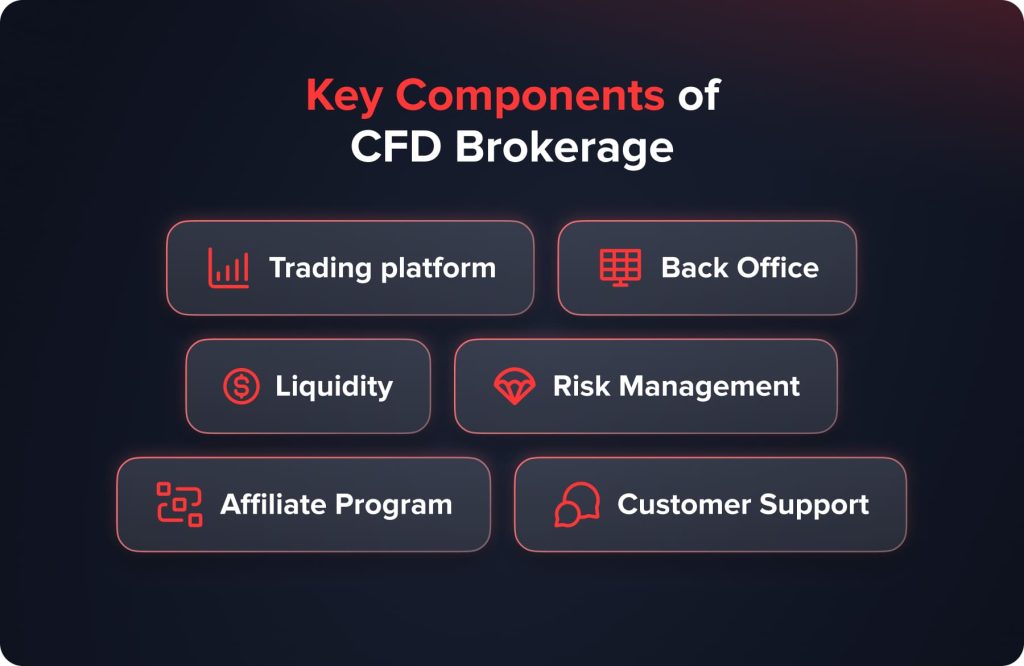
CFD brokers differentiate through platform integrations like MT4 and MT5, enabling automated trading via Expert Advisors (EAs) ideal for forex-focused users. Variable spreads, starting at 0.0 pips on majors, beat fixed spreads during low volatility, though they widen in news events.
Islamic (swap-free) accounts eliminate overnight interest (swap fees), complying with Sharia law by using profit-sharing models. These suit Muslim traders, with brokers like IC Markets or Pepperstone offering them without extra costs.
Advanced features include copy trading, where users replicate pro strategies, and API access for custom algos. Negative balance protection, mandated in EU via ESMA, prevents debt beyond deposits.
Brokers like IG Group provide educational webinars and sentiment tools, while Plus500 emphasizes mobile apps with one-click trading.
- MT5 supports more assets/timeframes than MT4, suiting multi-market traders.
- Variable spreads average 0.6 pips on EUR/USD, per broker data.
- Islamic accounts process via weekends, avoiding Friday swaps.
Are There Rare CFD Types for Niche Markets?
Yes, brokers offer synthetic indices simulating market volatility without real assets, like Volatility 75 Index from Deriv, trading 24/7. These generate random but realistic price movements, appealing to scalpers avoiding gaps.
Volatility indices, such as VIX CFDs on IG or CMC Markets, let traders bet on market fear via Chicago Board Options Exchange data, with leverage up to 1:20. Sector-specific bundles, like UK Banks Basket on Saxo Bank, aggregate FTSE 350 financial stocks into one CFD, simplifying exposure.
Cryptocurrency basket CFDs, excluding direct ownership, track top coins like Bitcoin and Ethereum. Turbos and barriers provide knock-out levels for leveraged range trading, rare outside Europe.
These instruments fill gaps in standard offerings, with synthetics showing 99% uptime.
- Synthetic indices use proven algorithms, audited for fairness.
- VIX CFDs spike during crashes, offering hedging uncorrelated to equities.
- Bundles reduce diversification effort, with auto-rebalancing quarterly.
