
Research
Supercharge High-End Trading with Low-Latency Colocation Services
Dec
Low-latency colocation services supercharge high-end trading by placing your servers right next to major exchanges, slashing data transmission times to microseconds and giving you a speed edge over competitors. In simple terms, colocation means renting space in a data center physically adjacent to trading venues like the NYSE or CME. This setup cuts the physical distance your trade data travels, which directly translates to faster order execution. Traders using these services often see execution speeds under 100 microseconds, compared to milliseconds from remote setups. This matters most in high-frequency trading, where every tiny delay can mean lost profits.
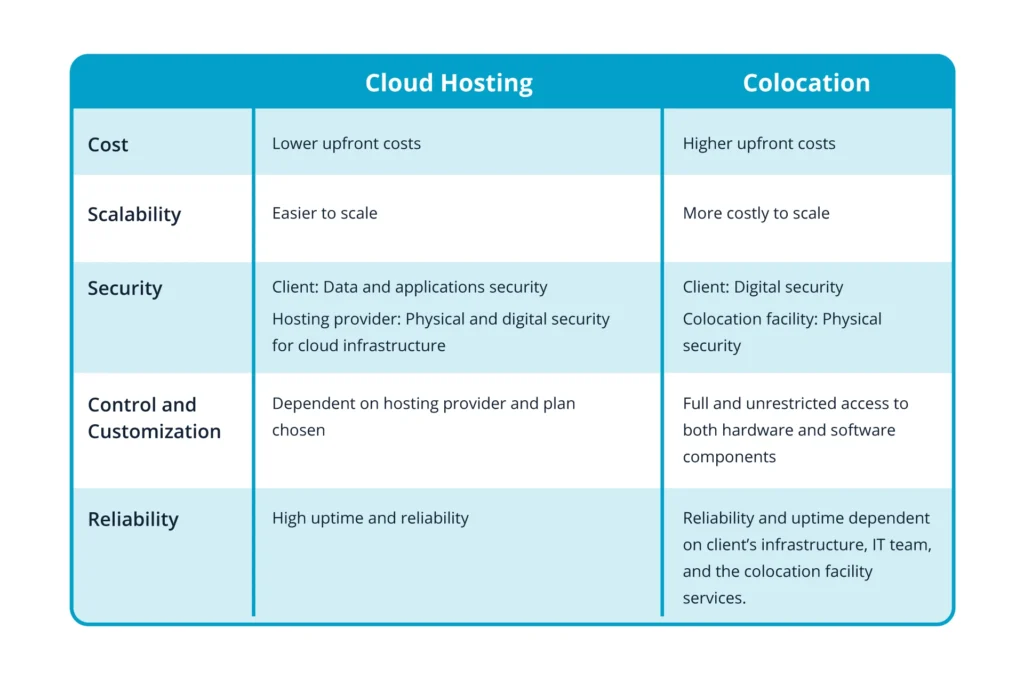
Colocation provides direct fiber optic connections to exchanges, reducing latency by 100-500 microseconds versus traditional cloud hosting. These connections bypass the public internet, using dedicated lines that keep your ping times predictably low. For high-end traders, this means orders hit the market before rivals’ signals even arrive.
Institutional and high-frequency traders gain the biggest advantages from colocation, while retail traders may not need it. Speed-sensitive strategies like arbitrage thrive here, but casual investors trading daily can stick with standard brokers without issue. The real power shows in competitive markets where microseconds decide winners.
Picture this: in a world where trades execute in the blink of an eye, colocation levels the playing field for pros. Now, let’s break down exactly how these services work and why they transform trading performance.
What Are Low-Latency Colocation Services?
Low-latency colocation services are data center hosting for trading servers placed adjacent to stock exchanges, minimizing physical distance to cut data travel time to microseconds. Specifically, this setup lets high-end traders host their hardware in facilities like those run by Equinix or CyrusOne, right next to venues such as the NASDAQ in Carteret, New Jersey.
In detail, colocation involves renting rack space, power, and cooling in these specialized data centers. Your servers sit meters away from the exchange’s matching engines. Data zips over short fiber cables at nearly the speed of light in vacuum, about 200,000 km/s in glass fibers. This physical proximity drops round-trip times from 1-10 milliseconds over long distances to under 50 microseconds locally. For context, that’s faster than a nerve impulse travels in your body.

You’ll notice providers advertise “10Gbps or 100Gbps cross-connects,” which are direct Ethernet links to exchanges. No routing through the internet means no jitter or packet loss. Traders customize setups with FPGAs (field-programmable gate arrays) for ultra-fast processing. Have you ever wondered why big funds cluster in places like Aurora, Illinois, near the CME? It’s all about that proximity.
How Does Colocation Differ from Traditional Hosting?
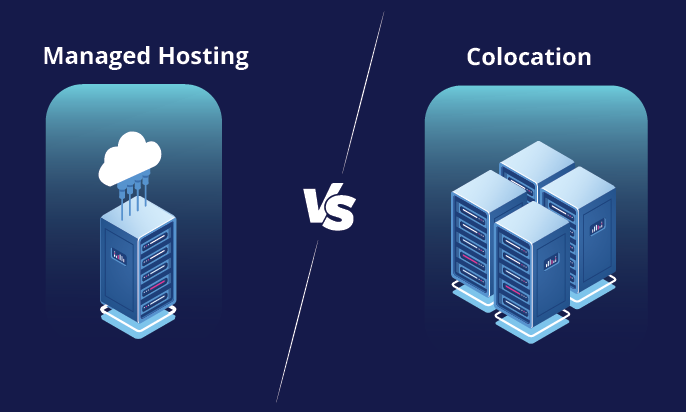
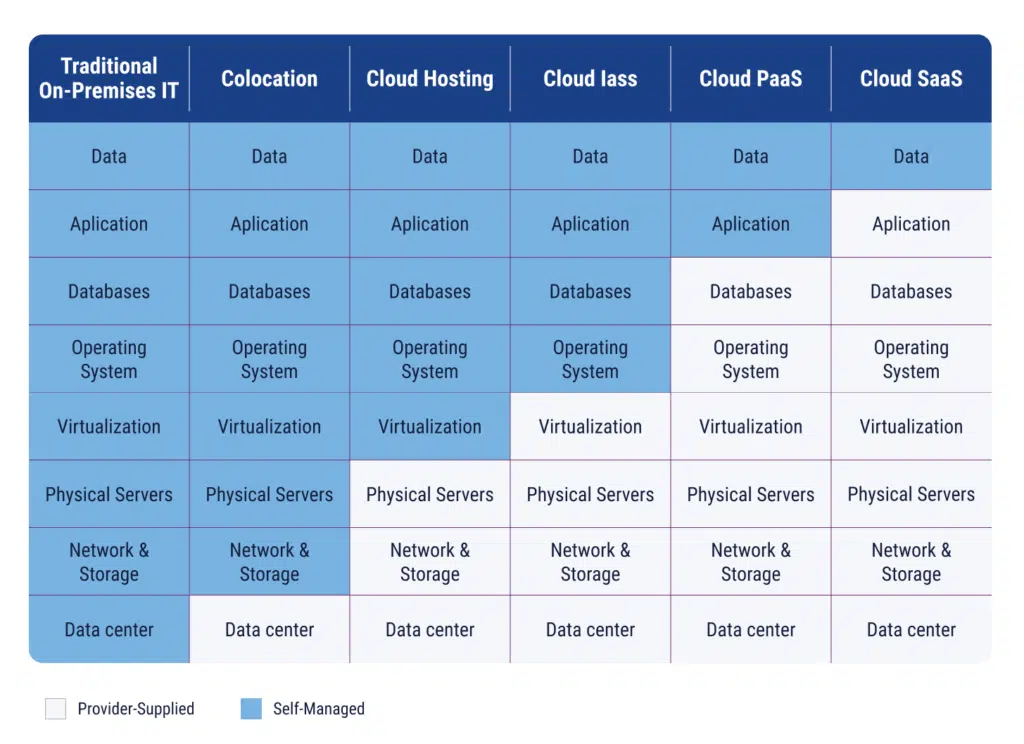
Colocation offers rack space in exchange-adjacent facilities with direct fiber links, while traditional cloud or VPS hosting relies on remote servers connected via public internet. For example, in colocation at Equinix NY4, your server pings the NYSE in 20 microseconds. A comparable AWS EC2 instance in Virginia might take 5-15 milliseconds due to geographic distance and network hops.
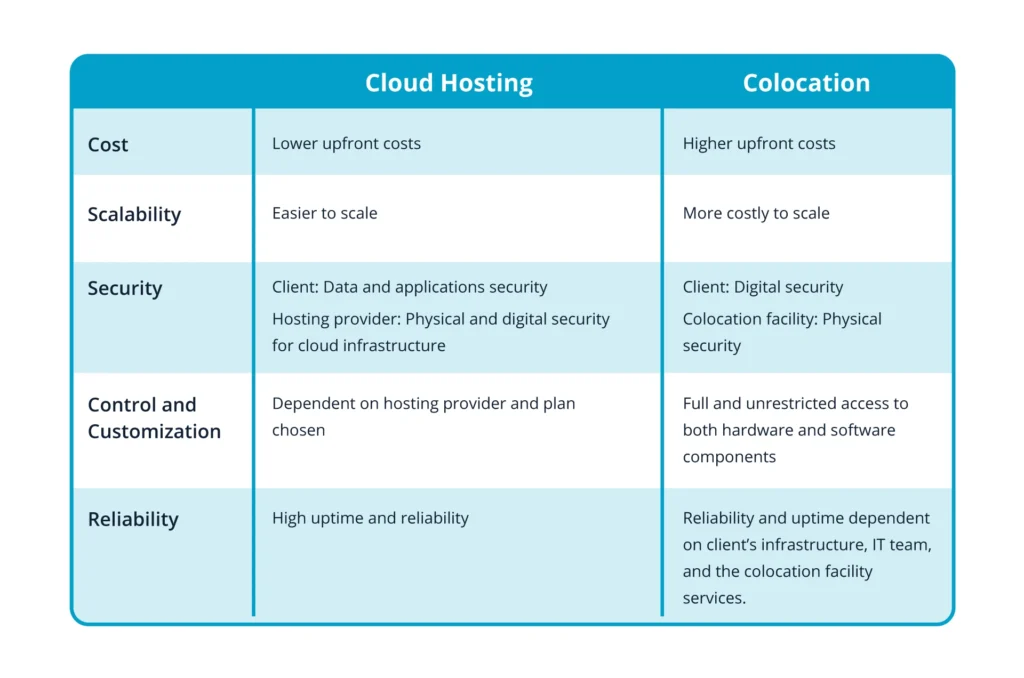
Rack space in colo gives full hardware control. You bring your own low-latency NICs (network interface cards) like Solarflare or Mellanox, tuned for microsecond precision. Traditional VPS from providers like DigitalOcean shares resources, leading to variable latency from virtualization overhead. Evidence from a 2023 FIA report shows colo users achieve 70% lower tick-to-trade times than cloud setups.
Direct fiber cross-connects shave off microseconds. Traditional hosting routes through ISPs, adding 100-1000 hops. Colo’s private peering cuts this to one hop. For instance, CME’s co-lo in Aurora uses dark fiber loops under 1km, versus cloud latency spikes during market volatility.
Another point: power and uptime. Colo facilities boast 99.999% uptime with diesel generators and UPS. Cloud outages, like the 2021 Fastly incident, halted trades globally. Traders in colo avoid such risks, maintaining consistent fills.
Why Is Low Latency Critical for High-End Trading?
Low latency is critical for high-end trading because high-frequency strategies depend on sub-millisecond execution, where microseconds directly affect profitability in competitive markets. Here’s the breakdown: in HFT, algorithms scan for tiny price discrepancies across exchanges. A 100-microsecond edge lets you buy low and sell high before others react.
High-frequency trading firms like Citadel or Jane Street process millions of orders per second. Latency here means tick-to-trade time: from receiving a market data tick to sending an order. Non-colo setups hit 500+ microseconds; colo drops it to 30. A TABB Group study found that 1 microsecond savings boosts HFT profits by 0.5-1% annually. In a $5 trillion daily market, that’s billions.
Boolean logic applies: yes, even microseconds matter. At scale, a 10-microsecond disadvantage compounds. If your rival executes 1000 trades ahead, slippage eats margins. Markets move in bursts; latency arbitrage exploits this, where fast players front-run slower ones legally within regs.
Retail traders might ignore this, but for pros, it’s table stakes. Think about order book dynamics: updates arrive every 100 microseconds. Slow feeds mean stale quotes, leading to poor fills.
What Role Does Latency Play in Trade Execution?
Latency governs ping time from your server to the exchange, tick-to-trade processing, and real-time order book updates. Specifically, ping time measures round-trip network delay. In colo, it’s 10-50 microseconds to CME Globex. Add FPGA processing at 5 microseconds, and total tick-to-trade hits 20-100 microseconds.
For instance, market data feeds like SIP (Securities Information Processor) multicast quotes. Fast colo captures Level 2 depth first, spotting imbalances. A 2022 Nanex analysis showed top HFTs with under 50-microsecond latency capture 60% more arbitrage opportunities.
Tick-to-trade breaks down as: receive tick (network in), parse/analyze (hardware), decide/risk check (algo), transmit order (network out). Traditional hosting balloons this to milliseconds due to hops. Colo’s microwave links or laser comms even beat fiber in some setups, shaving 100 nanoseconds per km.
Order book updates refresh every microsecond in equities. Low latency ensures your quotes match live depth, avoiding rejections. Poor latency causes “latency drag,” where fills execute at worse prices.
Is Colocation Necessary for All Traders?
Colocation suits institutional and HFT traders chasing speed, but retail traders rely on brokers without it. Retail platforms like Interactive Brokers aggregate orders with 1-10 millisecond latency, fine for swing trading. HFT needs colo for direct market access (DMA).
Institutional desks at banks use it for market making, quoting tight spreads. Retail volumes are tiny; brokers co-locate their gateways. A WatersTechnology survey notes 80% of HFT volume from colo, versus 5% retail.
What Are the Key Benefits of Low-Latency Colocation for Traders?
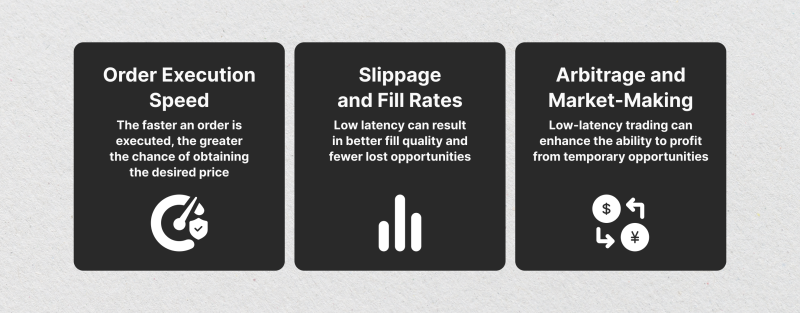
Key benefits of low-latency colocation include speed advantages, reduced slippage, better fill rates, and regulatory compliance, with 100-500 microsecond savings over non-colo setups. To understand this better, speed lets you act first on signals. Slippage drops as orders fill at quoted prices before moves.
Reduced slippage means trades execute closer to your target. In volatile opens, non-colo traders see 2-5 tick slippage; colo cuts it to 0.5. Better fill rates come from priority in matching engines. FIFO queues favor fastest arrivals.
Regulatory compliance fits via audited facilities meeting SEC Rule 15c3-5. Metrics back this: a 2023 Aite Group report cites colo users with 20% higher fill rates and 15% less slippage.
Groups like arbitrageurs thrive. Savings of 300 microseconds versus VPS hosting add up in high-volume strategies.
How Does It Provide a Competitive Edge in High-End Trading?
Colocation delivers first-mover advantage in arbitrage and market making by enabling sub-100 microsecond executions. For example, latency arbitrage scans forex pairs across venues. Colo spots a 0.1 pip gap on CME vs. Eurex first, executing round-trip in 50 microseconds.

Market makers quote bids/asks continuously. Speed ensures inventory turns before adverse moves. Firms like Virtu report colo boosts P&L by maintaining tighter spreads.
In equities, triangular arbitrage (e.g., SPY-ETF vs. futures) requires 20-microsecond edges. Slow traders miss 90% of opportunities, per Celoxica data.
Competition heats up; arms race pushes microwave towers between Chicago-NY, shaving 200 microseconds over fiber. Colo’s edge persists in crowded books.
What Infrastructure Features Enable These Benefits?
Cross-connects, dark fiber, and redundant power enable colocation benefits by ensuring ultra-reliable, low-jitter connectivity. Cross-connects are patch panels linking your rack to exchange ports via fiber. Equinix offers 100Gbps waves, dropping latency to 10 microseconds.
Dark fiber provides raw, lit-yourself strands for custom protocols. No electronics mean pure light speed. Providers like Zayo lease these loops.
Redundant power includes N+1 setups: dual feeds, batteries holding 15 minutes, generators kicking in seconds. Tier 4 data centers hit 99.995% uptime.
Cooling with hot aisle containment keeps servers at 20C. Microwave backups relay data over air at 2.5x fiber speed for NY-Chicago links.
Security features like biometric access and air-gapped networks protect against hacks. These combine for consistent performance, turning infrastructure into profit drivers.
Advanced and Niche Aspects of Low-Latency Colocation
Low-latency colocation provides unique setups like exchange-proximate data centers, hybrid links with microwaves, high-cost ROI models, and trading-specific security that outperform public internet options by microseconds.
Furthermore, these aspects allow high-frequency trading (HFT) firms to gain edges in speed and compliance.
What Are the Top Colocation Providers Near Major Exchanges?
Top providers include Equinix NY4 in New Jersey for NYSE proximity and Equinix CH4 in Chicago for CME access, alongside Digital Realty’s facilities. These centers house servers meters from exchange matching engines, slashing latency to under 10 microseconds round-trip. Equinix dominates with over 70% market share in financial colocation, offering direct fiber cross-connects to Nasdaq and CBOE too. Digital Realty complements with scalable power densities up to 50kW per rack.

You’ll notice how proximity matters: NY4 sits adjacent to Mahwah’s NYSE data hall, while CH4 links to Aurora’s CME Globex. Public internet routes add 100+ milliseconds, making them unusable for HFT. A 2023 TABB Group study shows colocated firms capture 2-5 basis points more alpha from faster fills.
This setup raises a question: how do firms choose? Factors like peering density and upgrade paths decide.
- Equinix’s ecosystem supports 1,000+ financial clients with automated provisioning.
- Digital Realty excels in hybrid cloud bursts for non-real-time analytics.
- Both offer 100% uptime SLAs backed by N+2 redundancy.
How Does Colocation Compare to Microwave or Laser Links?
Colocation serves as the foundational layer for rack-level access, while microwave and laser links extend it over distances, with hybrids achieving 1-5 microsecond advantages over fiber alone. Microwave towers relay signals at light speed through air, bypassing fiber’s refractive index delays, ideal for London-New York arbitrage at 3ms one-way. Lasers, using free-space optics, push boundaries further but face weather disruptions.
Colocation differs by anchoring trades at the exchange, where microwaves feed in from remote sites. Pure fiber public links lag at 50-200ms due to routing. A rare hybrid: firms colocate in NY4 and use microwave from New Jersey towers, netting 43% latency cuts per Celent research. Lasers shine in point-to-point deserts but cost 10x more per km.
Why combine them? Colocation handles local matching; microwaves bridge inter-exchange gaps. HFTs weigh trade-offs like $1M+ microwave installs versus $50K monthly colo racks.
This comparison prompts: when does distance justify extras?
- Microwave setups recover costs in 6-12 months via faster arb opportunities.
- Lasers offer sub-1ms over 100km but require line-of-sight maintenance.
- Colocation alone suffices for intra-exchange strategies, avoiding hybrid complexity.
What Are the Costs and ROI Considerations for HFT Firms?
HFT firms face $10,000+ monthly per rack setups, with ROI from P&L alpha where 1 microsecond edges yield 20-50% annual returns on break-even under $500K yearly spend. Initial costs hit $100K-$500K for cross-connects, FPGAs, and power. Ongoing: $15K/rack for 10Gbps, scaling to $50K for 400G. Public cloud alternatives balloon to $100K+ from data egress fees.
Break-even analysis hinges on strategy: market-making recoups in 3 months via 0.1-1bp fills, per a 2024 Aite-Novarica report. Simulate P&L: $20M daily volume at 5bps spread captures $1K/day per microsecond gain. Versus high-latency VPS at $1K/month, colo multiplies throughput 1,000x.
Firms model ROI with Monte Carlo sims, targeting 3-5x leverage. Downtime costs $10K/minute, so redundancy doubles budgets.
How do you calculate yours? Factor strategy velocity and win rate.
- Rack power at $1,000/kW/month demands efficient ASICs.
- ROI peaks at 18-24 months for microwave add-ons.
- Negotiate volume discounts dropping 20-30% for multi-year commits.
What Regulatory and Security Features Are Unique to Trading Colocation?
Trading colocation mandates FINRA Rule 3110 compliance, air-gapped networks, and biometric access, setting it apart from general hosting’s basic SOC 2. Providers enforce SEC Reg SCI for resiliency testing, with Equinix offering isolated VLANs preventing DDoS bleed. Air-gapping uses physical separation from public zones, audited quarterly.

Unlike AWS public regions vulnerable to shared-tenancy leaks, colo enforces client-only cages with 24/7 guards and mantraps. FINRA’s CAT reporting integrates via APIs, ensuring 100ms trade logs. A 2023 Deloitte survey notes 95% of breaches hit non-compliant hosts.
These features protect against insider threats via FPGA firmware locks. General data centers skip trading-specific audits like ISAE 3402 Type II for order management.
Does this justify premiums? Yes, as fines exceed $1M for lapses.
- Biometrics and CCTV cover 100% facility access.
- Encryption at rest/transit meets PCI-DSS for payment algos.
- Annual penetration tests simulate HFT-targeted attacks.
