
Research
Unlock Powerful Chatter Bots: Best AI Chatbot Software for Businesses
Dec
The best AI chatbot software for businesses includes Dialogflow, IBM Watson Assistant, Drift, ManyChat, and Intercom, offering powerful features like natural language processing, multi-channel support, and analytics for seamless customer interactions. These tools stand out because they handle complex conversations, integrate with existing systems, and deliver measurable results in customer service and sales. Businesses choose them for their ease of setup and ability to scale with growth.
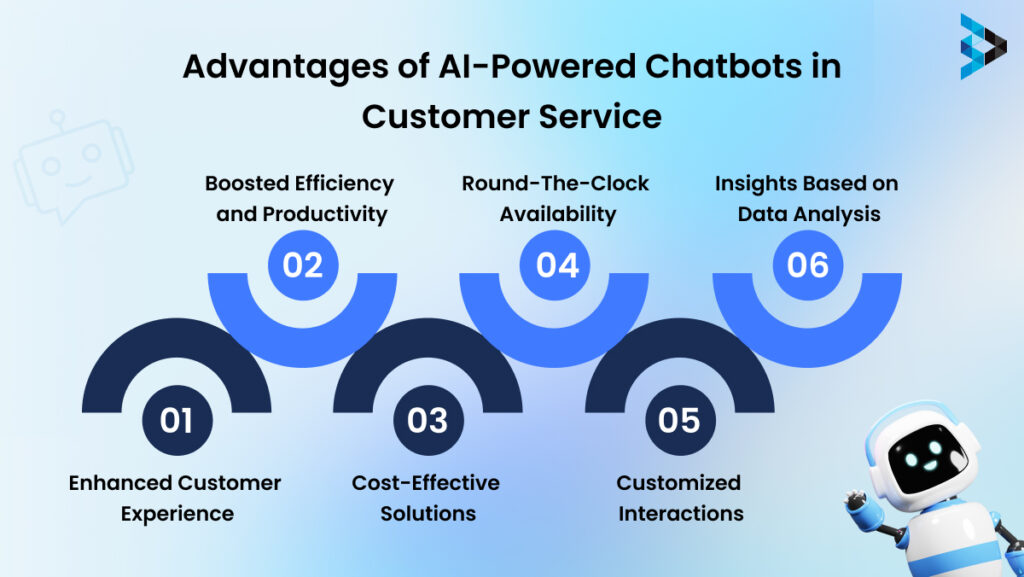
AI chatbots provide 24/7 support, cut operational costs by up to 30%, and boost customer satisfaction through instant responses. They manage routine inquiries, freeing human agents for high-value tasks. This leads to faster resolutions and happier customers who return more often.
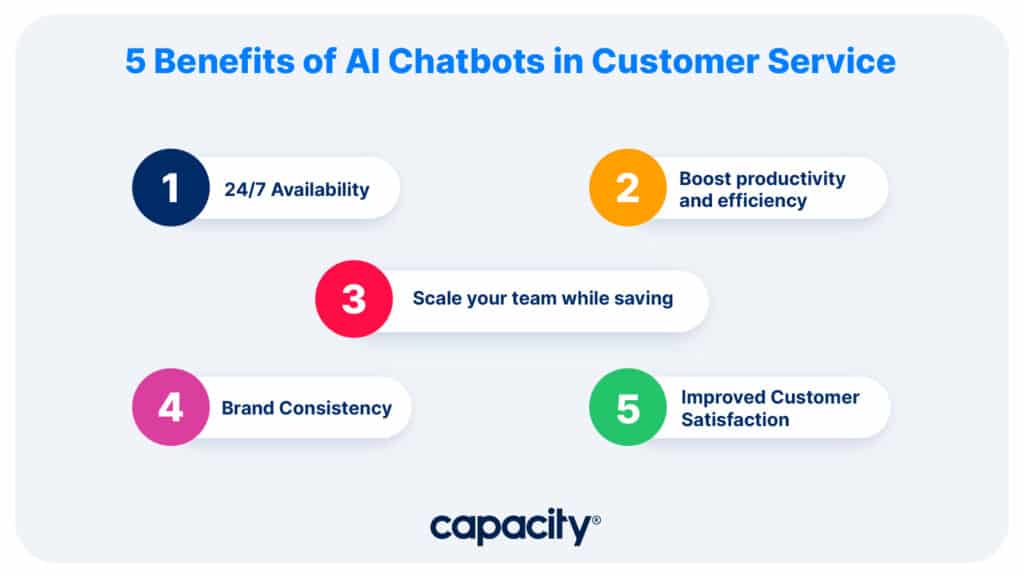
Top platforms like Drift and Intercom excel in sales by qualifying leads and recovering abandoned carts with personalized nudges. They analyze user behavior in real time to suggest products, increasing conversion rates without constant human oversight.
These solutions transform how businesses connect with customers. Now, let’s break down what AI chatbots are, why they matter, the leading options, and key features to look for when choosing one.
What Are AI Chatbots?
AI chatbots are automated conversational agents powered by machine learning and natural language processing (NLP) that simulate human-like interactions for business use. Here’s the breakdown on their core functionality, types, and workflow.
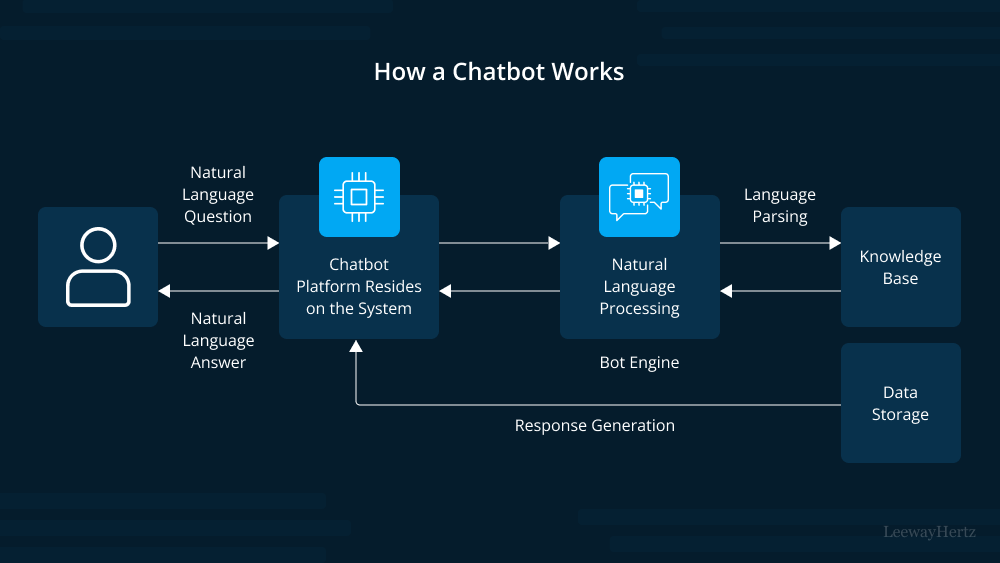
AI chatbots act as digital assistants on websites, apps, or messaging platforms. They use machine learning—algorithms that learn from data—to understand and respond to user messages. Natural language processing (NLP) breaks down human language into understandable parts, spotting intent and context.

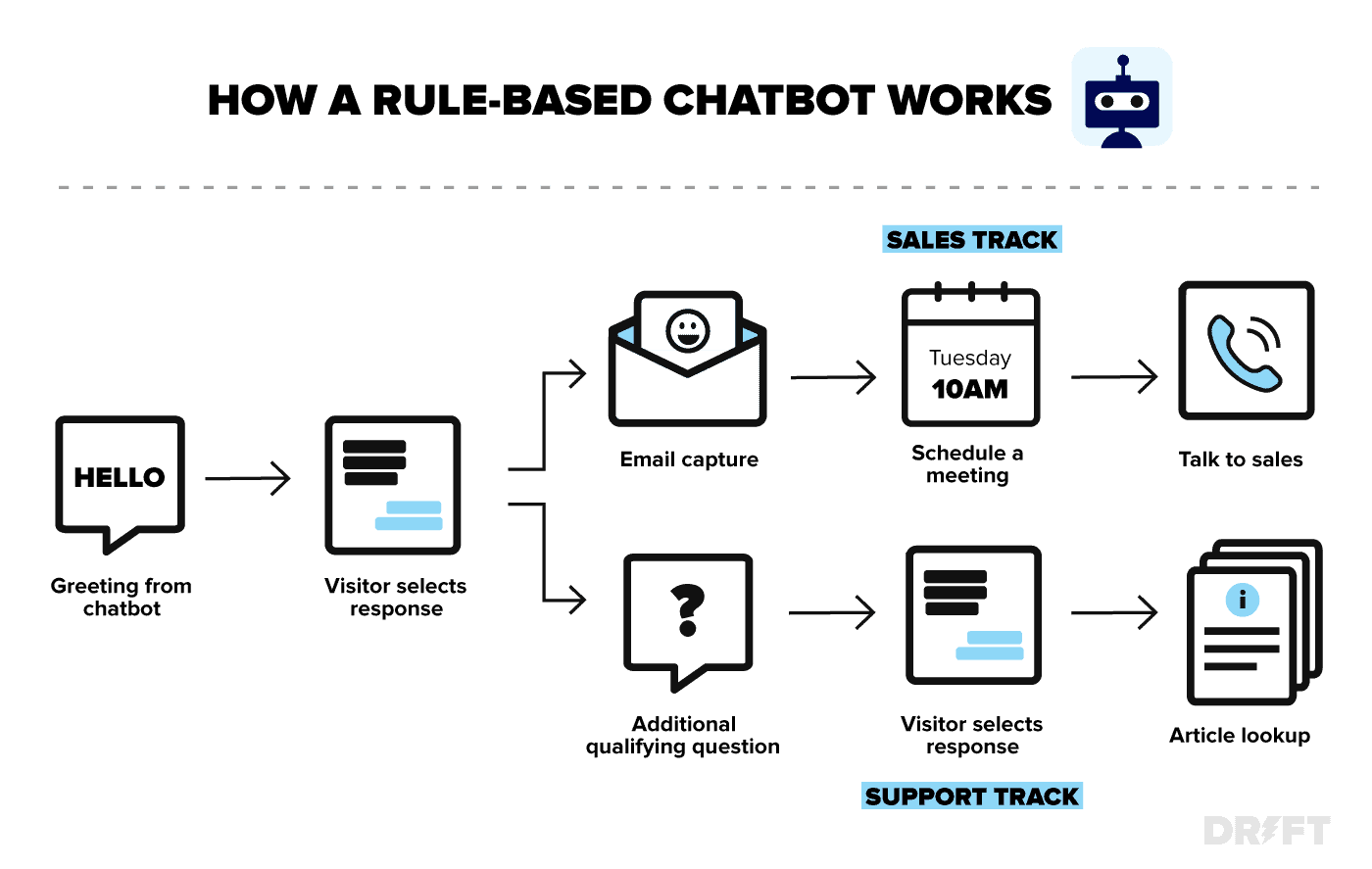
Core functionality starts with input processing. A user types a question, the chatbot parses it, matches it to known patterns, and generates a reply. Rule-based chatbots follow fixed scripts, while AI-driven ones adapt using trained models.
Basic workflow includes three steps: receive message, analyze intent, and respond. For example, in a retail setting, a chatbot might greet a visitor, ask about needs, and guide to products.
How Do AI Chatbots Work for Businesses?
AI chatbots rely on NLP to process language, intent recognition to identify user goals, response generation via machine learning models, and seamless integration with CRM or inventory systems. This setup allows businesses to automate interactions across touchpoints.
NLP turns text into data the system understands. It handles slang, typos, and context, like distinguishing “book a flight” from “read a book.” Intent recognition classifies messages—say, “complaint” or “purchase”—using trained datasets.
Response generation pulls from databases or generates new replies with generative AI. Integration connects to tools like Salesforce or Shopify, pulling real-time data. For instance, a support chatbot checks order status directly from the backend.
Businesses see quick setup with no-code builders. Training involves feeding conversation examples, improving accuracy over time. A study from Gartner shows 85% of customer interactions could shift to chatbots by 2025, proving their reliability.
What Are the Main Types of AI Chatbots?
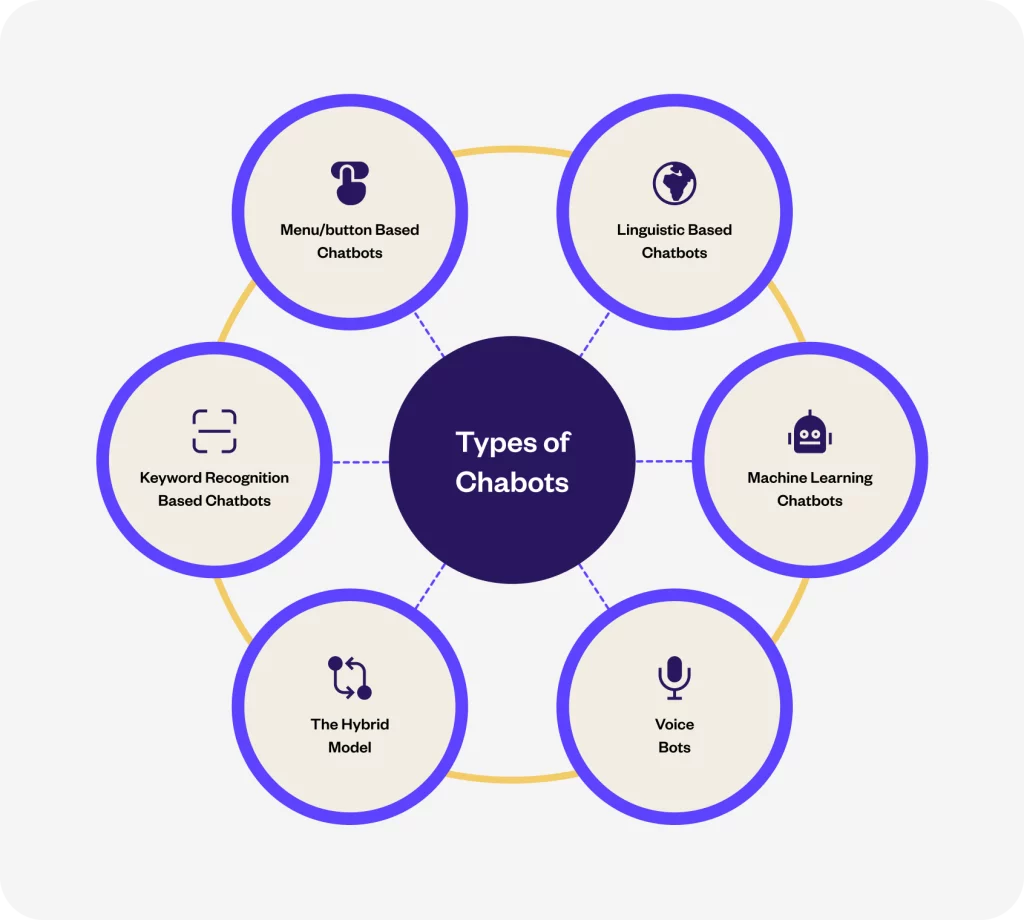
Businesses use four main types: transactional, informational, conversational, and hybrid models, grouped by purpose and complexity. Transactional chatbots handle specific actions like bookings. Informational ones provide facts, such as FAQs. Conversational types engage in open talks, mimicking humans. Hybrids combine elements for versatility.

Transactional chatbots shine in e-commerce for orders or payments. They follow strict flows but integrate payments securely. Informational chatbots answer queries fast, reducing support tickets by 40% per Forrester research.
Conversational chatbots use advanced AI for natural flow, ideal for brainstorming or troubleshooting. Hybrids, like those in Dialogflow, switch modes based on context. Each type fits scenarios—choose transactional for high-volume sales, conversational for engagement.
Why Are AI Chatbots Essential for Businesses?
AI chatbots are essential for businesses because they offer 24/7 availability, slash costs by automating routine tasks, scale effortlessly with demand, and enhance customer engagement through personalized interactions. To understand this better, look at how they address common pain points.
They provide constant support, answering queries anytime without fatigue. Cost savings come from handling thousands of chats daily, often replacing entry-level staff. Scalability means one chatbot serves millions, unlike hiring sprees during peaks.
Improved engagement happens via tailored responses. Customers feel heard, leading to loyalty. A PwC report notes 64% of consumers prefer messaging businesses over calls.
Businesses in retail, finance, or healthcare gain most. Think of a bank using chatbots for balance checks, freeing advisors for loans.
What Benefits Do AI Chatbots Provide for Customer Service?
AI chatbots cut response times to seconds, lift satisfaction scores by 20-30%, and manage peak volumes without added staff. They resolve 70% of queries instantly, per IBM data.
Reduced times mean no hold music. Customers get answers fast, boosting Net Promoter Scores. Satisfaction rises as chatbots handle simple issues, escalating complex ones smoothly.
High-volume handling shines during launches or holidays. One chatbot manages 100,000 chats daily, scaling via cloud tech. Evidence from Zendesk shows 42% ticket deflection.
Integration with knowledge bases ensures accurate info. Personalization, like using past chats, builds trust.
How Do AI Chatbots Boost Sales and Lead Generation?
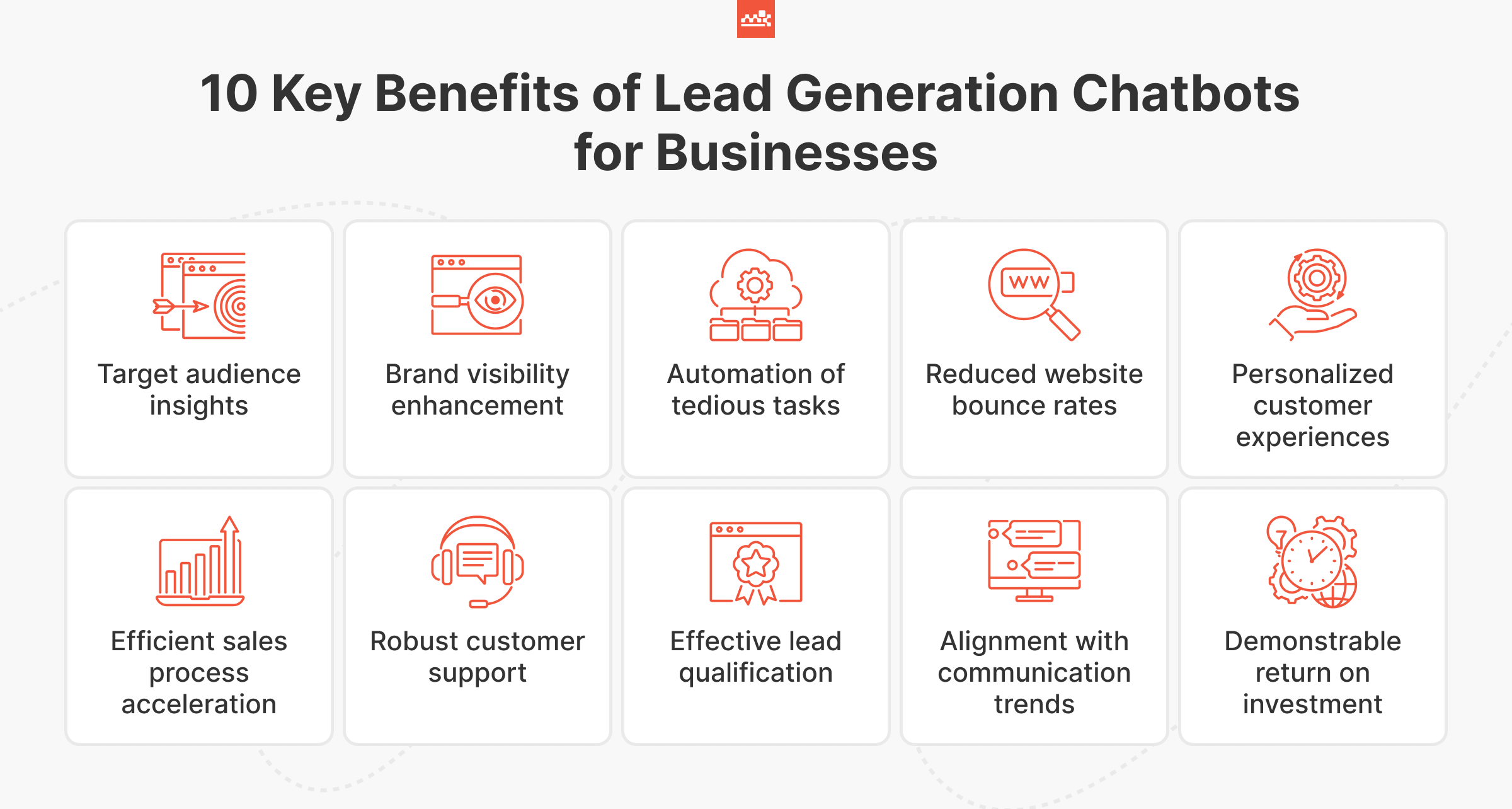
AI chatbots drive sales with personalized product recommendations, qualify leads by asking key questions, and recover abandoned carts through timely follow-ups. They increase conversions by 15-20%, according to Drift studies.
Recommendations analyze browsing history. “Saw this shoe? Pairs well with jeans.” Leads get scored—budget, timeline—passed to sales.
Abandoned cart recovery sends nudges like “Complete your purchase?” with discounts. Qualification filters hot prospects, shortening sales cycles.
Real-world results: Intercom users report 25% revenue lifts from proactive chats.
What Are the Best AI Chatbot Software for Businesses?
The best AI chatbot software for businesses are Dialogflow by Google, IBM Watson Assistant, Drift, ManyChat, and Intercom, chosen for high ratings, ease of integration, and proven ROI. Let’s explore their strengths based on user reviews and market data.
Dialogflow leads in NLP accuracy, powering apps like Google Assistant integrations. IBM Watson handles enterprise-scale with strong security. Drift focuses on sales conversations. ManyChat dominates Facebook Messenger bots. Intercom blends chat with CRM.
G2 ratings average 4.5+ stars. Market share leaders per Statista include these for their 90%+ uptime.
Capabilities vary: Dialogflow for developers, ManyChat for marketers.
Which AI Chatbot Tops the List for Ease of Use?
ManyChat and Intercom top the list for ease of use, with drag-and-drop builders and templates that let non-technical users launch bots in hours. ManyChat scores 4.7 on G2 for simplicity, ideal for social media.

Intercom offers visual flows, integrating with Slack or email. Setup takes minutes—no coding needed.
Comparisons show ManyChat fastest for Messenger (80% of users non-devs). Intercom wins for web with A/B testing. Both cut training time by 50% versus Dialogflow.
Users praise templates for quick wins, like lead forms.
What Makes These Chatbots Stand Out in 2023?
High adoption rates (Drift at 10,000+ businesses), strong ROI (up to 300% per Nucleus Research), and enterprise scalability set them apart. Dialogflow processes billions of queries yearly.

IBM Watson scales to millions of users with hybrid cloud. Drift’s revenue focus yields 10x faster lead response.
2023 updates include generative AI for smarter replies, boosting engagement 25%.
What Key Features Define Top AI Chatbot Software?
Top AI chatbot software feature multi-channel support, built-in analytics, deep customization, and security compliance like GDPR to meet business needs. Specifically, these elements ensure reliable performance.
Multi-channel means one bot on web, WhatsApp, Facebook. Analytics track metrics like deflection rate. Customization via APIs fits branding. Security protects data with encryption.
Businesses pick based on these for long-term value.
Do the Best Chatbots Support Omnichannel Integration?
Yes, the best chatbots support omnichannel integration across web, mobile apps, social media, and messaging like WhatsApp. Dialogflow connects to 20+ channels. Drift unifies web and email.

This creates consistent experiences. A customer starts on Facebook, continues on web—no re-explaining.
Examples: Intercom’s Messenger integration handles 1 billion messages yearly. ManyChat excels on Instagram.
Benefits include 30% higher retention, per Harvard Business Review.
How Important Is Analytics in AI Chatbot Performance?
Analytics in AI chatbots track key metrics like resolution rate, user drop-off, and sentiment, enabling A/B testing and deep conversation insights for optimization. They turn data into action.
Metrics reveal bottlenecks—say, 40% drop at step 3. A/B tests compare messages for better engagement.
Insights show trends, like popular queries. IBM Watson dashboards visualize this.
Importance lies in ROI proof: Optimize to hit 80% automation, saving thousands monthly. Tools like Intercom provide real-time alerts.
Advanced Selection Criteria and Niche Applications
Premium AI chatbots differentiate themselves via specialized integrations like CRM and e-commerce platforms, compliance in regulated sectors, custom ML models, and hybrid human-AI setups that handle edge cases beyond basic bots.
Furthermore, these advanced features address micro-niche needs that basic chatbots overlook.
What Unique Integrations Differentiate Premium Chatbots?
Premium chatbots gain an edge through seamless connections to enterprise tools, such as Salesforce for lead scoring or HubSpot for automated workflows, which basic bots lack. These integrations pull real-time data, enabling personalized responses without manual input. For e-commerce, Shopify plugins allow inventory checks and order tracking directly in chats, boosting conversion rates by 20-30% per industry benchmarks from Forrester.
You’ll notice how these links create closed-loop experiences. Basic chatbots handle generic queries, but premium ones sync with back-end systems for actions like updating customer records in Salesforce during a conversation.
This capability extends to micro-niches, like real estate bots integrating with MLS databases for property listings.
To select wisely, test API compatibility early.
- CRM depth: Salesforce offers AI-driven sentiment analysis tied to chat data, unlike HubSpot’s lighter automation.
- E-commerce speed: Shopify integrations process carts in seconds, reducing abandonment.
- Scalability: Premium bots support multi-platform syncing, such as Zapier plus native APIs.
How Do Chatbots Perform in Specific Industries Like Finance?
In finance, AI chatbots excel with built-in GDPR and HIPAA compliance, encrypting data and logging interactions for audits, features absent in standard bots. Case studies show JPMorgan’s chatbot handling KYC queries 40% faster while meeting SEC rules, per Deloitte reports. They manage fraud alerts and portfolio summaries without exposing sensitive info.

Basic chatbots falter here due to generic responses, but advanced ones use sector-tuned NLP for terms like “derivatives” or “yield curves.”
How do they stack up in volatile markets? Finance bots predict queries via historical data, offering proactive advice.
For implementation, prioritize vendors with compliance certifications.
- Regulatory tools: Auto-redaction of PII under GDPR, with audit trails for HIPAA.
- Case outcomes: HSBC’s bot cut support tickets by 25% in trading support.
- Edge handling: Real-time forex rate pulls with risk disclaimers.
What Are Rare Customization Options for Enterprise Chatbots?
Enterprise chatbots offer custom ML models trained on proprietary data, allowing unique behaviors like predicting customer churn from chat patterns, far beyond pre-built templates. Voice-enabled hybrids combine NLP with speech recognition, such as Amazon Lex integrations for phone-to-chat handoffs.

These options suit micro-niches, like legal firms customizing for contract reviews. Basic bots use off-the-shelf AI, but premiums let you fine-tune with TensorFlow for 15-20% accuracy gains, according to Gartner.
What makes this rare? Most require developer access to retrain models quarterly.
Start by assessing your data volume for training.
- ML tailoring: Upload datasets to build domain-specific models, e.g., finance jargon.
- Voice hybrids: Blend with Twilio for multimodal chats, improving accessibility.
- Deployment flexibility: White-label options with custom UIs for branding.
How Do AI Chatbots Compare to Human Agents in Complex Scenarios?
AI chatbots outperform humans on cost, handling 80% of queries at $0.01 per interaction versus $5-10 for agents, but lag in empathy for emotional issues, per McKinsey analysis. Escalation paths route tough cases seamlessly, like sentiment triggers sending to live agents.
Hybrid models blend both, where bots triage and humans intervene, achieving 95% satisfaction in banking pilots.
Do chatbots replace agents? No, they augment, freeing humans for high-value tasks.
Opt for platforms with smart handoffs.
- Cost efficiency: Scale to millions of chats without proportional hires.
- Empathy gaps: Bots score 70% on routine empathy, humans 90% on crises.
- Hybrid wins: 30% faster resolutions, with bots logging context for agents.
